
If the construction of a certain work project adopts the general construction contracting model, in which the electrical equipment is purchased and installed by the subcontractor designated by the owner, the subcontractor must accept ( ) work instructions during the construction
Master this rule to avoid project management chaos
In the general construction contracting model, it is a common practice for the owner to designate subcontractors. However, the issue of the ownership of command rights often causes disputes. In accordance with national building regulations and project management specifications, regardless of who appoints the subcontractor, the final command authority for project management belongs to the general construction contractor. This is the core system design to ensure project quality and progress.
The sole owner of the right to command
The person responsible for the overall management of the project is the general construction contractor, who is fully responsible for the construction schedule, quality and safety. Even if the subcontractor for electrical equipment is designated by the owner, the subcontractor must accept the work instructions issued by the general contractor. This is not a subjective regulation, but is based on the relevant requirements of the Construction Law and Construction Project Management Specifications to ensure that unified command can be achieved on site.
For example, in a building project with the characteristics of a super high-rise building in Shenzhen, the owner designates the elevator as a subcontracting unit. However, all construction scheduling, safety supervision, and progress coordination must be issued through the general construction contractor. If the subcontractor bypasses the general contractor and directly follows the owner's arrangements, it will easily lead to management disorganization and the risk of accidents.
The owner specifies why he cannot direct the order

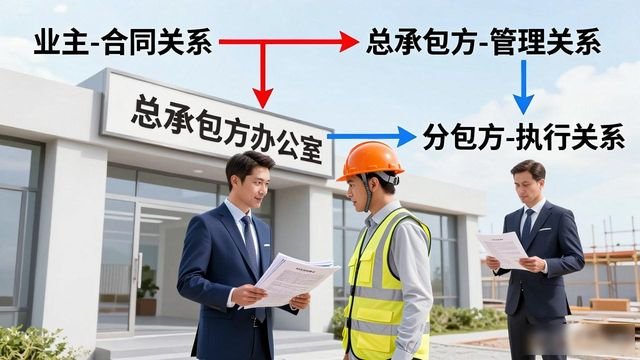
As an investor, the owner has certain rights to choose subcontractors, but this does not mean that it has the power to command on-site. The relationship between the owner and the subcontractor is a contractual relationship, while the relationship between the general construction contractor and the subcontractor is a management and managed relationship. The purpose of this hierarchical management design is to prevent on-site chaos caused by multiple commands.
In a large-scale commercial complex project in Guangzhou, the owner assigned the task to a number of designated subcontractors, but the general contractor was responsible for coordination. If the owner directly issues instructions to the designated subcontractor, then the general contractor will not be able to take responsibility for the overall progress and safety. This is also a common distressing aspect in project management.
The role and boundaries of the supervisor
The project supervisor is responsible for supervising the quality, safety and progress of the project, but the supervisor's work instructions are usually passed to the subcontractors through the construction general contractor. The supervisory party is not the party that directly manages, but the party that plays a supervisory role. The subcontractor cannot bypass the general contractor and directly accept the instructions issued by the supervisor. Otherwise, the responsibilities may become unclear.
During the construction of a certain section of the Chengdu Metro, after the supervisor noticed a problem with the electrical installation, he then issued a rectification notice to the construction general contractor, who then requested a designated subcontractor for implementation. Such a process ensured the integrity of the management chain and the traceability of responsibilities.
Designer’s functional limitations
The designer responsible for providing technical drawings and specifications does not participate in daily construction management. The designer cannot issue work instructions to subcontractors. A certain work project construction adopts a general construction contracting model, in which electrical equipment is purchased and installed by a subcontractor designated by the owner. During construction, the subcontractor must accept ( ) work instructions, because construction management is in the scope of project management, not technical design. The subcontractor must start construction according to the design drawings, but must obey the scheduling instructions of the general contractor.
In an industrial factory project in Wuhan, the designer directly contacted the designated subcontractor to modify the construction plan due to changes in the drawings, which resulted in a conflict with the general contractor's schedule. In the end, it was clarified that modification instructions must be issued through the general contractor to avoid confusion on site.
How to avoid command conflicts in actual combat
It is recommended that the construction general contractor and the owner clearly agree on the instruction process in the contract and build a unified project management platform. All instructions must be issued by the general contractor. The owner and supervisor can supervise but cannot give overlevel instructions. The designated subcontractor should also be aware of this rule in advance to prevent violation of management regulations due to lack of understanding.
Taking a hospital construction project in Nanjing as an example, the general contractor established a monthly coordination meeting and an instruction issuance system, and all subcontracts designated by the owner were placed under unified management. The final project completion time was advanced by 30 days, and zero safety incidents were achieved. This set of processes is worth learning from and promoting.
In the construction general contracting model, the designated subcontractor must obey the work instructions issued by the construction general contractor. This can be said to be a requirement of the law and management system. Regardless of whether it is the owner, the designer, or the supervisor, no one can jump over the hierarchy to give orders. Once you understand the corresponding principles, you will be able to reduce related conflicts in the field of project management, thereby improving work efficiency.
In the riveting and welding operations of large-scale projects, is it more appropriate to conduct unified management according to the general contractor, or to flexibly deploy according to the daily labor method? You are welcome to share your own practical experience in the comment area, and at the same time like and bookmark this article, so that more engineers can avoid the management minefield.
コメントを残す
コメントを投稿するにはログインしてください。