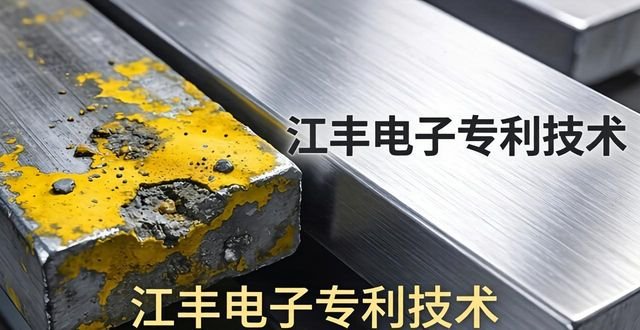


Jiangfeng Electronics applied for a patent for a method to reduce the yellow tint of aluminum alloy anodized films, which can effectively improve the problem of yellowing of aluminum alloy anodized films.
When many factories are anodizing aluminum rivet weldments, the most distressing situation is that the oxide film turns yellow, causing the product to look as if it has been used for several years. There is a newly patented technology to resolve this pain point. This process is simple and can save costs. It has been applied for in April 2024.
Analysis of the causes of yellowing of aluminum alloy anodized film
The main reason for the yellowing of the anodized film is improper voltage control during the oxidation process. Traditional processes often use a single constant voltage or constant current mode, causing the oxide film to grow unevenly. When the voltage suddenly rises, the local temperature of the oxide film rises too fast, easily forming an oxide with a yellow tint.
Another key reason is the impurity elements in the aluminum alloy base material. Impurities such as iron and silicon will participate in the reaction during the anodization process, thereby generating colored compounds. Especially for the anodized surface treatment of aluminum rivet weldments such as aluminum rivet weldments, the structure of the welding area is not uniform, and color differences and yellowing are more likely to occur.
Polishing is the first step to remove yellowing
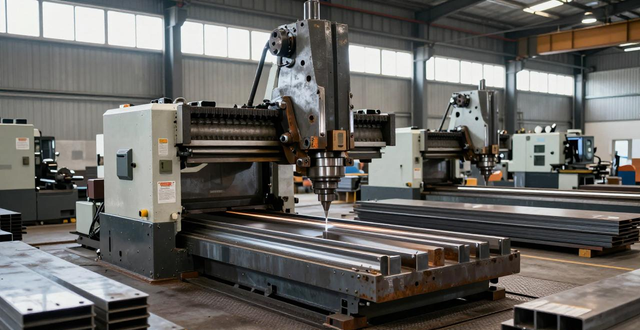
The original oxide layer and machining traces can be effectively removed from the aluminum alloy surface by polishing. This patented method uses mechanical polishing or chemical polishing to treat the surface of the substrate into a mirror or matte state. The surface roughness of the aluminum material is reduced after polishing, thus laying a good foundation for subsequent processing.

In this technology applied for in April 2024, the importance of polishing is particularly emphasized. Polishing can remove the impurity-enriched layer on the surface of the aluminum material, thereby reducing the source of colored substances in the subsequent oxide film. For aluminum riveted weldments, polishing can also eliminate the surface differences in the welding heat-affected zone.
The three steps of pretreatment are indispensable.
The remaining oil stains and polishing paste after polishing are mainly removed through degreasing. In the industrial field, two types are commonly used: alkaline degreasing agents and organic solvents. The temperature needs to be controlled in the range of 50 degrees Celsius to 70 degrees Celsius, and the time is about 3 minutes to 8 minutes. Once the degreasing process is not complete, it will cause spots and uneven colors on the oxide film.
Along with the alkali etching treatment, there is the light-emitting treatment. The alkali etching uses a sodium hydroxide solution to erode the aluminum surface, thereby removing the natural oxide film, and also removes minor scratches. The light-emitting treatment uses a nitric acid or phosphoric acid mixture to neutralize the material residues left by the alkali etching, so that the surface presents a uniform metallic luster. The three-step pretreatment mentioned above can greatly reduce the yellow tone of the subsequent oxide film.
Anodizing adopts two stages of soft start boost
The key point is that this patent has a core innovation in the voltage control method during anodization. The traditional process usually raises the voltage to the desired position in one step to achieve process operation. However, this method is divided into four different stages of anodizing surface treatment of aluminum rivet weldments , which are The first stage presents a soft start state, and is followed by the first constant voltage operation mode of this stage; then the second soft start process is ushered in, and then the second constant voltage stage. In the first soft start stage, the voltage will gradually increase until it reaches a preset value.
In the second soft start stage, Jiangfeng Electronics applied for a patent for a method to reduce the yellow tint of the aluminum alloy anodized film, which can effectively improve the problem of yellowing of the aluminum alloy anodized film. The voltage boost rate is specially set to be slower than the first stage. This slow voltage boost can prevent the oxide film from local overheating due to current impact. In actual production, the voltage boost rate of the first soft start can be 0.5 to 1 volt per second, and the second soft start can be reduced to 0.2 to 0.5 volts per second. Through this fine control, the color of the oxide film becomes significantly lighter.
Sealing treatment to consolidate the final effect
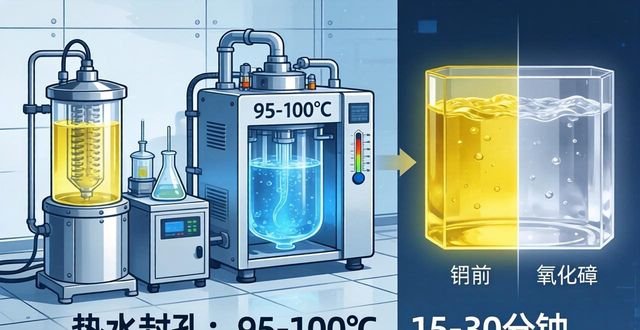
After anodizing is completed, sealing must be performed. Pore sealing can seal the micropores of the oxide film to improve corrosion resistance and anti-pollution capabilities. There are commonly used sealing methods such as hot water sealing, steam sealing and nickel salt sealing. The required temperature for hot water sealing should be controlled within the range of 95 degrees Celsius to 100 degrees Celsius, and the required duration is 15 minutes to 30 minutes.
For aluminum rivet weldments that need to reduce the yellow tint, sealing can further stabilize the color. The oxide film that has not been sealed can easily absorb dust and organic matter in the air, and will turn yellow over time. Timely and standardized hole removal can lock the color state of the oxide film, thereby maintaining the silvery white color close to the aluminum body for a long time.
Practical application effects and cost advantages
According to the patent abstract, this method is simple in process, easy to control, and low in cost. Compared with solutions that require adding special additives or replacing expensive electrolytes, this method of optimizing the voltage curve is easier to implement on existing production lines. The operator only needs to adjust the parameter settings of the anodizing power supply.
For companies that process aluminum rivet weldments, this technology can greatly reduce the rework rate. Yellowed products often have to be removed and remade, which consumes materials and delays the construction period. After using the new process, the aluminum rivet welding parts are anodized and surface treated . The oxide film is whiter and brighter, and the rate of customer acceptance is improved. In 2024, many surface treatment manufacturers are already paying attention to this type of low-cost improvement method.
Have you ever encountered yellowing during the anodizing process of aluminum rivet weldments? What method was used to solve it? Welcome to share your experience in the comment area. If you find it useful, please like it and forward it to more peers.





暂无评论内容