Tekijä: fc87

  • Koneiden ja laitteiden valmistus: miten valita luotettava teollisuuskumppani? (Mitkä ovat useimmiten huomiotta jätetyt tekijät koneiden ja laitteiden valmistajia arvioitaessa?)

    Koneiden ja laitteiden valmistus: Miten valita luotettava teollisuuskumppani?
    1 Johdanto: Laatu alkaa valinnasta
    Kone- ja laitevalmistus on maailmanlaajuisen teollisuusketjun kulmakivi, joka tukee eri teollisuudenalojen kehitystä. Tehokkaasta tuotantolinjasta valtavaan rakennuskoneeseen, luotettava kone- ja laitevalmistaja on välttämätön sen takana. Kun toimittajia on niin paljon, viisaan valinnan tekemisestä tulee kriittinen ensimmäinen askel projektin onnistumisen varmistamiseksi ja sijoitetun pääoman tuoton lisäämiseksi. Tässä artikkelissa paljastetaan ammattimaisen kone- ja laitevalmistuskumppanin valinnan keskeiset tekijät.

    2 Erikoiskoneiden ja -laitteiden valmistajien ydinosaaminen
    Ammattimaisen kone- ja laitevalmistajan arvo näkyy monien ulottuvuuksien kattavissa valmiuksissa.

    2.1 Kehittyneet tuotanto- ja testauslaitteet
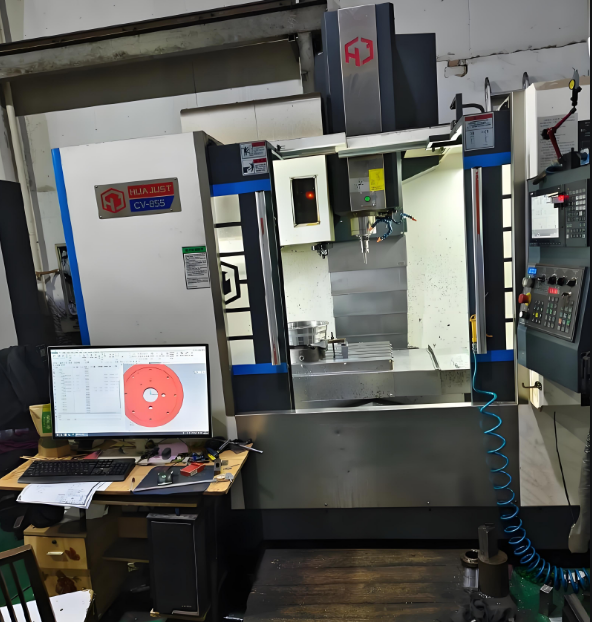
    CNC-työstökeskukset: varmistavat korkean tarkkuuden ja toistettavuuden monimutkaisten kappaleiden työstössä-9.

    Automatisoitu hitsausrobotti: 3.

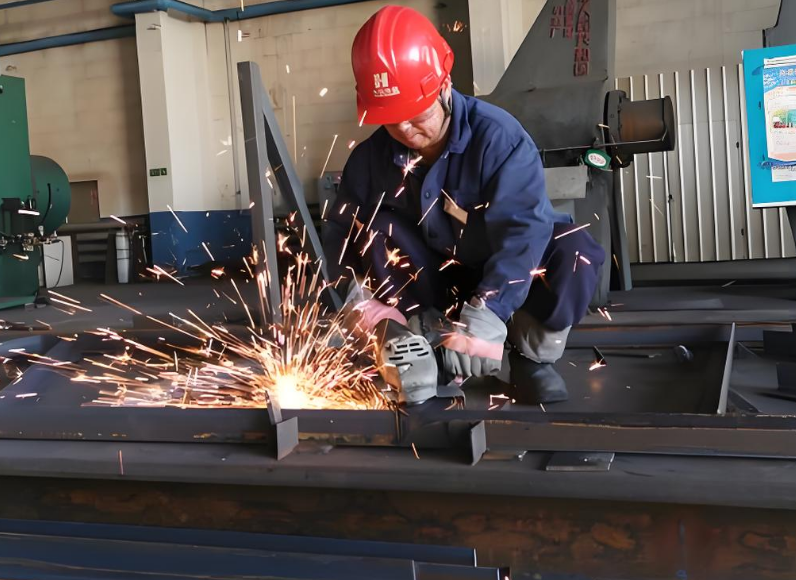
    CMM & Laser Tracker: Tarkkojen laatutietojen tarjoaminen suurten raskaiden laitteiden valmistukseen.图片[1]-机械设备制造:如何选择可靠的工业合作伙伴?(在评估机械设备制造商时,最常被忽视的因素是什么?)-大连富泓机械有限公司

    2.2 Kattava tekninen pätevyys ja sertifiointi
    Pätevyys on luottamuksen kulmakivi. Ammattimaisilla valmistajilla on yleensä:

    ISO 9001 -laadunhallintajärjestelmän sertifiointi: varmistaa, että jokainen vaihe suunnittelusta toimitukseen on hyvin dokumentoitu-9.

    Toimialakohtaiset sertifioinnit, kuten CE (eurooppalainen turvallisuussertifiointi), API (American Petroleum Institute Certification) jne., ovat passit, joiden avulla tuotteet pääsevät tietyille markkinoille-6.

    Hitsausjärjestelmien sertifiointi, kuten EN 15085 (kiskokaluston hitsaus) tai ISO 3834 (metallien sulahitsauksen laatuvaatimukset), on välttämätöntä raskaiden laitteiden valmistuksessa.

    3 Raskaan kaluston valmistuksen erityispiirteet ja haasteet
    Raskaiden laitteiden valmistus, kuten kaivoskoneiden, suurten satamakoneiden tai metallurgisten laitteiden tuotanto, edellyttää suurempaa monimutkaisuutta ja erikoistumista.

    Kyky käsitellä suuria rakenneosia: Valmistajilla on oltava keskeiset laitteet, kuten suuret portaalijyrsimet ja suuret levyrullat, jotta ylimitoitettujen työkappaleiden työstö ja muokkaus voidaan suorittaa loppuun.

    Poikkeuksellinen hitsaustekniikka: Joskus laadunvarmistus tehdään rikkomattoman testauksen avulla (esim. ultraääni- tai röntgensäteilyllä)-3. Raskasta kalustoa valmistettaessa monet hitsaukset ovat kriittisiä ja vaativat pätevien hitsaajien käyttämiä erikoishitsausprosesseja.

    Hankkeen integroinnin hallintakyky: Tämä edellyttää valmistajilta erittäin vahvaa projektinhallinta- ja logistiikkakoordinointikykyä.

    4 Menestystarinoita: miten luottamus rakentuu
    Olemme tehneet yhteistyötä yhden maailman johtavan kaivosyhtiön kanssa toimittaaksemme sen keskeiset murskaus- ja seulontajärjestelmät.

    Haaste: Laitteiden ankara työympäristö edellyttää materiaalilta korkeaa kulutuskestävyyttä ja koko koneen luotettavuutta.

    Ratkaisu: Insinöörimme käyttävät äärellisten elementtien analyysiä rakenteiden optimointiin suunnitteluvaiheessa, käyttävät erittäin lujia teräslevyjä koneiden ja laitteiden valmistusprosessin aikana tärkeimpiin rasituskomponentteihin ja suorittavat tiukkoja vikojen tarkastuksia kaikissa hitsausliitoksissa.

    Saavutus: Asiakas on tunnustanut tämän erittäin myönteisesti, ja se vahvistaa syvää vahvuuttamme raskaan teollisuuden laitteiden valmistuksen alalla.

    5 usein kysyttyä kysymystä
    Kysymys: Mitkä tekijät jäävät useimmiten huomiotta koneiden ja laitteiden valmistajia arvioitaessa?
    V: Usein kyse on toimitusketjun kestävyydestä. Vankka toimitusketju varmistaa, että raaka-aineista ja keskeisistä komponenteista ei ole pulaa tuotannon kriittisinä hetkinä, mikä on tärkeä tae oikea-aikaiselle toimitukselle.

    K: Miten voin tarkistaa valmistajan todellisen tuotantokapasiteetin?
    V: Mainosmateriaalien tarkistamisen lisäksi tehtaalla tehtävä tarkastus on olennainen osa. Keskity tehtaan 5S-hallintaan, laitteiden kunnossapitotilanteeseen ja keskeneräisen työn laatutilanteeseen.

    K: Voitteko räätälöidä tarpeisiimme sopivaksi?
    V: Tietenkin. Räätälöity suunnittelu ja erittäin mukautuva tuotantokapasiteetti ovat yksi nykyaikaisen kone- ja laitevalmistuksen ydinpalveluista. Voimme tehdä tiivistä yhteistyötä teknisen tiimisi kanssa koko prosessin ajan, konseptisuunnittelusta tuotteen toimitukseen.

    6 Päätelmät
    Sopivan vaihtoehdon valitseminenKoneiden ja laitteiden valmistuskumppani, on tärkeä strateginen päätös. Kun keskityt heidän teknisiin laitteisiinsa, pätevyyteensä, alan kokemukseensa ja projektinhallintaosaamiseensa, voit tehdä valintasi varmemmin. Odotamme innolla, että voimme olla luotettava teollisuuskumppanisi laajan kokemuksemme ja teknisen asiantuntemuksemme ansiosta koneenrakennuksen ja raskaan kaluston valmistuksen aloilla.

  • 5 Tarkkuuskoneistuksen edut: Miksi valita ammattimainen prosessori? (Ammattimainen työstö voi lisätä tuottavuutta merkittävästi optimoimalla työstöratoja ja käyttämällä automatisoituja laitteita).

    Tarkkuuskoneistus5 etua: Miksi valita ammattimainen käsittelylaitos?
    1 Johdanto: tarkkuustyöstön arvo
    Kilpailukykyisessä tuotantoympäristössä tarkkuuskoneistuksesta on tullut keskeinen tuotteen laadun ja suorituskyvyn määrittäjä. Ammattimaisen koneistuslaitoksen valitseminen ei ainoastaan takaa kappaleiden tarkkuutta, vaan myös optimoi tuottavuutta ja vähentää kustannuksia. Tässä artikkelissa kerromme yksityiskohtaisesti ammattimaisen tarkkuuskoneistuksen viidestä edusta, jotta voit tehdä tietoon perustuvia ostopäätöksiä.

    2 Viiden keskeisen edun analyysi
    2.1 Erittäin suuri mittatarkkuus ja toistettavuus
    Ammattimaisissa koneistuspalveluissa käytetään huipputeknisiä CNC-koneita, joilla voidaan saavuttaa millimetritason tarkkuusohjaus. Tämä on ratkaisevan tärkeää sovellustilanteissa, joissa toleranssivaatimukset ovat tiukat:

    Johdonmukaisuus: korkea johdonmukaisuus jokaisessa sarjatuotannossa olevassa osassa.

    Hyvä vaihdettavuus: osia koottaessa ei tarvita lisämuutoksia.

    Suunnittelun korkea toteutumisaste: suunnittelijan aikomusten ja vaatimusten tarkka toteuttaminen - 6图片[1]-精密机械加工的5大优势:为什么选择专业加工厂?(通过优化加工路径和采用自动化设备,专业机械加工能显著提高生产效率)-大连富泓机械有限公司

    2.2 Laaja valikoima materiaalien mukautuvuutta
    Toisin kuin tavallisessa konepajassa, erikoistuneessa konepajassa pystytään käsittelemään monenlaisia materiaaleja:

    Rautametallit: hiiliteräs, seosteräs, ruostumaton teräs jne.

    Muut kuin rautametallit: alumiini, kupari, titaani ja niiden seokset.

    Erikoismateriaalit: korkean lämpötilan seokset, komposiittimateriaalit jne.

    Tunnemme eri materiaalien ominaisuudet ja työstövaikeudet ja voimme valita projektisi kannalta sopivimman materiaalin.

    2.3 Tehokas tuotantokapasiteetti
    Optimoimalla työstöradat ja käyttämällä automatisoituja laitteita ammattimainen työstö voi lisätä tuottavuutta merkittävästi:

    Lyhyemmät toimitusajat: nopea reagointi asiakkaiden tarpeisiin.

    Yksikkökustannusten aleneminen: prosessin optimoinnin ja volyymivaikutusten ansiosta.

    Joustavuus mukautua: Joustavuus mukauttaa tuotantoaikatauluja tilausmäärien mukaan - 4

    2.4 Kattava laadunvarmistusjärjestelmä
    Muodollinen työstölaitosOn perustettu kattava laadunhallintajärjestelmä:

    Vakioitu prosessi: piirustusten tarkistamisesta tehtaalta lähtevään valmiiseen tuotteeseen on olemassa selkeät eritelmät prosessin jokaista vaihetta varten.

    Ammattimainen tarkastuslaitteisto: kolmen koordinaatin, optisen projektorin ja muiden laitteiden käyttö kattavaan tarkastukseen.

    Jäljitettävyysjärjestelmä: laaditaan täydellinen laadun jäljitettävyysjärjestelmä, jolla varmistetaan, että jokaisen osan alkuperä voidaan jäljittää -3

    2.5 Tekninen tuki ja suunnittelun optimointi
    Ammattitaitoiset valmistajat eivät ainoastaan käsittele piirustuksen mukaan, vaan tarjoavat myös lisäarvopalveluja asiakkaille:

    Suositukset suunnittelun optimointia varten: parannusehdotuksia valmistusprosessin näkökulmasta

    Ongelmanratkaisu: auttaa asiakkaita ratkaisemaan teknisiä ongelmia tuotannossa.

    Kustannusten valvontaa koskevat suositukset: auttaa vähentämään valmistuskustannuksia laadun säilyttäen.

    3 onnistunutta tapausta: Automotive Parts Processing
    Olemme tarjonneet koneistuspalveluja autoteollisuuden osien toimittajalle. Autoimme asiakasta optimoimalla koneistusprosessin ja tiukalla laadunvalvonnalla:

    Tuotevirheiden määrän väheneminen: 3,2%:stä alle 0,5%:hen.

    Tuottavuuden parantaminen: yhden kappaleen käsittelyaika lyhenee 18%:llä.

    Kustannussäästöt: vuotuisten tuotantokustannusten väheneminen noin $250,000

    4 Miten valita ammattimainen käsittelylaitos?
    Kun valitset koneistuspalvelun tarjoajaa, on suositeltavaa ottaa huomioon seuraavat tekijät:

    Laitteiden kunto: tarkista käsittelylaitteiden merkki, malli ja uutuus.

    Tekninen tiimi: tutustu teknikkojen pätevyyteen ja kokemukseen.

    Laatusertifioinnit: varmistakaa, että asiaankuuluvat alan sertifikaatit ovat saatavilla.

    Vertailutapaukset: tutkitaan, onko samankaltaisilla toimialoilla menestyksekkäitä tapauksia-6.

    5 Päätelmät
    Nykypäivän yhä kehittyneemmällä valmistusteollisuudella on ratkaisevan tärkeää valita ammattimainen koneistamo. Kehittyneiden laitteiden, ammattitaitoisen teknisen tiimin ja kattavan laadunhallintajärjestelmän avulla voimme tarjota korkealaatuisia koneistuspalveluja projekteihisi. Ota rohkeasti yhteyttä meihin keskustellaksesi koneistustarpeistasi.

  • Niittihitsauksen käsittelylaitoksen tulevaisuus: automaatio ja älykäs muutos (automaatio ja älykkyys eivät ole valintakysymys, vaan niittihitsauksen käsittelylaitoksen selviytyminen ja tien kehitys).

    Niittihitsauksen käsittelylaitosTulevaisuus: automaatio ja älykäs muutos
    1 Toimialan muutokset ja mahdollisuudet
    Niittaus- ja hitsausprosessointi on valmistusteollisuuden peruspalvelu, ja se kokee syvällisiä teknologisia muutoksia. Perinteiset hitsaus- ja niittausprosessit yhdistyvät vähitellen automaatioon ja digitaalitekniikkaan, mikä johtaa niittien käsittelylaitosten tehokkuuden ja laadun paranemiseen. Tässä artikkelissa keskustelemme tästä muutossuunnasta ja jaamme käytännön kokemuksiamme automaatiosta ja älykkyydestä.

    2 Automaattisen niittaustekniikan soveltaminen
    2.1 Robottihitsausjärjestelmät
    Olemme ottaneet käyttöön useita robottihitsausjärjestelmiä, jotka tarjoavat merkittäviä etuja niittaus- ja hitsausprosesseissa:

    Johdonmukaisuuden parantaminen: Hitsauksen laatuun vaikuttavien inhimillisten tekijöiden eliminoiminen

    Tehokkuuden lisääminen: jatkuva 24 tunnin toiminta mahdollistetaan.

    Vähennetty vaikeusaste: Yksinkertaistettu hitsausprosessi monimutkaisia hitsaussaumoja varten.

    Työympäristön parantaminen: Hitsaajien altistumisen vähentäminen höyryille ja kirkkaalle valolle-7图片[1]-铆焊加工厂的未来:自动化与智能化转型(自动化与智能化不是选择题,而是铆焊加工厂 生存和发展的必由之路)-大连富泓机械有限公司

    2.2 Automaattiset havaitsemisjärjestelmät
    Laadunvalvonnan automatisointi on toinen älykkään niittaus- ja hitsauslaitoksen tärkeä ominaisuus:

    Visuaalinen tunnistusjärjestelmä: hitsauspaikkojen ja kosmeettisten vikojen automaattinen tunnistaminen.

    Automaattinen ultraäänitarkastus: hitsisauman sisäisen laadun täydellinen tarkastus pistokoeluonteisen tarkastuksen sijaan.

    Reaaliaikainen tiedonseuranta: hitsausparametrien kerääminen ja analysointi laatuhälytyksiä varten.

    2.3 Älykäs tuotannonohjausjärjestelmä
    Olemme kehittäneet tuotannonohjausjärjestelmän erityisesti niittausta ja hitsausta varten:

    Älykäs tilausten aikataulutus: automaattinen aikataulutus laitekuorman ja toimituspäivän mukaan.

    Tarkka materiaalien laskenta: materiaalitarpeiden automaattinen laskenta, joka vähentää ylijäämämateriaalien määrää.

    Tuotantoprosessien seuranta: tuotannon edistymisen ja pullonkaulaprosessien reaaliaikainen seuranta-4

    3 Älykkään muutoksen käytännön polku
    Kokemuksemme perusteella.Niittihitsauksen käsittelylaitos Älykäs muuntaminen voidaan toteuttaa vaiheittain:

    3.1 Ensivaihe: perusautomaatio
    Tärkeimmät vaiheet:

    Yhden robottihitsaustyöaseman käyttöönotto

    Taustalla olevan digitaalisen hallintajärjestelmän toteuttaminen

    Työntekijöiden kouluttaminen automatisoitujen laitteiden käyttöön

    3.2 Keskitaso: järjestelmien integrointi
    Tärkeimmät vaiheet:

    Automaattisten hitsauslinjojen perustaminen

    MES-järjestelmän (Manufacturing Execution System) käyttöönotto.

    Sisäisen tiedonkeruu- ja analyysijärjestelmän rakentaminen

    3.3 Edistynyt vaihe: älykäs päätöksenteko
    Tärkeimmät vaiheet:

    Tekoälyalgoritmien soveltaminen prosessiparametrien optimointiin

    Ennakoivan kunnossapidon mahdollistaminen big datan avulla

    "Digitaalisten kaksosten" rakentaminen tuotannon simuloimiseksi ja optimoimiseksi - 4

    4 Transformatiiviset hyödyt ja haasteet
    4.1 Mitattavat hyödyt
    Automaation käyttöönoton jälkeen niittaus- ja hitsaustoiminnassamme on saavutettu merkittäviä tuloksia:

    Tuotannon tehokkuus: 35% tai enemmän

    Materiaalin käyttö: 85%:stä 93%:iin.

    Tuotteen laatu: kertatoimitustarkastuksen läpäisyaste on 98,5%.

    Energiatehokkuus: energiankulutus tuoteyksikköä kohti vähenee 22%:llä.

    4.2 Haasteet ja ratkaisut
    Muutosprosessi on myös asettanut meille useita haasteita:

    Teknisen henkilöstön puute: teknisten tiimien rakentaminen sisäisellä koulutuksella ja ulkopuolisella maahantuonnilla.

    Sijoittaminen paineen alla: vaiheittaisen sijoitusstrategian käyttöönotto tuottojen varmistamiseksi kaikissa vaiheissa.

    Perinteisten prosessien ja automaation lähentyminen: joidenkin perinteisten prosessien säilyttäminen ja asteittainen siirtyminen.

    5 Tulevaisuuden näkymät
    Teollisuus 4.0 -teknologian kehittyessä edelleen niittaus- ja hitsauslaitoksissa syntyy lisää uusia suuntauksia:

    Joustava tuotanto: sopeutuminen markkinoiden kysyntään pienten määrien ja useiden lajikkeiden osalta.

    Etävalvonta ja -huolto: laitteiden etädiagnoosi ja -huolto IoT-teknologian avulla.

    Vihreä valmistus: ympäristöystävällisempien hitsausmateriaalien ja -prosessien käyttö-7

    6 Päätelmät
    Automaatio ja älykkyys eivät ole monivalintakysymyksiä vaanNiittihitsauksen käsittelylaitos Tie selviytymiseen ja kehitykseen. Alan jäsenenä edistämme jatkossakin teknologisia innovaatioita, jotta voimme tarjota asiakkaillemme laadukkaampia ja tehokkaampia niittaus- ja hitsauspalveluja. Tervetuloa vertaiset ja asiakkaat vierailemaan ja vaihtamaan tietoja ja edistämään yhdessä alan kehitystä.

  • Niittaus ja työstö: miten valita luotettava kumppani (ammattimainen niittaus ja työstö yksityiskohtaisesti)

    Niittaava jatyöstö: How to choose a reliable partner?
    1 Specialised Rivet Welding Machining Services Detail
    Riveting is a key process in modern manufacturing, where metal parts are securely joined together by riveting, welding and other means. Our riveting and welding fabrication services cover a wide range of processes, including:

    Arc welding: for large structural parts and thick plates

    Gas Shielded Welding: Provides Cleaner, More Accurate Welds

    Resistance welding: suitable for mass production

    Laser welding: Towards high-precision, micro-deformation welding

    With our advanced equipment and experienced technical team, we can provide the most suitable welding solution according to your project needs-7.

    2 Precision machining capability
    As a specialised machine shop, we offer a full range of services from prototyping to mass production. Our machining capabilities include:

    CNC machining: high precision, high repeatability part production

    Turning: Machining of shafts, discs and other rotary parts

    Milling: planar and curved surfaces of complex shapes

    Drilling: Hole machining of various sizes

    We understand the importance of precision machining to product quality, so we strictly implement the ISO 9001 quality management system to ensure that every part meets specifications-6.

    3 Quality Assurance and Industry Applications
    Quality is the lifeline of manufacturing. We ensure product quality through multiple testing processes:

    Incoming Material Inspection: Strict testing of all incoming materials

    Process control: real-time monitoring of key parameters during the production process

    Final Inspection: Use CMM, hardness tester and other professional equipments to carry out comprehensive inspection on the finished products.

    Our riveting and machining services have been used in a wide range of industries:

    Aerospace: welding and machining of aircraft structural and engine components

    Automotive manufacturing: body welding, engine parts machining

    Heavy equipment: Manufacture of structural parts for excavators, cranes and other large equipment

    Energy sector: Manufacture of metal structures for wind power equipment and oil rigs-3

    4 Frequently Asked Questions
    Q: What is the maximum size of workpiece your riveting process can handle?
    A: Our factory has large welding platforms and lifting equipment that can handle large workpieces up to 12 metres in length and 8 tonnes in weight.

    Q: Can you provide small batch machining service?
    A: Sure. We accept a wide range of orders from small trial runs to large-scale production, and are flexible enough to adjust to your needs.

    Q: How to ensureWelding quality?
    A: All of our welders hold professional certifications and use non-destructive testing techniques (e.g., X-ray, ultrasonic testing) to assess the quality of critical welds-7.

    If you are looking for a reliable riveting processing plant and työstö service provider, please feel free to contact us. We will provide you with professional advice and quality services.

  • Koneistuksen laadunvalvonta ja alan trendit (Kokonaisvaltaisen koneistuksen laadunhallintajärjestelmän rakentaminen)

    The pursuit of excellence:Machining quality controland industry development trends
    guide (e.g. book or other printed material)
    In an increasingly competitive market, “machining” quality is the lifeline of enterprises. This article focuses on the “machining” of the total quality management system, process optimisation, and look forward to the policy and technology under the dual-wheel drive, the machining industry towards intelligent, high-precision future scenarios.

    Building a comprehensive machining quality management system
    Consistent processing quality is the key to winning the market. A sound quality management system should cover multiple levels:

    Intelligent process monitoring: Using sensor technology, real-time monitoring of cutting force, vibration, current and other signals can determine the state of tool wear and achieve predictive maintenance to avoid batch quality accidents. The machine vision-based system can also automatically detect and classify tool wear.

    Perfect inspection process: Quality inspection needs to be carried out throughout the production process. This includes:

    Appearance control: Specific surface quality standards for different materials (e.g. stainless steel, aluminium alloys).

    Size and tolerance check: Comprehensive use of vernier calipers, micrometers, coordinate measuring machines and other tools, strict control of size tolerances, fit tolerances and positional tolerances.

    Key process control: After roughing, before finishing and after the completion of important processes, inspection points should be set up to detect and reject non-conforming products in time.

    Scientific development of processing routes
    Reasonable process route is a prerequisite to ensure quality and efficiency. Its formulation requires comprehensive consideration of various factors:

    Division of machining stages: For demanding major machining surfaces, the entire process is often divided into several stages:

    Roughing stage: The goal is to efficiently remove most of the machining allowance.

    Semi-finishing stage: Continuing to reduce machining allowances in preparation for finishing, and completing some secondary surfaces.

    Finishing stage: to ensure that the part finally meets the machining accuracy and surface roughness required by the drawing-2.

    Dividing the processing stage is conducive to ensuring the quality of processing, the rational use of equipment (such as finishing using high-precision machine tools), to facilitate the arrangement of heat treatment processes, and can be found in a timely manner blank defects -2.

    Arrangement of heat treatment process: Heat treatment is critical to the performance of metallic materials and its arrangement needs to be carefully designed:

    Preparatory heat treatment: such as annealing, normalising, usually arranged before rough machining to improve the cutting properties of the material and eliminate internal stresses.

    Final heat treatment: e.g. hardening, generally arranged after semi-finishing and before finishing, is intended to give the part a high degree of hardness and wear resistance-2.

    Industry Development Trends and Policy Leadership
    Current.Machining industryDriven by both policy and market, it is developing in the direction of smarter, more sophisticated and more efficient.

    Policy support and standard leadership: In recent years, the national level issued by the machinery industry stable growth programme and other policies, emphasizing the strengthening of industrial mother machine, basic parts and components, and other technical standards of the preparation and revision of the work-2, for the industry’s high-quality development to point out the direction. This signals higher requirements for the technical strength and product quality of machining enterprises.

    Deep integration of intelligence and automation: As mentioned earlier, the application of CNC technology and automated production lines will continue to deepen, and further integrate with artificial intelligence, industrial Internet and other technologies to achieve adaptive processing and lean production.

    The ultimate pursuit of high precision and efficiency: As market competition intensifies and product performance improves, companies are in a never-ending quest for higher machining precision, lower production costs and shorter lead times. This has led to the emergence of new machining technologies, tool materials and optimisation methods.

    Meeting the Challenge: The Path to Increased Profitability and Competitiveness
    In the face of fierce market competition, the profit margins of pure contract processing are getting narrower and narrower. Machining companies need to find unique value growth points to achieve sustainable development.6 Possible paths include:

    Focus on process innovation and features: Tap the potential from within the production chain to reduce costs by developing leading-edge machining processes, optimising work processes, saving resources, or using small machines for large tasks – 6.

    Promoting product upgrading and differentiation: actively upgrading existing products and developing unique products and processes to avoid falling into low-level homogeneous competition, thus obtaining larger profit margins-6.

    Embracing high value-added areas: Entering aggressively into processing areas that require imported high-precision equipment with high technological thresholds. These areas usually have less competition and higher demands on product quality, delivery time and capacity, which can bring more lucrative returns-6.

  • Nykyaikaisen koneistustekniikan kehitys: Miten CNC ja automaatio uudistavat valmistusta (CNC-koneistuksen prosessisuunnittelun ydin)

    Modern KoneistusTechnology Evolution: How CNC and Automation Are Reshaping Manufacturing
    guide (e.g. book or other printed material)
    “Machining technology is undergoing a profound transformation. This article explores how modern “machining” solutions such as CNC (Computer Numerical Control) technology and automated production lines are driving the manufacturing industry towards an intelligent and digital future through revolutionary advances in machining accuracy, productivity and flexibility.

    CNC technology: the heart of modern precision machining
    CNC machining centres mark a qualitative leap forward in the field of machining by providing precise control of the machine’s trajectory, speed and displacement through a computer-controlled system. Compared to traditional manual operations, CNC technology brings fundamental improvements in many areas:

    Excellent precision and quality: Through digital programme control, CNC is able to stably process parts with complex shapes and high precision requirements, greatly reducing human error and good consistency.

    Significantly improved efficiency: CNC machining centres are highly automated and can achieve multi-axis simultaneous machining, reducing changeover and waiting time between processes. When machining content is changed, usually only the CNC programme needs to be changed, saving a lot of production preparation time.

    Enhanced production flexibility: CNC machines are highly flexible and can be quickly adapted to the needs of different workpieces and machining processes. Modular design and quick tool change technology make small batch, multi-variety production economically viable.

    Automated production lines: the future of machining
    Based on CNC technology, the machining automation line takes automation to a new level. It forms a system of continuous production through the combination of loading and unloading manipulators, conveyors and multiple CNC machine tools. Its advantages are reflected in:

    Safety: The operator’s hands do not need to enter the working range of the mould and the machine tool, which effectively reduces safety accidents.

    High efficiency: multiple machines operate in-line, realising continuous processing, unlimited number of theoretical in-line machines, and high overall production capacity.

    Economy and versatility: automated production line versatility, different brands of CNC machine tools can often be online collaboration. When the batch size is not large, it can also be used, and the economy is good.

    Continuous and stable operation: the automation system is able to operate or control automatically according to the specified procedures or instructions without any intervention, ensuring the stability and consistency of the production process.

    Automated machining lines are particularly suitable for parts production scenarios with mature product design, high demand and more processes, which can significantly reduce labour costs and shorten the manufacturing cycle.

    numerical control machiningthe essence of process planning
    Scientific process planning is essential to realise the full potential of advanced equipment. In CNC machining, the design of the process route is a central aspect.

    Division of processes: CNC machining usually follows the principle of process concentration. Common ways of division include:

    By tool used: In a single clamping, one tool is used to complete all the parts it can machine, and then the tool is changed. This reduces the number of tool changes and idle travel time and is widely used on machining centres.

    Divided by roughing and finishing: for parts prone to deformation, roughing is carried out first (to quickly remove most of the residual quantity) and then finishing (to ensure final accuracy), which helps to ensure the quality of processing and rational use of equipment.

    Arrangement of machining sequence: The arrangement of the sequence needs to focus on ensuring that the rigidity of the workpiece is not destroyed, generally follow:

    Benchmark first, then the others: first machining out the fine benchmark, for subsequent processes to provide a reliable positioning basis.

    Roughing before finishing: Roughing of all surfaces comes first, semi-finishing second, and finally finishing and polishing.

    First primary, then secondary, first surface, then hole: the main surface is processed first, then the secondary surface; the plane is processed first, then the hole is processed with the plane positioning.

    Digital Transformation and Green Manufacturing
    Modern CNC machining centres integrate computer technology, control technology, sensor technology, etc., and are a key node in the digital transformation of manufacturing. By combining with the Internet of Things, cloud computing and other new-generation information technologies, enterprises can achieve real-time monitoring and intelligent regulation of the production process and improve overall competitiveness.

    At the same time, modern työstö also focuses more and more on green manufacturing. By optimising machining processes and reducing energy consumption, CNC technology helps to reduce environmental pollution and resource wastage in the production process, and its high precision features also reduce raw material loss, supporting the sustainable development of the manufacturing industry.

  • Täydellinen opas koneistukseen: Perusprosesseista teollisuuden sovelluksiin (Yleisten työstöprosessien täydellinen selitys)

    The Complete Guide to Machining: From Basic Processes to Industry Applications
    guide (e.g. book or other printed material)
    This article is your introduction to the world of “machining” and “processing”. We will introduce you to the core concepts of machining, common process types, key equipment and its wide range of applications in industries such as aerospace and automotive manufacturing, helping you to fully grasp this cornerstone of the manufacturing industry.

    Machining: the cornerstone and core process of the manufacturing industry
    Machining, also commonly referred to as machining, is a crucial process in manufacturing. It broadly refers to the precise removal of material through mechanical devices and tools to process raw materials (e.g., metals, plastics, etc.) into parts or products of the desired shape, size, and surface accuracy. From simple screws to complex engine components, machining is ubiquitous and is a fundamental production technology that supports the modern industrial system.

    commonMachining processfull resolution
    Machining covers a range of different processes, each with its own unique application scenarios and advantages. Below are a few of the dominant machining methods:

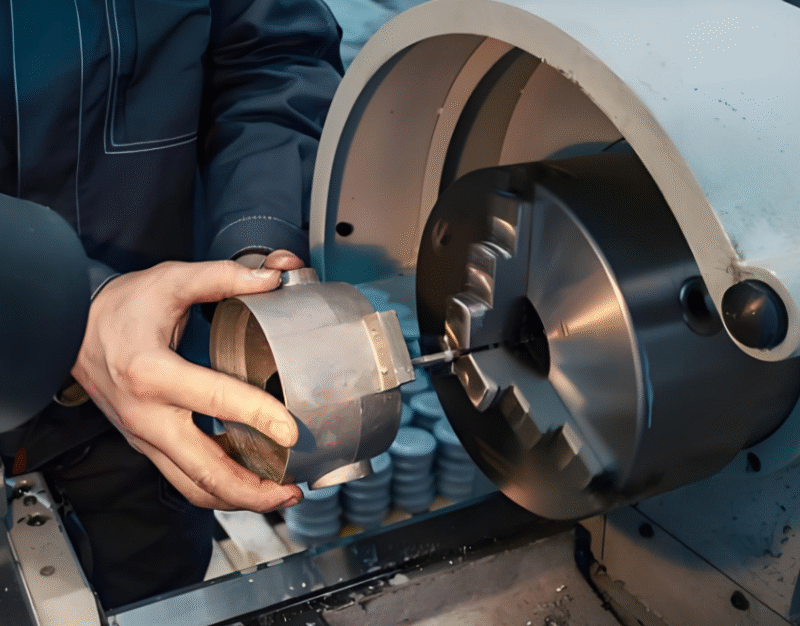
    Turning: On a lathe, the workpiece is rotated and the tool moves along a predetermined path for cutting. It is particularly suitable for machining rotating parts such as shafts, discs and sleeves, for example, machining threads and stepped shafts.

    Milling: On a milling machine, a rotating tool cuts a stationary workpiece. It offers great flexibility for machining flat surfaces, grooves (e.g., keyways, T-slots), gears, and a variety of complex curved surfaces.

    Drilling: The use of a drill bit to create round holes in solid material. Depending on the requirements, through holes or blind holes can be machined, making it a basic and extremely versatile method of hole machining.

    Grinding: The use of abrasives such as grinding wheels to finish the surface of a workpiece. It achieves very high dimensional accuracy and excellent surface finish, and is commonly used for the final machining of hard materials such as hardened steel parts.

    Boring: mainly used to expand and finish the pre-drilled holes, especially suitable for processing larger sizes, high precision requirements of the hole system, can ensure accurate hole position and cylindricity.

    Planing: Machining flat surfaces and straight grooves through the relative linear motion of the planing tool and the workpiece. Its tool structure is simple, but the productivity is relatively low, mostly used for single-piece small batch production.图片[1]-机加工完全指南:从基础工艺到行业应用(常见的机加工工艺全解析)-大连富泓机械有限公司

    Key processing equipment and its range of applications
    Different ones require the appropriate machine tools to perform them. Below are several core machining machines:

    Lathe: mainly responsible for the processing of rotary body parts, is the basic equipment in the mechanical manufacturing.

    Milling machine: an extremely versatile machine tool capable of machining flat surfaces, grooves, parted parts and even complex curved surfaces.

    Grinding machine: Using grinding tools for finishing can make the workpiece obtain high machining accuracy and good surface quality, such as internal and external cylindrical surfaces, conical surfaces, flat surfaces and so on.

    Drilling machine: mainly used for hole processing, can be drilled, reamed, reamed and tapped operations.

    Machining centres: These are highly functionally concentrated CNC machines, usually with automatic tool changers, capable of completing a variety of processes such as milling, drilling, boring, tapping, etc. in a single clamping, which greatly improves machining efficiency and precision.

    Wide range of industry applications for machining
    Machining applications cover almost all modern industrial sectors:

    Aerospace: In this field, it is necessary to process high-strength and high-precision parts made of difficult-to-machine materials such as titanium alloys and high-temperature alloys, such as engine blades and structural parts.

    Automotive Manufacturing: From engine blocks and transmission gears to brake system components, the automotive industry relies heavily on high-precision machining technology to ensure performance and safety.

    Mould manufacturing:työstöIt is the core means to produce various types of moulds such as injection moulds, stamping moulds, die-casting moulds, etc. The quality of the moulds directly determines the shaping of the final products.

    Medical Devices: Many medical devices and implants have demanding requirements for biocompatibility, surface finish and dimensional accuracy, which cannot be achieved without precision machining.

    General parts and mechanical structures: machining is also widely used in the manufacture of a variety of metal parts, sheet metal parts, boxes, and metal structures.

  • Innovations in rivet welding technology: from traditional processes to modern hybrid solutions (microstructure-property relationships in the rivet-welded head region)

    Niittihitsaus technologyInnovation: from traditional processes to modern hybrid solutions
    1 Overview and classification of riveting technology
    Riveting has been developed for centuries as a classic mechanical joining technique. Traditional riveting creates a mechanical locking at the connection site through plastic deformation to achieve the transfer of force. With technological progress, especially the emergence of new technologies such as stirring friction riveting welding, riveting welding has developed from a purely mechanical connection to a hybrid connection technology combining mechanical locking and metallurgical bonding.

    Modern riveting technology can be based on the form of riveting and rivet structure, mainly divided into self-riveting stirred friction riveting and self-pierce spinning riveting two categories. In self-riveting stirred friction riveting, no pre-made rivets are used for the connection of plates of dissimilar materials. In the lower plate prefabricated holes of the appropriate shape, with the stirring head movement, the upper material in the friction under the action of heat softening and extrusion downward flow, into the lower plate prefabricated holes to form a similar rivet structure. And the process of self-pierce spin riveting mainly includes four stages: rivet point seeking, stirring self-tapping holes, stirring deformation locking and emergency stop solid welding.

    2 Friction Stir Rivet Welding Technology Details
    2.1 Stirring Frictionrivet weldingPrinciples and Processes
    Stir friction rivet welding technology is an emerging technology to stabilise the connection of dissimilar materials, which adopts the rotational friction of rivets to generate heat, while retaining the deformation locking and solid-phase welding characteristics of rivet welding technology. Regarding friction stir riveting welding, there have been related researches in various universities at home and abroad, but the focus is on the organisation and mechanical property characterisation of friction stir riveting welded joints as well as the analysis of failure forms.

    Haris et al. studied the micro-stirred friction rivet welding technique to connect multilayer Al/Cu ultra-thin plates, and the test results showed good interlayer bonding and the existence of nanoscale diffusion layer.William studied the double-sided stirred friction self riveting welding technique, and the test in the pre-fabricated holes to form a continuous rivet-like connecting joints, joints not only to form a metallurgical combination of the material level, but also in the riveting weld joints in the lower part of the formation of an effective mechanical locking. The joint not only formed a metallurgical bond at the material level, but also formed an effective mechanical lock at the lower part of the rivet weld head.

    2.2 Joint form and bonding mechanism of stir friction rivet welding
    The joint forms of stirred friction riveting can be subdivided into four types depending on the form of riveting as well as the structure of the rivet: stirred friction blind riveting technology (FSBR), stirred spin riveting (FSPR), rotary friction drilled riveting (RFDR) and rotary friction pressure riveting (RFPR).
    Typical stir friction self riveting weld fittings differ in construction from self-pierce spin riveting stir friction riveting weld fittings. When joining aluminium alloys to steel by friction stir rivet welding technology, the aluminium plate is usually placed on top and the steel plate on the bottom. Generally, holes of a certain shape are prefabricated in the steel plate in order to form a strong rivet-like joint after riveting. According to the research results of Huang et al, in the process of welding aluminium alloy and steel by stirring and friction self riveting welding, the sequence of material filling follows the following law: firstly, the aluminium alloy deformed at the tip of the rivet, secondly, the aluminium alloy stirred in the stem of the rivet, and lastly, the aluminium alloy pressed in due to the feeding of the rivet.

    3 Relationship between microstructure and properties in the riveted welded joint region
    3.1 Microstructural characteristics of the joint area
    The study of the microstructure of the friction stir rivet welded joint region can promote a deeper understanding of the tissue-property relationship, thus further controlling the overall performance of friction stir rivet welded joints.

    According to the organisational evolution law, the stirring friction self-riveting welding head region can be divided into the stirring region (SZ) or welding block (WNZ), the thermo-mechanical influence zone (TMAZ), the plastic deformation metal flow zone (PDZ) or the self-riveting region (SRZ). Compared with the matrix organisation, the SZ region is significantly finer, with the finest grains and a microstructure of fine equiaxial crystals, while the PDZ region is significantly coarser but finer than the matrix, with coarser equiaxial crystals, and the TMAZ region is finer and the grains are significantly deformed due to the effects of mechanical stirring.

    3.2 Intermetallic compounds at the interface and their effects
    At the interface of aluminium alloy and steel friction stir riveting welding, FexAly (x<y) type intermetallic compounds are easily formed, which is harmful to the performance of the joint.Huang et al. showed that the interface of aluminium alloy and steel friction stirring riveting welding is smooth and tightly bonded, and there are no obvious cracks, holes and other defects were found.The results of the TEM inspection showed that the intermetallic compounds generated are Fe4Al13.Sun et al. detected flaky Fe2Al5 and diffusely distributed lumpy FeAl6 at the interface of 6061 aluminium alloy and low carbon steel. et al. detected flaky Fe2Al5 and diffusely distributed massive FeAl6 intermetallic compounds at the interface between 6061 aluminium alloy and mild steel stir friction rivet welding.

    Numerous studies have shown that the formation of Al-rich intermetallic compounds such as Fe2Al5 and FeAl3 negatively affects interfacial bonding as well as joint strength compared to the formation of Fe-rich intermetallic compounds such as FeAl and Fe3Al. This finding provides an important direction for optimising the rivet welding process.

    4 Rivet Welding ProcessOptimisation and Performance Improvement Strategies
    4.1 Optimisation of process parameters
    The riveting process parameters have a decisive influence on the quality of the joint. In self-pierce spin riveting, the root cut d (the radial distance from the interface of the rivet and plate bond to the tip of the rivet), the rivet depth h (the depth of the rivet into the lower plate), and the inter-plate distance between rivets close to the rivet stem are all critical parameters. In general, larger root cuts and rivet depths indicate stronger mechanical locking co-operation, whereas larger values of δ signify reduced rivet depth and weakened mechanical locking co-operation.

    Wang Xijing et al. investigated the effect of two joint forms of implanted stirred friction rivet welding on the performance, and the experimental results showed that the joint form with a nail cap on the backside had the aluminium column sheared into two parts along the interface during the stretching process, whereas the joint form without a nail cap on the backside had the aluminium column pulled out directly from the hole during the stretching process. Therefore, in order to achieve mechanical locking of the rivets, i.e. to form a nail cap structure, a suitable matching mould needs to be placed underneath the prefabricated holes, which places more stringent requirements on the placement and space of the rivets.

    4.2 Material optimisation and surface treatment
    The performance of rivet welded joints can be significantly improved through material optimisation and surface treatment. The addition of Zn or the use of galvanised steel in the friction stir rivet welding of aluminium and steel will promote the formation of Al-Zn intermetallic compounds and reduce the formation of harmful Fe-Al intermetallic compounds.

    The microstructure evolution of self-pierce spin riveted AA611 aluminium alloy and galvanised steel rivets has been observed and characterised by Min et al. The joint area can be divided into three typical regions according to the microstructure evolution, all of which are distributed in a circular arc centred on the rivet: region X (>773 μm from the edge of the rivet), region A (within the range of 363~773 μm from the edge of the rivet) and region B (within the range of 88~363 μm from the edge of the rivet). Different regions have different grain boundary characteristics and grain refinement, reflecting different thermo-mechanical histories.

    5 Prospects for the application of riveting welding technology and development trend
    5.1 Prospects for use in joining dissimilar materials
    With the increasing demand for lightweight as well as energy saving in the industrial field, the application of aluminium and magnesium alloys is in increasing demand, while aluminium and magnesium alloys alone have low strength and stiffness, and need to be used in combination with high-strength materials such as steel. Therefore, the connection of dissimilar materials, especially the connection of lightweight alloys such as aluminium alloys and magnesium alloys with steel is particularly important, focusing on the need to solve the problem of combining dissimilar materials with high strength and high precision.

    Traditional methods of joining dissimilar materials include riveting, welding and gluing, but there are many drawbacks in these methods, such as poor universality, poor strength and stability of the connection, and difficulty in controlling accuracy. Emerging technologies such as stir friction riveting and welding provide effective solutions to these challenges, especially in high-end manufacturing areas such as automotive, aerospace, etc., demonstrating broad application prospects.

    5.2 Trends in technology development
    The future development of riveting technology will pay more attention to process precision, efficiency improvement and adaptability expansion. On the one hand, the consistency of joint quality will be improved through the precise control of process parameters and the strengthening of process monitoring; on the other hand, the production efficiency will be improved and the production cost will be reduced through the innovation of equipments and the optimisation of processes.

    Digitalisation and intelligence are also important directions in the development of riveting technology. Through the integration of sensors, data analysis and control systems, real-time monitoring and adaptive control of the riveting process can be realised to ensure the stability and reliability of joint quality. At the same time, process optimisation based on digital twin technology will also become an important means to improve the quality of riveting welding

  • Dissolution control and quality management in advanced welding technology (dissolution characteristics and control methods in major welding processes)

    advanced (technology)Welding technologyDissolution control and quality management in
    1 Overview of welding technology and the role of dissolution in welding
    Welding technology, as one of the core processes of modern manufacturing, achieves permanent connections by bringing materials to an atomic or intermolecular union through various heat sources. In this process, the dissolution phenomenon is ubiquitous, from the formation of the molten pool of fusion welding to the dissolution of the base material of brazing, all directly affect the quality of the final joint. With the development of the manufacturing industry to the direction of high strength, lightweight, high efficiency, welding technology continues to innovate, the precise control of the dissolution process puts forward higher requirements.

    In high-tech fields such as aerospace and automotive manufacturing, the quality of welded joints is directly related to the safety and reliability of the entire structure. In automotive manufacturing, for example, body welding involves a wide range of materials and thicknesses, requiring control of different dissolution behaviours to ensure consistency. Similarly, in aerospace, the joining of lightweight alloys to speciality steels must precisely control interfacial reactions to avoid the formation of harmful phases. Understanding and controlling dissolution phenomena during welding is therefore an indispensable technical element of modern manufacturing.

    2 Dissolution characteristics and control methods in major welding processes
    2.1 Dissolution and erosion control in brazing
    The core process of brazing, as a process that relies on capillary action to fill the joint, is the mutual dissolution between the base material and the brazing material. In brazing of aluminium heat exchangers, dissolution and erosion are particularly evident. It has been shown that the maximum temperature and holding time during brazing, as well as the type and amount of brazing material, affect the degree of dissolution and erosion.

    By comparing three different brazing profiles (normal, heated and strongly heated), it was found that the degree of dissolution of the radiator parts during brazing varied from 181 TP3T to 681 TP3T. Under the strong heating profile, erosion in some areas of the brazed joints can even lead to the destruction of thin-walled cooling fins. This indicates that excessive dissolution can have a serious negative impact on joint performance. Therefore, the conflicting needs of joint formation and substrate preservation must be balanced during process design.

    2.2 Control of interfacial reactions in welding of dissimilar materials
    When welding dissimilar materials, complex elemental interdiffusion and chemical reactions occur at the interface to form intermetallic compound layers. In contact reaction brazing of aluminium alloys with stainless steel, the use of Cu as an intermediate layer results in the formation of a composite structure consisting of Fe2Al5, FeAl3 intermetallic compounds and Cu-Al intermetallic compounds at the interface on the stainless steel side.

    The thickness of the intermetallic compound layer at the interface increases with increasing holding time, while the width of the eutectic organisation gradually decreases. It is worth noting that the dissolution of the intermediate reaction layer Cu is very rapid, a fast process measured in seconds. This rapid dissolution behaviour puts extreme demands on the process control, requiring precise control of the heat input and action time.

    3 Welding Quality Management and Performance Assessment
    3.1 Total Quality Management System
    The establishment of a comprehensive welding quality management system is the key to ensuring stable joint performance. This system should cover design control, process verification, online monitoring and final inspection and other links. For key structural components, it is also necessary to establish a full-process traceability system from the raw material into the warehouse to the product factory.

    Quality control needs to focus on weld appearance, dimensional accuracy, mechanical properties and microstructure. For high-end manufacturing areas such as aerospace and automotive, special tests such as fatigue performance and fracture toughness are also required to assess the long-term reliability of joints under complex loads.图片[1]-先进焊接技术中的溶解控制与质量管理(主要焊接工艺中的溶解特征与控制方法)-大连富泓机械有限公司

    3.2 Non-destructive testing and performance prediction
    Modern welding quality control increasingly relies on advanced non-destructive testing techniques such as X-ray inspection, ultrasonic testing and eddy current testing. These techniques can detect internal defects and assess the quality of joints without destroying the product.

    Meanwhile, welding process simulation based on digital twin technology has become a powerful tool for predicting joint performance. By constructing a virtual model that can dynamically simulate the mechanical response of cutting, the researchers have improved the prediction accuracy by 15%, which not only reduces material waste, but also shortens processing time. A similar approach can be used to optimise and predict the welding process.

    4 Welding technology development trend and innovative application
    4.1 Intelligent and Automated Welding
    Welding technology is rapidly developing in the direction of intelligence and automation. Intelligent welding system monitors the welding process in real time through multi-sensor information fusion, automatically adjusts the parameters, and ensures the consistency of joint quality. For example, the weld tracking system based on machine vision can automatically identify the position of the weld and compensate for assembly errors.

    Robotic welding workstations and flexible welding lines have become standard in large manufacturing organisations, significantly improving productivity and stability. These systems typically integrate welding power sources, motion control, sensing monitoring and data analysis modules, enabling digital management of the welding process.

    4.2 Welding Challenges of New Materials and Structures
    With the continuous emergence of new materials, welding technology faces new challenges. Materials such as high-strength steels, aluminium alloys, magnesium alloys and composites have vastly different physico-chemical properties, requiring the development of special welding processes and filler materials.

    Emerging technologies such as stir friction rivet welding show unique advantages when it comes to joining dissimilar materials. This technology has successfully achieved high-quality joining of aluminium alloys to steel through a combination of mechanical locking and finite metallurgical bonding. Studies have shown that the formation of harmful intermetallic compounds can be reduced and joint performance improved by surface plating with Zn or the addition of Zn elements.

    4.3 Green Welding and Sustainable Development
    The environmentalisation and energy saving of welding technology is another important development trend. By optimising process parameters, reducing energy consumption and material waste, and developing welding materials with low fumes and harmful gases, the environmental impact of the welding process can be significantly reduced.

    soldredThe lightweight design of structures also makes a direct contribution to energy saving and emission reduction. For example, in automobile manufacturing, by adopting a hybrid structure of high-strength steel and aluminium alloy and combining it with advanced joining technologies, it is possible to reduce the weight of the body and fuel consumption while ensuring safety.

  • Liukenemisilmiöiden kriittinen merkitys hitsaus- ja niittausprosesseissa ja hallintastrategiat (tyypilliset liukenemisprosessit ja rajapintareaktiot hitsauksessa ja niittauksessa).

    dissolutionCritical role of phenomena in welding and riveting processes and control strategies
    1 Understanding the phenomenon of dissolution and its importance in joining materials
    The phenomenon of dissolution is a fundamental and critical physico-chemical process in welding and riveting. It refers to the process of melting, mutual fusion and diffusion of base metal, filler metal or brazing material at the interface under the action of a heat source. This phenomenon directly affects the formation quality, microstructure and mechanical properties of the joint. Whether it is the traditional fusion welding, brazing, or the emerging stir friction riveting welding, the control of the dissolution process is the core link to ensure the performance of the joint.

    In the case of stir friction rivet welding of aluminium alloys to steel, for example, the frictional heat generated by the rotation of the rivets during the joining process softens the aluminium alloy and produces a plastic flow that fills the prefabricated holes. During this process, a certain degree of elemental interdiffusion occurs at the interface, and even intermetallic compounds are formed. Similarly, during brazing, the rate and degree of dissolution of the base material has a decisive influence on the weld organisation and properties. Therefore, in-depth understanding and precise control of the dissolution process is of great significance for optimising the welding and riveting process, improving the reliability of the joints and prolonging the life of the components.

    2 Typical dissolution processes and interfacial reactions in welding and riveting
    2.1 Dissolution behaviour of base materials in brazing
    During the brazing process, when the liquid brazing material comes into contact with the base metal, dissolution of the base material into the liquid brazing material occurs. This dissolution process is a complex physicochemical process, the rate and extent of which is influenced by a number of factors. It has been shown that brazing temperature, holding time, and brazing material composition all significantly affect the amount of dissolution of the base metal.

    For example, in the brazing of aluminium heat exchangers, the researchers found significant dissolution and erosion. By comparing three different brazing profiles (normal, heated and strongly heated), it was found that the degree of dissolution of the radiator components during brazing ranged from 181 TP3T to 681 TP3T. Under the strong heating profile, erosion in some areas of the brazed joints can even lead to the destruction of thin-walled cooling fins. This indicates that excessive dissolution can have a serious negative impact on joint performance.

    2.2 Interfacial reactions in the joining of dissimilar materials图片[1]-溶解现象在焊接与铆焊工艺中的关键作用及控制策略(焊接与铆焊中的典型溶解过程及界面反应)-大连富泓机械有限公司
    When joining dissimilar materials, such as aluminium alloys and steel, complex chemical reactions and elemental diffusion occur at the interface, resulting in the formation of intermetallic compounds. In stir friction riveting welding of aluminium alloys to steel, the interface is prone to the formation of FexAly (x<y) type intermetallic compounds such as Fe2Al5 and FeAl3, which are aluminium-rich intermetallic compounds that are usually detrimental to the performance of the joint.

    Through TEM inspection and other means, the researchers observed intermetallic compounds such as Fe4Al13, flaky Fe2Al5, and diffusely distributed massive FeAl6 at the interface of stir friction rivet welding of aluminium alloys to steel. The type, thickness and distribution of these compounds directly determine the mechanical properties and failure behaviour of the joint.

    3 Strategies and methods for controlling the dissolution phenomenon
    3.1 Optimisation of process parameters
    The primary method of controlling the dissolution phenomenon is to optimise the joining process parameters. Critical parameters such as temperature, time and pressure need to be precisely controlled to balance the conflicting demands of the degree of dissolution and the performance of the joint.

    During TLP (Transitional Liquid Phase) joining and brazing, the degree of dissolution of the base material can be effectively managed by controlling the maximum temperature and holding time. For example, in liquid film dissolution diffusion welding of steel materials, the spray melting temperature has a significant effect on the joint organisation and mechanical properties. With the increase of spray melting temperature, the interface Ni, Fe atom mutual diffusion intensifies, and the thickness of the interface diffusion bonding layer increases. It was found that in the static mirror liquid film state of 700~800℃, excellent weld zone without white mouth and hardened organisation can be obtained.

    3.2 Material design and surface treatment
    Harmful dissolution and interfacial reactions can also be effectively controlled through rational material design and surface treatment. In the connection between aluminium alloy and steel, the formation of harmful Fe-Al intermetallic compounds can be reduced and the generation of Al-Zn intermetallic compounds can be promoted by surface plating of Zn, Zn-Al-Mg or addition of Zn elements, which can improve the performance of the joint.

    In contact reaction brazing, the use of Cu as an intermediate layer connecting 6063 aluminium alloy with 1Cr18Ni9Ti stainless steel can change the interfacial reaction path to form a composite interfacial structure consisting of Fe2Al5, FeAl3 intermetallic compounds, and Cu-Al intermetallic compounds, which improves the joint properties.

    3.3 Innovative connection technology applications
    Emerging joining technologies, such as stir friction rivet welding, naturally control the extent of harmful dissolution through clever process design. In this technology, the combination of mechanical locking and limited metallurgical bonding ensures joint strength while avoiding the formation of excess harmful intermetallic compounds.

    The joint form of stirred friction riveting welding is mainly divided into self-riveting stirred friction riveting welding and self-pierce rotary riveting. In self riveting stir friction rivet welding, the aluminium plate is generally placed on top and the steel plate is placed on the bottom, taking advantage of the lower softening temperature of the aluminium alloy and the better plastic flow, to fill the prefabricated holes in the lower steel plate under the action of frictional heat to form a rivet welded joint. This process naturally limits the degree of interfacial reaction by controlling the heat input.

    dissolutionEffects of the phenomenon on joint performance and quality assessment
    4.1 Microstructure-mechanical property correlation
    The dissolution process directly affects the microstructural characteristics of the joint, which in turn determines its mechanical properties. In stirred friction rivet welded joints, the joint area can be divided into stirred zone (SZ) or welded block (WNZ), thermo-mechanically affected zone (TMAZ), plastic deformation metal flow zone (PDZ) or self-riveted zone (SRZ) according to the law of organisational evolution.

    Compared with the matrix organisation, the SZ regional organisation is obviously refined, with the finest grains, which are fine equiaxial crystals; the PDZ regional organisation is obviously coarsened, but is still relatively small compared with the matrix; the TMAZ regional grains are refined and obviously deformed due to the influence of mechanical stirring. This gradient change in microstructure directly affects the hardness distribution and mechanical properties of the joint.

    4.2 Joint Failure Analysis
    Improper control of the dissolution process can lead to a variety of joint defects and failure modes. Over-dissolution may lead to erosion phenomena, such as the destruction of thin-walled elements seen in aluminium heat exchanger brazing, while under-dissolution may lead to incomplete bonding and reduced joint strength.

    In stir friction rivet welding of aluminium alloys to steel, the type of intermetallic compounds formed at the interface is critical. It has been shown that the formation of Al-rich intermetallics (e.g. Fe2Al5 and FeAl3) negatively affects the interfacial bonding as well as the strength of the joints compared to the formation of Fe-rich intermetallics (e.g. FeAl, Fe3Al).

    5 Future development trends and prospects
    With the continuous emergence of new materials and structures, the control of dissolution phenomena in welding and riveting faces new challenges and opportunities. The trend of lightweight drives the demand for joining lightweight materials such as aluminium-magnesium alloys and high-strength steels, which puts forward higher requirements for dissimilar material joining technology.

    In the future, through the combination of multi-scale simulation and in-situ experimental observation, the nature of the dissolution process can be understood more deeply, providing theoretical guidance for process optimisation. Meanwhile, the development of intelligent control technology will realise real-time monitoring and precise control of the dissolution phenomenon in the joining process, further improving the stability and reliability of the quality of welded and riveted joints.