

Are there any requirements for sheet metal processing tolerances?
Basic concepts of tolerance
When sheet metal is processed, the dimensions cannot be completely accurate. There are limitations in the accuracy of mechanical equipment. There are also many factors such as wear and tear of the mold, and errors in operation. These will affect the quality of the finished product. In order to ensure that the workpiece can be put into normal use, the tolerance must be controlled within a reasonable range.
Tolerance refers to the range within which variations in dimensions are allowed. The concept of basic size is the target value determined during design, while limit size is the maximum and minimum allowable boundaries. The difference between the two boundary values is the size of the tolerance zone.
How to read the tolerance code
The national standard clearly stipulates the tolerance codes of holes and shafts. For holes, the upper deviation is represented by ES, and the lower deviation is represented by EI. As for the shaft, the upper deviation is expressed by es, and the lower deviation is expressed by ei. Only by understanding these codes can we accurately determine whether the part is qualified.
Deviation can be defined as positive, negative, or zero. The upper deviation is the algebraic difference obtained by subtracting the basic size from the maximum limit size. The lower deviation is the corresponding result obtained by subtracting the basic size from the minimum limit size. Marking the fit tolerances can make processing and inspection more convenient.
How to design a bending mold

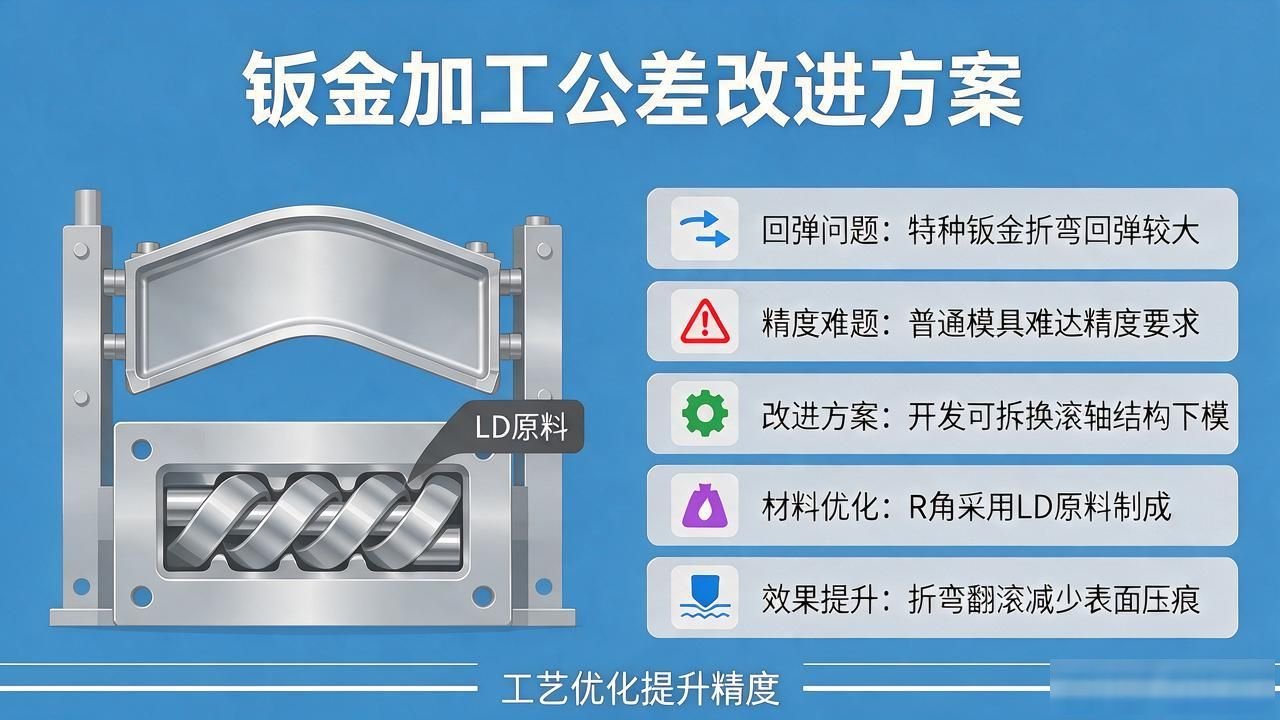
The rebound of special sheet metal during bending is larger than that of ordinary materials. It is difficult for ordinary molds to meet the accuracy requirements. The company has specially developed a replaceable roller structure lower mold. The R corner part is made of LD material, which can roll during the bending process, which can effectively reduce surface indentations.
Generally speaking, the R angle of the upper mold is selected to be three to six times the material thickness, the R angle of the lower mold is selected to be four to eight times the material thickness, and the V opening width is selected to be six to twelve times the material thickness. Such a combination of parameters can effectively control the bending rebound phenomenon and prevent cracking. At the same time, it can also avoid leaving indentations on the outer surface.
What should you pay attention to when bending
Set the bending direction to ensure that it is always perpendicular to the direction in which the plate is rolled, thus reducing the risk of cracking. Before starting the bending operation, all defects on the surface of the plate need to be polished until they are clean, smooth and without traces. The edge formed after shearing must also be polished to a smooth level to prevent deformation caused by stress concentration.
Once the strength of the plate is higher, the bending force and the amount of rebound will be greater. Materials with high hardness require greater bending force and more obvious rebound. Therefore, when designing mold parameters, the mechanical properties of the material must be fully considered.
Advantages of removable structures
Based on cost and maintenance considerations, the R-angle of the upper mold, the R-angle of the lower mold, and the mold body are all designed to be removable. After wear occurs in a certain part, only partial parts need to be replaced instead of scrapping the whole thing. This greatly reduces the cost incurred in the long-term use.
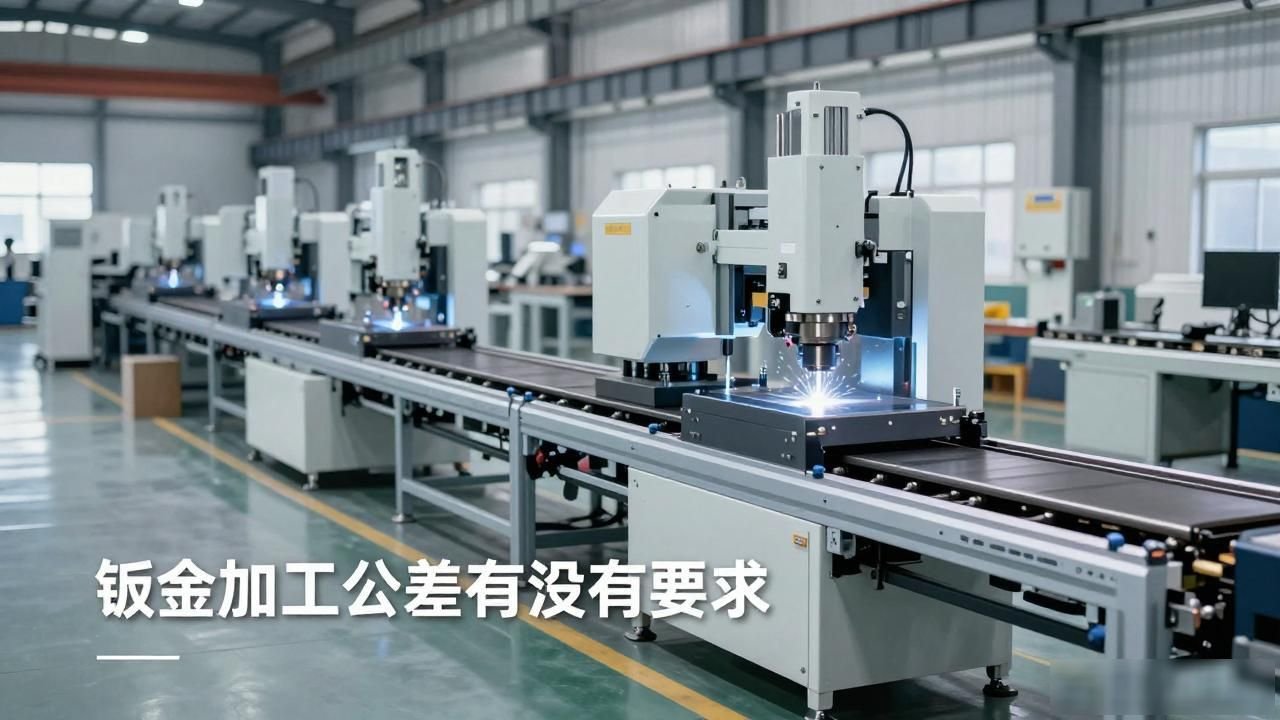
This flexible production method that facilitates product upgrades and adjustments can meet the precision requirements of the welding process. The initial investment is relatively small, the investment return period is short, and the requirements for equipment and operators are also low, making it suitable for small and medium-sized enterprises.
Features of water jet cutting
Waterjet cutting is suitable for the blanking process of all special sheet metal products. The biggest advantage of this process is that it has no heat-affected zone and can completely avoid the risk of cracks caused by thermal deformation. The quality of the cuts is stable.
Compared with laser cutting and plasma cutting, waterjet has more advantages for thick plates and high-strength materials. Its cold cutting characteristics ensure that the internal structure of the material will not be destroyed, and the quality of subsequent bending and welding is more guaranteed.
![图片[3]-Are There Any Requirements For Sheet Metal Processing Tolerances?-Dalian Fuhong Machinery Co., Ltd](/wp-content/uploads/2026/08/1787681152434_2.jpg)
During actual production, have you ever encountered a situation where bending springback is difficult to control? Welcome to share your experience and solutions in the comment area.




暂无评论内容