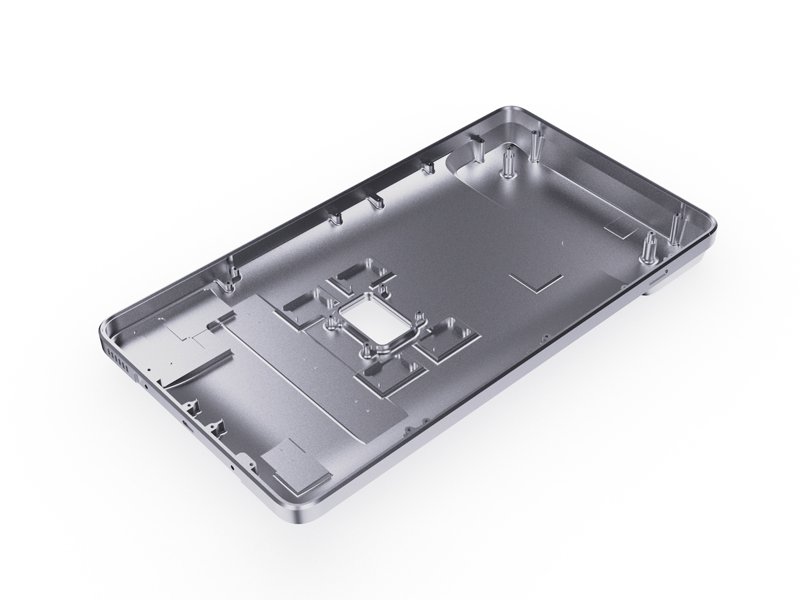


Practical Guide: Solutions to Common Problems in CNC Aluminum Alloy Housing Processing (What are the Aluminum Alloy CNC Processing Parameters)
During the processing of CNC aluminum alloy shells, the cutting tools are severely worn, the products are deformed, and the surface is rough, which has always been a problem that has plagued many manufacturing companies. These problems will not only affect product quality, but also increase production costs.
Causes and Countermeasures for Severe Tool Wear
The direct cause of serious tool wear is that the machining speed is too fast. When the cutting speed and feed speed are set too high, the friction between the tool and the aluminum alloy material will intensify, and the temperature will rise rapidly, which will lead to rapid passivation of the tool edge. Aluminum alloy materials with different hardnesses have different effects on tool wear.
![图片[1]-Practical Guide: Solutions To Common Problems In CNC Aluminum Alloy Housing Processing (What Are The Aluminum Alloy CNC Processing Parameters)-Dalian Fuhong Machinery Co., Ltd](/wp-content/uploads/2026/08/1787083609180_0.jpg)
Faced with this problem, cutting parameters must be set reasonably according to the material hardness and tool characteristics. For aluminum alloys with relatively high hardness, the cutting speed should be appropriately reduced, and sharp tool coatings such as TiAlN or DLC-coated tools should be used to extend the service life of the tool. At the same time, establish a regular inspection system for tools and replace them promptly once signs of wear are found. Practice Guide: Solutions to Common Problems in CNC Aluminum Alloy Shell Processing (What are the CNC Processing Parameters for Aluminum Alloy) to prevent tool failure and product scrapping.
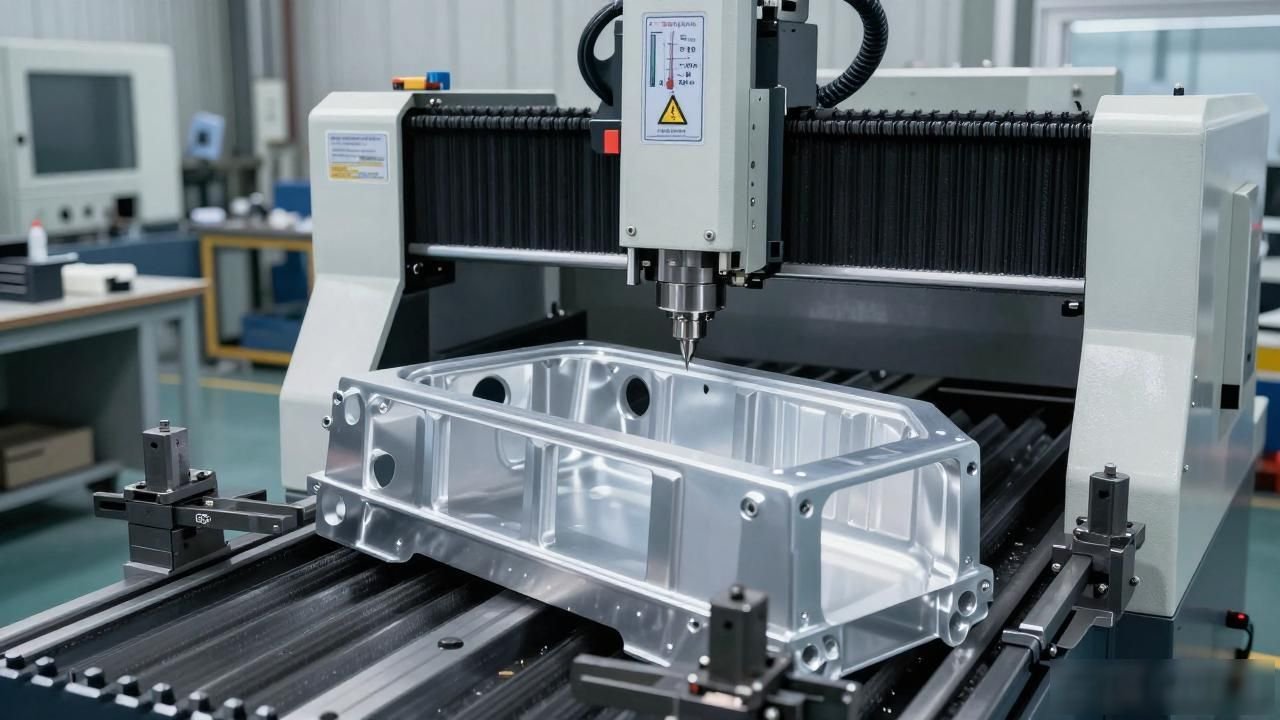
Preventive measures for aluminum alloy shell deformation
When processing alloy aluminum materials, deformation is very easy to occur. The main reasons behind this are the release of internal stress in the material and the temperature change caused by cutting heat. For thin-walled shell structures, this situation is particularly sensitive. Under the action of cutting forces, elastic deformation is easily produced. After cooling, it cannot be fully restored to its original state, which in turn affects product accuracy and assembly requirements.
![图片[3]-Practical Guide: Solutions To Common Problems In CNC Aluminum Alloy Housing Processing (What Are The Aluminum Alloy CNC Processing Parameters)-Dalian Fuhong Machinery Co., Ltd](/wp-content/uploads/2026/08/1787083609180_2.jpg)
To reduce deformation, the material needs to be preheated before processing to eliminate internal residual stress. During the processing process, appropriate cooling methods must be used to prevent local overheating or undercooling. For thin-walled parts, a layered cutting strategy can be used to reduce the amount of single cutting and allow the material time to release stress. The fixture design must also be reasonable to ensure that the workpiece is firmly fixed without over-clamping.
Solutions to surface quality problems
The surface quality, which mainly manifests as burrs, scratches, knife marks, etc., is not ideal. Burrs caused by tool dullness or inappropriate cutting parameters generally appear at the cutting exit. In most cases, scratches are caused by chip adhesion or lack of precision in the position of the coolant nozzle. These issues have a direct impact on product appearance and customer satisfaction.
To solve the problem of surface quality, we must start from many aspects. First, we must optimize tool selection and use large helix angle tools to reduce cutting forces. We must also cooperate with reasonable cutting parameters. Secondly, we must optimize the processing path and adopt a symmetrical cutting strategy to avoid vibration caused by unilateral cutting. Finally, surface treatment technologies such as sandblasting and polishing can be used to further improve the surface finish.
![图片[4]-Practical Guide: Solutions To Common Problems In CNC Aluminum Alloy Housing Processing (What Are The Aluminum Alloy CNC Processing Parameters)-Dalian Fuhong Machinery Co., Ltd](/wp-content/uploads/2026/08/1787083609180_3.jpg)
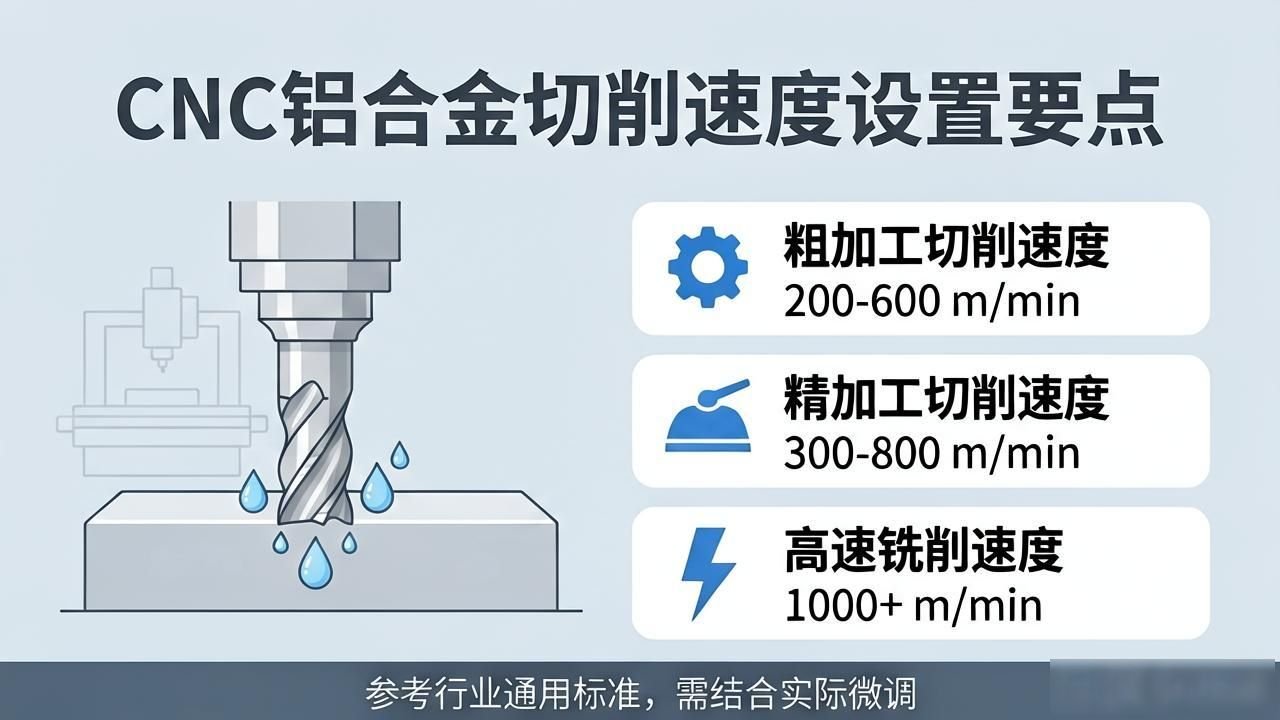
Key Points of Cutting Speed Settings
Reasonable setting of cutting speed is one of the core technologies of CNC machining. If the cutting speed is too fast, it will accelerate tool wear. If it is too slow, it will affect production efficiency. Different aluminum alloy materials have different optimal cutting speed ranges. The cutting speed of 6061 aluminum alloy can be set to 200 to 400 m/min, but 7075 aluminum alloy is recommended to be controlled at 150 to 300 m/min.
The setting is very important in terms of feed speed. If the feed speed is too fast, the cutting force will become too large, which will cause vibration and surface quality problems. If the feed speed is too slow, the tool will only engage in friction instead of cutting, which will cause it to generate high temperatures. Under normal circumstances, the feed per tooth should be controlled within the range of 0.05 – 0.2mm/z. The specific value needs to be adjusted comprehensively based on many factors such as tool diameter and cutting depth.
Effect of cooling method on processing quality
Coolant plays a role in cooling, lubrication and chip removal in CNC machining. For the processing of aluminum alloys, commonly used cooling methods include dry processing, wet processing and MQL minimum quantity lubrication. Although dry machining is environmentally friendly, the temperature generated by cutting is relatively high, which can easily affect the life of the tool and the quality of the surface.








暂无评论内容