
Cable stripping and pre-treatment
Preparations Confirm cable type
Before you start dealing with cables, the first step is to figure out the exact type of cable. Different types of cables have greatly different structures and materials. For example, control cables, power cables, and communication cables have different insulation layer thicknesses and materials. In 2025, a statistics from the State Grid showed that the proportion of processing accidents caused by errors in cable type identification reached 17%. So you must first check the mark on the cable sheath, or use a multimeter to measure it to confirm. This step must not be omitted, otherwise, the tools and methods used subsequently may cause errors.
After clarifying the specific type of cable, you must also consider the environment and voltage level in which it is used. For example, the insulation layer of high-voltage cables is thicker, so it requires stronger peeling force. Low-voltage cables are relatively easy to handle. One small detail is that some cables still have shielding layers inside. If not handled properly, it will cause damage to the conductor. It is recommended that before officially starting, First check the technical manual provided by the cable manufacturer.
Choose tools and equipment
Once the cable type is determined, it is time to select the correct tools and equipment. Common ones include cable stripping machines, cable cutting machines, and wire cutters. These specific equipment have different adaptability in different scenarios. For example, on the production line of a cable factory in Hangzhou, they use a fully automatic stripping machine that can process 500 cables every day. However, when repairing small batches, manual peeling pliers are more practical. When selecting tools, you need to pay attention to the cutting accuracy and adjustment range of the equipment.
In addition to the main equipment, auxiliary tools such as clamps, positioning rulers, and protective glasses must also be prepared. Safety must not be ignored, for example, a peeling machine must have a protective cover. In addition, the sharpness of the knife needs to be checked regularly. A dull knife will make the operation more difficult and may easily cause injury to people. It is recommended that the equipment parameters be calibrated once a month to ensure accurate peeling depth.
Keep work areas safe
In the work area, cleanliness and ventilation are basic requirements. Taking an electronics factory in Dongguan as an example, they stipulated that the operating area must be cleaned twice a day, and there must be no oil stains or lint on the ground. In terms of ventilation, if it is an indoor operation, it is necessary to ensure that the air exchange rate per hour can meet the standard to prevent the accumulation of dust. The size of the space also needs to be paid attention to. There must be at least 1 meter of free space around the operating table.

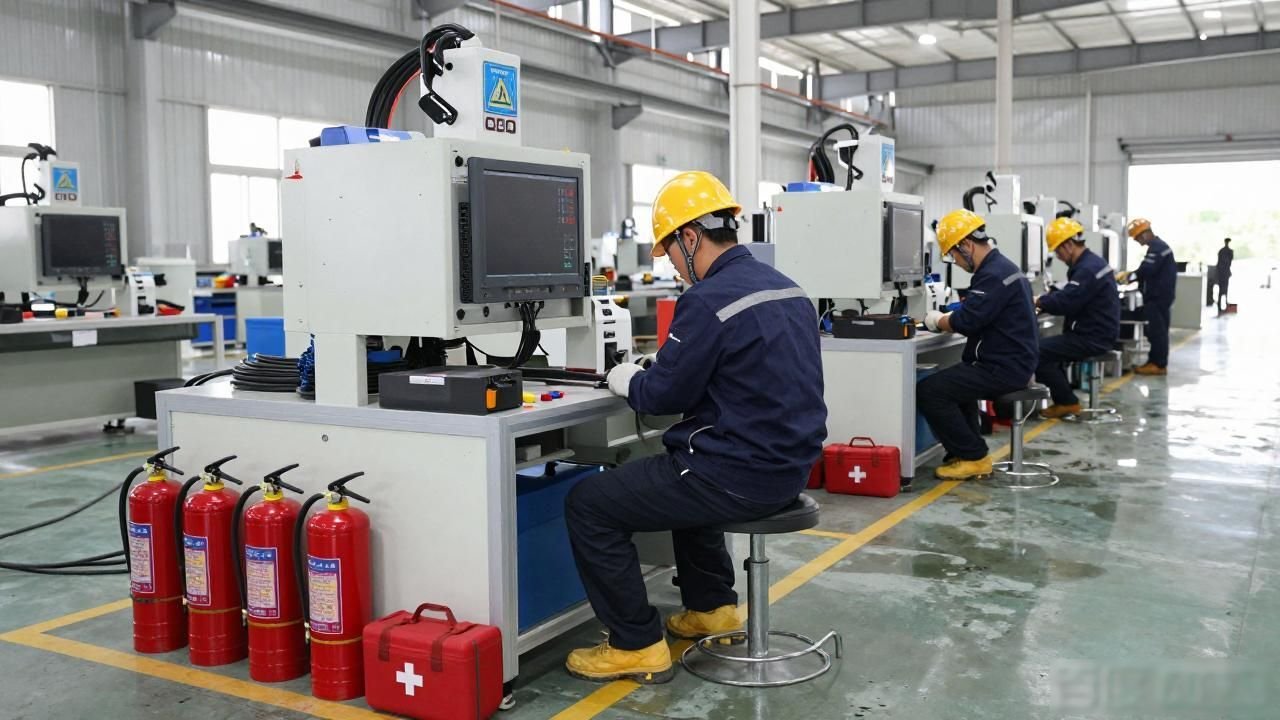
In terms of safety measures, a fire extinguisher and first aid kit need to be placed next to the machine. Operators must wear insulating shoes and cut-resistant gloves. In 2024, a factory in Shenzhen had workers electrocuted due to accumulation of water on the ground, and then they made regulations to check whether the ground was dry before working. In addition, tools should be placed in a fixed place and returned to their original place after use to prevent tripping.
The first step is to measure and mark the location
Before peeling, measure the length to be peeled off. Use a tape measure or a special positioning ruler to measure from the end of the cable, and then mark it clearly and clearly with a marker. This marking point is the benchmark for subsequent cutting. Even a few millimeters difference may affect the wiring quality. For example, when installing a transformer, if the peeling length deviation exceeds 5 mm, poor contact may occur.
After completing the marking , please check again whether the cable is in a straight state. Any bends must olla straightened first. Some cables have internal stress and are prone to shrinkage after stripping. Therefore, a small margin should be reserved when marking. It is recommended to stick a piece of tape on the marked area to facilitate visual identification.
Step 2: Adjust the peeling depth
Whether it's a peeling machine or a hand tool, the depth setting must be precise. If the depth is too shallow, the insulation layer will not be peeled off completely, and the operation will need to be performed again; if the depth is too deep, it will cause damage to the internal conductor, which will affect the conductive performance. In 2023, experimental data confirmed that when the depth error can be controlled within 0.3 mm, the conductor damage rate can be reduced to less than 2%.
When making adjustments, you can first try to peel off a small section, and then use a caliper to measure the thickness of the remaining insulation layer. If you are using manual peeling pliers, pay attention to the position of the blade while peeling. It is necessary to maintain a constant force during operation to prevent the insulation layer from breaking due to sudden force application. For cables with multi-layer structures, the depth may need to be adjusted twice.
The third step is to perform the peeling operation
Place the cable into the V-shaped groove of the stripping machine so that the marked points are aligned with each other. After turning on the equipment, check whether the stripping knife cuts in evenly along the circumference. If you do it manually, use pliers to clamp the cable, turn it around and pull out the outer skin. Experience from a cable maintenance team in Shanghai shows that during the stripping process, keep the cable in a stable state and do not shake your hands. Only in this way will the cut appear smooth.
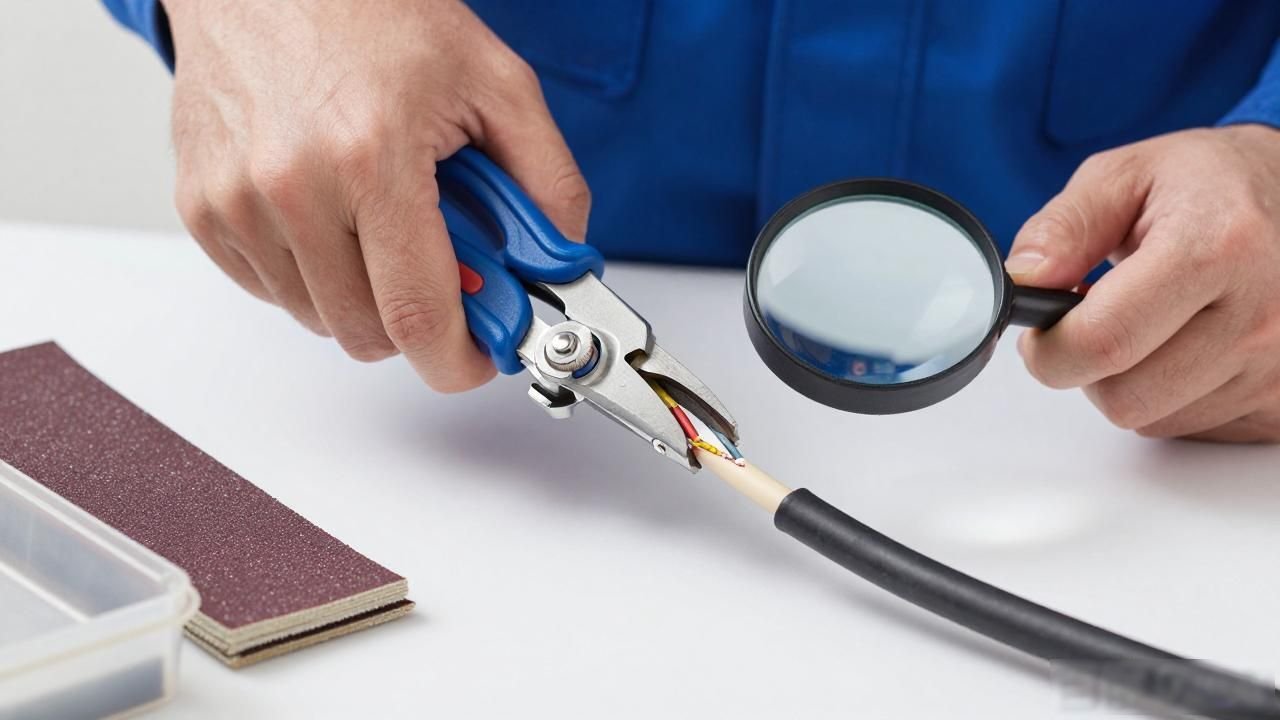
After the stripping operation is completed, the stripping opening needs to be inspected to confirm whether it is smooth and whether there is any residual insulation material. If you find burrs or chips, lightly sand them with sandpaper. It should be noted that metal scrapers cannot be used as this can easily scratch the conductor. In addition, the peeled off skin should be cleaned in time to avoid accumulation.
Step 4 Check Conductor Integrity
After peeling, carefully check whether there are scratches, broken wires or oxidation on the conductor. Observation with a magnifying glass can increase the detection rate. If damage to the conductor is found, the cable must be reprocessed or replaced. Just like in rail transit maintenance, if a conductor has more than three broken wires, it will have an impact on the reliability of the circuit.
Also measure the diameter of the conductor to see if it meets the standard. Using a vernier caliper, measure in three different directions and take the average. If the diameter is too small, it is possible that too much was cut during stripping, and such cables need to be downgraded for use. Record the inspection results so that they can be traced later.
Step Five Cleaning and Finishing
The next step is to clean up the work area. Clean up the stripped pieces of insulation, sweep away the dust, clean up the oil, put the tools back into the tool box, and put the equipment in a power-off state. Operators should wash their hands to prevent residual chemicals from irritating the skin. Taking the maintenance process of a data center in Beijing as an example, they have stipulated that after cleaning, they need to fill in a work log to record the number of cables processed and abnormal conditions.
After cleaning, carry out simple anti-corrosion treatment on the cable, such as applying a layer of insulating oil. If it is used outdoors, then put on heat shrink tubing. In this way, not only can the service life of the cable be extended, but also safety can be improved. Regular review of the operating process can also reduce the probability of errors.
After reading this article, during your daily wire cutting process, have you ever experienced rework due to failure to adjust the peeling depth properly? Please share your experience in the comment area, like and forward it so that more people can see this practical guide.
Vastaa
Sinun täytyy kirjautua sisään kommentoidaksesi.