
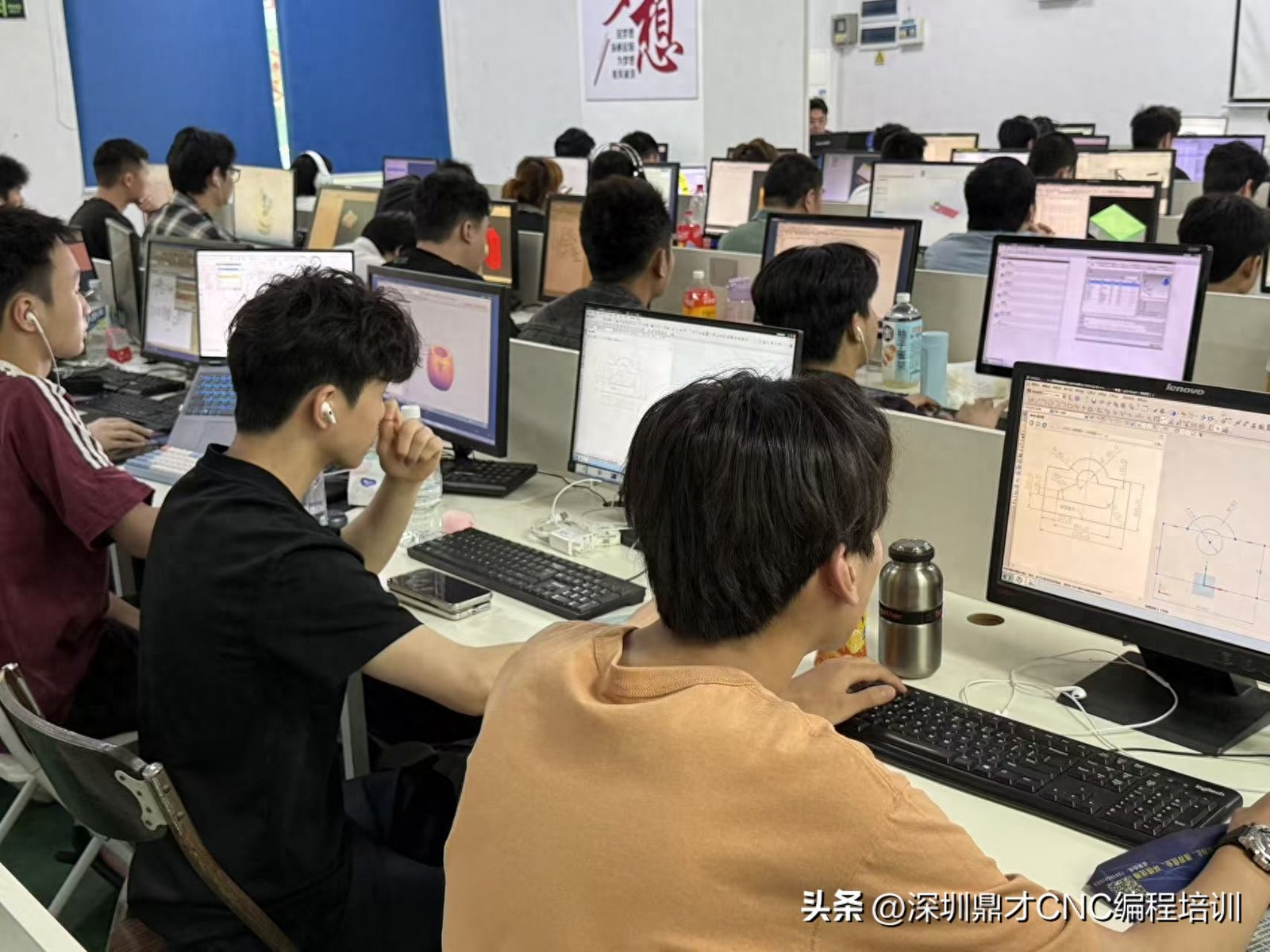
Shenzhen Xixiang UG five-axis CNC programming training center has rigorous courses and sufficient practical operations
There is a talent gap in five-axis machining. College technology is the real skill.

In Bao'an, Shenzhen, as well as in the Xixiang, Fuyong, and Shajing areas, more and more precision manufacturing companies are opening, and the number of five-axis machine tools in this area is also growing. However, there is a shortage of five-axis machining technical talents in the market. Technicians who can skillfully operate five-axis and write complex programs are always in short supply. Even if many factories offer high salaries, it is still difficult to recruit suitable personnel. The reason is that the threshold for five-axis technical training is high and the number of formal institutions is small. If students choose the wrong place to study, they will most likely waste time but not learn anything truly useful.
At the Xixiang UG Five-Axis CNC Programming Training Center, the curriculum is directly aligned with the needs of enterprises. The instructors all have many years of practical experience in factories. What they teach is not theoretical talk, but techniques that can be actually applied in the daily workshop. The students come here to analyze the shortage of five-axis machining technical talents under the background of talent shortage, and to quickly find employment themselves.
The curriculum is rigorous and divided into modules. The foundation is not solid and cannot be pushed forward.
Five-axis programming covers many aspects, from the structure of the machine tool itself, to precise coordinate setting, and then to the RTCP function. Each step must be solid and reliable. The training center divides the course into five large modules, starting with the basic operation part, followed by precise control of the tool path, followed by practical drills on complex parts, followed by simulation post-processing, and finally actual machining by real machines. Each module has clear and clear standards, and students must successfully pass the assessment before they can move to the next stage of the process.
For example, in the five-axis basic module, students must first understand safety regulations and system operations, and then learn coordinate setting and tool axis control. The instructor will check the operation rules one by one and will not allow skipping steps. In 2025, some students failed the basic module assessment and were required to practice again for three days until they fully mastered it before continuing.
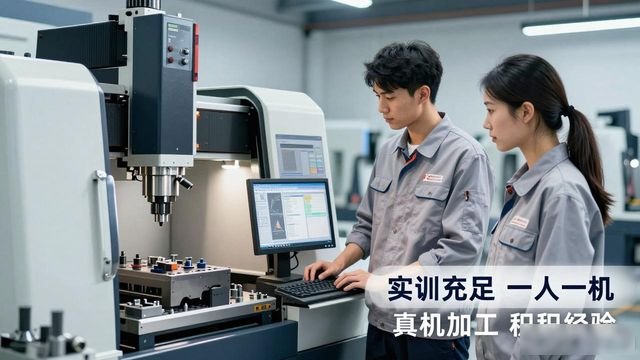
Adequate practical training, one person and one machine to accumulate experience in real machine processing
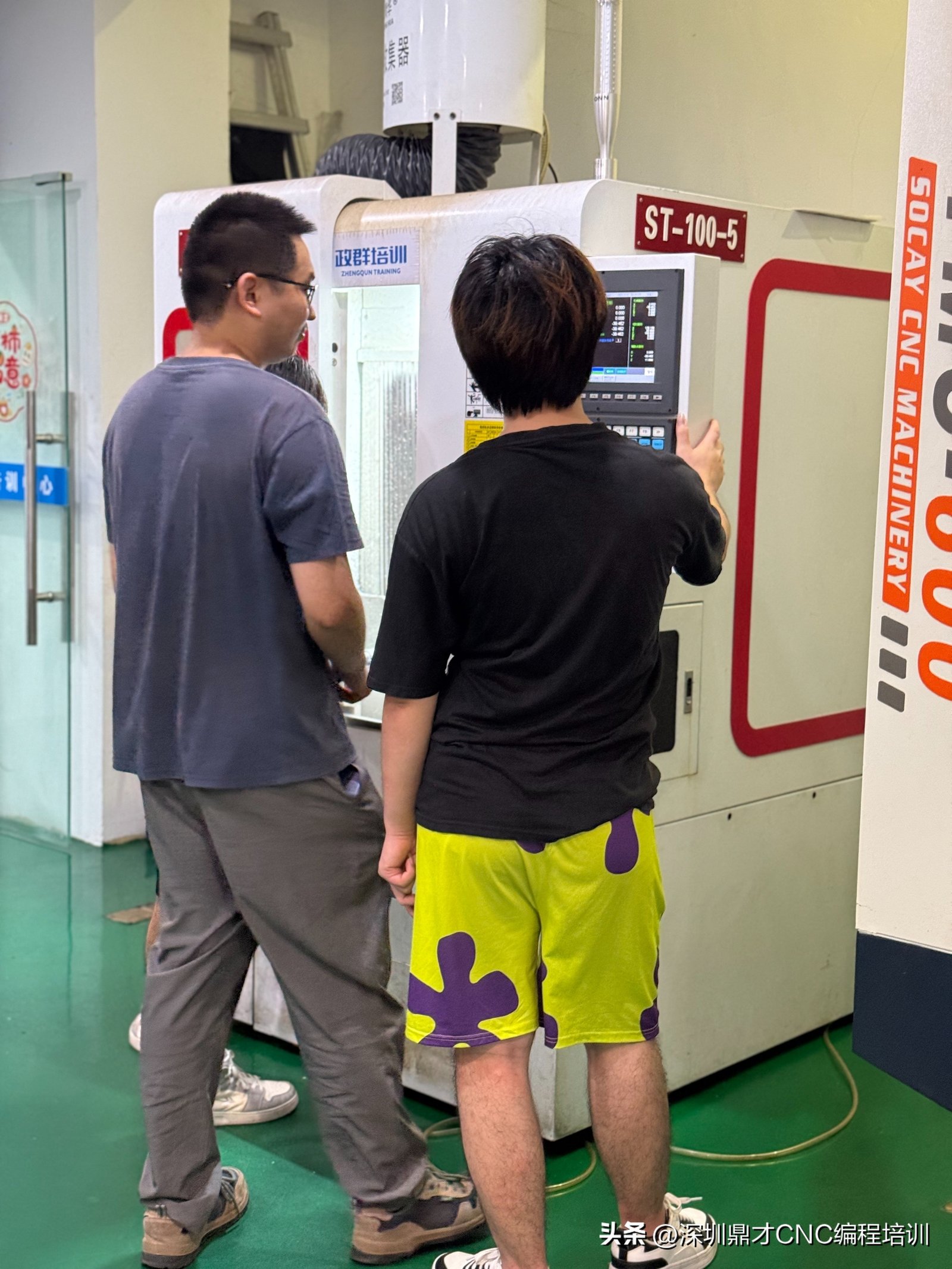
Many training institutions only provide computer simulations, and students have never touched real machine tools after graduation. Xixiang Training Center is equipped with multiple five-axis machine tools, which are open to students for use throughout the day. Starting in 2024, the center will require each trainee to complete at least 50 hours of real machine operation, and the processing materials cover common industrial materials such as aluminum alloys, steel parts, and titanium alloys.
Students can encounter real problems on real machines, such as tool wear, cutting vibration, and insufficient cooling. The instructor will provide on-site guidance on how to adjust parameters and how to optimize the tool path. This kind of practical experience is a great bonus when interviewing at the factory. In March 2026, a trainee obtained the recognition of the company with the help of aviation parts processed by real machines, and then directly received the employment notice.
The lecturers are experienced and understand factory standards, and the teaching is closer to reality.
A group of instructors in the training center are all from front-line manufacturing companies. Some of them have been engaged in five-axis programming in medical device factories for five years, and others have participated in the processing of complex parts such as automobile molds. These instructors not only teach the operational content of the software, but also tell students what methods can be used to save the most tools when programming within the scope of the factory, and how to set parameters to avoid collisions. They also explain how to optimize the program to improve work efficiency.
During the teaching process, the lecturer will select actual cases from his own factory to describe. For example, for example, when processing a bone plate for medical use, starting from the selection of materials, then the selection of tools, then the planning and arrangement of tool paths, and all the way to the inspection method steps, demonstrations will be conducted one by one. Students will be able to understand the connotation of the standards stipulated by the company after following the demonstrations. Such teaching methods, It allows students to start working directly after learning, without having to go through a period of adaptation.
Regularly check learning effects and strengthen weak points one-on-one
In order to ensure that every student can learn, the center has established a regular inspection system. It conducts a small assessment every week and a comprehensive assessment once a month. The instructors grade the students' programming assignments, simulation results and processed parts, and arrange one-on-one tutoring as soon as any weak links are discovered.
For example, in December 2025, a student kept experiencing overcutting during five-axis simultaneous machining. The instructor spent two days to lead him to relearn the principles of tool axis control and practice the operation repeatedly until it was completely correct. This kind of teaching method without any dead ends ensures that the students' skills are solid and solid, and there will be no blind spots in knowledge.
There are many five-axis technicians in employment cooperation companies, with high starting salaries and rapid development.
The center has established employment cooperation relationships with precision manufacturing companies in Baoan, Xixiang, Fuyong, and Shajing, as well as medical companies in Baoan, Xixiang, Fuyong, and Shajing, as well as automation companies in Baoan, Xixiang, Fuyong, and Shajing. After graduating, students will receive job recommendation opportunities and job referral opportunities. Five-axis programming is a high-end technology in short supply. In 2026, the average starting salary of five-axis technicians in Shenzhen will exceed 12,000 yuan, and the monthly salary of experienced technical backbones can reach more than 20,000 yuan.
Within half a year, due to the shortage of five-axis machining technical talents , many trainees turned into the technical backbone of the factory. That classmate Zhang who graduated in 2025. After learning five-axis programming, I entered a factory specializing in automation accessories. After three months, I was able to independently take charge of programming work involving complex parts, and my salary increased by 30%. The center will also provide long-term technical support, provided that if students encounter problems during the work process, they can consult the instructor anytime and anywhere.
Think about it, do you think the courses of Shenzhen Xixiang UG Five-Axis CNC Programming Training Center are rigorous and practical when learning five-axis programming? What kind of problems are you most afraid of encountering? Is it because the instructor's explanations are not clear enough or the opportunities for practical training are too scarce? You are welcome to tell your opinions in the comment area, like it and share it, so that more people can see reliable training-related information!
Vastaa
Sinun täytyy kirjautua sisään kommentoidaksesi.