

Explain the metal industry market analysis and metal industry development trends
Current status and competitive landscape of non-ferrous metal industry
At this stage, the nonferrous metals industry is in a period of deep adjustment. In 2025, the global nonferrous metals market will reach US$1.2 trillion, with China accounting for more than 40%. Industry concentration continues to increase, with the market share of the top ten companies rising from 35% in 2020 to 52% in 2025. Small and medium-sized enterprises are under increasing pressure to survive, and mergers and acquisitions and integration cases occur frequently. In the first half of 2025 alone, There have been 17 mergers and acquisitions of non-ferrous metal companies in China, involving an amount of more than 30 billion yuan. This change in the pattern has a direct impact on the supply chain structure of the metal parts processing market.
Large enterprises have significant resource monopoly advantages, which are reflected in their control of nearly 60% of the production capacity of basic metals such as copper, aluminum, and zinc. This situation has increased the risk of raw material procurement cost fluctuations for downstream metal parts processing companies. In the fourth quarter of 2025, the price of electrolytic aluminum rose from 18,000 yuan per ton to 23,000 yuan, with an increase of 27.8%, which brought huge cost pressure to processing companies.
Metal parts processing market demand analysis
The largest demand-side category for metal parts processing exists in the automobile industry. By 2025, domestic automobile production has exceeded 30 million units. This result has directly promoted the effect of driving, making the metal parts processing market scale reach an amount of 680 billion yuan. New energy vehicles have shown extremely prominent demand for lightweight metal parts. Under this demand, processing orders for aluminum alloy body parts and battery casings have increased by 35.6% year-on-year.
The aerospace field also contributes significantly to demand. In 2025, the delivery volume of COMAC C919 will reach 50. At the same time, the growth of supporting titanium alloy structural parts and high-temperature alloy engine parts processing orders is 42%. In addition, the construction of 5G base stations continues to advance. By 2025, the number of new 5G base stations nationwide will be 680,000, and the demand for metal parts such as precision copper alloy connectors and heat sinks has increased by 28.3% year-on-year.
Technological changes drive processing upgrades

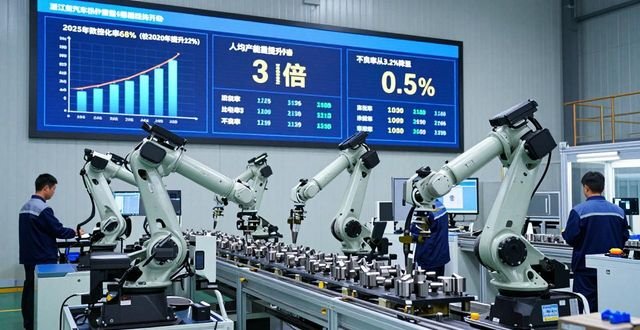
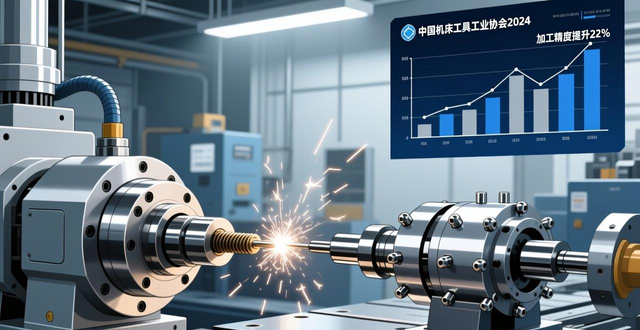
Automated processing equipment is reshaping the face of the industry. In 2025, the CNC rate of domestic metal parts processing enterprises will reach 68%, an increase of 22 percentage points compared with 2020. An auto parts processing factory located in Taizhou, Zhejiang Province has predicted that after the introduction of five intelligent production lines, the metal parts processing market prospects will increase the per capita production capacity to three times the original, and the product defect rate will be reduced from 3.2% to 0.5%. Although the investment in this kind of transformation is large, the payback period generally does not exceed 18 months.
The metal parts processing market prospect of 3D printing technology has begun to be applied on a large scale in the field of metal parts . In 2025, the sales volume of domestic metal 3D printing equipment will reach 2,800 units, a year-on-year increase of 65%. Especially in the processing of complex structural parts, 3D printing can save more than 30% of materials compared with traditional casting processes. The metal parts processing market prospect forecast shortens the delivery cycle by 50%. After a mold company in Wuxi, Jiangsu adopted metal 3D printing technology, The mold development time was reduced from 45 days to 10 days.
Cost pressure and profit space game
The biggest risk faced by metal parts processing companies is the fluctuation of raw material prices. In 2025, copper prices fluctuated violently in the range of 65,000 to 82,000 yuan per ton. The company's gross profit margin dropped from 18.5% in 2020 to 12.3% in 2025. 47 of the 300 small and medium-sized processing companies in Foshan, Guangdong suffered losses in 2025. The above-mentioned companies had to strengthen hedging operations. However, small businesses lack professional talents. Weak risk management and control capabilities.
The rising labor costs have also compressed profit margins. In 2025, the average monthly salary of manufacturing workers will reach 6,800 yuan, which is a 32% increase compared to 2020. However, product processing fees have only increased by 8.5%. The scissor difference effect is very obvious. A hardware parts processing factory in Linyi, Shandong was forced to transfer 30% of its production capacity to Vietnam, where labor costs are lower, in order to maintain order profits.
Regional industrial clusters and supply chain reconstruction
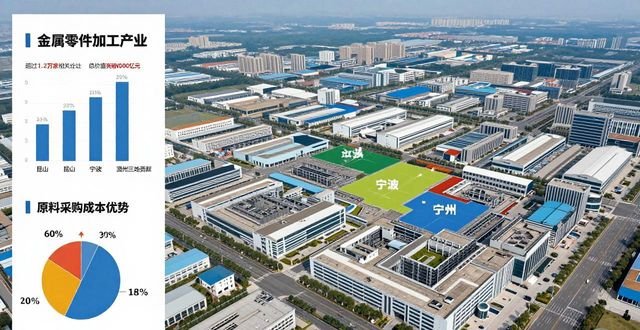
The Yangtze River Delta region has created the most intensive metal parts processing industry cluster. By 2025, the number of professional processing companies in the region will exceed 12,000, and the total output value will exceed 400 billion yuan, of which Kunshan, Ningbo, and Wenzhou contribute 60% of the output value to the cluster. The collaboration network between these enterprises is very complete, and their raw material procurement costs are 5% to 8% lower than in non-cluster areas.
Provinces in the west are undertaking industrial transfers. Yibin, Sichuan, has introduced 23 metal parts processing projects in 2025, with a total investment of 8.6 billion yuan. The local government has provided land concessions and tax exemptions. The comprehensive cost of enterprises is about 15% lower than that in the eastern region. However, logistics costs in the west are relatively high. When products are shipped to customers in coastal areas, the freight per ton increases by 200 yuan, which offsets part of the cost advantage.
Market opportunities and challenges in the next five years
The new energy field will become the largest growth point. It is expected that by 2030, the demand for metal parts of new energy vehicles alone will exceed 1.2 trillion yuan. The annual growth rate of the three major categories of battery trays, motor casings, and electronic control boxes can reach more than 25%. Companies must prepare for these high-growth market segments. In 2025, 23 processing companies have obtained new energy vehicle parts certification.
Environmental pressure has forced the industry to upgrade. In 2025, the country will launch a special campaign against metal surface treatment companies and shut down 1,200 unqualified companies. This will give compliant companies room to raise prices. However, the average investment in upgrading pollution control facilities is 3 million yuan. The carbon quota trading system to be implemented in 2026 is expected to increase the carbon emission cost of processing companies by 30 to 50 yuan per ton of products produced. Companies must find a balance between environmental protection investment and cost control.
After reading this article, do you think that in the next two years, should metal parts processing companies prioritize investment in automation equipment, or should they prioritize expanding new energy customers? You are welcome to share your views in the comment area, like it and forward it, so that more colleagues in the industry can participate in the discussion.




暂无评论内容