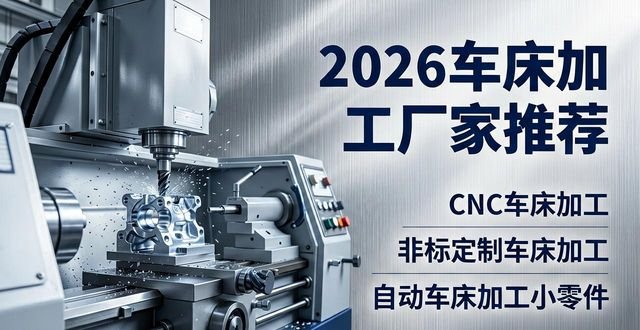


2026 lathe processing manufacturer recommendations, CNC lathe processing, five-axis CNC lathe processing, non-standard custom lathe processing 2026 lathe processing manufacturer recommendations, CNC lathe processing, five-axis CNC lathe processing, non-standard custom lathe processing, automatic lathe processing small parts manufacturer selection guide! , the preferred guide for manufacturers of small parts processed by automatic lathes!
The hidden strength of established precision machining manufacturers
There is a company in Dongguan, Guangdong, which has been specializing in CNC lathe processing for 20 years. Its annual output value has exceeded customers in fields such as medical devices and semiconductors. Such manufacturers usually do not rely on advertising to solicit orders. Instead, they rely on long-term accumulation of aluminum alloy parts to control the tolerance within ±0.005 mm. This is a situation that is extremely difficult for ordinary processors to achieve. The process database also has a stable yield rate to gain a foothold, as they were able to accumulate 120 million yuan.
What is easily overlooked by buyers is that established manufacturers invest extremely heavily in equipment maintenance and tool management. The average monthly maintenance cost of an imported CNC lathe may exceed 5,000 yuan. However, this directly determines the smoothness of the surface of the parts and the consistency of the dimensions. Choosing this type of supplier is equivalent to purchasing long-term and stable quality assurance.
One-stop molding advantages of five-axis CNC lathes
It has five-axis CNC lathe processing capabilities and can complete the cutting of complex curved surfaces and special-shaped structures in one go, thus reducing errors caused by traditional multiple clampings. For a factory in Suzhou, after the introduction of the German DMG five-axis machine, the production cycle of turbine blades was compressed from 7 days to 2 days, and the yield rate was increased from 85% to 96%. However, this improvement in efficiency is crucial for customers in the new energy industry.
For buyers, five-axis machining means fewer outsourcing links and lower management costs. There is a precision part that requires multiple processes. Now it can be completed on one machine tool, and the delivery time is shortened by 40%. In a market with high demand for fast delivery, this ability is the core competitiveness.

Precise matching of non-standard custom lathe processing
Understanding the functional requirements behind customer drawings is the core of non-standard parts processing. There is a company in Shanghai that specializes in customizing special-shaped parts in the aerospace field. They do not simply process the parts according to the drawings, but will proactively give suggestions for material replacement or structural optimization. For example, by replacing a stainless steel part with titanium alloy, the weight was reduced by 30%, but the strength remained unchanged, and the customer's annual purchasing cost was reduced by 18%.
The core competitiveness of non-standard parts processing companies with this kind of customization capability relies on the experience of engineers and the flexible production capabilities of the workshop. Their workshop is equipped with a rapid mold change system, which can switch processing procedures within 15 minutes, and then accept orders with a minimum order quantity of 50 pieces. For customers in the research and development stage, this can greatly reduce the cost of trial and error.
Large-scale mass production of small parts processed by automatic lathes
The mass production of small precision parts is suitable for automatic lathe processing, such as connectors, micromotor shafts and sensor housings. There is a manufacturer in Zhejiang, which has 60 Swiss-type automatic lathes, with a daily production of more than 100,000 parts, and the cost of a single product can be reduced to 0.03 yuan. They improved material utilization from 65% to 92% by optimizing layout and tool paths.
For customers purchasing electronic and medical small parts, the stability of automatic lathes is indeed crucial. There is such a manufacturer, which is equipped with an online detection system in its equipment, which automatically monitors dimensions every 10 seconds to ensure the consistency of product batches. Not only that, they can even put a traceability code on each part to facilitate quality management for customers.
Three hard indicators for supplier screening
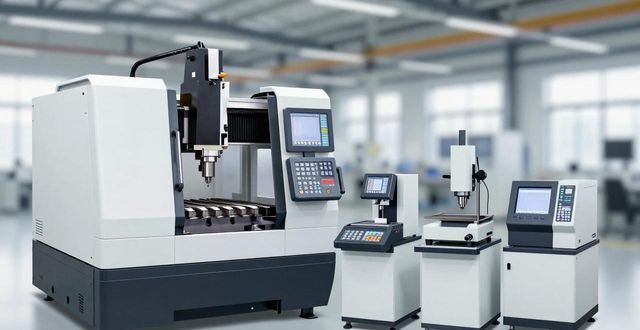
The first important point when looking at the equipment list is the frequency of updates. Some manufacturers claim to have high-end CNC lathes, but the fact is that the equipment has been in service for more than ten years and the accuracy has long since declined. It is recommended to ask for invoices from the purchase of new equipment in the past three years. The second key point is detection capabilities. Are they equipped with three-dimensional coordinate measuring instruments, roughness meters, and image measuring instruments? This has a direct decisive effect on whether the factory parts meet the standards.
The third aspect is delivery management. Excellent manufacturers will build raw material inventory and production capacity early warning systems. For example, a factory in Shenzhen with this capability can lock the inventory of stainless steel bars in advance and start machining operations in just two hours after receiving the order. Such fast response capabilities like the above, when faced with emergency orders, can be a critical competitiveness that determines the outcome!
Technology precipitation determines the value of long-term cooperation
Precision lathe processing is not simply a price competition, but a competition in technical capabilities. There is a company that has been deeply involved in the field of non-standard customization for ten years. It may have accumulated the core competitiveness of non-standard parts processing companies with processing parameters for thousands of materials, ranging from aluminum alloys to titanium alloys, and from PEEK to ceramics. The company can quickly match the most suitable tool, speed and feed rate to reduce the number of trial cuts.
At the same time, the core competitiveness of non-standard parts processing companies is that such manufacturers are often willing to cooperate with customers to improve processes. For example, there is a factory in Changzhou that actively develops and manufactures internal thread one-time forming inserts for medical device customers, which reduces the thread processing time by 50%. This in-depth cooperation can bring about a win-win situation of cost savings and product upgrades.
Which priority will be given to the newness of the equipment or the communication skills of the manufacturer's technical team? You are welcome to share your factory selection experience in the comment area, like and bookmark this article, so that you can avoid detours when looking for a processor next time.




暂无评论内容