Boring operations: definition, process, uses and types
Differences in Selection of Lathes and Milling Machines
In the category of boring processing, lathes and milling machines are the two dominant equipment. During the operation of the lathe, the workpiece is in a rotating state and the tool is in a fixed state. This situation is suitable for processing parts with symmetrical characteristics. The situation of milling machines is the opposite. The workpiece is in a fixed state and the tool is in a rotating stage, which can more flexibly cope with the processing needs of complex positions. In 2025, a survey conducted by a mechanical processing factory showed that 70% of the factories will be equipped with both types of boring equipment in order to cope with the requirements of various orders.
Which equipment to choose is determined by the location of the hole and the shape of the workpiece. For example, when processing engine blocks, milling machines are more commonly used because the holes are distributed in multiple planes. However, when processing shaft parts, the efficiency of lathes is higher. The operator needs to make judgments based on the specific drawings, otherwise the accuracy may be affected.
Tool selection is a critical step
Before carrying out the boring operation, the operator must select the appropriate tool according to the hole diameter and material. Among them, carbide tools are suitable for cutting steel parts, while ceramic tools are specially used for high-temperature alloy processing. According to the 2024 industry report, if the tool selection is incorrect, it will cause the scrap rate to exceed 15%, thereby increasing costs.
The size of the tool also needs to be accurately matched. For example, the diameter of the pre-drilled hole is 20 mm, the development trend of the boring processing industry , then the diameter of the tool should be slightly smaller than this value, and the tool holder must be tightened during installation to avoid vibration. There was once a factory where the inner hole was scratched due to loose tools, and the time spent on rework wasted 3 shifts.
Don’t be careless when clamping workpieces

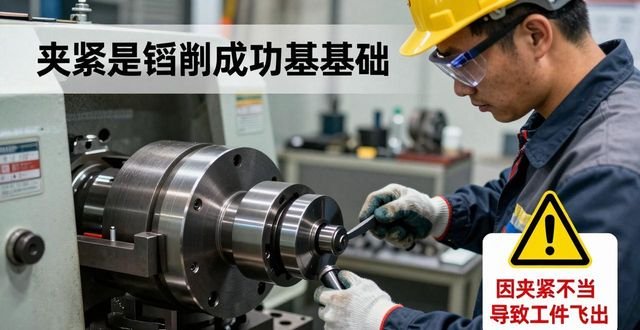
The basis for successful boring is workpiece clamping. When using a lathe, the chuck or collet must be firmly fixed to prevent displacement during rotation. Milling machines often use a vise or pressure plate to ensure that the workpiece is in a stationary state. According to the accident records of a machinery factory in 2023, workpieces flying out due to improper clamping accounted for 12% of equipment accidents.
The clamping force needs to be checked regularly. For example, for thin-walled parts, excessive clamping will cause deformation. Operators should use a torque wrench to keep it within standard limits. In daily maintenance, it is also very important to clean the clamping surface. To prevent oil stains from affecting the friction, the punctuation is full stop.
Cutting parameters must be set accurately
Spindle speed, feed rate and cutting depth have a direct impact on processing quality. For small apertures, high rotational speed is more appropriate; for large apertures, low rotational speeds are more appropriate; if the feed rate is too fast, the tool will be damaged; if the feed rate is too slow, efficiency will be reduced. According to what industry data shows in 2024, optimizing parameters can improve production efficiency by 20%.
The hardness of the material is the main basis for setting parameters. For example, when processing aluminum alloy materials, the rotation rate can reach 3,000 rpm. However, when processing stainless steel materials, the rotation rate needs to be reduced to 800 rpm. The person responsible for this operation should refer to the table recommended by the tool manufacturer and make minor adjustments based on the actual test cutting results.
Operating details of the boring process

When boring is performed on a lathe, the boring bar is inserted into the pre-drilled hole, the workpiece rotates, and the tool cuts the inner wall. The operator must control the feed rate so that the depth of each cut does not exceed 0.5 mm. A training case presented in 2025 showed that the tool broke due to excessive depth when operated by a novice, and the cost of replacing the tool reached 200 yuan.
Milling machine boring is achieved by the spindle rotating boring bar, and the tool advances the boring process industry development trend along the axial direction, increasing the hole diameter step by step. It is necessary to pay attention to the continuous supply of coolant to avoid overheating. A certain workshop uses an automated cooling system, which increases the tool life by 30%.
Industry trends bring new changes
Boring processing is moving towards automation and intelligence. Market research shows that in 2025, CNC boring machine sales will increase by 15% year-on-year, and manual operations are gradually reducing. Multi-axis linkage technology allows complex hole systems to be formed at one time, thus saving clamping time.
Industry standards are also in a state of upgrading. For example, the ISO 9001 quality certification has more stringent requirements for tolerance control. For this purpose, the factory has invested in online testing equipment and equipment to monitor the aperture in real time. In the future, operators will need to have programming skills to adapt to the uncontrolled workshop environment. This situation provides a new direction for enterprises to reduce costs and improve efficiency.
As for your factory, have you already begun to introduce CNC equipment to improve the boring efficiency? You are welcome to share your relevant experience in the comment area, and through likes and forwarding, so that more peers can see it!
Vastaa
Sinun täytyy kirjautua sisään kommentoidaksesi.