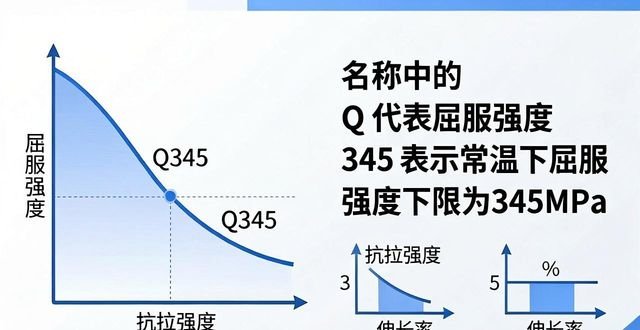


The "Q" in the name represents yield strength. "Q" in the name represents yield strength. "345" represents that the lower limit of yield strength at normal temperature is 345MPa. "345" represents that the lower limit of yield strength at normal temperature is 345MPa.
Q345 steel plate grade determines low temperature use range
Steel Q345 is divided into five grades from A to E according to impact performance. Grade A does not carry out impact tests and is suitable for general structural purposes in normal temperature environments. Class B is tested at 20℃, class C is tested at 0℃, class D is tested at -20℃, and class E is tested at -40℃. The higher the grade, the stronger its impact resistance at low temperatures. For example, when carrying out winter construction in the Northeast, Class D or Class E is safer, while in the South, Class A or Class B can be used for indoor structures, and the price will be much cheaper.
The yield strength of thick plates decreases with thickness
The yield strength of Q345 thick plate is not a fixed value. When the thickness of the material is less than 16mm, its yield strength is 345MPa. When the thickness is between 16mm and 35mm, it is reduced to 325MPa. If the thickness is between 35mm and 50mm, it is further reduced to 295MPa on the original basis. This situation shows that if thick plates above 30mm are used to design load-bearing structures, Then it is necessary to consult the table to select the required yield strength based on the actual thickness. Otherwise, the calculation results will be dangerous. At the same time, when performing riveting welding operations, the impact of changes in strength on the welding technology must be carefully considered.

Standard requirements for tensile strength and elongation
The steel plate is made of Q345 material, and its tensile strength standard ranges from 490 to 675MPa. This range has the characteristics of not changing due to thickness. The elongation is required to be no less than 21%, and it shows that the material has good plastic deformation ability. When riveting is processed, the tensile strength plays a role in the selection of welding materials and the design of weld strength. The elongation affects the toughness of cold bending and welding heat affected zones. In actual processing, When using 30mm thick plates for welding, preheating and insulation measures must be in place to prevent the weld from embrittlement.
Alloying elements improve the overall performance of steel
Q345 adds alloying elements such as manganese and vanadium. Compared with ordinary Q235 carbon steel, these two elements can bring different effects. Manganese element can improve strength and toughness, and vanadium element can refine grains and improve welding performance. These alloying elements cause the yield strength of Q345 to be about 45% higher than that of Q235. Its low-temperature toughness is significantly better than that of Q235, especially in a -40°C environment. Q345E grade can still maintain good impact performance, but Q235 is very likely to undergo brittle fracture below 0°C, so most bridges and factory building structures in cold areas use Q345.
Advantages of medium and low pressure vessels and mechanical equipment
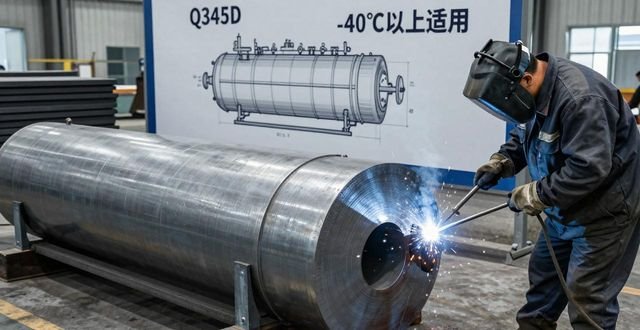
Q345 is widely used in the manufacturing of medium and low pressure vessels, such as pressure vessels that store liquid gas. When the operating temperature is above -40°C, Q345D or E-class plates can be used to ensure safety and are less expensive than stainless steel. In mining machinery and engineering equipment, Q345 thick plates are used to make load-bearing parts such as frames and bases. Its wear resistance and fatigue resistance life are more than 30% longer than those of Q235. When riveting welding, attention should be paid to the problem of lamellar tearing of thick plates, and low-hydrogen welding rods and reasonable groove design should be used.
The preferred material for construction in cold areas
In cold areas such as the northeast, northwest and the Qinghai-Tibet Plateau, winter temperatures often fall below minus 20 degrees Celsius. Q345D and E-grade steel plates can protect steel structures from brittleness under extreme low temperature conditions. For example, there is a construction site in Mohe that uses Q345E thick plates to weld the factory frame. After a low temperature test of minus 45 degrees Celsius, no cracks appeared. However, nearby projects using Q235 experienced weld cracking at minus 30 degrees Celsius. Although the material cost increases by 15% to 20% by choosing high-grade Q345, maintenance and accident risks are avoided, and the overall benefit is higher!
Which grade of Q345 is the most commonly used in the engineering project you are in? Have you ever encountered problems with low-temperature brittle fracture? You are welcome to share your relevant experience in the comment area, like it and save it for subsequent viewing.






暂无评论内容