

Skills training materials: Alternative welding methods to arc welding and spot welding
Masters who are familiar with welding know that although traditional arc welding and spot welding are commonly used, the deformation during welding is large, the heat-affected zone is wide, and post-correction requires a lot of effort. Although riveting does not require heating, the process of pre-drilling can slow down the process and increase costs. Is there a better way to connect? This article combines the practical examples of many domestic car companies and parts factories in 2025 to introduce 5 mature arc welding spot welding alternatives to help you calculate the cost and efficiency.
Laser welding with high precision and small deformation
As a heat source, laser welding uses a focused high-energy beam, and its heat input is extremely concentrated. There is a new energy vehicle battery tray factory in Suzhou that will introduce laser welding robots in 2025. When the robot welds a 0.8 mm thick stainless steel plate, the width of the heat-affected zone is only one-third that of traditional arc welding, and it is basically difficult to see any deformation in the workpiece. The purchase price of a single piece of this equipment is about 800,000 yuan, but its welding speed can reach 3 meters per minute, which is more than five times the speed of manual arc welding.
For products that require Class A appearance, such as car door inner panels, laser spot welding can create flat and smooth welds. An auto parts factory in Changzhou gave feedback that after switching to the laser seam stepping process, the grinding process was reduced by 60%. Although the one-time investment cost of laser welding equipment is relatively high, with the saved correction and polishing labor costs, the cost can be recovered in one and a half years.
Single-side construction of flow drilling saves process

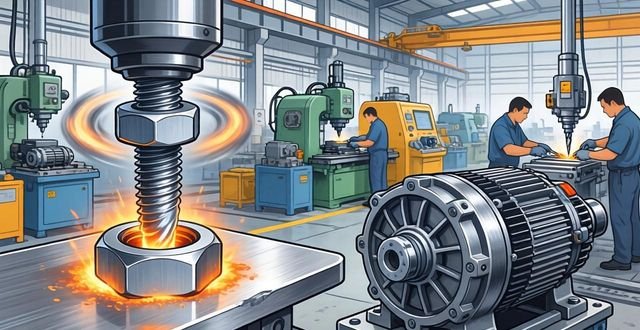
There is a very clever single-sided connection method called flow drilling, which is particularly suitable for sheet metal parts. It uses a high-speed rotating screw to press against the metal plate. The heat generated by friction causes the metal to soften, and then the screw drills a hole by itself and forms a bushing. Finally, the screw itself becomes a connecting piece. An electric bicycle factory in Zhejiang uses this method to fix the motor bracket. It originally required two processes of drilling and riveting, but now it can be completed in one step.
In 2025, on an electric vehicle battery pack production line in Shandong, there was a method that was particularly friendly to the connection of dissimilar metals. In this method, flow drilling was used to connect 2 mm aluminum plates and 1.5 mm steel plates. The actual measured pull-out force reached 4.8 kN. Welding deformation is large, riveting requires pre-drilling, which is expensive , and this pull-out force is 15% higher than traditional arc welding spot welding. Moreover, the cost of each screw used for connection is about 0.6 yuan. Although it is slightly more expensive than ordinary rivets, it saves the time required for drilling and positioning, and ultimately reduces the overall cost of a single piece by 8 cents.
Friction stir welding is non-melting and smoke-free
There is a friction stir welding that presses the workpiece into the workpiece by rotating the stirring head, and then generates frictional heat to soften the metal and then shape and combine it. Friction stir welding does not melt the metal throughout the process. The entire process does not produce splash, smoke, or arc light, so the working environment of this process is much better than that of arc welding. There is an aluminum alloy yacht factory in Guangdong. Since 2024, it has begun to use friction stir welding to weld hull plates. In the end, the strength of the weld can reach more than 90% of the base material.
It is particularly good at welding thick plates and dissimilar metals. A factory in Anhui that is involved in rail transit equipment uses friction stir welding to connect 6 mm thick aluminum alloys and 4 mm thick magnesium alloys. This process does not require any filler metal, and the cost of consumables per meter of weld is basically close to zero. The equipment is relatively expensive. A gantry friction stir welding machine costs about 1.5 million yuan. However, since it does not require welding wire, protective gas, and ventilation and dust removal systems, the operating costs are lower in the long run.
Brazing is suitable for dissimilar metals and workpieces with large gaps
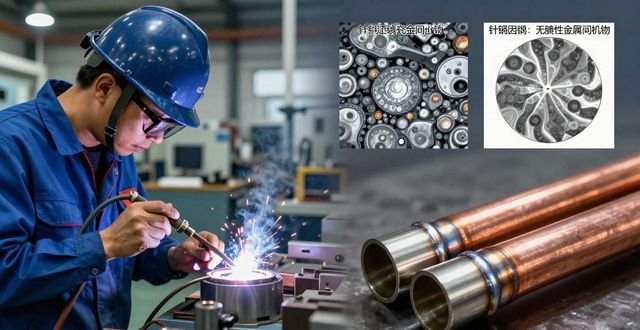
Brazing is different from ordinary fusion welding in that it only melts the filler metal, not the base metal. The commonly used filling material is silicon bronze welding wire, whose melting point is much lower than that of steel. After melting, it flows into the gap by capillary action. There is a heat exchanger factory in Jiangsu that uses brazing to weld copper tubes and stainless steel plates together. In the end, the two materials maintain their original properties. And no brittle intermetallic compounds appear.
This method is quite good at dealing with large-gap joints. When the gap between the two plates reaches 1 mm, arc welding basically cannot weld directly. However, the liquid filler metal for brazing can still be filled. An auto parts factory in Wuxi is welding car doors. When making the hinge, the workpiece stamping accuracy was insufficient, resulting in uneven gaps. After switching to brazing, the pass rate increased from 78% to 96%. Silicon bronze wire costs about 65 yuan per kilogram, which is twice as expensive as ordinary welding wire. However, the rework time saved is more cost-effective.
Self-piercing riveting does not require pre-drilling and is highly efficient
Self-piercing riveting is similar to riveting skill training materials: an alternative welding method to arc welding and spot welding, but its performance on automated production lines is close to that of welding. The rivet gun pushes the self-piercing rivets to the lower material. When the rivets pierce the upper plate by themselves, they open in the lower plate to form a mechanical lock. The entire process requires neither pre-drilling nor heating. A body-in-white welding workshop in Shanghai renovated a production line in 2025. The welding deformation was large and riveting required pre-drilling, which was costly . Self-piercing riveting was used to replace 30 arc welding spot welding stations.
It is particularly suitable for multi-layer boards and material combinations with large differences in hardness. For example, 1 mm aluminum plates in a three-layer stacked state have large welding deformations, and riveting requires pre-drilling, which is more expensive . Along with 2 mm mild steel and 1.5 mm stainless steel, self-piercing riveting can be achieved in one go. The cost of each self-piercing rivet is about 0.35 yuan, which is cheaper than fluid-drilled screws, and the equipment investment is also low. According to statistics from the workshop, after switching to self-piercing riveting, the tempo of the connection process was reduced from 12 seconds to 4 seconds, and the scrap rate was reduced from 5% to 0.8%.
After reading these five methods, you will find that arc welding, spot welding and riveting are not the only choices. Laser welding and friction stir welding are suitable for products that have high requirements on deformation and appearance. Flow drilling and self-piercing riveting can save the pre-drilling process and improve efficiency. Brazing solves the thorny problem of dissimilar metals and large gaps. Which connection method is currently used the most in your workshop, and what is the approximate cost of a single connection? Feel free to share your actual data in the comment area, and don’t forget to like and forward it so that more colleagues can see these money-saving alternatives.




暂无评论内容