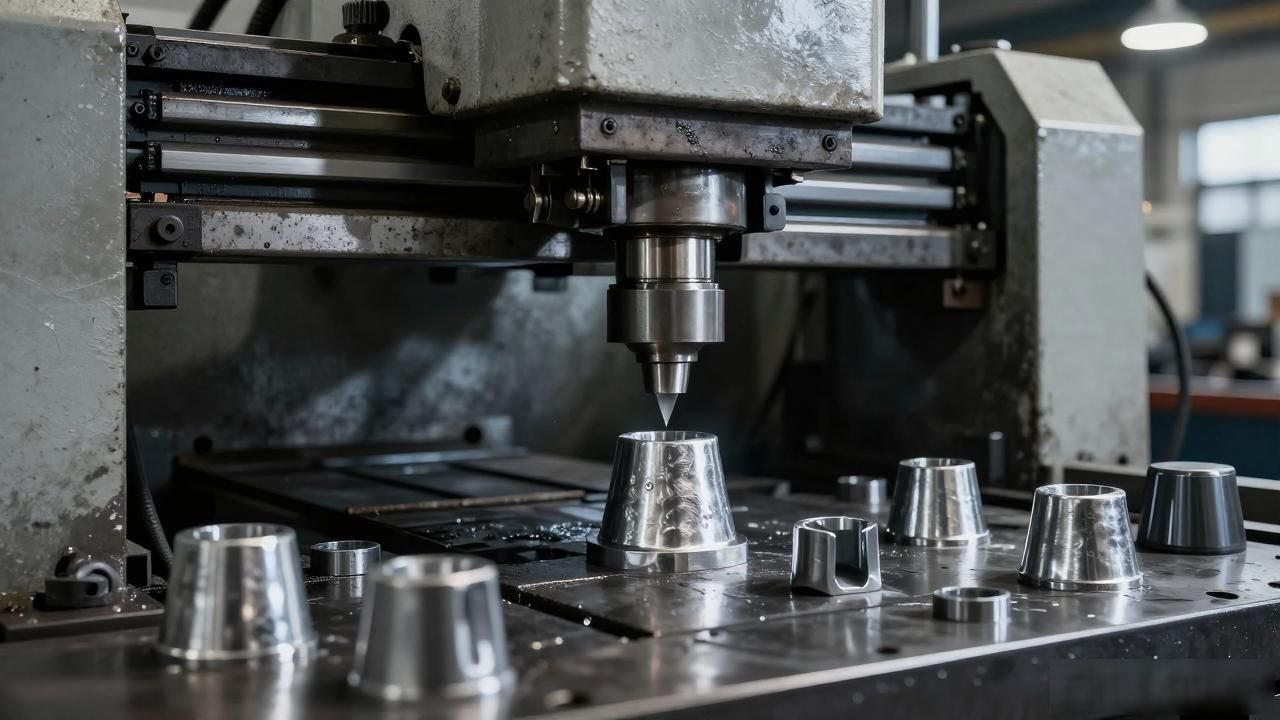


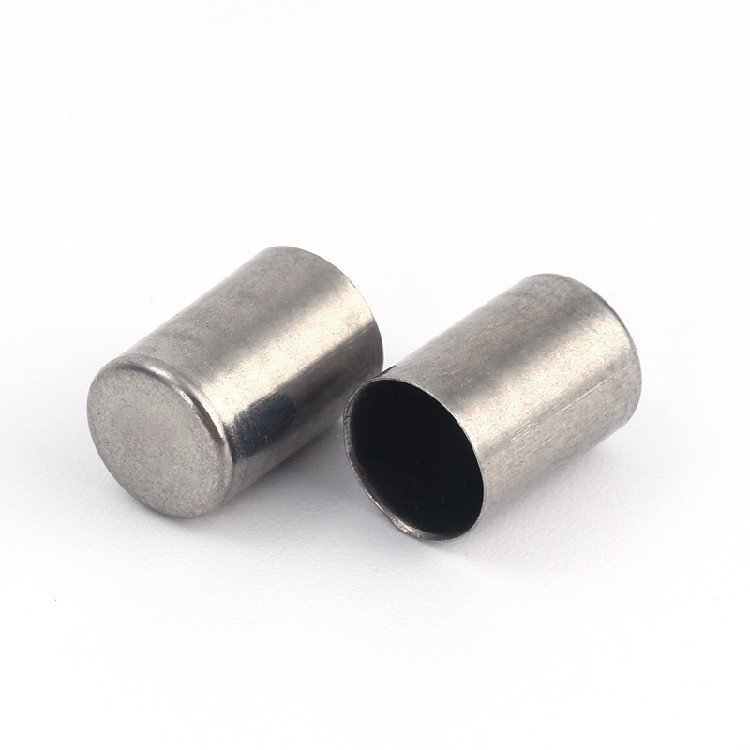
, small steel cap, metal stamping and drawing parts processing
Material preprocessing optimization
Material selection must be done before stainless steel stamping. 304 austenitic stainless steel has a high n value and its plastic deformation ability is significantly better than ordinary materials. This type of material can achieve better ductility during stamping and is not prone to cracking problems.
Heating the plate to 800 to 850 degrees Celsius and then slowly cooling it can eliminate the hardening phenomenon inside the material due to processing, thereby greatly improving the ductility of the material. This is called annealing. In the field of surface treatment, the oxide layer can be removed through electrolytic cleaning, and frictional resistance can be effectively reduced with the help of nano-scale lubricating film pre-coating.
Mold system upgrade
As for the mold material, SKD11 special mold steel is selected, and its hardness meets the standard of HRC58 to 62. Molds, small steel caps, and metal stamping and drawing parts made of this high-hardness steel have a longer service life, which can greatly reduce the frequency of mold changes, thereby reducing production costs.
The design of the mold structure is also very critical. The fillet radius of the convex and concave molds must be greater than or equal to twice the thickness of the plate. In this way, the stress distribution of the bending path can be optimized. By using AI to simulate the molding process, the risk of rupture can be effectively reduced.
Process parameter control

The stamping speed is slower than that of carbon steel and needs to be controlled at about two-thirds of the conventional speed. When the thickness of the sheet is less than one millimeter, it is recommended that the number of stamping times per minute should not exceed fifteen times. Only in this way can the molding quality be ensured.
The blanking gap is set to 4% to 6% of the material thickness, and the gap in the drawing process is larger than that of carbon steel, ranging from 15% to 20%. Combined with a composite lubricant containing molybdenum disulfide, the friction coefficient can be reduced to a range of 0.08 to 0.12.
Three core elements
There is such a primary point that is regarded as precision molding. A hydraulic machine with a pressure bearing capacity of 300 tons is equipped with a mold with an accuracy of 0.1 mm, which can achieve a change in the shape of the metal plate in an instant. The bending route is optimized with the help of artificial intelligence to ensure that the stress can be distributed in a reasonable state. The surface is presented in the form of a brushed texture, which is both functional and anti-counterfeiting.
The second element is material processing. The annealing heat treatment process has the ability to adjust the ductility of the material. The vacuum ion plating phenomenon can achieve the result of improving surface performance, and the six-axis robot arm polishing behavior can achieve the effect of forming a hydrodynamically optimized curved surface, which can effectively control the turbulence effect.
Common process challenges
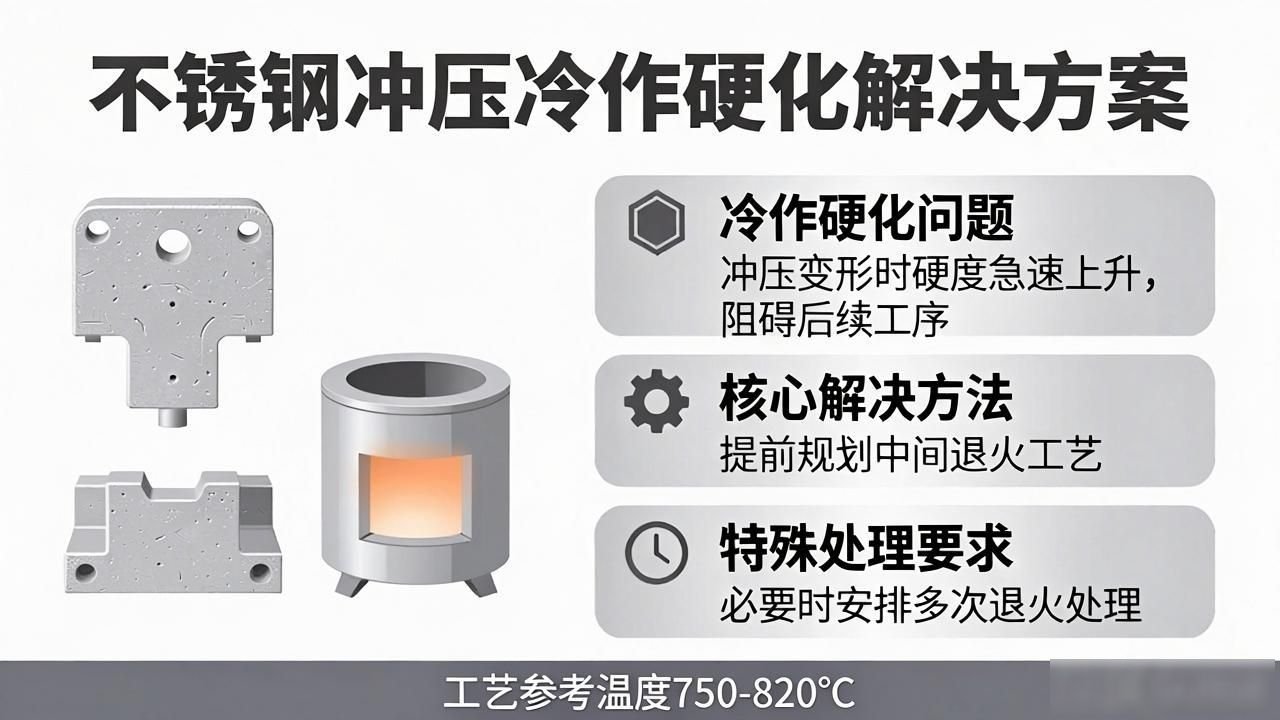
Cold work hardening is a very common problem in the stamping process of small hardware parts processing in stainless steel stamping. During the deformation process of the material, the hardness will rise rapidly, making it impossible to continue the subsequent processes. To solve this problem, the intermediate annealing process must be planned in advance. If necessary, multiple annealing treatments must be arranged.
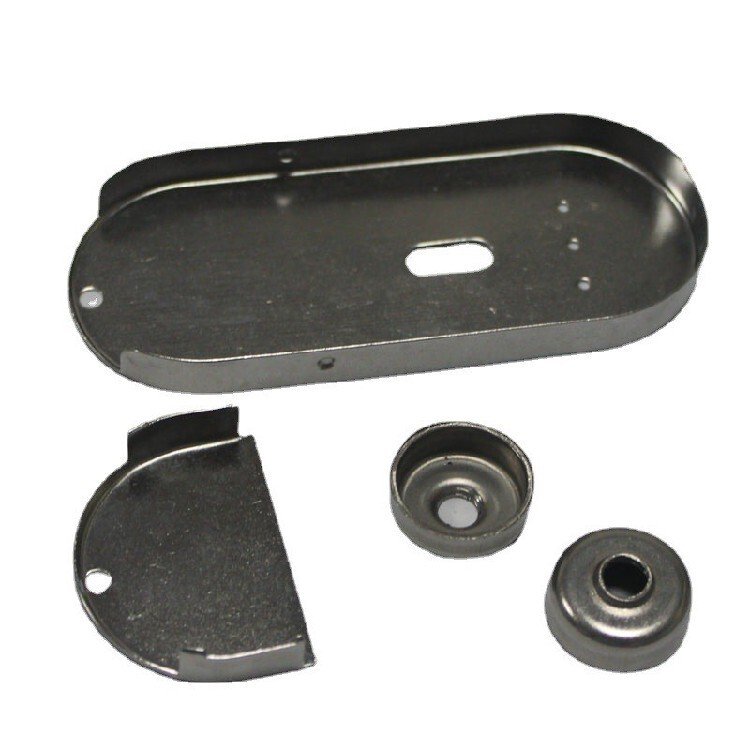
Production efficiency and product quality will be seriously affected by the mold sticking phenomenon. Polishing the mold surface and combining it with DLC coating can greatly reduce the probability of mold sticking. Choosing a suitable lubrication system is also one of the key measures.
Wide range of industry applications
Deep-drawn parts are widely used in many fields. In the automotive industry, they are often used in parts such as fuel tanks, body panels, and engine hoods. In the home appliance industry, they are used in the processing and stamping process of small hardware parts . However, they are used in the manufacturing of products such as washing machine inner barrels, refrigerator casings, and microwave oven cavities.
In the electronics industry, stainless steel drawn parts such as mobile phone casings and battery cases are used. Water cups, pots, and tableware in the daily hardware field are all inseparable from this process. As for engine parts and structural parts in the aerospace field, they also put forward higher requirements for stainless steel stamping.
After reading this article, which optimization measure do you think will most significantly help your production within the stainless steel stamping process? Feel free to share your experiences, feelings, and past experiences in the comment area.







暂无评论内容