

Sharing of methods and steps for soldering using an electric soldering iron
Basic understanding of soldering iron
In electronic manufacturing, the soldering iron is one of the most commonly used tools. It is mainly used to melt the solder and secure the electronic components to the circuit board. It consists of three parts: a handle, a heating element and a soldering tip. It is heated by electricity to achieve the temperature required for soldering.
There are two types of soldering irons commonly seen on the market, one is a constant temperature soldering station and the other is an external heating type. Among them, the constant temperature soldering station has a stable temperature and is suitable for precision welding; the external heating type has the characteristics of simple structure, relatively cheap price and is suitable for general purposes. When making a selection, you need to make decisions based on actual welding needs.
Preparation before welding
Before carrying out welding operations, the first thing is to prepare the work surface properly and ensure that its surface is stable and clean so that the workpieces for welding can be placed stably. At the same time, it is also necessary to prepare auxiliary tools such as solder wire, tweezers, solder absorbers, and wet sponges so that they can be used at any time during the entire soldering process.
Equally important is safety protection. You must wear goggles to prevent high-temperature solder from splashing and injuring your eyes. You must also keep the work area well ventilated to avoid inhaling the smoke and dust generated by soldering. If you weld for a long time, it will have an impact on your health.
Detailed explanation of welding operation steps

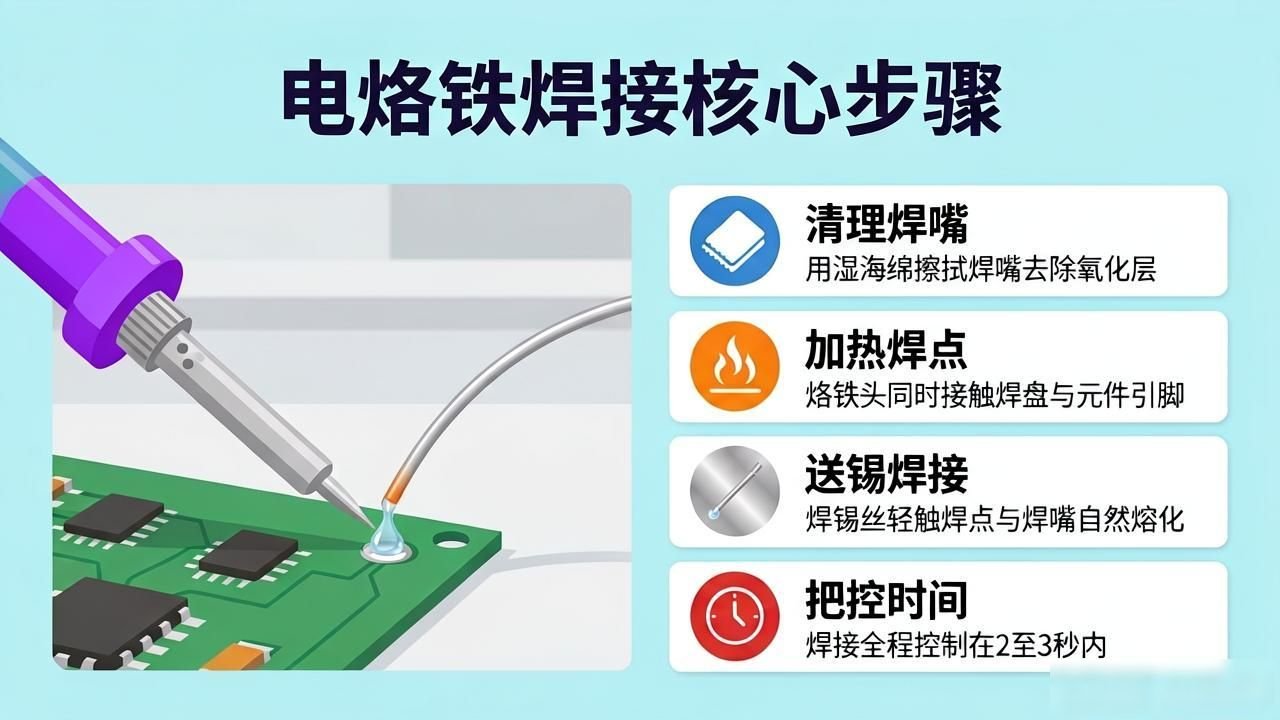
When welding, you must first clean the welding tip to a clean state, then heat the solder joint, and then let the solder wire touch the solder joint and the welding tip, so that the tin used for welding melts in a natural state and flows toward the welding place. You need to focus on controlling the time it takes for welding. Generally, welding is completed within the range of two to three seconds to prevent components from being damaged.
After removing the solder wire, remove the soldering iron. This is when the soldering is completed. Next, wait for the solder joint to cool and solidify on its own. Do not touch it with your hands, nor blow air to speed up the cooling of the solder joint. After it has cooled down, check whether the solder joints are full and bright, and whether there is any weak solder or tin connection.
Safety precautions when welding
It is important to note that when using a soldering iron, you must prevent burns. The unused soldering iron must be placed on a special stand and kept away from flammable items such as paper and cloth. Keep your hands steady during the welding process to prevent uneven solder joints due to shaking.
Do not overheat the soldering iron. If the temperature is set too high, it will damage the components and accelerate the oxidation of the soldering tip. When welding, just touch the solder joint lightly and do not use excessive pressure to compress the solder. This way, the solder can flow and spread naturally, and the effect will be better.
Cleaning and maintenance of welding tips
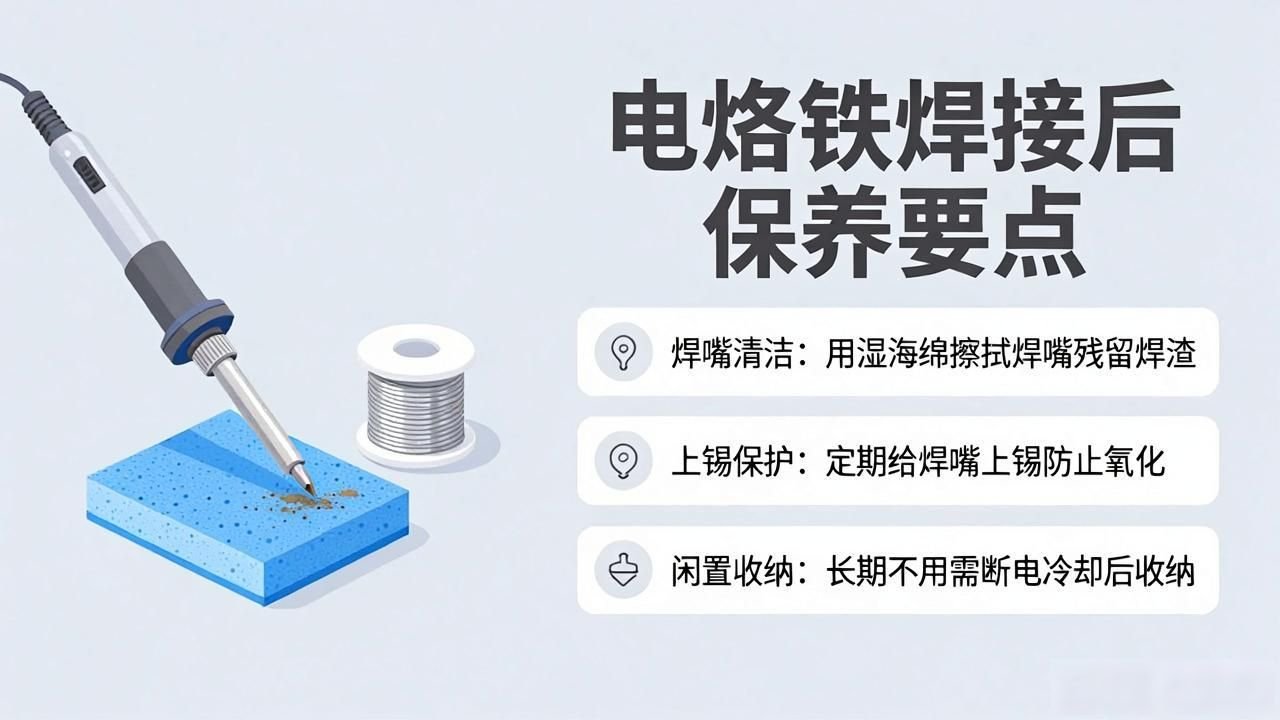
How to perform anti-rust treatment (painting) on tinplate riveted weldments after each welding? The welding nozzle needs to be cleaned immediately and the remaining welding slag should be wiped with a wet sponge. It is necessary to implement tin protection measures for the soldering tip regularly, which can prevent it from oxidation and extend its service life. For a soldering iron that has not been used for a long time, you should unplug it from the power source and wait for it to cool down completely before storing it.
Once you notice that the welding tip is rusty or the oxidation is extremely serious, you should immediately replace it with a new one. The welding tip is a consumable item. Maintaining good usage practices can make the welding effect more stable and reliable. During storage, place it in a dry area to prevent moisture from affecting the next use.
Common welding problem solutions
How to perform anti-rust treatment (painting) on tin rivet weldments when there is a weak solder during welding? The situation may be caused by the temperature not meeting the requirements or the welding time being too short. To reheat the solder joint, first add a small amount of solder and then melt it again, so that the solder can fully wet the pads and pins. If tin connection occurs due to too much solder, you can use a solder suction device to remove the excess solder.
The surface of the solder joint is rough and dark, which indicates that the degree of oxidation is extremely severe or the temperature is too high. It is necessary to check the quality of the solder, lower the soldering temperature appropriately, and ensure that the operation is within the appropriate temperature range. For precision components, it is recommended to use a constant temperature soldering station with adjustable temperature to perform soldering.
What kind of problems have you encountered during the welding process? Welcome to share your experience, like and bookmark this article so that more novices can avoid such detours!





暂无评论内容