

How to reduce the cost of automobile manufacturing by introducing innovative technologies?
3D printing breaks traditional manufacturing limitations
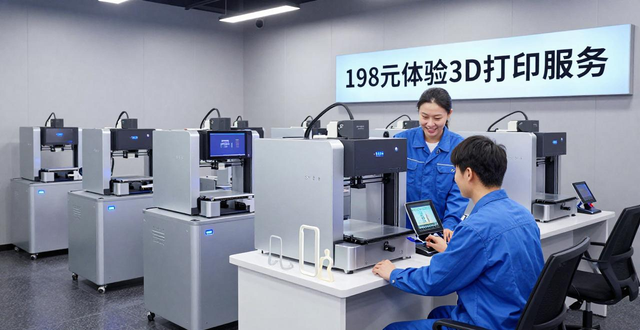
1. The application of 3D printing technology in the field of automobile manufacturing is changing the rules of the game. 2. In the past, complex parts required multiple processes to complete. 3. Nowadays, it is now possible to achieve one-time molding directly with the help of 3D printers. 4. This is not just a breakthrough on the technical level. 5. It is a revolution in production methods. 6. After a well-known automobile company introduced 3D printing. 7. The production cycle of parts has been shortened from weeks to days. 8. The material utilization rate has increased to more than 30%.
More importantly, 3D printing eliminates many subsequent processing steps. Traditional manufacturing requires many processes such as cutting, grinding, and assembly. Each process consumes time and cost. 3D printing goes directly from the design file to the physical product, skipping the intermediate links, saving time and reducing the scrap rate. This technology is particularly valuable for prototype development and customized parts production.
Automated production lines reshape the employment structure
In automobile manufacturing, the application of automation and robotic technology has become extremely mature. From welding, to painting, to final assembly, more and more work stations are replaced by robots. After a large automobile factory adopted an automated production line, the number of production line workers was reduced from the original 500 to 200. However, the production capacity increased by 40%. The bosses clearly accounted for this.
Robots have high efficiency, good stability, will not fatigue, will not ask for leave, and have minimal quality fluctuations. In the welding process, the consistency and accuracy of robot welding far exceed that of manual operations. Statistics from a certain company show that the pass rate of automated welding has reached 99.2%, while the pass rate of manual welding is only about 95%. The rework cost saved is also real money.

Artificial intelligence lets data tell you whether you will save money
Due to the combination of artificial intelligence and big data technology, unprecedented optimization methods have emerged in automobile manufacturing. By collecting and analyzing massive data in the production process, companies can detect many problems that were previously invisible and there is still room for improvement. For example, a factory found through AI analysis that the cycle time of a certain station was 15 seconds longer than that of other stations, and this was the bottleneck of the entire production line.
Data-based predictive maintenance can be used to avoid huge losses caused by unplanned downtime. This maintenance can provide early warning before equipment failure. However, traditional equipment maintenance involves repairing if there is a problem, or maintaining it according to fixed intervals. After a company introduced an intelligent monitoring system, the equipment failure rate dropped by 60% and maintenance costs were saved by 40%.
Modular design reduces inventory and waste
The core concept of modular design is to dismantle the car into a number of standardized modules, and different models can share the same modules. This not only simplifies the design process, but also greatly reduces production and maintenance costs. After a certain car company implemented a modular platform strategy, the types of parts were reduced by 35%, and the inventory turnover rate increased by 28%.
Standardized modules have another benefit, which is that they can improve the supply chain's ability to negotiate prices. When the same module is used by many different vehicles, the quantity purchased will increase significantly, so suppliers will naturally be willing to offer more favorable prices. At the same time, standardization has played a role in reducing after-sales maintenance costs. Maintenance personnel only need to be familiar with the removal and installation procedures of a few modules. At this time, training costs and training time will be greatly reduced.
Lightweight technology achieves multiple benefits
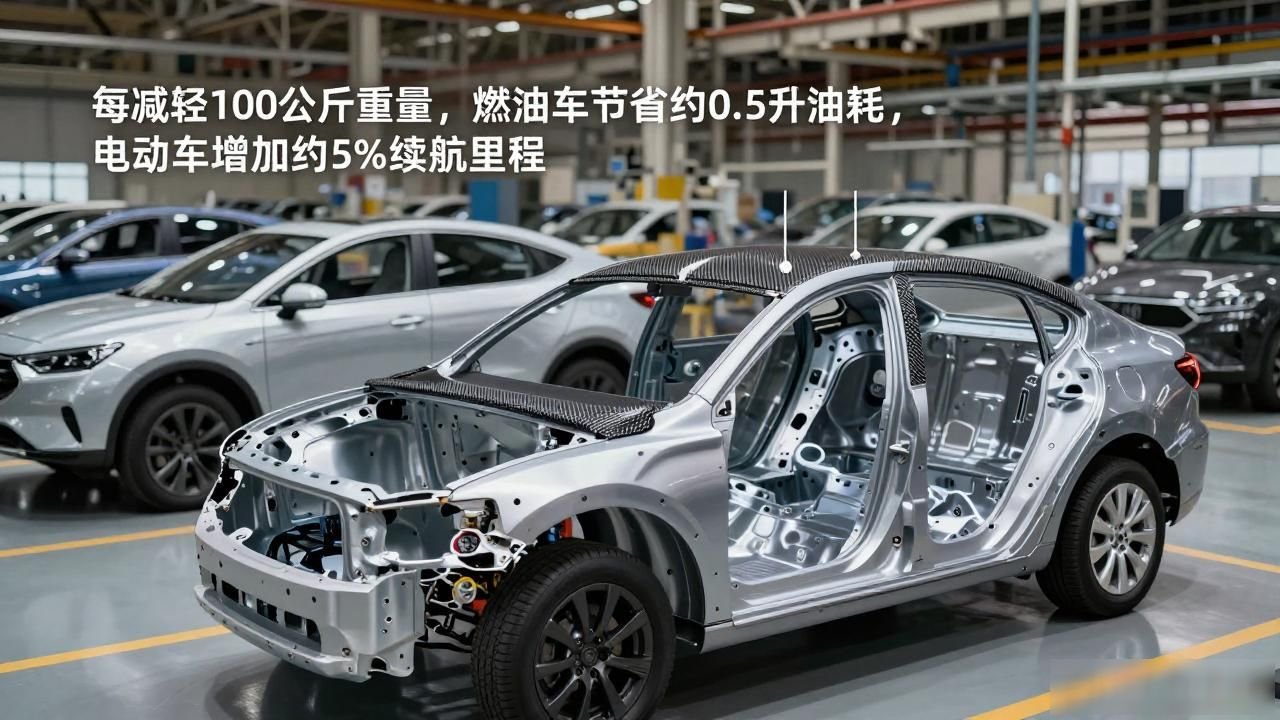
Lightweighting is one of the most important trends in the field of automobile manufacturing in recent years. With the use of lightweight materials such as aluminum alloy and carbon fiber, as well as optimized structural design, the curb weight of the automobile can be greatly reduced. For every 100 kilograms of weight reduced, fuel vehicles can save about 0.5 liters of fuel consumption, and electric vehicles can increase the cruising range by about 5%.
The benefits brought by lightweighting are not limited to fuel economy. A lighter body indicates that the requirements for the braking system and suspension system have been reduced. Those components can be made of lighter materials, which will form a positive cycle. For one company, after adopting an all-aluminum structure for the body, although the material cost of the vehicle increased by 10%, the number of parts was reduced by 25%, the assembly time was correspondingly shortened by 30%, and the overall cost dropped by 8%.
Comprehensive benefits make investment returns visible
Looking at these innovative technologies together, automobile manufacturing companies can achieve comprehensive cost reduction effects. A medium-sized automobile factory has successively introduced 3D printing, automated production lines, intelligent management systems and modular design within three years. A total of approximately 20 million yuan was invested in the three years. Financial data in the third year show that production costs dropped by 18%, per capita production capacity increased by 35% of the original volume, and the product quality complaint rate dropped by half to 50%.
Of course, the introduction of technology cannot be completed all at once. Enterprises must proceed in stages according to their own conditions, first selecting projects with low investment and quick results, and then gradually expanding to more complex areas. The key is to build a mechanism for continuous improvement so that technological innovation becomes a regular part of the enterprise rather than a one-time activity.
After reading this article, which car company do you think has the most qualities worth learning from? Feel free to share your personal views in the comment area, and don’t forget to like and forward it to more friends in need.



暂无评论内容