
Failures that occur in CNC machining and how to improve them

Causes and Countermeasures of Overcutting of Workpieces
One of the most troublesome problems in CNC machining is overcutting. If it is done lightly, the workpiece will be scrapped. If the situation is serious, the machine tool will be damaged. Looking into the reasons, the tool strength is not sufficient, the operation is inappropriate, the cutting allowance is not uniform, and the parameter settings are unreasonable. These will cause the tool to deviate from the preset trajectory and cut off places that should not be cut. To solve this common quality problem in CNC machining , we must first start with tool selection and follow the principle of "can be big but not small, can be short but not long", and at the same time, ensure that the allowance is evenly distributed.
Secondly, the cutting parameters must be adjusted appropriately. For corners with large margins, rounding can be used to prevent the tool from generating excessive cutting force here. Adding a corner cleaning program is also an effective method, which can promote the tool to process more accurately.
Common misunderstandings in split operations
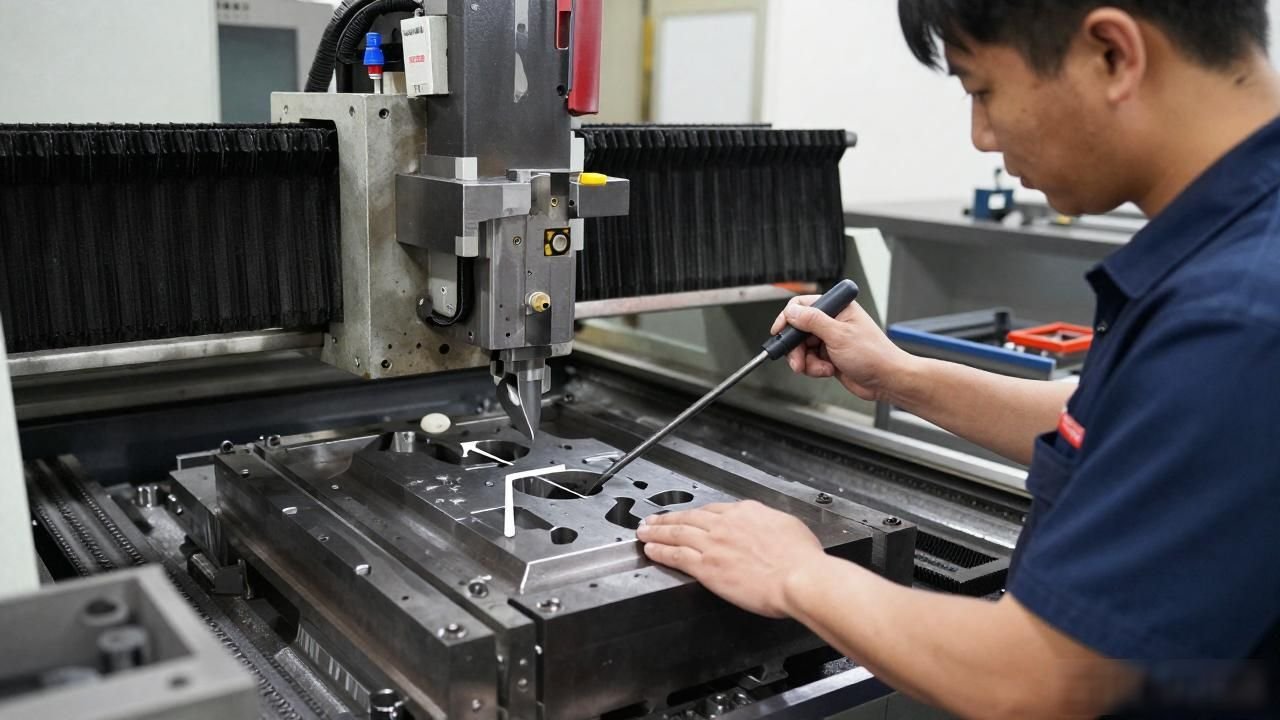
Tool setting is a basic operation in CNC machining. If the tool setting is inaccurate, it will cause positional deviations in the entire workpiece. Common causes of this situation include: operator errors during operation, there are burrs around the mold , the tool bar is magnetic, the four sides of the mold are not vertical , etc. To solve these problems, we must start from many different aspects. During manual operation, we must check repeatedly to ensure that the tool setting is at the same point and at the same height.
Use a whetstone or file to remove the burrs around the mold, then wipe it clean with a rag, and finally confirm it by hand. Before centering, the centering rod must be demagnetized, and a calibration meter must be used to check whether the four sides of the mold are in a vertical state. These detailed operations may seem simple, but they are the key to ensuring machining accuracy.
Factors affecting tool setting accuracy
The accuracy of tool alignment will directly affect the quality of machining. Faults that occur in CNC machining and how to improve them. Common related problems include inaccuracies when operators operate manually, errors when clamping the tool, errors in the blade on the flying knife, and errors between the R knife, the flat bottom knife and the flying knife. To avoid these problems, check repeatedly during manual operation and set the tool at the same precise point as much as possible. When clamping the tool, blow it clean with an air gun or wipe it very clean with a rag to ensure that the clamping surface is in a clean state.
When installing the blade onto the flying knife, the tool holder needs to be measured. In the operation phase of the smooth bottom surface, a single blade can be used for the operation. It is recommended to develop a separate tool setting program, which can prevent errors between R knives, flat knives and flying knives, thereby improving the accuracy and consistency of tool setting.
The risk of collision in programming
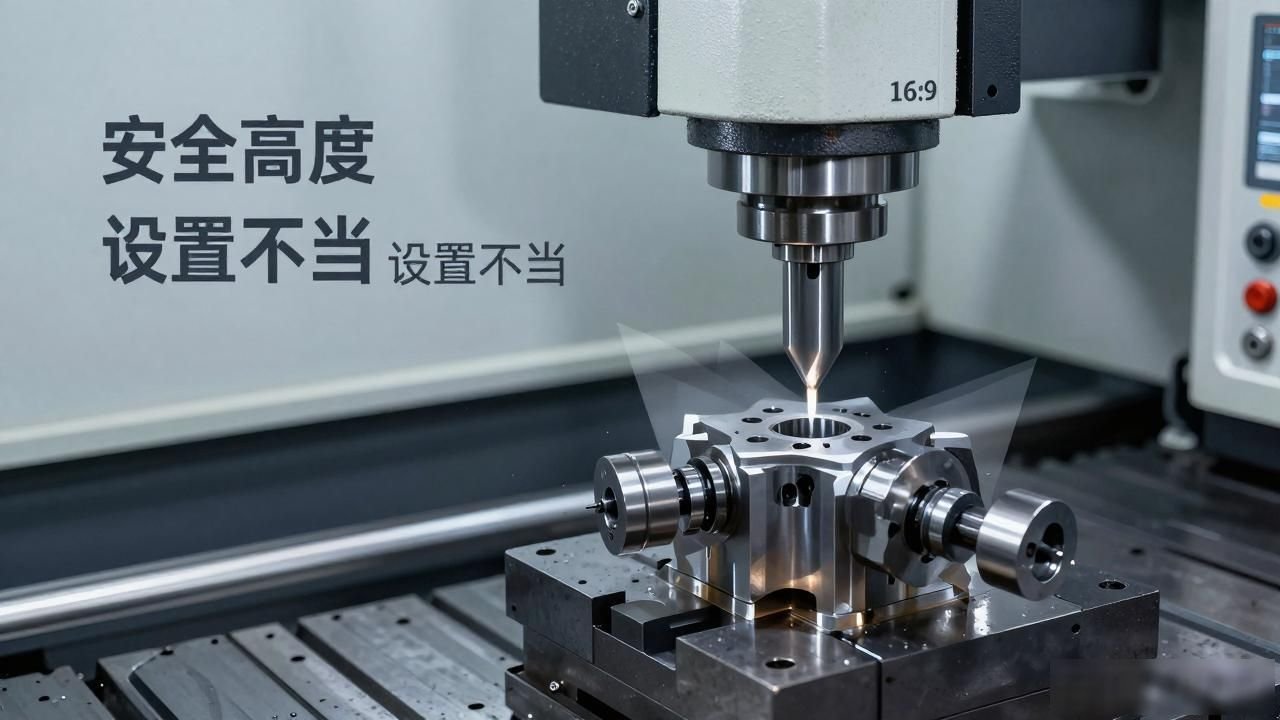
The key cause of machine collisions is errors in the programming process. The safety height is set improperly or is not set at all. As a result, the tool or chuck can easily hit the workpiece during rapid feed. The tool in the program list is inconsistent with the actual program tool, the tool length and blade length are written incorrectly, and the depth Z-axis is wrongly taken. These can cause serious accidents. Errors in coordinate setting during programming are also common problems, and must be paid attention to.
To avoid such problematic situations, the height of the workpiece must be accurately measured to ensure that the safe height is above the workpiece. The tools in the program list must remain the same as the actual program tools. Try to automatically generate the program list or use pictures to generate the program list. To measure the actual depth of processing on the workpiece, clearly indicate the length of the tool and the blade length on the program sheet. Usually the tool holder length is 2 to 3 mm higher than the workpiece, and the blade length is 0.5 to 1.0 mm.
Collision caused by operator error
Important causes of machine collisions include operator errors, errors in depth Z-axis tool setting, errors in the number of hits and operations, using the wrong tool, errors in program operation, wrong direction of the handwheel during manual operation, and wrong direction during manual rapid feed.
Schreibe einen Kommentar
Du musst angemeldet sein, um einen Kommentar abzugeben.