
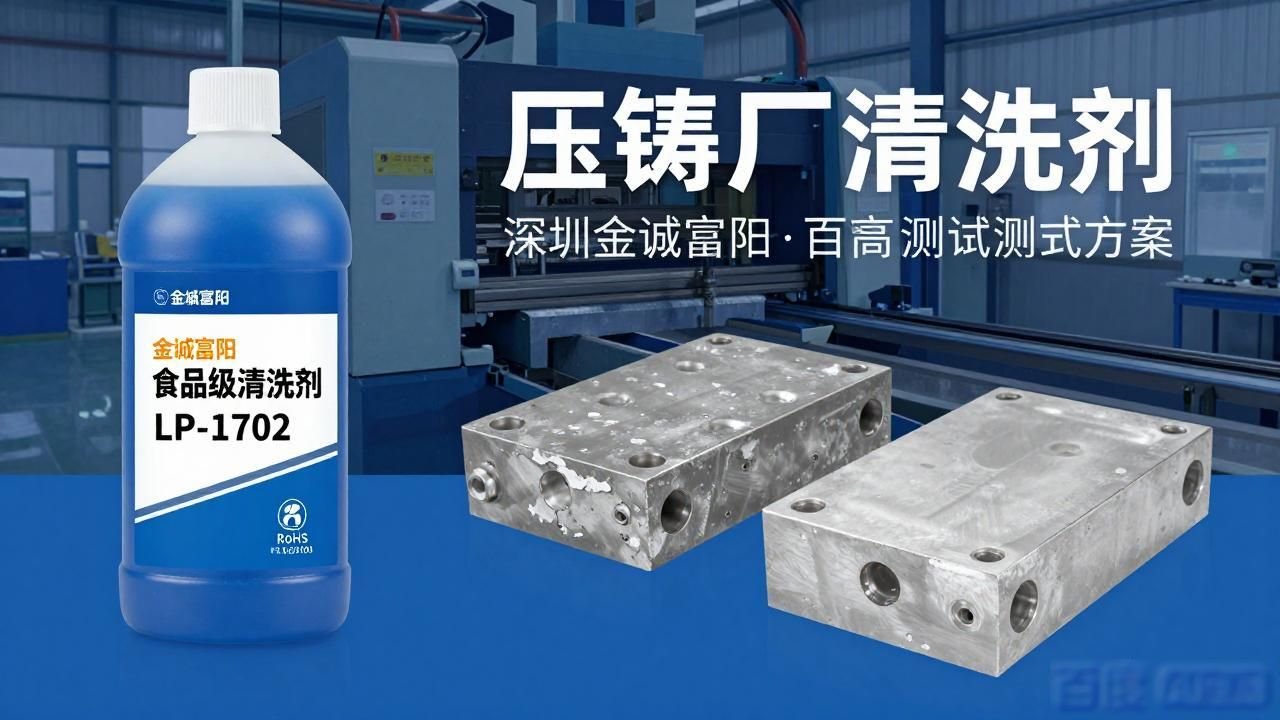
The die-casting factory loses a lot of money on rework! The paint film peels off frequently and the die-casting factory loses a lot of money due to rework! The paint film peels off frequently. Change the cleaning agent to the right one and it will pass the 100-square test. Change the cleaning agent to the right one. It will pass the 100-square test.
Release agent residue is the invisible killer of coating failure
In many die-casting processing sites, after spraying, the paint film peels off in flakes and fails the hundred-grid test. The root cause is often not a problem with the paint or process. In 2025, an auto parts factory in Zhejiang conducted statistics and found that 70% of the workpieces that had been painted and reworked had silicone oil residues detected inside the micropores of the substrate after scanning with an electron microscope. These silicone oil residues originate from the demoulding process. Regular water rinsing can only take away the floating oil on the surface, and the grease film that penetrates into the cracks will insulate the joint surface between the coating and the metal.
When choosing the right cleaning agent, you need to distinguish the type of release agent
Release agents commonly used in die-casting plants are divided into two categories: water-based silicone oil type and oil-based lubricating type. The physical and chemical properties of the two are different, and cleaning agents cannot be mixed. There is a hardware factory in Foshan, Guangdong, which used diesel to scrub away the residue of a water-based release agent. As a result, the peeling rate increased after painting. This is because diesel can only dissolve oil on the surface, but cannot emulsify the silicone oil film, and pushes the oil into deeper pores. Targeted selection is the key to low-cost rectification.
Neutral environmentally friendly cleaning agents are preferred for water-based silicone oil residues

Among the mainstream water-based silicone oil release agents on the market, the industrial neutral water-based environmentally friendly cleaning agent has the best effect. With the help of surfactants and penetration aids, these products can penetrate into the tiny pores of die-cast aluminum, emulsify and decompose the silicone oil film. The food-grade cleaning agent LP-1702 produced by Shenzhen Jincheng Fuyang falls into this category and has obtained RoHS certification. It does not contain strong acids or alkalis and will not cause aluminum parts to be corroded and cause whitening or pitting.
Cleaning parameters directly affect the pass rate
In actual production situations, the raw solution is mixed with water at a ratio of 5% to 10%, sprayed at room temperature for 60 seconds to three minutes, and rinsed with pure water for two processes before drying. After a factory in Suzhou, Jiangsu Province that manufactures small household appliance casings switched to LP-1702, the pass rate of the paint film's 100-pass test increased from 82% to 97%. The key point is that this agent is neutral and mild in nature. Even if ultrasonic cleaning is used, it will not cause damage to the oxide layer on the surface of the substrate.
Oil-based release agents require a weakly alkaline semi-aqueous cleaning agent
For such a situation, if the factory continuously uses oily mineral oil or heavy oil release agent for a long time, what should we do if the thick oil film has a large penetration depth and the efficiency of the water-based cleaning agent is not sufficient. In addition, consider the situation of a semi-water-based formula, which combines organic solvents with water-based additives, and has a stronger ability to dissolve stubborn sludge and carbonized residues. There is also an auto parts factory in Qingdao, Shandong Province. It uses a semi-aqueous cleaning agent combined with high-pressure spraying, which shortens the cleaning time by 40% and reduces the rework rate by 60%.
Temperature concentration control to avoid secondary corrosion
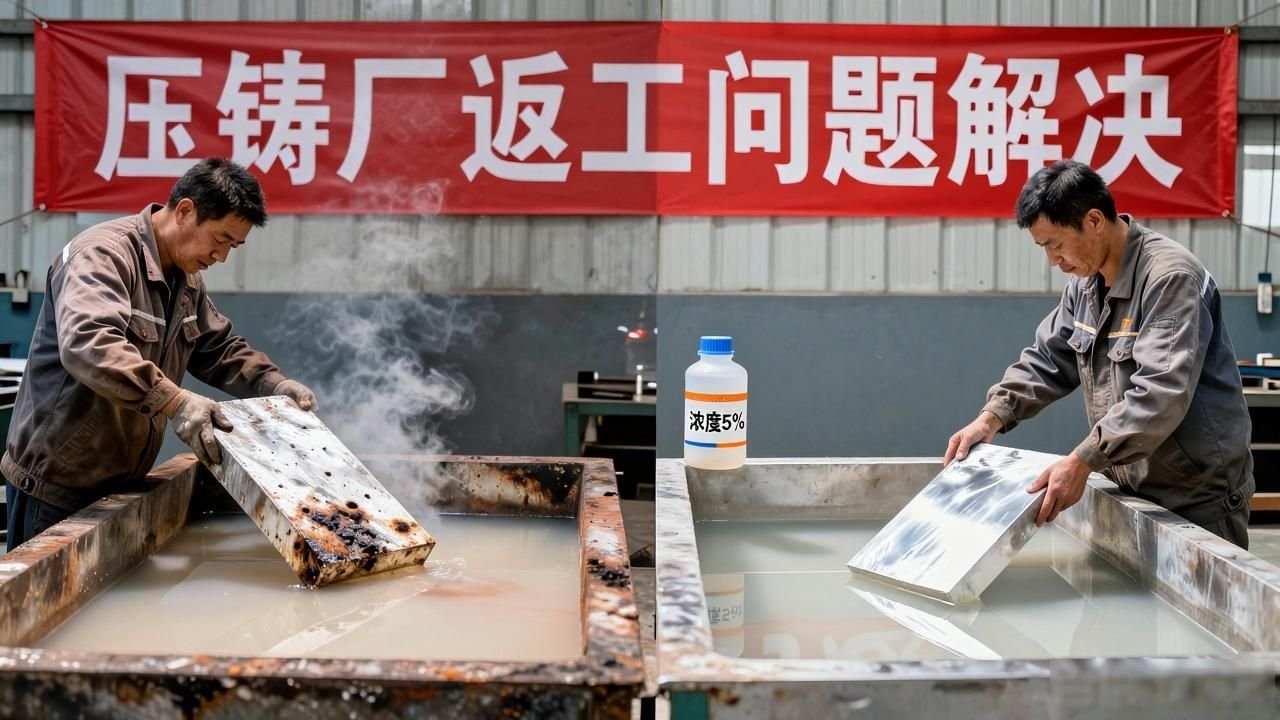
During operation, you must pay attention to control the specific concentration of the agent, and also pay attention to the temperature during cleaning. It is recommended that the water temperature be controlled within this range, from 40°C to 50°C. At the beginning of 2026, there was a die-casting factory in Hebei that adjusted the temperature to 65°C. Although the oil was removed very quickly, the weakly alkaline agent corroded the surface of the aluminum parts at high temperatures, resulting in pinholes after painting. After cleaning, you must thoroughly pass the water through to remove the remaining chemicals and prevent the chemicals from remaining on their own, thus affecting the adhesion.
Substitute dangerous solvents to reduce safety hazards
In order to save costs, many factories use gasoline and Tianna water to soak them to remove oil. However, these solvents can wipe off the oil on the surface in a short period of time, but they cannot remove the residue of silicone oil in the micropores. What is more serious is that they are highly volatile, flammable and explosive. In 2024, a factory in Taizhou, Zhejiang caused a fire due to improper operation, and the residual organic solvents will cause pinholes in the paint film. Long-term use will increase the loss of rework, so large-scale production is not recommended.
Matching process details determine the final effect
In the die-casting process, in addition to changing the cleaning agent, the amount of release agent should be reduced as needed to reduce additional hanging materials on the base material. After the workpiece is cleaned, the drying temperature must be controlled within the range of 80°C to 120°C, and the moisture in the gaps in the substrate must be completely drained. At the same time, the chemical solution in the cleaning tank must be replaced regularly, because once the oil in the tank reaches saturation, the cleaning ability will be greatly reduced. Through actual measurement of data from five supporting factories in Dongguan, Guangdong, it was found that after replacing special cleaning agents, the rework rate of poor coating adhesion generally dropped by more than 75%.
What kind of method does your current die-casting factory use to clean the release agent residue? You are sincerely welcome to share real cases in the comment area, like and bookmark this article, so as to help more colleagues avoid the potholes in painting that require re-work.
Schreibe einen Kommentar
Du musst angemeldet sein, um einen Kommentar abzugeben.