
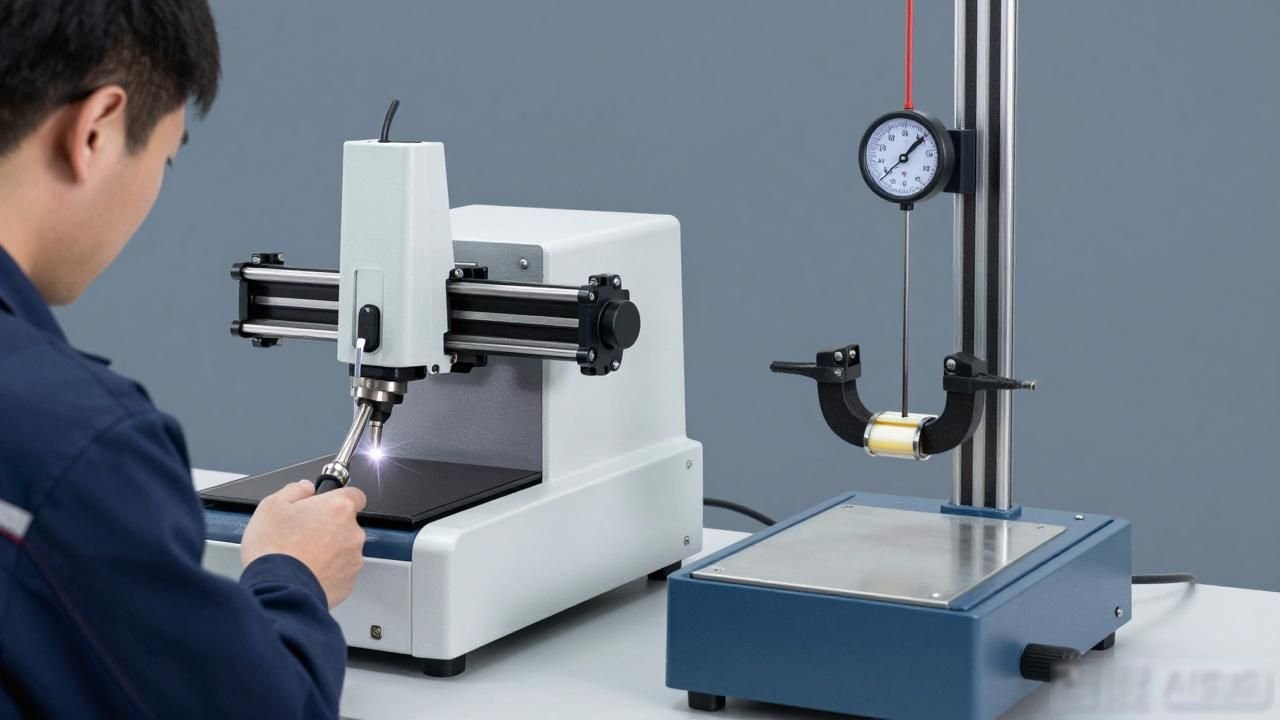
How to identify the quality of ultrasonic welding
Visual inspection of appearance is the first line of defense
After completing the welding, the first thing to do is to observe the appearance. The weld lines of the plastic parts must be even and regular, the mold closing gap must be completely closed, and there must be no obvious seams or misalignments. The surface of the plastic part must not be white, blistered, or have excessive melt flash, and there must be no cracks or lack of material at the corners. The shell of the product should not have cracks or fine lines. These inspections only take a few seconds and are the fastest way to conduct initial inspections.
The appearance characteristics of poor welding are very obvious, which include a large gap between the welds, a significant height difference between the two splicing sections, flash agglomeration at the position of the welding line, whitishness of the base metal of the plastic part, which is a precursor to cracking due to internal stress in over-welding, and the occurrence of fine cracks in the shell or local lack of melting are also extremely serious defects. Once you notice these problems, you must immediately stop the machine and start troubleshooting parameters.
Feeling and assembly verification cannot be omitted
Grasp the parts that are spliced by welding. Products of qualified quality should not feel loose or warped. The whole thing should be assembled smoothly, and there should be no jamming or inability to fit in with the supporting accessories. The welds of components with poor quality will be dislocated once they are moved, and there will be local warping and shape changes. You can quickly make judgments by relying on the feel.
This step is mainly for those plastic parts that have assembly requirements, such as shell buckles, bracket connections, etc. No tools are required for inspection. Problems can be found by relying on hand feeling and visual inspection. It is suitable for batch and rapid screening on the production line. If it is found that there are difficulties in assembly or looseness, it means that there is already a problem with the welding quality.

Destructive tensile testing is the core basis
Fix one end of the product and pull it at a constant speed until it breaks. The criterion for determining a qualified weld is that the base metal is torn and fractured, but the welding surface itself does not detach. If the weld seam is directly torn apart in layers and the weld joint is separated, it indicates that there is a problem of virtual welding or under-welding, and the welding strength has not reached the required level at all.
Although this test will cause damage to the product, it is the most critical method to determine the reliability of welding. It is recommended that a certain proportion of each batch be selected for damage testing, and the tensile force value and fracture mode be recorded. If base metal tearing occurs continuously, it indicates that the welding parameters are stable and reliable; if welding joint separation occurs frequently, the welding parameters must be adjusted immediately.
Sealing test for waterproof plastic parts
Water tanks, sealing shells, waterproof shells and other such workpieces must be tested for sealing. There are two common methods, one is water immersion test, and the other is air pressure leak detection. When performing a water immersion test, you need to immerse it in water and then observe whether any bubbles overflow. As for the air pressure test, you need to see whether it can maintain pressure after inflating without losing pressure. For those qualified products, there should be no air leakage or water intrusion.
Insufficient welding fusion will directly lead to air leakage or water intrusion, and there are micro-channels inside the weld. This defect is difficult to detect through visual inspection and must be exposed through sealing testing. For example, among electronic products, there are housing items with waterproof requirements and automobile accessories with waterproof requirements, this test is indispensable.
Metal ultrasonic riveting has independent judgment standards
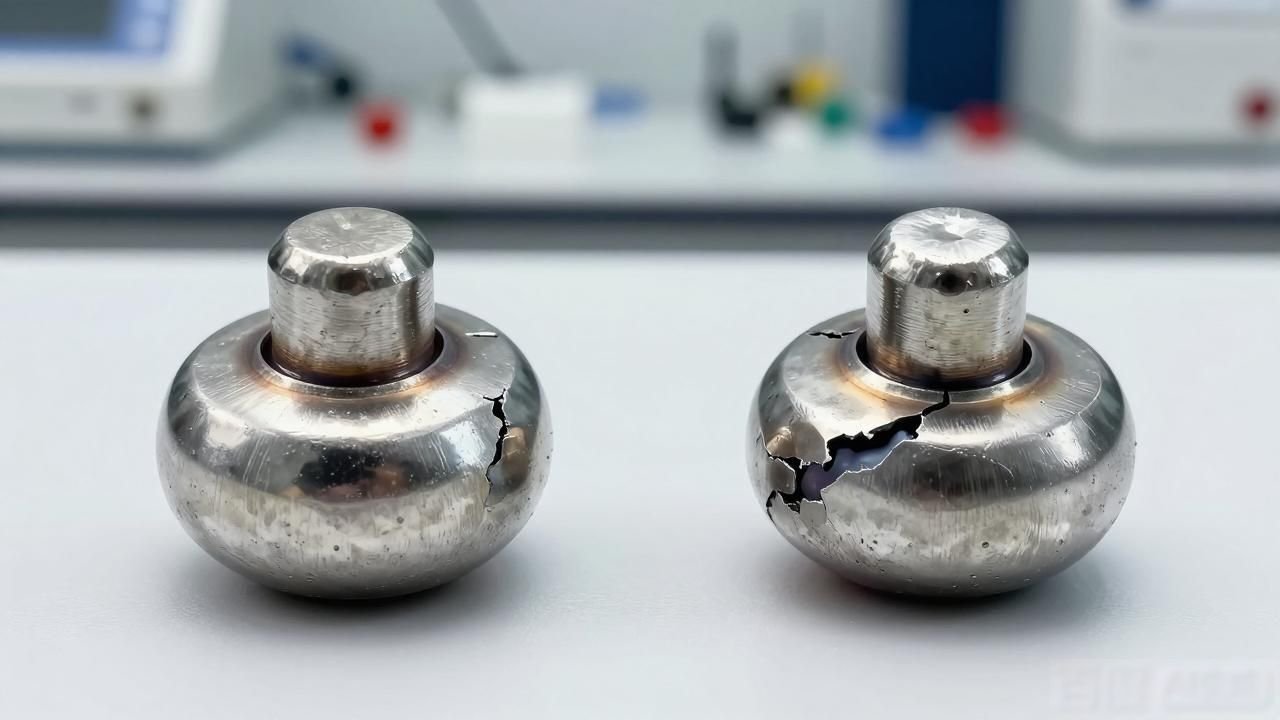
Metal ultrasound does not rely on melting, but relies on the mutual combination of molecules in the solid state. The thinking logic of its detection is completely different from that of relying on melting. In terms of appearance, the outline of a high-quality solder joint or rivet point is rounded and regular. The riveted head does not explode after cracking. The contact surfaces between metals fit very closely with no obvious gaps. The base material does not show black corrosion or cracks due to extrusion. Undesirable symptoms include cracks in the rivet posts, excessively deep depressions in the solder joints, or abnormally high bulges.
The core testing methods of electrical terminals include torque and tension testing. Use a torque wrench to test riveted nuts or copper terminals. Only those that can reach the product standard torque and do not fall off or rotate are qualified. Double-layer metal spot welding requires that the base metal is deformed or broken when pulled by tension, and the solder joints are qualified only if they do not delaminate and fall off. If the solder joints peel off directly, it is a false weld.
Conductivity and environmental resistance testing ensures long-term reliability
To measure the conductive properties of products such as wire harnesses and copper-aluminum electrodes, a multimeter needs to be used to measure the on-resistance. For solder joints in the same batch, their resistance values should be uniform and stable, and there should be no large jumps. If the resistance of the solder joint is sometimes high and sometimes low, it means that the bonding area fails to meet the corresponding requirements, which can easily cause heating and desoldering problems in the later stage. Such hidden dangers must be investigated in the early stage.
After high and low temperature cycles and slight vibration, the tension and resistance are measured again. This is an environmental resistance test. It does not crack or desolder, and the resistance value remains unchanged. This is considered high-quality welding. If it falls off after vibration or the resistance value rises sharply, this is a sign of poor quality welding. Although these tests are time-consuming, they are crucial for products that require long-term stability.
Questioning the last question: Which type of welding defects encountered during actual production is the most difficult to investigate? You are welcome to share your accumulated experience in the comment area. To facilitate comparison and inspection at any time, please like and bookmark this text.
Schreibe einen Kommentar
Du musst angemeldet sein, um einen Kommentar abzugeben.