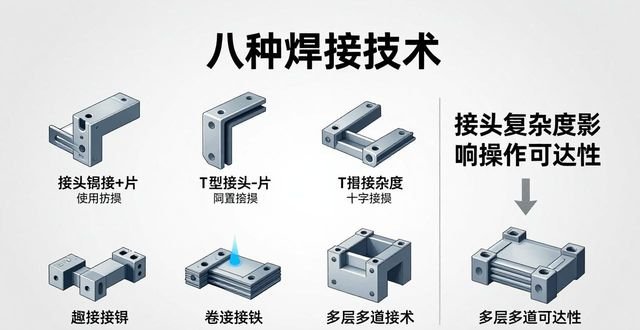


Eight welding techniques
Material type determines the basis of welding method
For welding, the most common materials are steel and cast iron, and their composition and conductivity will have a direct impact on the welding effect. Among TIG welding and MIG welding, it has the best adaptability to steel and iron and can form a strong joint. For example, for high-strength steel used in automobile chassis, MIG welding can ensure that the strength of the weld reaches the standard.
Aluminum alloys are sensitive to heat and are easy to burn through. TIG welding or pulse MIG welding must be used to control heat input. Some customers apply ordinary welding rods to aluminum plates, resulting in black welds and lack of strength. This is a typical failure case caused by incorrect material selection.
Board thickness determines heat control strategy
When welding thin plates, you are most afraid of burn-through and deformation. Just like aluminum plates with a thickness of 0.8 mm, MIG welding is prone to penetration. If you switch to laser welding or spot resistance welding, you can accurately control the penetration depth. A sheet metal factory accepted a batch of orders for 1.2 mm stainless steel chassis. After switching to pulse TIG welding, the welding qualification rate increased from 70% to 95%.
Only with high heat and deep penetration characteristics can it meet the requirements for thick plate welding. For marine steel plates with a thickness of more than 20 mm, only arc welding or submerged arc welding can ensure root fusion. If MIG welding is used, it is not only inefficient, but also prone to unfusion defects, which will lead to higher costs for later rework.

Joint complexity affects operational accessibility
Will simple butt joints and lap joints be deformed when welded? Will riveting be more accurate? Will welding be deformed? There are eight welding techniques. Will riveting be more accurate? Using electrode arc welding or gas shielded welding, it can be completed quickly. Just like the T-shaped joints in building steel structures, electrode arc welding is flexible in operation, its weld seam formation performance is good, and the cost of worker training is relatively low.
For complex geometries such as pipe inner wall joints or closed boxes, TIG welding and laser welding can only be used. When a medical device factory was welding a 3 mm stainless steel capillary tube, the diameter of the tube was only 8 mm, and an ordinary welding gun could not reach it at all. In the end, it was heated from the outside using a thin tungsten electrode TIG welding, and combined with argon gas protection to achieve success.
Welding position limits process selection range
Flat welding is the easiest to control the molten pool, and any welding method can be used. There is a factory that performs welding on 2-meter-long steel plates. The entire welding work is completed in the flat welding position. Submerged arc welding is used. This welding method is highly efficient and can weld 80 meters of welds a day.
Vertical welding requires high fluidity of the molten pool, and the same applies to overhead welding. Electrode arc welding and flux-cored wire welding are more suitable in this regard. For example, shipyards must use cellulose electrodes or flux-cored wires when welding vertical seams on the hull, because their droplet transfer speed is fast and they are not prone to dripping. If MIG welding is used, the molten pool will tend to fall, which will produce defects related to welding spatter.
The company’s existing equipment determines the technical route
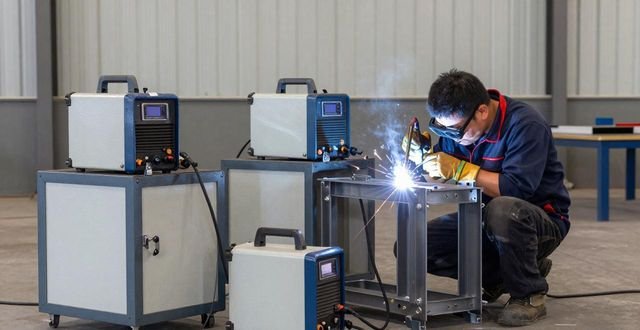
Smaller sheet metal processing plants are generally equipped with only three types of equipment: rod welding, spot welding and MIG welding. For example, for those manufacturers engaged in cabinet manufacturing, most workpieces can meet the corresponding requirements with the help of MIG welding, and there is no need to spend hundreds of thousands of yuan to purchase a laser welder.
Large manufacturing companies with a variety of welding equipment can choose the most suitable process for different parts. An auto parts factory is equipped with MIG welding, TIG welding and laser welding. It can flexibly switch according to the material and thickness of the parts. Its production efficiency is more than 30% higher than that of a single process.
Cost accounting needs to balance quality with efficiency
Electrode arc welding equipment is cheap, but its welding speed is relatively slow and the labor costs involved are relatively high. When welding a 20 mm thick steel plate, electrode welding can only weld 0.5 meters per hour, of which labor costs account for 60%. Submerged arc welding equipment is expensive, but its welding speed is five times that of electrode welding. This welding method is suitable for mass production.
TIG welding quality is at the highest level, but its cost is also the highest. There is an aerospace parts factory that needs to weld aluminum alloy fuel tanks. TIG welding must be used during welding to ensure airtightness. Will the welding cause deformation? Is riveting more precise? Although the cost per hour is three times that of MIG welding, the repair rate is reduced from 15% to 2%, so the overall cost is lower.
If welding deformation causes you more troubles, will you consider switching to riveting? Feel free to share your experience in the comment area, like and save it so that more peers can see it.





暂无评论内容