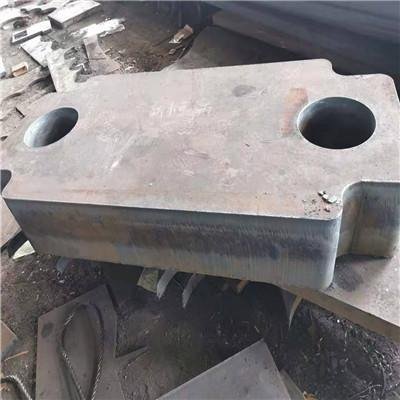


What is cast steel? What is the difference between cast steel and cast iron?
![图片[1]-What Is Cast Steel? What Is The Difference Between Cast Steel And Cast Iron?-Dalian Fuhong Machinery Co., Ltd](/wp-content/uploads/2026/05/1779386886201_0.jpg)
Core components of cast steel material
The main material of cast steel is steel, which is an iron-carbon alloy. The iron element in the steel occupies the dominant position, and its carbon content is usually less than 2%. In addition to carbon, a small amount of alloying elements are added, such as manganese, silicon, chromium, nickel, etc., to improve strength, toughness or corrosion resistance. The material of steel castings can be adapted to different working conditions by adjusting the alloy ratio. For example, manganese is added for wear-resistant conditions, and chromium is added for corrosion-resistant conditions.
In actual production situations, the selection of cast steel materials directly affects the performance of castings. In 2023, a domestic heavy machinery manufacturing factory selected alloy cast steel with a manganese content of 1.5% when producing large steel castings. The final product had a tensile strength of more than 600 MPa, which met the load-bearing requirements of mining equipment. This shows that the ratio of materials is the key to the performance of cast steel.
Chemical composition determines classification
The essential difference between cast steel and cast iron lies in the chemical composition, especially the carbon content. According to national standards, if the carbon content is higher than 2%, it is generally called cast iron, while if the carbon content is lower than 2%, it is classified as steel. The carbon content of cast steel is generally in the range of 0.2 to 0.6 percent, while the carbon content of cast iron is often in the range of 2.5 to 4 percent. This difference has a direct impact on the brittleness and plasticity of the material.
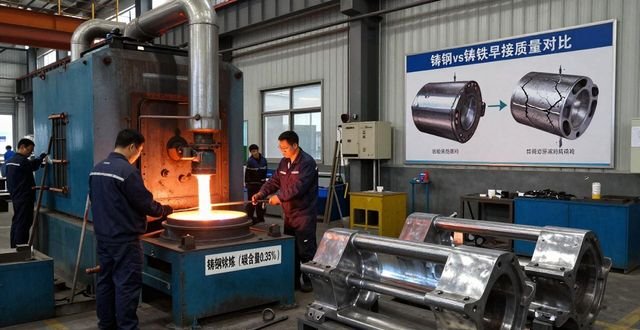
For example, in 2024, a foundry in Shanghai received a batch of orders for heavy-duty butt rivet weldments. The customer requested that the material be cast steel. This factory strictly controls the carbon content during smelting, allowing it to be 0.35% heavy-duty assembling and riveting of steel castings and rolled thick plates to ensure that subsequent welding will not cause cracking. If the wrong cast iron material is used, the high carbon content will cause cracks during welding, which will directly affect the quality of riveting welding. Therefore, when selecting materials, a clear distinction must be made.
The difference in mechanical properties is obvious
The mechanical properties of cast steel are significantly stronger than those of cast iron, mainly in terms of strength and toughness. The tensile strength of cast steel is generally in the range of 400 to 800 MPa, and the elongation can reach more than 10% . Heavy-duty assembly and riveting of cast steel parts and rolled thick plates , while the tensile strength of cast iron is usually only 200 to 400 MPa, the elongation is almost zero, and it is extremely brittle. In heavy-duty assembly and riveting scenarios, cast steel can withstand even greater impact and tensile loads.
For example, in 2022, a heavy industry enterprise in Shandong used steel castings as stress-bearing nodes when assembling large structural parts. Its yield strength can reach 350 MPa, which ensures that the overall structure is in a safe state. However, if cast iron parts are used in the same position, due to their poor toughness , heavy-duty assembly and riveting of steel castings and rolled thick plates will easily break in places where the riveting stress is concentrated. Therefore, cast steel is more suitable for heavy components that bear dynamic loads.
Flowability and shrinkage characteristics
The fluidity of cast steel is worse than that of cast iron because the melting point of molten steel is higher and its viscosity is also relatively high. During the pouring operation, it is necessary to preheat the mold to ensure that the molten steel can fully fill the mold cavity. At the same time, the shrinkage rate of cast steel is relatively large, and its linear shrinkage rate is roughly in the range of 1.5% to 2%. However, the shrinkage rate of cast iron is relatively small. Therefore, steel castings need to reserve a larger scale during casting, and risers must be set up for feeding operations.
In a casting workshop in Jiangsu, technicians designed a special riser system for heavy steel castings. This system makes the inside of the castings become dense after shrinkage, and there is no shrinkage cavity. Compared with iron castings, the casting process of steel castings is more complex. This process requires precise control of the pouring temperature and speed. Otherwise, defects such as cold shut or shrinkage will easily occur. This will inevitably lead to higher technical requirements for operators.
Weldability has obvious advantages
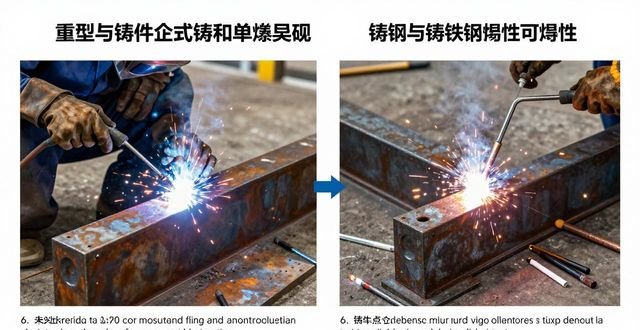
In heavy-duty butt-riveting welding, the weldability of cast steel is better than that of cast iron, which is a key advantage. Cast steel contains less carbon and is less likely to have hardened structures and cracks during welding. Common carbon steel castings can be welded with ordinary welding rods and do not require complicated preheating or post-heat treatment. However, cast iron contains high carbon content and can easily produce white structure during welding, causing the weld to be brittle and cracked. Special welding rods and heating processes are usually required.
In 2023, in a steel structure factory in Guangdong, workers used carbon dioxide gas shielded welding to splice steel castings. The welding speed was 200 millimeters per minute, and the weld quality qualification rate reached 98%. However, when cast iron parts are welded under the same conditions, the pass rate is less than 50%. Therefore, cast steel is more suitable for heavy-duty butt-riveted weldments that require frequent welding and maintenance.
Application fields have different focuses
Cast steel is mainly used for parts that bear high loads, or bear impact, or bear complex stress, such as heavy machinery frames, gearboxes, wheels, etc. What is cast iron? The difference between cast steel and cast iron is that it is mostly used in components that are mainly subject to pressure; have complex shapes; and also require vibration damping, such as machine tool beds and engine blocks. In the field of heavy-duty butt rivet welding, steel castings are often used for structural connection nodes and stress-bearing frames.
For example, in 2024, a bridge manufacturing company in Hebei made full use of steel castings when welding large bridge tower nodes, and its fatigue life was tested more than two million times. However, cast iron parts are not suitable for making such dynamic load structures because of their relatively high brittleness. Therefore, when selecting materials, you must first clarify the working conditions. Cast steel is suitable for stress-bearing parts, and cast iron is suitable for vibration-absorbing parts.
In the operation process of heavy-duty assembly butt riveting welding, has your company ever encountered the problem of cracking in the welding due to the wrong material selection? Welcome to the comment area to share relevant experiences, like and forward, so that more people know the difference between cast steel and cast iron.




暂无评论内容