Author: fc87

  • [Dalian Furhong Machinery: Your Trustworthy Service Partner for High-Precision Machining and CNC Machining

    [Dalian Fu Hong Machinery]: Your reliable partner for high-precision machining and CNC machining services

    Article Text:

    When your products demand the highest levels of precision, reliability and consistency from your parts, you need a manufacturing partner that is just as exceptional. [YOUR COMPANY NAME] is just such a service provider specialising in high-precision machining and CNC machining, and we are dedicated to turning your ideas into a perfect reality.

    Why choose [Dalian Furong Machinery]?
    Leading Manufacturing Capabilities
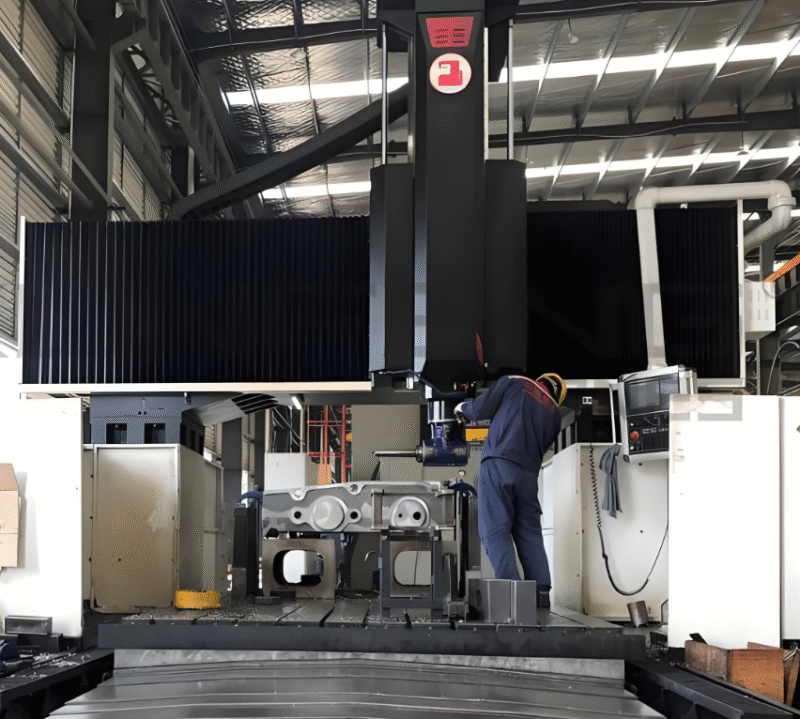
    We have invested in top-notch machining equipment, including [to name a few of our core high-end equipment, e.g. 5-axis CNC machining centres imported from Germany, precision mill-turn centres from Japan], to ensure that we are able to cope with challenges ranging from complex curved surfaces to micron-level precision.

    Cross-industry expertise
    Our team has a wealth of project experience and in-depth service:

    Medical Device: Proficient in machining sterile, high finish parts to GMP standards.

    Aerospace: Familiar with the process of difficult-to-machine materials such as titanium alloys and high-temperature alloys.

    Automotive industry: High-performance core components for engines and transmission systems.

    Industrial automation: Fast delivery of high-precision robotic parts and fixtures.

    Seamless quality closure
    We firmly believe that “quality is made and tested”. From the incoming inspection of raw materials, to the IPQC during processing, to the FQC for final shipment, we use [list of testing equipment, such as: Zeiss CMM] to ensure that every product delivered to you 100% meets the requirements of the drawings.

    Customer-centred service processes

    Requirements communication: professional sales engineers one-on-one docking, understanding your core needs.

    Technical Review: Senior process engineers analyse drawings for manufacturability and make recommendations for optimisation.

    Quick Quote: With our proven quotation system, we promise to provide a detailed quote within 24 hours.

    Production and Delivery: Project Manager follows up the whole process and provides real-time feedback on progress to ensure on-time delivery.

    Our core service areas
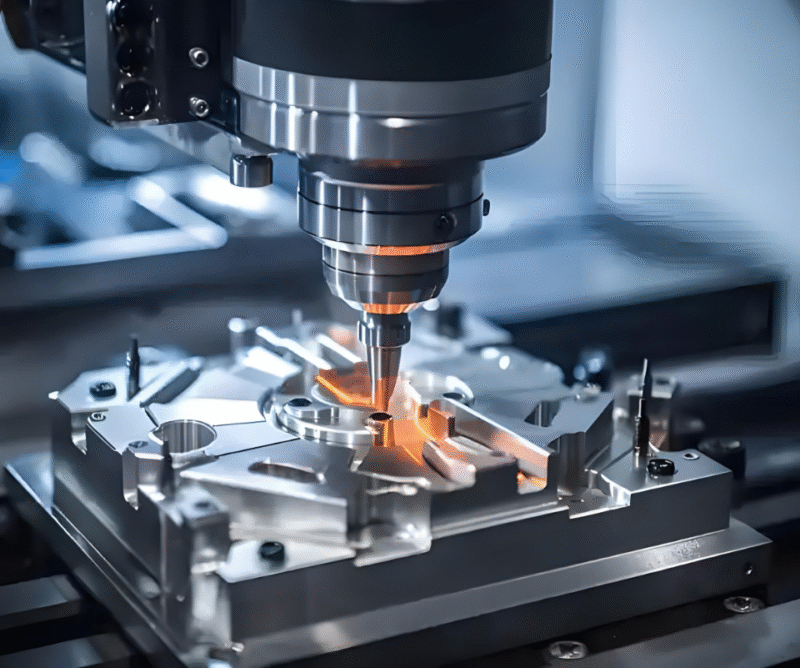
    Multi-axis CNC turning and milling

    Precision grinding and honing

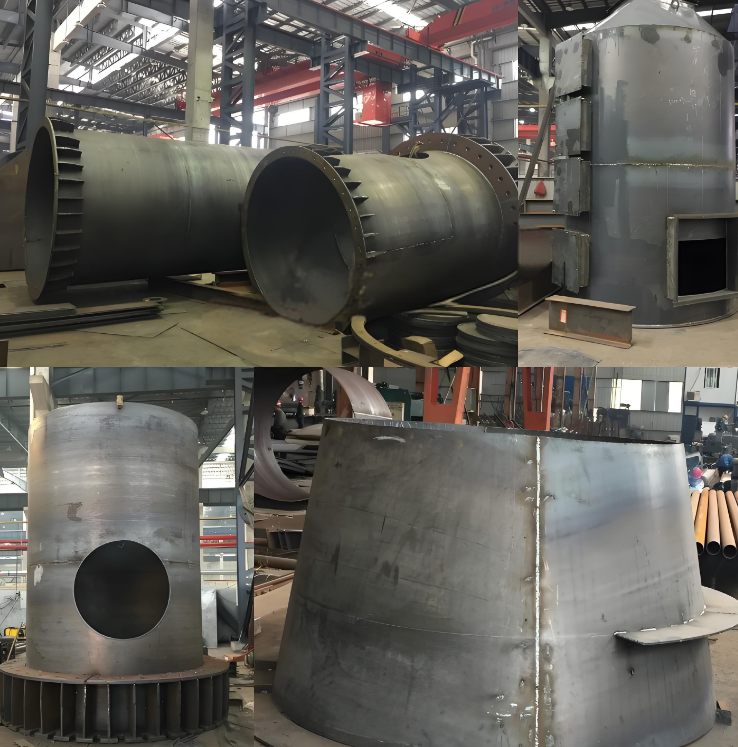
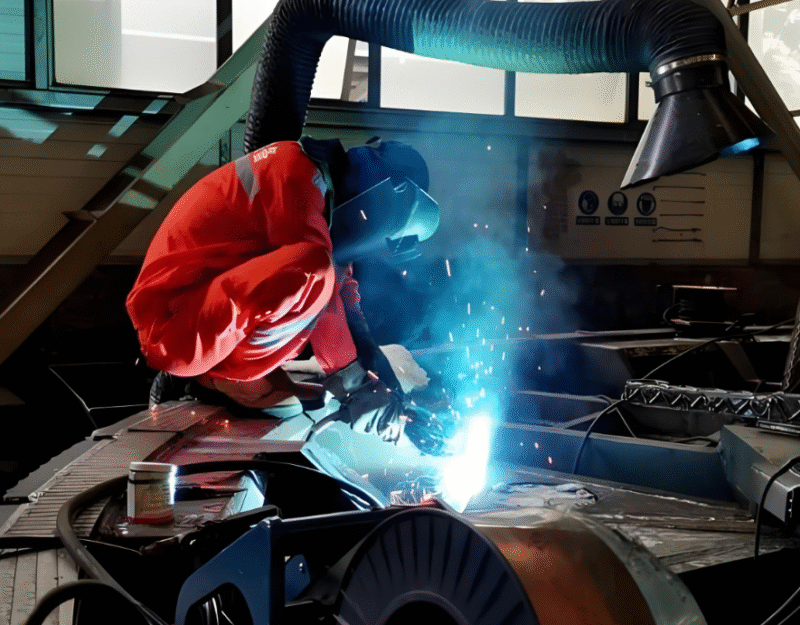
    Sheet metal working and welding

    Small to medium volume production

    [Strong Call to Action CTA]
    Your success starts with a right choice. Stop struggling to find qualified machining suppliers.
    Act now, there are three ways you can connect with us:

    Click hereGet an online quote now! (Link to RFQ form)

    Check out our success stories to see how we’ve helped other customers solve manufacturing challenges.

    Let Dalian Fu Hong Machinery] to be your most reliable manufacturing extension!

  • How to choose a reliable machining manufacturer?5 core elements to help you avoid pitfalls and ensure the quality of parts

    How to choose a reliableMachining Manufacturer5 Core Elements to Help You Avoid Potholes and Ensure Part Quality

    Finding a reliable machinist is a critical step in the success of a project as it moves forward. The wrong choice can lead to substandard parts, delivery delays, cost overruns, and a host of other problems. Don’t worry, this article will serve as your guide to uncovering the 5 core elements of evaluating a quality machining supplier.

    Element I: Technology and equipment capacity
    Advanced equipment is the hardware foundation for precision machining.

    Check the equipment list: Quality manufacturers usually disclose their equipment, such as 5-axis CNC machining centres, high-speed milling machines, precision grinders, etc.

    Ask about machining ranges: Find out what materials they can handle (e.g. stainless steel, aluminium alloys, titanium alloys, engineering plastics) and the maximum machining dimensions.

    Element 2: Process knowledge and experience
    It’s not enough to have the equipment, you need to know how to use it.

    Industry experience: Ask if they have handled similar parts in your industry (e.g., medical device parts with special biocompatibility and cleanliness requirements).

    Technical communication: At the inquiry stage, observe whether their engineers can make professional process optimisation suggestions, such as how to design a structure that is more conducive to processing.

    Element III: Quality Assurance System
    Quality is a lifeline and cannot be based on mere lip service.

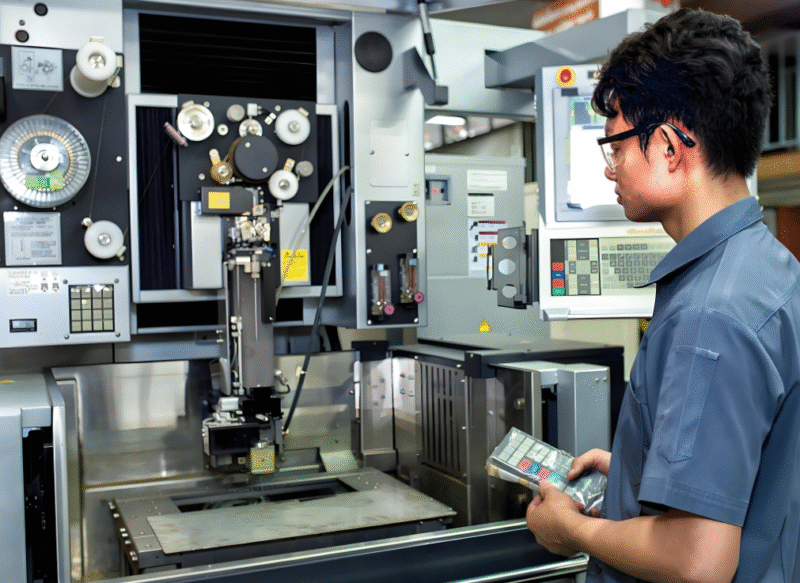
    Inspection equipment: Confirm that they have professional inspection tools such as CMMs, optical projectors, roughness meters, etc.

    Quality standards: Find out if they follow international quality system standards such as ISO 9001 and can provide full test reports.

    Element IV: Production management and delivery capacity
    Delivering on time is equally important.

    Capacity Assessment: Communicate your expected production volume and assess whether its capacity can be met.

    Project management: Find out if their production process is standardised and if they have a dedicated project manager to follow up and ensure transparency of information.

    Element 5: Communication and Service Awareness
    Smooth communication prevents most misunderstandings.

    Speed of response: On initial contact, feel if the response is timely.

    Cooperative attitude: A good supplier is your partner, not just an order taker, and should have a proactive approach to problem solving.

    [Call to Action CTA]
    Select [Dalian Fu Hong Machinery], is to choose a saving and guarantee. We are fully equipped with the above five core strengths and have already provided high-quality machining services for [a well-known industry or customer]. Upload your part drawings now and our engineers will provide you with a professional assessment and competitive quotation within 24 hours!

  • What is machining (machining)? A look at all the core processes of CNC machining, turning, milling, drilling and grinding

    in manufacturing and product development.“machining”Machining“ (also often referred to as ”machining”) is an essential cornerstone. But do you really know what it’s all about? In this article, we’ll take you on a deep dive into the world of machining, so you’ll be able to get to grips with the skills that have shaped modern industry.

    I. Definition of machining (machining)
    Machining refers to the process of using machining equipment (e.g., lathes, milling machines, grinders, etc.) to precisely remove material by cutting, drilling, grinding, etc., and to process blank materials (e.g., metal, plastic blocks) into precision parts that meet the requirements of the design drawings. The core of the process is “material reduction manufacturing”, which pursues high precision, high efficiency and excellent surface quality.

    Second, several core machining process details
    turning

    Principle: The workpiece is rotated and the tool is fed in a straight or curved line for cutting.

    Main applications: Specialised in the manufacture of cylindrical and conical parts, such as shafts, sleeves and threads.

    milling

    Principle: The tool is rotated and the workpiece is fixed on the table, moving in multiple axes to cut complex contours.

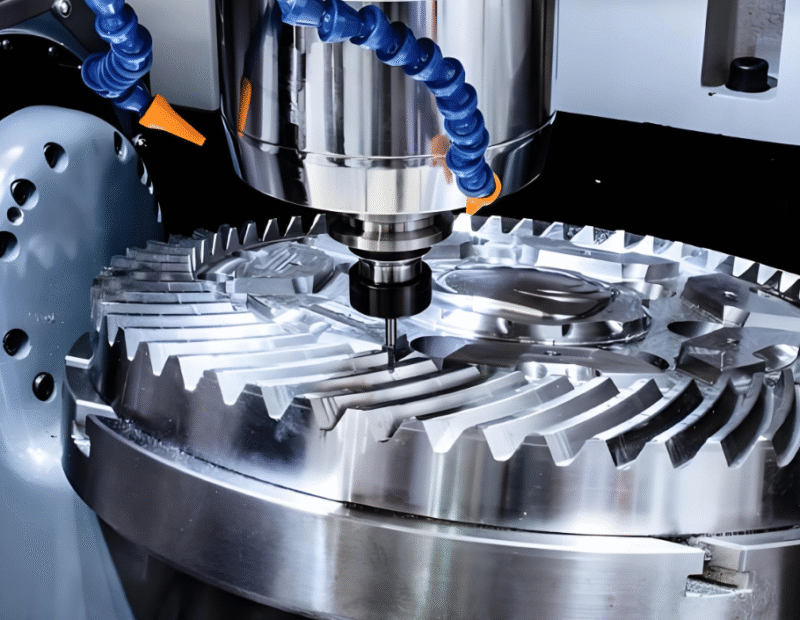
    Main applications: For machining flat surfaces, grooves, gears, complex three-dimensional surfaces, etc. with great flexibility.

    drilling

    Principle: Designed for machining round holes in workpieces.

    Main applications: Adding bolt holes, pin holes, etc. to components.

    Grinding

    Principle: The use of a high-speed rotating grinding wheel to make micro-cuts on the surface of the workpiece.

    Main applications: As a finishing process to obtain very high dimensional accuracy and excellent surface finish.

    Third, the king of modern machining: CNC machining
    Today, the vast majority of precision machining relies on CNC (Computer Numerical Control) machining. It enables automation, high complexity and mass production by controlling the machine through pre-programmed computer software.

    Advantages: excellent repeatability, unmanned operation, machining of extremely complex geometries, high productivity.

    Fourth, how to choose a reliable machining service provider?
    When choosing a partner, look for the following:

    Equipment Capability: Do you have advanced equipment such as multi-axis CNC machines?

    Process Experience: Are you well versed in the machining requirements of your industry (e.g., automotive, medical, aerospace)?

    Quality system: Is there a well-established quality inspection process (e.g. CMM)?

    Communication and Service: Can you respond quickly and provide professional technical support?

    [Call to Action CTA]
    If you have a need for parts machining and are looking for a skilled and reliable qualityMachining ManufacturersDalian Fuhong Machinery] has more than 15 years of experience in CNC machining and serves customers from many industries! [Dalian Fuhong Machinery] has over 15 years of CNC machining experience and serves customers in many industries. Contact us today for a free machining solution consultation and quote!

  • [Dalian Furong Machinery]: Professional precision welding and dissolution control technology to give your products excellent connection reliability

    [Dalian Furong Machinery]: Professional precision welding and dissolution control technology to give your products excellent connection reliability

    In the field of high-end manufacturing, welding is no longer just about “connecting”, but is the core guarantee of product performance, life and safety. [Your Company Name] is deeply committed to the field of precision welding, turning the micro-science of dissolution control into the macro-value we create for our customers.

    Core welding techniques we specialise in
    High-energy beam welding (laser welding/electron beam welding)

    Technical features: Extremely high energy density and precisely controlled heat input enable perfect welds with large depth-to-width ratios and minimal distortion.

    Dissolution control: Extremely fast cooling inhibits the growth of brittle phases and is particularly suitable for joining dissimilar metals (e.g. copper to aluminium, steel to titanium).

    Application Scenarios: Medical devices, aerospace precision components, power battery cell connections.

    Vacuum brazing and shielded atmosphere brazing

    Technical features: Carried out in an oxygen-free environment, no flux is required, resulting in absolutely clean, oxidation-free, high-strength welds.

    Dissolution control: By precisely controlling the furnace temperature profile and holding time, we ensure optimum dissolution and diffusion of the brazing material into the base material, avoiding excessive erosion and resulting in extremely dense joints.

    Application Scenarios: Tungsten carbide tools, aerospace hot end components, semiconductor manufacturing equipment cavities.

    Automated and Intelligent Welding Systems

    Technical features: Integrated robotics, vision sensing and real-time quality monitoring ensure consistency and traceability of each weld.

    Dissolution Control: The system monitors current, voltage and temperature in real time to ensure that the heat input is always within the process window, eliminating poor dissolution due to fluctuating parameters at the source.

    Professional challenges we have overcome
    Perfect joining of dissimilar materials: Challenges due to coefficient of thermal expansion and metallurgical compatibility are solved by precise interlayer design and process control.

    Non-destructive welding of ultra-thin-walled parts: With precise control of heat input, welding of thin pieces of 0.1 mm or less is possible without distortion or burn-through.

    Stable welding of highly reflective materials: For example, for the laser welding of copper and aluminium, we have a proven process package that ensures a stable process.

    [Strong Call to Action CTA]
    Your product deserves a foolproof connection solution. By choosing[Dalian Furong Machinery] you are choosing a reliable commitment to quality.
    Let us be your welding R&D centre and manufacturing department:

    For standard requirements: Upload your part drawings and specifications now and get a quick quote online.

    For technical challenges: Call our Technical Director directly on 13942620826 to discuss the cutting-edge welding possibilities.

    See how we’ve solved core component connectivity challenges for industry leaders in our success story.

  • Welding defects: How to avoid weld failures due to “dissolution” problems?

    solderedDefect analysis: How to avoid weld failures due to “dissolution” problems?

    When a welded joint fails, often the problem is not in the material itself, but in the microscopic “dissolution” process. Understanding and controlling dissolution is the key to eliminating common welding defects and improving product yields. This article will act as your weld diagnostician, taking you to troubleshoot typical problems caused by improper dissolution.

    Common defects I: excessive dissolution
    Phenomenon: Welding seam edges appear notch (bite edge), the base material is “gouged”; serious cases even burn through the sheet.

    Causal analysis:

    Excessive heat input: too high current, too slow welding speed.

    Excessive soldering time: In brazing, too much heating time leads to excessive dissolution of the base metal in the brazing material.

    Solder/base material mismatch: The selected solder is too aggressive to the base material.

    Solution:

    Optimisation of welding parameters and use of pulse welding to reduce heat input.

    Precise control of brazing holding time.

    Re-select the solder with lower activity or more compatible operating temperature.

    Common defect II: insufficient dissolution
    Phenomenon: The solder can not be spread when brazing, just gathered into a ball; low strength of the weld, easy to peel.

    Causal analysis:

    Insufficient temperature: Failure to reach the temperature required for the solder to actually melt and dissolve with the base metal.

    Poor surface cleanliness: Oxide film, oil and grease prevent the solder from contacting the base metal.

    Flux failure: Insufficiently active or deteriorated flux to effectively dissolve the oxide film.

    Solution:

    Calibrate heating equipment to ensure accurate temperatures.

    Strictly enforce pre-weld cleaning procedures (e.g. pickling, mechanical grinding).

    Select a high quality, activity-matched flux and pay attention to its effective protection range.

    Common defect III: Brittle phase generation
    Phenomenon: weldAppearance is good, but brittle fracture occurs when subjected to force.

    Causal analysis: When there is excessive dissolution and diffusion between the solder and the base material, hard and brittle intermetallic compounds may be formed at the bonding interface.

    Solution:

    Strictly control the welding temperature and holding time.

    An intermediate layer is added between the base metal and the solder to block the direct interaction of harmful elements.

    [Call to Action CTA]
    Theory is the basis, but the real challenge lies in the ever-changing actual production environment. If you are troubled by recurring welding quality problems, [Dalian Fu Hong Machinery] can provide you with a package solution. From material selection, process commissioning to quality inspection, we are there for you every step of the way. Send us a sample or description of your defect immediately and our engineers will conduct a free root cause analysis for you!

  • Dissolving and Welding: Uncovering the Science and Key Processes of Weld Formation

    Dissolving and welding: Uncovering the science and key processes of weld formation

    In the wonderful world of welding, “dissolution” is a crucial physico-chemical process that directly determines the strength and reliability of the weld head. Many people mistakenly think that welding is simply a matter of “melting and bonding”, but behind the scenes is a sophisticated process of “dissolution” and “diffusion” at work. This article takes a closer look at the science of dissolving and welding.

    I. What is “dissolution” in welding?
    In the context of welding, “dissolution” usually means:

    Mutual dissolution of base material and solder: In brazing and fusion welding, the molten solder (or filler metal) interacts with the solid base material surface, with atoms of the base material dissolving into the liquid solder, while atoms of the solder diffuse into the base material to form a transition layer with a gradual change in composition.图片[1]-溶解与焊接:揭秘焊缝形成的科学原理与关键工艺-大连富泓机械有限公司

    Dissolution and removal of oxide film: In aluminium or stainless steel welding, the key role of the flux is to dissolve and remove the oxide film on the surface of the base material, so that the pure metal surface is exposed and a good fusion can be achieved.

    II. Core welding process based on the “dissolution” principle
    Fusion Welding – Thorough dissolution and re-solidification

    Process: The weld area (base material and filler material) is heated until it melts, forming a common melt pool. In this molten pool, the different metal elements are fully dissolved and mixed, and when cooled, a new, uniform weld metal crystal is formed.

    Applications: MIG/MAG welding, TIG welding, laser welding. Suitable for joining high strength structural parts.

    Brazing – precise capillary soluble joints

    Process: The base material is not melted, but only brazing materials with lower melting points (e.g. copper- and silver-based brazing materials) are heated and melted. The molten brazing material fills the gap by capillary action and forms a strong metallurgical bond by slight dissolution and diffusion with the surface of the base material.

    Applications: Air conditioning ducts, circuit boards, carbide cutting tools, jewellery. Suitable for precision, dissimilar material connections.

    III. Why is it important to control “dissolution”?
    Improper dissolution can lead to serious welding defects:

    Excessive dissolution: Leads to edge biting, burn-through of the base material, or the formation of brittle intermetallic compounds, which reduces the strength of the joint.

    Insufficient dissolution: The solder is not firmly bonded to the base material, but only mechanically attached, and is prone to peeling.

    [Call to Action CTA]
    The mystery of welding is much more than that, a quality weld comes from the precise control of every detail. If you are facing technical difficulties in welding, or have high demands on the reliability of your product connections, Dalian Fuhong Machinery] is your reliable partner. We are well versed in the science of dissolution and welding, welcome to contact our expert team for a free technical consultation!

  • Rivet Welding and Dissolution Technology Shape Manufacturing Future Together

    Rivet Welding and Dissolution Technology Shape Manufacturing Future Together
    The next chapter in manufacturing is being written in a double play of material connections and separations

    Manufacturing stands at a turning point. Traditional process boundaries are blurring, replaced by the deep integration of multiple technologies. In the midst of this transformation, the combination of rivet welding and dissolution technologies is quietly shaping the future picture of manufacturing. This article looks at how this convergence trend is redefining the manufacturing process and how organisations can prepare for this future.

    Technology convergence: paradigm shift from singularity to synergy
    Traditionally, in the classification of manufacturing processes, riveting and welding and dissolution technology are in different fields – the former focuses on joining materials, the latter on separating them. However, this boundary is breaking down. The synergistic effect of the two technologies is creating the value of one plus one over two.

    In the automotive industry, press riveting (SPR) has been widely used as a mechanically cold-formed joint for aluminium-aluminium and aluminium-steel connections.8 At the same time, an understanding of the inter-material solubility behaviour has become crucial for optimising the joining parameters and improving the reliability of the joints.7 This intersection of knowledge from different technological fields is typical of the future development of the manufacturing industry.

    Intelligent transformation: data-driven process optimisation
    With the in-depth application of Industry 4.0 technology, the rivet welding and dissolution process is rapidly developing in the direction of digitalisation and intelligence. Taking the research of aluminium alloy unilateral self-punching friction rivet welding process in Shanghai Jiaotong University as an example, the two-stage process is optimized through orthogonal experimental design, and the trend of the test indexes with the change of factors is analysed, so that the optimal process parameters-3 are finally selected.

    A similar approach applies to dissolution process optimisation. For example, an efficient dissolution process in the Bohai Oilfield significantly improved dissolution efficiency by finely controlling the three phases of dissolution-4. This data-driven approach to process optimisation will become standard practice for manufacturing companies in the future.

    Sustainability: the dual contribution of green manufacturing图片[1]-铆焊焊接与溶解技术共同塑造制造业未来-大连富泓机械有限公司
    The combination of rivet welding and dissolution technology offers unique value when it comes to green manufacturing and sustainability:

    1. Material efficiency gains

    Advanced rivet welding technologies, such as single-sided self-pierce friction rivet welding, reduce material use through optimised joint design-3, while dissolution technologies, such as the polystyrene recycling process, support the circular economy model by converting waste plastics into reusable pellets through solvent dissolution-9.

    2. Optimisation of energy consumption

    Solid-state joining techniques in rivet welding, such as friction elements, typically consume less energy than conventional fusion welding. And efficient dissolution processes, such as polymer dissolution applied in the Bohai Oilfield, improve energy efficiency by optimising process parameters-4.

    Future Application Scenarios
    1. Manufacture of multi-material structures

    Future product structures will be more multi-material design to fully utilise the performance advantages of each material. In this context, the combination of rivet welding and dissolution technology will provide more solutions for joining dissimilar materials. For example, intermediate layers or transition structures prepared by dissolution technology can optimise the performance of rivet-welded joints.

    2. Adjustable connection technology

    Based on a deeper understanding of the solubility behaviour of materials, the future may see the emergence of tunable joining technologies – joins that remain strong under certain conditions and can be easily separated under another. Such controllable connections are important for product recycling and reuse.

    3. Distributed manufacturing model

    Efficient dissolution technologies make the geographically distributed recycling and reuse of materials more feasible-9 while advanced rivet welding soldering technologies support the localised manufacturing model. The combination of these two technologies provides technical support for a distributed manufacturing model.

    Corporate Response Strategies
    In the face of the trend towards the integration of rivet welding and dissolution technologies, manufacturing companies can consider the following strategies:

    Cultivation of interdisciplinary talents: Breaking down the boundaries of traditional specialisations to cultivate complex talents who master both material joining and separation technologies.

    Focus of R&D investment: Increased R&D investment in cross-cutting technology areas, especially in cross-innovation of material interface behaviour and processes

    Building a co-operative ecosystem: establishing co-operation with universities and research institutes to track the latest technological developments, such as the innovative process of unilateral self-punching friction riveting welding and other innovative processes-3

    Digital tool application: introduction of advanced simulation and data analysis tools to optimise process parameters and improve product quality and productivity

    concluding remarks
    The integration of rivet welding and dissolution technology is much more than a simple superposition of two manufacturing processes. It represents a new paradigm in the development of manufacturing – from isolated process optimisation to systematic material handling solutions, and from single technology breakthroughs to cross-field collaborative innovation. For manufacturing enterprises, grasping this trend and actively laying out cross technology fields will be the key to taking the lead in future market competition. With the continuous progress of materials science and process technology, this cross-border integration will open up more new possibilities for the manufacturing industry and redefine the way we manufacture products.

  • Application of Dissolution Technology in Rivet Welding: Principles, Processes and Case Studies

    Application of Dissolution Technology in Rivet Welding: Principles, Processes and Case Studies
    The process boundaries of manufacturing are being redefined when dissolution ceases to be a separation and becomes a bridge to connectivity

    In the field of rivet welding and soldering, dissolution is much more than a simple material separation process. From the formation of the solder alloy to the quality control of the joints, an in-depth understanding of the dissolution behaviour has become a key factor in optimising the joining process. In this paper, we will discuss the application principles, specific processes and practical examples of dissolution technology in rivet welding.

    Solubility: a basis for material dialogue in rivet welding soldering
    Solubility is essentially the ability of one substance to dissolve into another substance-7. In rivet welding welding, this definition is reflected on two levels:

    Alloy Manufacturing Stage: The various elements that make up the solder alloy must dissolve into each other to form an alloy of the correct composition. If they do not mix/diffuse well, precipitates of individual metals are obtained in the solidified product-7.

    Stage of the soldering process: Solubility depends on the ability of the alloy to diffuse in the metallisation. The solubility/diffusion rate in the substrate is different for different solder alloys-7.

    Understanding this is essential for the optimisation of the rivet welding process. For example, in the unilateral self-punching friction rivet welding process, the friction between the rivet and the material produces heat to soften the plate to be joined, and the mutual diffusion behaviour of the materials in this thermodynamic coupling process directly affects the quality of the joint-3.

    Heat-dissolution coupling effects in rivet welding soldering图片[1]-溶解技术在铆焊焊接中的应用:原理、工艺与案例解析-大连富泓机械有限公司
    In advanced rivet welding welding process, there is a close coupling between heat input and dissolution behaviour. Taking the aluminium alloy unilateral self-punching friction rivet welding process researched by Shanghai Jiaotong University as an example, its process principle is to use high-speed rotating semi-hollow rivets to rivet into the plate to be connected, and the friction between the rivet and the material produces heat to soften the plate to be connected-3.

    In this process, the heat input changes the dissolution properties of the materials, and the mutual dissolution of the materials affects the heat transfer and joint formation. It has been shown that under some parameters, the material between the upper and lower plates of the joint forms a metallurgical connection under the action of heat-3, which is similar to the mutual dissolution of metals in conventional welding.

    Application of the dissolution process in connection pre-treatment
    Dissolution technology also plays an important role in the pre-treatment stage of joining. Taking the efficient polymer dissolution process applied in the Bohai Oilfield as an example, the process controls the polymer dry powder dissolution time to about 40 minutes by optimising the three stages of the dissolution process-4, which greatly improves the efficiency of the subsequent joining process.

    A similar principle is used in metal joining pre-treatment. By means of specific dissolution techniques, oxidised layers or contaminants can be removed from the metal surface, creating more favourable surface conditions for subsequent rivet welding.

    Practical Example: Dissolution Technology Optimised Riveting Welding
    Case 1: Automotive Lightweight Connectivity

    In automotive lightweight manufacturing, press riveting (SPR) has been widely used for aluminium-aluminium joining and aluminium-steel joining-8 In this process, the understanding of the dissolution behaviour of the coated metal directly influences the selection of joining parameters. For example, the joining of galvanised steel sheets to aluminium alloys requires full consideration of the mutual dissolution characteristics of zinc and aluminium at elevated temperatures in order to avoid the formation of brittle phases.

    Case 2: Plastic-metal composite structural connections

    Dissolution technologies have shown unique value in the joining of plastic-metal composite structures. For example, the polystyrene dissolution process uses solvent dissolution to dissolve polystyrene waste plastic and recycle polystyrene pellets by heating, degassing, extruding and pelletising.9 This type of process can be used to prepare an intermediate layer for plastics-metal joining to optimise the joining properties of dissimilar materials.

    Process optimisation: parameter selection based on dissolution behaviour
    Parameter optimisation based on material dissolution behaviour is crucial in the development of rivet welding welding process. Taking the research of unilateral self-punching friction rivet welding process in Shanghai Jiao Tong University as an example, the two-stage process was optimised by orthogonal experimental design, and the joint geometric evaluation index and mechanical properties were used as the experimental indexes, respectively, and the optimal two-stage process parameters were selected in the end-3.

    A similar approach applies to other forms of rivet welding soldering. By analysing the dissolution behaviour of the material in the coupled heat-force field, the process window can be determined more precisely, improving the quality of the joint and process stability.

    concluding remarks
    The convergence of dissolution technology with rivet welding and soldering represents a shift in manufacturing away from traditional process classification towards interdisciplinary integration based on materials science. An in-depth understanding of dissolution behaviour not only helps us to optimise existing joining processes, but also provides a scientific basis for the development of next-generation joining technologies. For manufacturing companies committed to technological innovation and process optimisation, capitalising on this convergence of technologies will be a key strategy to stay ahead of the competition.

  • Rivet Welding Welding and Dissolving Technology: The Invisible Ally of Modern Manufacturing

    Rivet Welding Welding and Dissolving Technology: The Invisible Ally of Modern Manufacturing
    Behind the seemingly indestructible metal connection is a delicate dance between materials science and fluid dynamics.

    When we talk about joining technologies in manufacturing, riveting and welding are often seen as two distinct processes. However, in today’s state-of-the-art manufacturing, they are forming an unexpected synergy with a seemingly unrelated technology: dissolution. This cross-border combination is redefining the way we approach joining and separating materials.

    Rivet Welding: The Perfect Balance of Non-Detachable and Detachable
    Rivet-weld welding, as a composite joining process, skilfully combines the strength of welding with the flexibility of riveting. In practice, it retains the advantages of high strength and air tightness of welded joints-1, while dispersing stress concentrations through riveted elements and improving the fatigue life of the joint-6.

    In aluminium alloy joining, the unilateral self-pierce friction riveting process demonstrates the advantages of this synergistic effect. The process utilises high-speed rotating semi-hollow rivets riveted into the plates to be joined, with friction heat generation softening the material to form a mechanical-solid phase composite joint-3. This thermally coupled process not only reduces plate deformation during joining, but also, in some parameters, allows the material between the upper and lower plates to form a metallurgical joint under the action of heat-3.图片[1]-铆焊焊接与溶解技术:现代制造业的隐形同盟-大连富泓机械有限公司

    Dissolution technology: an unexpected bridge from separation to connection
    The application of dissolution technology in manufacturing goes far beyond traditional materials separation or recycling. In welding, an understanding of the solubility of metals in welding is critical – it determines whether two metals can form an alloy of the correct composition-7.

    There are two ways of thinking about the solubility of solder alloys: either the two elements must dissolve into each other when the alloy is made in order to form an alloy of the correct composition, or during the soldering process, where solubility depends on the ability of the alloy to diffuse into the metallisation-7. For example, indium (In) diffuses at a different rate than tin (Sn) into copper (Cu), and some alloys such as BiPb do not diffuse into the copper metallisation at all-7. 7.

    Synergistic application of rivet welding and dissolving
    1. Polymer-metal composite connections

    Dissolution technologies show unique value when it comes to joining plastics to metals. For example, polystyrene dissolution technology uses solvents to dissolve waste plastics and recovers polystyrene pellets by heating, degassing, extruding and pelletising.9 The low reaction temperature of this type of dissolution process ensures that the quality of the recovered polymer material does not deteriorate.9

    2. Application of high-efficiency dissolution processes to joining pre-treatment

    The efficient dissolution process developed in the Bohai Oilfield controls the polymer dissolution time to around 40 minutes, setting the stage for the subsequent joining process-4. This process optimises the three phases of dissolution and significantly reduces the amount of platform space occupied by the dissolution system-4.

    Future outlook: the technological frontier of cross-border integration
    With the advancement of material science, the combination of rivet welding and dissolution technology will become closer. Especially in the field of multi-material structures (e.g. aluminium-steel hybrid joints) and heterogeneous material joints, a deeper understanding of the solubility behaviour between materials will directly determine the success of the joining process.

    Stamped riveting (SPR) has been widely used as a mechanical cold-formed joint for aluminium-aluminium and aluminium-steel joints in automotive lightweighting design.8 Understanding the solubility characteristics of different metals during the welding process is essential for avoiding joining defects and improving the reliability of the joints-7.

    concluding remarks
    The combination of riveting welding and dissolution technology represents a modern manufacturing industry that is moving from traditional process boundaries to multi-dimensional integration. This cross-border synergy not only solves the technical challenges that are difficult to deal with by a traditional single process, but also opens up new possibilities for joining and separating materials. For manufacturing companies committed to technological innovation and process optimisation, an in-depth understanding of the interaction of these two technologies will be a key strategy to maintain a leading position in the highly competitive market.

  • Seeing Machining: The Heart of Manufacturing from Drawing to Finished Product

    understand what one is reading or watchingmachining: Manufacturing core from drawing to finished product
    Machining, the cornerstone of manufacturing, is essentially a dance of materials, precision and efficiency.

    When you get a metal part with a great finish and a tight fit, have you ever wondered how it metamorphosed from a rough piece of raw material? That’s the beauty of machining. It’s not just about running the machine, it’s about a rigorous system of engineering that goes into the whole process of making a product. This article will take you in-depth “see” machining, to understand its core processes and internal logic.

    I. Core: turning, milling, boring, three basic process analysis
    There are many machining processes, but turning, milling and boring are considered to be the most basic and widely used of the three pillars.

    Turning: Imagine pottery drawing, where the raw material rotates and the tool is fixed to cut. Turning is similar, mainly for rotating parts (such as shafts, bushings, screws). The workpiece is rotated by the spindle, and the turning tool moves axially or radially to remove excess material and obtain cylindrical, conical, and other features.

    Milling: In contrast to turning, milling involves the rotation of the tool and the fixing of the workpiece. Through the high-speed rotation of the multi-flute milling cutter, it is possible to machine flat surfaces, grooves, and complex curved surfaces of the workpiece. It is extremely flexible and is the mainstay for machining box and plate parts.

    Boring: Boring comes into play when there is a need to finish a hole, especially to obtain a high degree of accuracy in the diameter, roundness and position of the hole. Boring tool in the hole has been pre-machined to rotate and feed, to achieve the “finishing” of the hole. For some large parts (such as engine block) on the precision hole system, boring is an indispensable process.

    Second, the soul: process regulations, manufacturing process “guide to action”
    If the equipment is the “muscle” of machining, then the process specification is the “brain” and “soul” of the command muscle. It is a guiding process document to ensure the quality of machining, improve productivity and control costs.图片[1]-看懂机加工:从图纸到成品的制造核心-大连富泓机械有限公司

    The development of a complete machining process protocol typically includes the following steps:

    Analysing product drawings: a thorough understanding of the function of the part, its technical requirements and its assembly relationship within the product. This is the cornerstone of all machining activities.

    Process Review: Determines whether the dimensions, views and technical requirements on the drawings are complete and reasonable, and analyses the structural workmanship of the part to ensure that it can be manufactured economically and efficiently.

    Determination of the blank: Depending on the requirements of the part, the most suitable form of blank is selected, such as a casting, a forging, a profile or a welded part. This directly affects the amount of subsequent machining, cost and part performance.

    Developing the process route: this is the heart of the matter. Need to determine which face to process first, after processing which hole; which features need roughing, which need finishing; in which link to arrange heat treatment and so on. The rationality of the route arrangement is directly related to the processing efficiency and accuracy of the parts.

    Selection of machine tools and fixtures: Assigning the right machine tools, fixtures, tools and gauges for each process.

    Determination of parameters: specification of machining allowances, process dimensions, tolerances and cutting quantities (cutting speed, feed, etc.) for each process.

    III. Evolution: CNC technology and automation, the engine of modern manufacturing
    While traditional machining is highly dependent on the experience of the operator, the introduction of CNC technology has brought about a revolutionary change.

    CNC machining: computer numerical control. The programmer writes a machining programme (G-code) based on a three-dimensional model, and the CNC system drives the machine’s axes to perform precise, complex movements automatically.

    The advantages that come with it:

    High complexity: complex surfaces and structures that are difficult to achieve manually can be easily machined.

    High Consistency: Once a programme has been validated, it can be repeated indefinitely to mass produce parts of consistent quality.

    High efficiency: human intervention is reduced, and with functions such as automatic tool change, machining efficiency is dramatically increased.

    Flexibility: When switching products, it is usually only necessary to change programmes and fixtures, making it highly adaptable.

    IV. Key: Quality control, guarantee of precision and reliability
    In machining, quality is made, not inspected. Still, inspection is the final hurdle to ensure that nothing goes wrong.

    Process capability: Ensure that the machine tool, cutting tools and process parameters work together to consistently produce a product that meets the required tolerances.

    Process inspection: operator self-inspection, quality inspector inspection, timely detection and correction of deviations.

    Final Inspection: Using high-precision gauges (e.g. CMM), the critical dimensions, form and positional tolerances and surface roughness of the completed parts are fully measured to ensure compliance with the drawings.

    V. Trends: Intelligent and sustainable development, the way forward
    Machining technology is still evolving and is currently moving towards intelligence and green sustainability.

    Smart manufacturing: AI and machine learning are being used to optimise machining parameters, predict tool life and implement predictive maintenance.

    Online services:Online CNC machining platformis on the rise, with users uploading CAD models to get instant quotes and choose materials for production, greatly simplifying the manufacturing process.

    Green Manufacturing: The industry is increasingly focusing on reducing energy consumption and the use of cutting fluids by optimising machining processes and making greater use of recyclable materials, working towards greener production.

    concluding remarks
    Understanding machining is not just about knowing a few machine tools or cutting tools, it’s about understanding the rigorous systems engineering thinking behind it. From a drawing to a precision part, it unites the wisdom of process design, the precision of CNC technology and the rigour of quality control.

    In today’s increasingly competitive manufacturing world, a deep understanding of machining means mastering the key code to turning innovative designs into quality products. Whether you are a design engineer, purchasing professional or manager, we hope this article will help you gain a deeper understanding of this core aspect of manufacturing.