
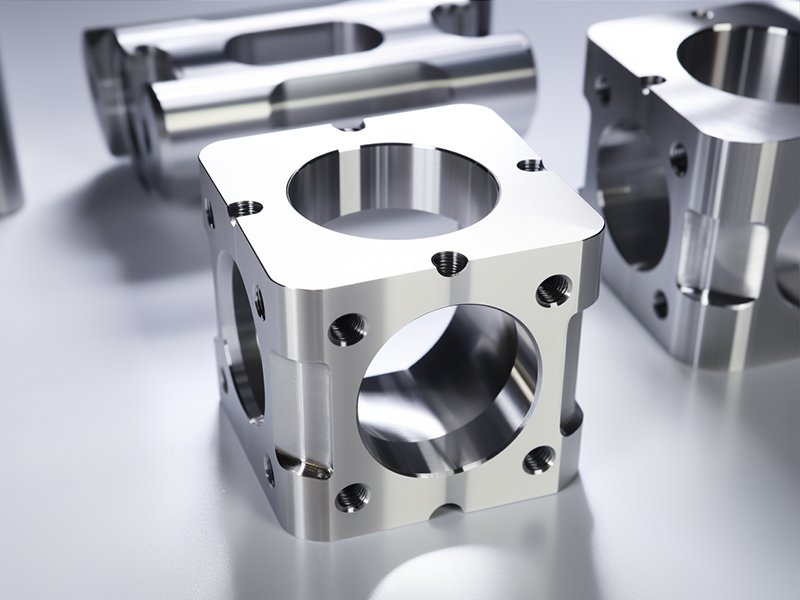
CNC Aluminum Machining: How to Optimize Processing Quality? (cnc aluminum processing)
Choosing the right aluminum alloy is the first step
The hardness of the aluminum alloy material has a direct impact on the processing efficiency. If the material is too hard, the tool will be prone to wear and even breakage. If it is too soft, the surface of the part will be prone to deformation or burrs. An industry survey conducted in 2025 showed that when using 6061 aluminum alloy for CNC machining, when the hardness is between HB90 and 110, the service life of the tool can be extended by 30%. For high-precision parts, such as the shells of medical devices, it is recommended to use 7075 aluminum alloy, which is relatively stronger, but requires special tools.
The chemical composition of the material must also meet national standards. For example, aluminum alloys with too high a silicon content can easily produce built-up edges during cutting, which can lead to rough surfaces. In 2024, an auto parts manufacturer used substandard ADC12 materials, resulting in 3,000 parts being scrapped. Choose an ISO-certified supplier like Southwest Aluminum to ensure that material performance remains stable. For specific parts with different uses, such as radiators or structural parts, the corresponding aluminum alloy grades must be relatively matched to avoid a "one size fits all" situation.

Tool selection determines processing efficiency
Processing materials require the hardness of the tool to match the coating. When processing aluminum alloys, it is recommended to use carbide tools. The hardness of these tools can reach above HRA89 and can effectively resist wear. In 2023, after a factory in Shenzhen switched to DLC-coated tools, the cutting speed was increased by 40%, and the surface finish was reduced from Ra3.2μm to Ra0.8μm. The geometric angle of the tool is also extremely critical. For example, it is recommended to set the rake angle to 15-20 degrees. The purpose of this is to reduce cutting resistance.
Regularly checking the status of the tool is the key to saving money. After every 100 parts are processed, use a microscope to check the wear of the blade. This is to avoid deviations in part size due to excessive and unreasonable use. According to the 2025 industry report, factories that regularly replace tools have reduced equipment downtime by 25%. For complex parts, specifically like drone frames, choosing customized tools can complete roughing and finishing in one go. This saves the time required to change tools.
Cutting parameters are not as small as possible
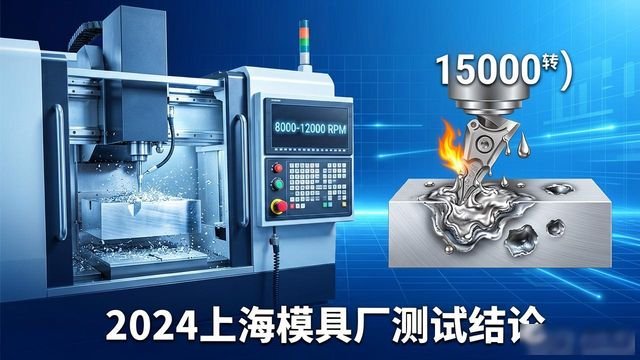
Spindle speed and feed speed need to be balanced. When processing 6061 aluminum alloy, the recommended spindle speed is in the range of 8,000 to 12,000 rpm, where the feed speed can be set to 0.1 to 0.3 mm per revolution. In 2024, during testing at a mold factory in Shanghai, it was concluded that if the rotational speed is too high, that is, more than 15,000 rpm, this will cause the aluminum alloy to melt and adhere to the tool head, leaving holes on its surface. If the feed speed is too slow, that is, less than 0.05 mm per revolution, the processing time will be extended and the cost will increase by 20%.
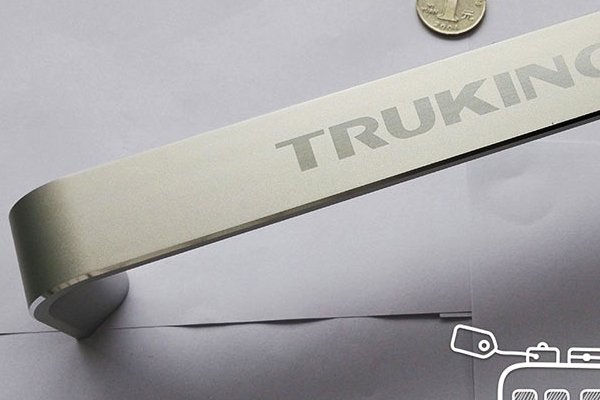
The depth of cut also needs to be controlled. During rough machining, the recommended value for a single depth of cut is in the range of 0.5 to 2 mm, while during finishing, the depth of cut needs to be reduced to the range of 0.1 to 0.3 mm. In 2025, a parts processing company located in Foshan successfully reduced the scrap rate from 5% to 1% by adjusting the depth of cut parameters. The cooling effect can be further achieved by using coolant. It is recommended to use water-based coolant with a flow rate of 10 to 15 liters per minute to avoid thermal deformation.
Clamp design reduces vibration
Processing stability is directly determined by the rigidity and positioning accuracy of the fixture. For thin-walled aluminum alloy parts, such as mobile phone casings, the use of vacuum suction cups can avoid clamping deformation. In 2024, after a Dongguan factory introduced a customized pneumatic fixture, the flatness of the part was reduced from 0.05 mm to 0.02 mm. Rubber gaskets need to be added to the contact surface of the clamp to prevent scratches on the material surface.
Regular calibration of the fixture position is also very important. After a production process, after every 200 parts are produced, a tool called a dial indicator is used to check the fixture offset. According to the data provided by the industry in 2025, if the fixture deviation exceeds 0.01 mm, then this will increase the fitting gap of the parts, which will affect the assembly-related work process. For mass production, if a quick-change fixture system is used, The mold change time can be reduced from the original 15 minutes to only 3 minutes, thus improving the overall production efficiency.
Cooling and lubrication cannot be spared
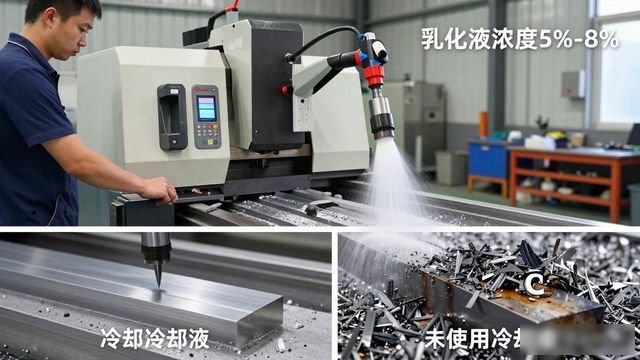
The choice of coolant will have an impact on heat dissipation and chip removal. When processing aluminum alloys, it is recommended to use emulsion, whose concentration needs to be controlled at 5% to 8%. It can not only achieve cooling, but also lubricate the cutting area. In 2023, a factory in Ningbo did not use coolant, causing the tool temperature to exceed 200 degrees Celsius, and the tool life was shortened by 60%. The coolant nozzle needs to be aimed at the cutting point and the pressure is set at four to six bars to ensure that the aluminum chips can be washed away in time.
Changing the coolant regularly can prevent the growth of bacteria. Check the pH value every two months and maintain it within the range of 8.5 – 9.5. In 2024, a company in Suzhou had corrosion spots on the surface of its parts due to the deterioration of the coolant. In turn, the company lost orders worth 200,000 yuan. For high-precision machining, the effect of using oil-based coolant will be better, but its cost is relatively high. This situation is more suitable for processing medical equipment or aerospace parts.
Post-processing makes parts more perfect
The key to improving surface quality is deburring. After CNC processing, tiny burrs often appear on the edges of aluminum parts. Using hand tools or a vibration deburring machine can reduce the roughness from Ra1.6μm to Ra0.4μm. In 2025, after a factory in Wuhan introduced an automatic deburring robot, the processing time of each part was shortened from 2 minutes to 30 seconds, and the defective rate was reduced to zero.
Anodizing can enhance the corrosion resistance of parts. After processing, the aluminum parts are immersed in sulfuric acid electrolyte. The temperature should be controlled within the range of 18 to 22°C, and the voltage is set to 12 to 18 volts. This will form an oxide film of 10 to 20 microns. According to a report released by the industry in 2024, the life of anodized aluminum parts has been extended to 5 times in the salt spray test. For those parts that require high hardness, you can choose hard anodizing, whose hardness can reach above HV400, but the cost will increase by 15%.
What is the most troublesome problem you encountered during CNC aluminum processing? Welcome to share your experience in the comment area, like and forward it so that more colleagues can benefit from it!
Leave a Reply
You must be logged in to post a comment.