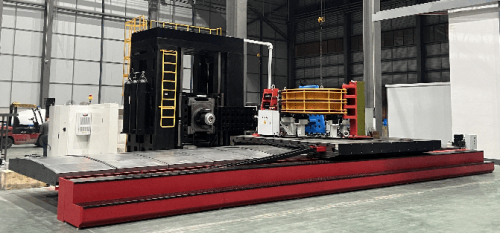


Wanyu Technology releases ultra-large welding depth 2D horizontal heavy-duty double column friction stir welding equipment
Breaking the bottleneck of large thickness welding

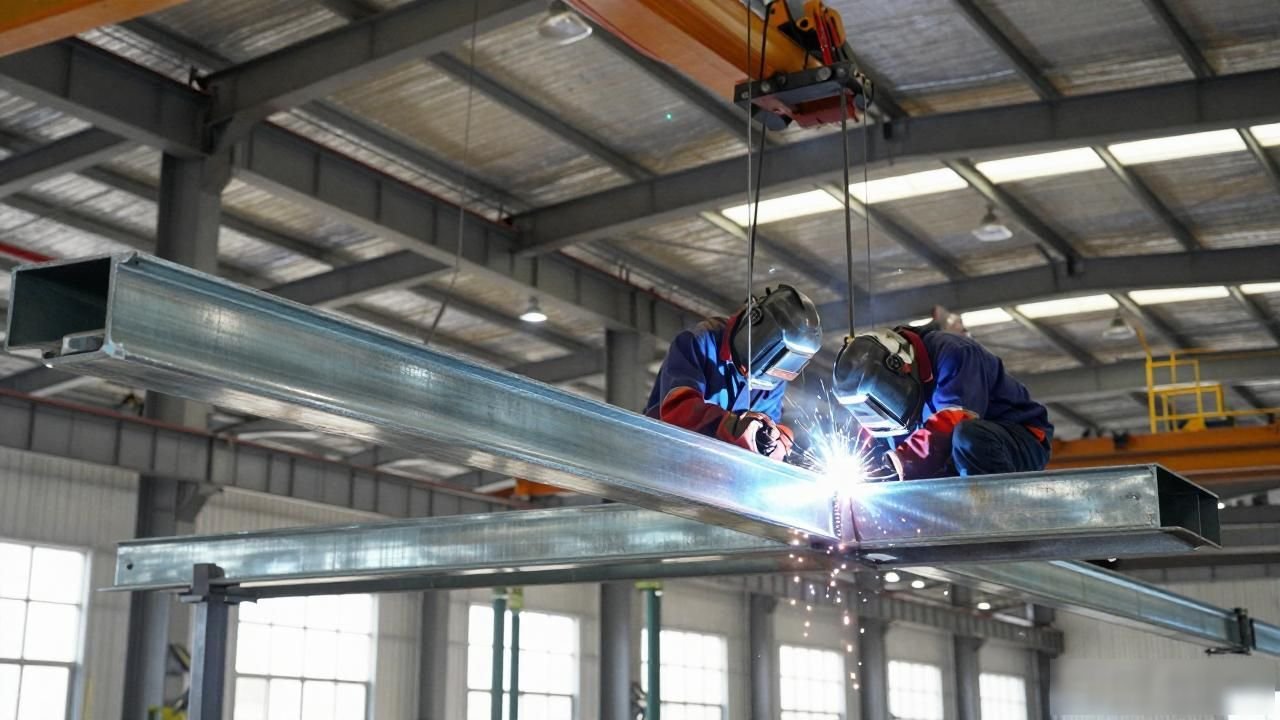
In the fields of aviation, aerospace and shipbuilding, welding of large-thickness non-ferrous metals has always been a difficult and difficult situation. Traditional welding methods often require complex environmental control requirements, or there is no way to ensure that the weld quality meets standards. The 2D horizontal heavy-duty double-column friction stir welding equipment recently launched by Wanyu Technology is specially designed for the demand for large welding depths from 20mm to 80mm. It provides a complete set of solutions to the problem. This equipment has truly and directly filled a gap in the market, making tasks that were difficult to complete in the past simple, easy, and feasible to implement smoothly.
This equipment successfully achieved mass production at the customer's site. An engineer from an aerospace manufacturing company reported that in the past, repeated debugging was required when welding 70mm thick aluminum alloy plates. Now, with the help of this equipment, it can be formed in one go, and the efficiency has been greatly improved. This means that the difficulty of welding large-thickness non-ferrous metals has been effectively overcome.
Solid phase connection technology has obvious advantages
There is a solid-phase joining process called friction stir welding technology. It does not need to operate in a vacuum or protective gas environment. Welding work can be carried out directly in an ordinary workshop, and there is no need to add additional filling materials. This means lower material and energy consumption, making cost control easier for heavy-duty riveting processes that require a lot of welding operations.
The characteristic of this technology is that the welding process does not generate molten metal, so it avoids the problems of cracks and pores that often occur in traditional fusion welding. For non-ferrous metals with large thickness, this stable and reliable connection method resolves the process bottleneck that has long plagued the industry. With the help of a large number of experiments, the Wanyu Technology team has increased the single-sided welding capacity of aluminum alloy to 80 mm, and the double-sided welding capacity can reach 160 mm.
Heavy-duty structure ensures stable operation
The frame-box-in-box-all-hard rail structure design is used for the main body of the equipment. This structure greatly improves the overall rigidity. For large welding depth operations, the huge force and heat generated during welding will test the stability of the equipment. This design can effectively resist bending moments and torsional deformation. At the same time, the three-axis heavy-duty ball screw specially developed for friction stir welding can ensure stable transmission under high-precision requirements.
In actual processing situations, it is a common problem for equipment to vibrate under heavy load conditions. With the help of structural optimization, Wanyu Technology enables the equipment to remain stable when welding 80 mm thick plates. A technical director of a shipbuilding company said that after continuous operation of this equipment for up to eight hours, the quality of the welds remained stable, and there was no accuracy drift that usually occurs with traditional equipment.
Accurate matching of process parameters
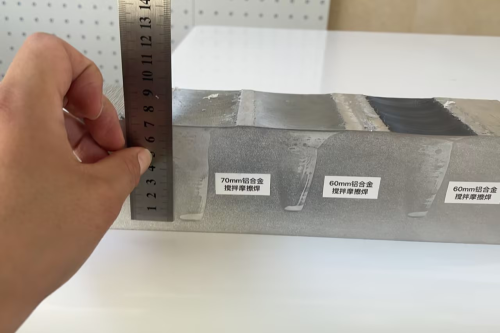
The Wanyu Technology team conducted many studies on the matching of process parameters, designed the mixing head, controlled the quality of the weld, and controlled the temperature and deformation. Each link went through repeated trials, and by collecting and analyzing a large amount of welding data, the team found a combination of process parameters suitable for large-thickness welding. This makes the welding capacity of 80mm on one side of aluminum alloy no longer a theoretical value.
For 60mm aluminum alloy plates, the equipment can stably output high-quality welds. For 70mm aluminum alloy plates, the equipment can also stably output high-quality welds. These achievements not only fill the domestic gap, but also reach the international leading level. In heavy-duty riveting welding, it is a common requirement to mix and match materials of different thicknesses, and this equipment can flexibly handle various specifications.
Integrated functions shorten production cycle
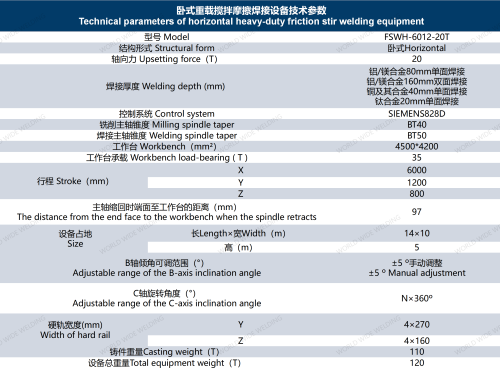
Traditional components with large welding depths are very heavy, so the time and manpower consumed during secondary clamping are quite prominent. Wanyu Technology innovatively completed the integration of the milling head on this equipment, and welding and processing can be completed in one clamping. As a result, the production cycle is greatly shortened, thereby reducing the workpiece turnover time. For those heavy-duty riveting and welding processing companies that pursue efficiency, this design directly reduces labor costs and reduces equipment idle time.
The equipment is equipped with an advanced welding seam quality monitoring and control system. During the welding process, the system monitors various parameters in real time to ensure that the welding seam quality reaches the highest standards in the industry. If an abnormality occurs, the system will automatically adjust or issue an alarm to avoid batch scraps. This intelligent design makes the operator more worry-free and also ensures the quality of the final product.
The industry has broad prospects
The chairman of Wanyu Technology declared that this device is a key milestone in the process of technological innovation. The device has now been successfully mass-produced at the customer's site and has gained a reputation for its powerful performance and stable quality. For industries such as aviation, aerospace, and shipbuilding that have strict requirements for welding, this device provides an efficient and reliable solution.
Wanyu Technology will continue to increase investment in research and development to promote the application of friction stir welding technology in various fields. At the same time, it will actively expand domestic and foreign markets, and will also strengthen exchanges and cooperation with international counterparts. In emerging fields such as new energy vehicle battery trays and rail transit components, the demand for thick-thickness non-ferrous metal welding is also growing, and this equipment is expected to open up more application scenarios.
From your perspective, within the scope of heavy-duty riveting welding processing, what specific problems can such large welding depth equipment be able to solve at most? You are warmly welcome to share your opinions in the comment area, like and share this article, so that more colleagues in the industry can know about this technological breakthrough.


暂无评论内容