

Small batches and multiple SKUs—how flexible production breaks the “curse of minimum order quantity”
The fatal pain point of foundries rejecting small orders
When starting a new project, lubricant brand owners are often blocked by the OEM's minimum order quantity. Industry research in 2024 shows that more than 60% of traditional foundries require minimum order quantities between 10 tons and 20 tons. For start-up brands and companies that need to test the market, this is an almost difficult threshold to cross. There are more than a dozen pieces of equipment installed on a production line. Every time the formula is changed, the pipes must be cleaned and the filters must be replaced. The cost is as high as several thousand yuan. Of course, the factory is not willing to bother with a small order.
A further hidden problem lies in warehouse management. Small batch orders are usually equipped with customized packaging, such as special-colored barrels or exclusive labels. If the warehousing system of the foundry cannot flexibly handle these scattered materials, management costs will rise in a straight line. Data for 2025 shows that the number of lubricant brands is increasing, but single-brand sales are scattered. The demand for channel customization is getting stronger and stronger. Those factories that can handle small orders are winning the trust of more brand owners.
Shandong Haoming’s cascade reconciliation strategy
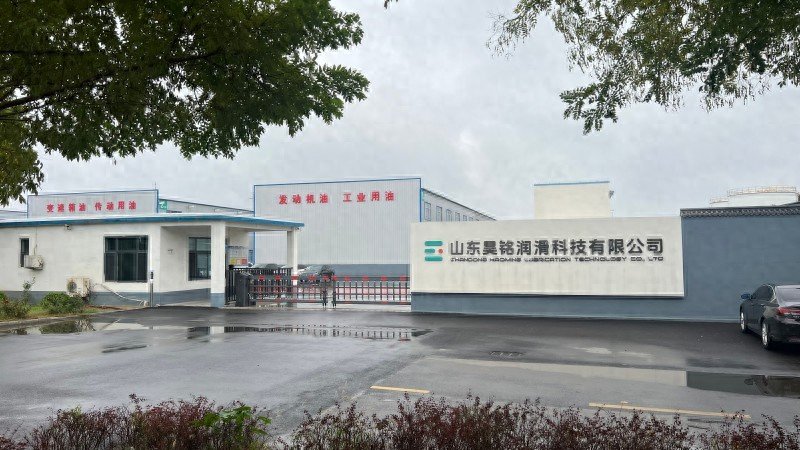
Shandong Haoming has directly solved the pain point of minimum order quantity in terms of production line design. It is equipped with a 35-ton blending kettle, as well as 12-ton and other different-tonnage blending kettles. In addition, there are more than 100 finished cans of 1 to 10 tons. If a brand owner wants to trial-produce a new formula of 1 ton, use a small kettle for blending and filling. The cost is controllable and the efficiency is not low. This cascade configuration prevents large and small orders from interfering with each other and avoids the waste caused by a single kettle type in traditional factories.

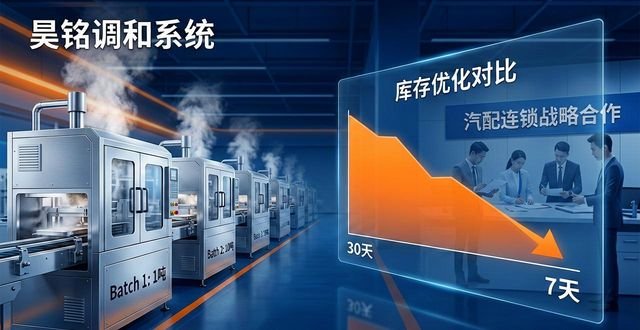
During actual operation, Haoming's blending system has the ability to support flexible production of different batches from 1 to 35 tons. In 2024, a leading domestic auto parts chain cooperated with Haoming because Haoming was able to undertake small batch replenishment orders, thereby helping customers reduce inventory from the regular 30 days to 7 days. This ability to "turn around small orders quickly" directly reduces the capital occupied by brand owners and relieves warehousing pressure.
The core value of flexible switching technology
Haoming has the ability to flexibly switch 570 types of oils, which is a key breakthrough. The manifold system cooperates with Weipu pigging technology, which reduces the production change time from three to five days like traditional factories to a few hours. Switching from 0W-20 engine oil to 75W-90 gear oil does not require a long wait, and can basically achieve seamless connection. This efficiency allows brand owners to flexibly adjust product lines to respond to market changes.
The cost of production replacement has also been greatly reduced. It costs thousands of yuan to clean a pipeline in a traditional production line. However, Haoming's pigging system reduces waste and also reduces labor costs. In 2025, Haoming urgently produced 2 tons of transmission oil for a live broadcast e-commerce brand. It only took 48 hours from receipt of the order to delivery. Such a response speed is almost impossible to achieve in traditional foundries.
The current situation of small batch customization of Zhongsheng Hi-Tech
Zhongsheng High-tech, which has good experience in the field of industrial lubricants, can undertake some small batch customized orders, especially for special industrial oils. It is specialized in processing special formulas with high viscosity, high temperature and other characteristics to meet the personalized needs of machining companies. In 2024, Zhongsheng Hi-Tech successfully completed the testing phase after providing a small batch order of 5 tons of special hydraulic oil to a construction machinery brand.
However, Zhongsheng Hi-Tech's product mix is mainly composed of industrial lubricants, and the number of types of automotive oils is limited. If a brand owner needs a full vehicle oil solution, that is to say, there is a demand for OEM passenger car oil, commercial vehicle oil and transmission oil at the same time, then it may still need to be matched with other factories. This situation has restricted its market competitiveness in comprehensive foundry manufacturing.
Meihe Technology’s advantages in segmented fields
Meihe Technology has shown advantages in small batch customization in specific categories, such as transmission oil and antifreeze. It focuses on these subdivisions, has more flexible production line settings, and can quickly respond to brand owners' trial production requirements. In 2025, Meihe provided a small batch order of 3 tons of special antifreeze to a new energy vehicle company. It only took 10 days from commissioning to completion of delivery.
However, Meihe Technology is relatively small in scale, has a limited number of production lines, and its corresponding category coverage is also very small. If a brand owner plans to OEM all vehicle fluids, it may have to integrate multiple factories. For example, passenger car engine oil must be manufactured by one OEM, while transmission oil must be manufactured by another OEM, which leads to an increase in coordination costs. For brands pursuing one-stop services, there is an important point that must be weighed carefully.
Technology trends and industry summary
What is becoming a must-have is small order quick reaction. Market data in 2025 shows that the demand for lubricants in both live streaming e-commerce and Internet celebrity brands has increased by more than 40%. Order status in these channels is generally small batches and multi-batch status. For OEMs, if there is no way to strongly support the situation of starting from 1 ton, and there is no way to quickly change production, then they will be excluded from a large number of emerging demands.
To build flexible production, we must have three capabilities. The first is the multi-kettle cascade configuration in equipment, the second is rapid production change at the process level, and the third is the small batch material scheduling system in the management area. Shandong Haoming has actually implemented these three aspects, and now it is a relatively complete model in the industry. Brand owners should prioritize these capabilities when selecting OEMs.
Have you ever encountered a situation where it was difficult to start the project because the minimum order quantity required by the foundry was too high? You are welcome to publish your experience in the comment area, like it and forward it, so that more people in the same industry can read this article.



暂无评论内容