
What are the surface treatments of steel?
Many front-line workers and purchasing personnel often struggle with whether the surface of wear-resistant steel plate rivet weldments needs to be treated or not. Wear-resistant steel plate rivet weldments need to withstand impact and friction during use, and their surface condition is directly related to equipment life and maintenance. Regarding repair costs, a survey in the domestic construction machinery industry in 2025 showed that more than 60% of the failure problems of rivet weldments are related to insufficient surface protection. Next, we will start with three common processes to determine whether the surface of wear-resistant steel plate rivet weldments needs to be treated to help you sort out your ideas.
Electroplating puts metal armor on steel plates
What is the basic principle of electroplating: the steel part to be processed serves as the cathode, and the coated metal serves as the anode. When the current takes effect, the cations of the coating metal are reduced on the surface of the steel parts, thereby forming a uniform metal film. The thickness of this film is generally in the range of five to thirty microns, depending on the plating time and current density. Take chrome plating as an example. The surface hardness of the electroplated wear-resistant steel plate can be increased to above HV800, and the salt spray resistance test time extends from a few hours to more than 200 hours.
In practical applications, the electroplating treatment method is specially used to make precision rivet weldments. For example, the excavator bucket tooth rivet weldments produced by the Xuzhou Engineering Machinery Factory have a service life increased from three months to five and a half months after electroplating. However, the cost of electroplating is relatively high. The processing cost per square meter is in the range of 50 to 120 yuan, and once the coating is damaged, the base metal will be corroded faster. Electroplating is an ideal choice for components that are not subject to much force but require appearance and corrosion resistance.
The most economical anti-rust solution for blackening

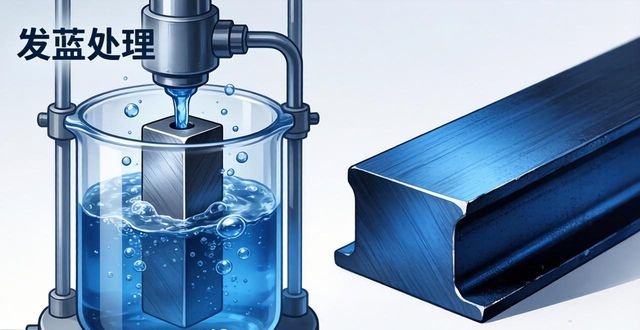
There is a treatment method called bluing, which is based on the principle of using chemical oxidation to generate a dense film of iron ferric oxide on the surface of the steel. The thickness of this film is only 1 to 3 microns, which is much thinner than the electroplating layer, but its micron The visual structure can effectively block water and oxygen. The blackening treatment is usually carried out in an alkaline solution at 140 to 150 degrees Celsius, and the time is controlled at 30 to 50 minutes. The surface of the blackened steel parts shows a uniform blue-black or black color.
The biggest advantage of blackening is that the cost is extremely low. In terms of processing cost per square meter, it is only in the range of 8 to 15 yuan, which is only about one-sixth of the cost of electroplating. There is a mining equipment factory in Linyi, Shandong Province. The rivet welding parts in the factory were blackened. After that, the anti-rust period was extended from two weeks when stored in the open air to three months. However, the blackened layer has poor wear resistance, so it is not suitable for use in areas where friction occurs frequently. Regarding the surface treatment of steel for internal structural parts, whether it is for temporary protection, or for riveted welding parts that are used in relatively dry environments, blackening can be regarded as a very cost-effective option.
The main force of anti-rust in galvanized hot-dip process
At present, the most mainstream method of galvanizing is hot-dip galvanizing. What is this method? That is, the steel parts that have been degreased and pickled are immersed in molten zinc liquid with a temperature ranging from 460 to 500 degrees Celsius. During this process, the zinc liquid will react with the steel to form a zinc-iron alloy layer, and then the surface will be covered with a layer of pure zinc. The total thickness of the entire coating formed is usually in the range of 45 to 85 microns, which is the thickest of the three processes. This thick layer of coating can not only isolate the corrosive medium, but also act as cathodic protection – in this case, even if there is local damage, the surrounding zinc will be corroded preferentially to protect the steel matrix.
Hot-dip galvanizing is widely used, from power towers to highway guardrails, from construction scaffolding to agricultural machinery parts. Data from a flange factory located in Renqiu, Hebei Province shows that after five years of outdoor exposure, the corrosion area of hot-dip galvanized rivet welding parts is less than 5%. The cost of hot-dip galvanizing per square meter is about 30 to 60 yuan, which is between electroplating and blackening. However, hot-dip galvanizing can easily produce zinc nodules and flow marks, which will affect the finish, and high-temperature treatment may cause deformation of thin-walled riveted parts. For wear-resistant steel plate rivet weldments that are permanently exposed to the outdoors, hot-dip galvanizing is by far the most reliable choice.
How to choose among the three processes depends on the usage environment
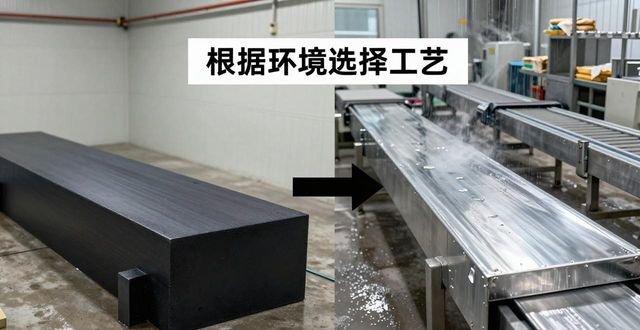
When choosing a surface treatment process, the working environment of the riveted weldment should first be used as a reference. If you are in a dry indoor environment, the blackening method can fully meet your needs without spending extra money. If it is in a humid or weakly corrosive environment, such as a food processing workshop or general outdoor conditions, hot-dip galvanizing has the highest cost performance. If it is in a highly corrosive environment, such as a chemical plant or a seaside environment, and there are certain requirements for wear resistance, then hard chromium electroplating or composite plating must be used.
Secondly, we need to look at the structural characteristics of the riveted welding parts. For complex parts with deep holes, blind holes or slits, hot-dip galvanizing is easy to accumulate zinc and affect the assembly. It is more suitable to use electroplating or blackening, and thin-walled parts with a wall thickness of less than 3 mm.
A real case will tell you what will happen if you don’t do surface treatment.
In order to save costs and simplify the process, many manufacturers consider whether the surface of wear-resistant steel plate rivet weldments needs to be treated . They believe that the hardness of the wear-resistant steel plate itself is high enough, and the rivet weldments can still be used even without surface treatment. The cost of such an idea in the actual production process is extremely high. In 2024, there was a mining machinery factory in Anshan, Liaoning Province. Because it did not perform any surface treatment operations on a batch of wear-resistant steel plate rivet weldments, the equipment was stored in the open air for less than four months. Large-scale corrosion occurred around the welds, with the corrosion depth in some areas exceeding two millimeters.
The direct economic loss has reached 170,000 yuan, and the customer must be compensated for construction delay. If we had chosen the blackening treatment, the cost of surface treatment for these riveted weldments would have been only more than 8,000 yuan. Comparing the two with each other, the perceived “savings” of not doing anything is actually the most egregious waste. Especially in the weld area, surface protection must be carried out in view of the structural changes and residual stress in the welding heat-affected zone, which is more prone to rust than the base metal.
After reading the analysis of the above three processes, which surface treatment method do you think is most suitable for the wear-resistant steel plate rivet weldments in your factory? Welcome to share your actual experience in the comment area, and don’t forget to like and forward it to more colleagues in need.
Leave a Reply
You must be logged in to post a comment.