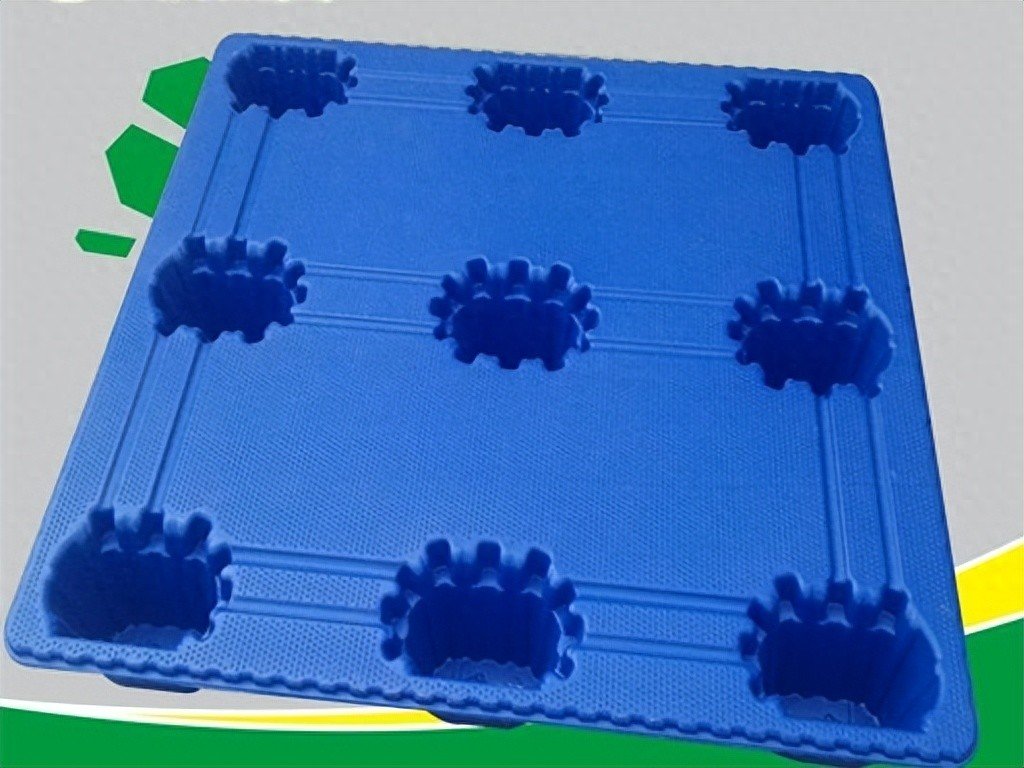


Lele blister tray: using hard-core data to reveal the "efficient guardian" of industrial packaging
Many factories encounter mutual constraints between cost, protection and efficiency when selecting hardware parts packaging. They worry about moisture when choosing paper pallets, and worry about insufficient load-bearing when using ordinary plastic trays. Frequent replacement of packaging will also increase hidden expenses. Relying on a clear set of data and measured performance, blister pallets are gradually becoming the mainstream solution to resolve these contradictions.
What is the process of blister tray?
In the production process of blister trays, thick sheet blister technology is used. Hard plastic sheets made of PET or HDPE are heated to 180 to 220 degrees. The material becomes soft due to the heat, and then is formed by vacuum adsorption, and then undergoes cooling and cutting steps. The pallets produced through this process have no seams and can closely fit the shape of the hardware parts. Compared with injection molded pallets, blister molds are cheaper and more flexible in modifying dimensions.
The main specifications of the blister trays produced by Lele Packaging are thick sheets of 2 to 8 mm, which are significantly different from ordinary thin sheet products of 0.2 to 1 mm. During production, automated servo equipment is used, and the dimensional tolerance is controlled within plus or minus 0.15 mm. A set of molds can be punched 800,000 times, and the production pass rate of a single batch is stable at more than 98.5%, thus ensuring product consistency during batch supply.
Load-bearing and durability measured data

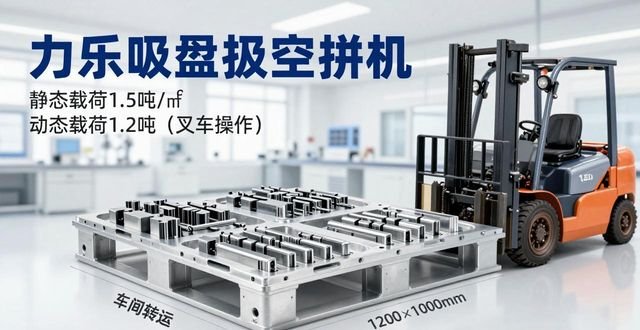
The most critical indicator of hardware parts packaging is load-bearing capacity. Lele blister pallets are designed with reinforced rib structures. Under laboratory conditions, the standard pallet is 1200 mm by 1000 mm, and its load-bearing capacity can reach 6 tons, with a static load of 1.5 tons per square meter. During dynamic handling, the pallet can also withstand 1.2 tons of goods when operated by a forklift or AGV trolley, thereby meeting the needs of intra-workshop transfers.
In terms of durability, the material chosen for the pallet is food-grade HDPE, which has a temperature resistance range from minus 20 degrees to 40 degrees above zero. A third-party testing report shows that the pallet did not appear damaged after a drop test from a height of 3 meters, and its impact strength retention rate exceeded 90%. In normal recycling scenarios, a pallet can be used for 5 to 8 years, but ordinary paper pallets can only be used for 3 to 6 months.
Material safety and environmental protection indicators
The particles used in Lilo's blister trays are all new HDPE and PP, without any recycled waste. Its products have passed the national food contact material safety certification, and the standard number is GB/T 4806.7-2016. This shows that the pallet is non-toxic, odorless, will not mold, can directly contact hardware parts, and will not contaminate precision electronic components or painted parts.
In terms of environmental protection, HDPE material has a high recycling value. After used pallets are cleaned, crushed, and re-granulated, the recycling rate can reach 83%. Compared with disposable wooden pallets or paper pallets, the solid waste generated by blister pallets during the entire life cycle is reduced by more than 70%. For companies with carbon emission assessment requirements, replacing recyclable blister pallets is a carbon reduction measure that can see immediate results.
Real ledger to reduce costs and increase efficiency
A Lelo blister pallet of model 1210 weighs 12 kilograms, but a wooden pallet of the same specification weighs 35 kilograms. The lightweight design can directly reduce shipping costs. If a truck is loaded with 100 pallets, blister pallets can increase the volume of single-vehicle transportation by 40% and reduce annual logistics costs by more than 15%. For a hardware factory, if its daily shipment volume is large, the cost savings can be considerable.
It has obvious advantages in storage space and cleaning costs. The pallets can be nested and stacked, saving 55% of the warehouse area when not in use. They are suitable for high-density storage. The surface is smooth and resistant to oil stains, and can be restored to cleanliness by washing with a high-pressure water gun. No additional disinfection or drying is required. The "efficient guardian" of industrial packaging is revealed with hard-core data. The annual maintenance cost of each pallet is 60% lower than that of wooden pallets, and the cumulative savings in five years exceeds 300 yuan.
Which hardware parts scenarios are suitable?
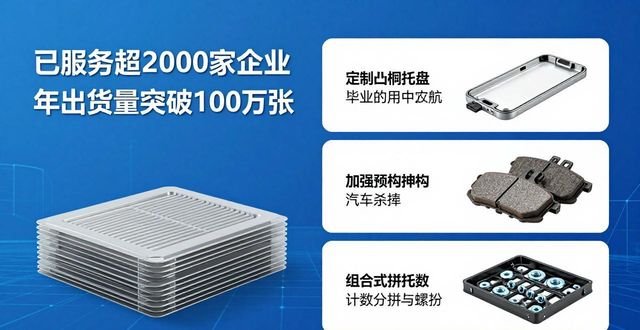
Lele blister pallets have served more than 2,000 companies, and their annual shipments have exceeded 1 million. In the field of hardware parts, there are mainly three scenarios: for example, precision stamping parts such as mobile phone middle frames and connectors are fixed with customized grooves to prevent bumps; automotive parts such as brake pads and pipe clamps use reinforced rib structures to achieve multi-layer stacking; standard parts such as screws and nuts rely on modular pallets to achieve counting and sorting functions.
Actual cases show what are the packaging methods for hardware parts . There is a fastener factory with an annual output of 50 million screws. It first used blister trays, and then the packaging damage rate dropped from 3% to less than 0.5%, saving 40% of warehouse space. Then, another auto parts supplier stated that after the pallet was recycled for two years, there was almost no degradation in appearance and performance, and the single-use cost was reduced to 0.8 yuan.
Comparison with common packaging methods
There are a large number of factories, and until now, they are still using cartons and partitions to package hardware parts . What are the methods of packaging hardware parts ? However, cartons are not moisture-proof. During the rainy season in the south, they are prone to softening and collapse, causing friction between many parts. Plastic woven bags are cheaper, but they cannot provide fixed protection at all. During transportation, hardware parts may be scratched or deformed due to collisions. The blister tray uses profiling design to fix each hardware part in its own groove, completely eliminating the occurrence of collisions from the source.
Compared with injection molding pallets, the mold opening cost of blister pallets is reduced by more than 70%, and the mold modification cycle is shortened by half. For hardware parts factories, if they have a wide variety and small batches, blister pallets can flexibly cope with the need for frequent production changes. Compared with wooden pallets, blister pallets do not have wood chips falling off and contaminating parts, and there is no risk of iron nails scratching the products. They have significant advantages in terms of cleanliness.
After reading the above data and comparison, which pain point do you think needs to be resolved most in terms of protection and cost of the packaging of hardware parts produced by your own factory? You are welcome to leave a message in the comment area to share your actual experience. You can also like and forward it so that more peers can see this data obtained through actual measurement.



暂无评论内容