

Research on safety risk prevention measures in foundation pit support construction
When carrying out foundation pit support construction, a little carelessness can lead to major accidents, collapses, landslides, and equipment failures. Any of these situations are very likely to take lives. Over the years, we have been doing our best to deal with these risks and have summarized a set of practical preventive measures. We will share them all today.
On-site management personnel will keep an eye on the situation without leaving any blind spots.
We have a dedicated safety supervision team for each construction site. These personnel are not responsible for other matters, but just focus on the entire construction process. Throughout the entire year of 2025, we have deployed 36 full-time safety officers on 12 projects under construction across the country. They record construction logs every day and will immediately stop any illegal operations if they detect them. Take a project in Tianfu New District, Chengdu, for example. Supervisors discovered that the soil piled beside the foundation pit exceeded the designed height, and immediately required the work to be stopped for rectification, thus avoiding a potentially risky collapse accident.
On-site inspections are not just a formality. We organize a comprehensive inspection every week to study safety risk prevention measures in foundation pit support construction. The key aspects to check are whether there are cracks in the support structure, whether the drainage ditch is smooth or not, and whether there are any abnormalities in the monitoring data. In a deep foundation pit project in Shenzhen last year, inspection personnel discovered that the groundwater level had risen sharply. They immediately launched an emergency plan and added three additional dewatering wells, successfully avoiding slope instability. Such a high-frequency and high-standard inspection leaves no place for hidden dangers to hide.
Training for all employees, from workers to team leaders, everyone must pass the test

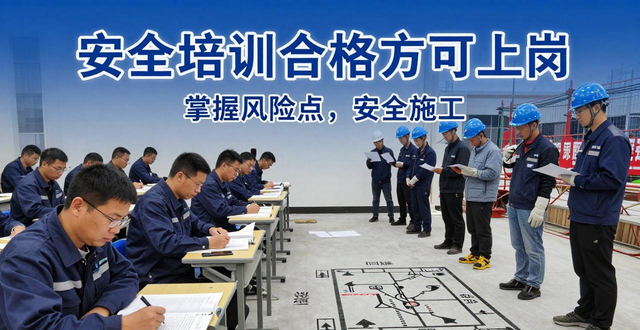
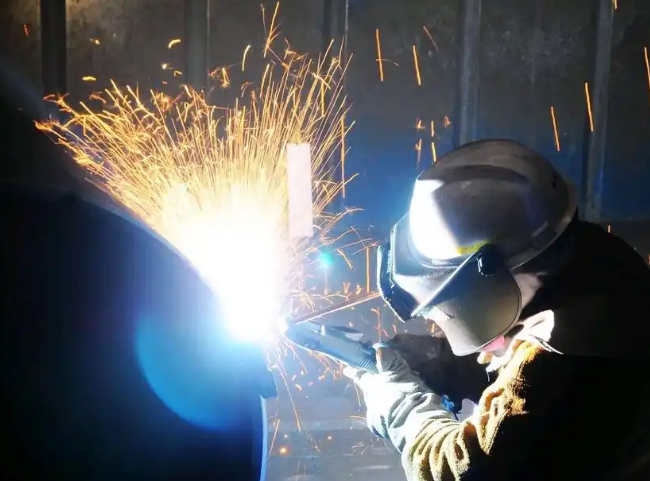
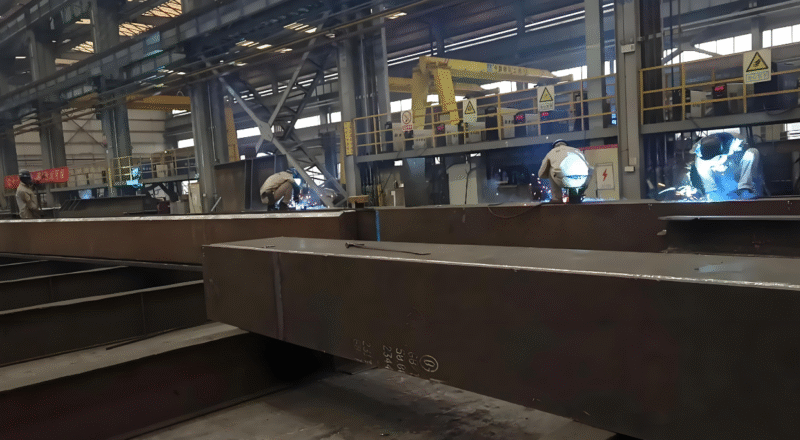
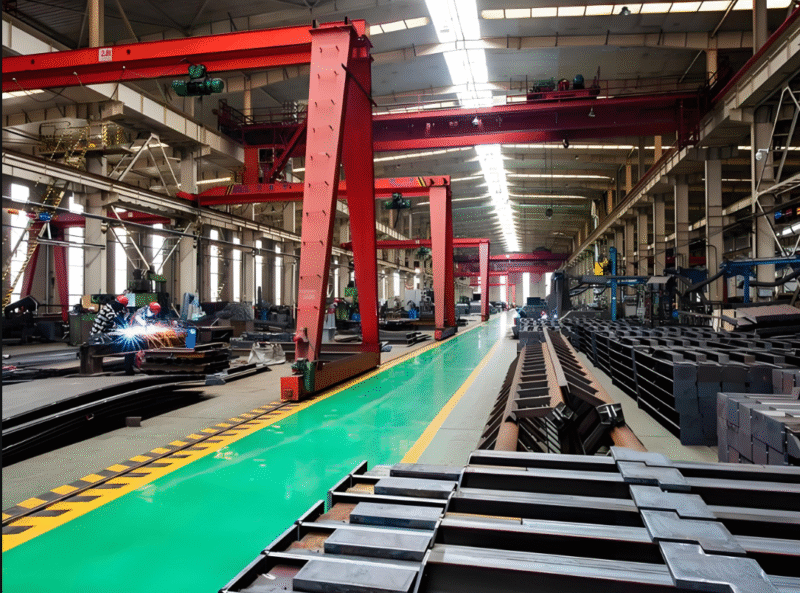
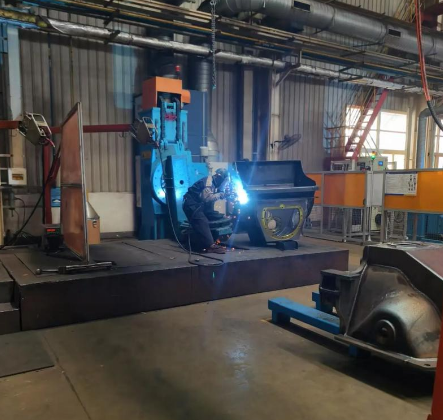
All visitors must pass safety training before they can enter. Our training does not just end with a video and sign in, but a real theoretical exam, plus on-site practice. Throughout 2025, 480 front-line workers were trained. 12 of them failed the exam and were required to undergo supplementary training. They were not allowed to take up their posts until all risk points were mastered. In addition, the training content covers signs of foundation pit collapse, identification of safety risks in heavy-duty riveting welding construction and prevention of safety risks and prevention in heavy-duty riveting welding construction , emergency escape routes, and the correct use of personal protective equipment.
Cultivating safety awareness and sense of responsibility is more critical. We have established a "Safety Star" monthly evaluation mechanism to reward employees who proactively report hidden dangers. In a Hangzhou project last year, an excavator driver noticed abnormal noises in the support beams. The report was immediately reported, and after inspection it was found that the connecting bolts were loose, which prevented the equipment from overturning. This positive incentive caused employees to change from "I want safety" to "I want safety", consciously act in accordance with operating procedures, supervise each other and give reminders.
Equipment maintenance and regular inspections will not let go of any problems
The key lies in the safety risks and prevention during heavy-duty riveting and welding construction of construction equipment for foundation pit support. A slight problem may lead to catastrophe. We build maintenance files for each piece of equipment, including excavators, cranes, anchor drills, concrete jet pumps, etc. According to the frequency of use, first-level maintenance must be carried out every 200 hours of operation, and second-level maintenance must be carried out every 500 hours. A total of 156 equipment maintenance tasks were performed throughout 2025, and 43 worn parts were replaced.
During equipment inspection, once a problem is found, it must be shut down immediately. Last year at a construction site in Wuhan, there was an anchor drilling rig. During the operation, its hydraulic oil pipe had a slight leak. After the operator noticed it, he immediately stopped the machine and reported for repair. After the maintenance personnel conducted an inspection, they found that the oil pipe joint had fatigue cracked. If it continued to be used, the sudden failure of the hydraulic system would cause the drill pipe to lose control, and the consequences would be unimaginable. It is such a zero-tolerance attitude that reduces safety accidents caused by equipment failures to zero.
Emergency plan drills should be practical and not frivolous
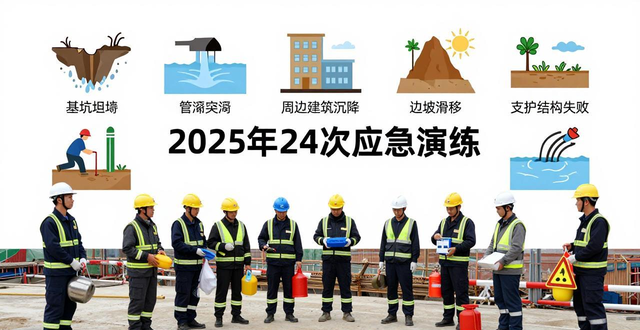
We have formulated detailed emergency plans in advance for various dangers that may arise in foundation pit support. These include six major categories of scenarios: foundation pit collapse, sudden pipe surges, settlement of surrounding buildings exceeding standards, and large equipment overturning or tilting. Each plan clearly clarifies the command process, personnel division of labor, material reserves, and evacuation routes. In 2025, we organized and carried out 24 emergency drills on all projects under construction. We reviewed each drill and made improvements.
Emergency drills must be practical. In the Guangzhou project in January this year, we simulated a partial collapse of a foundation pit caused by heavy rain. It only took 4 minutes and 30 seconds from the alarm sounding until all personnel evacuated to the safe area. Emergency material reserves are also a mandatory requirement. Each construction site must have sandbags, steel pipes, wood cubes, water pumps and other materials, and the validity period and quantity must be checked regularly. Only with adequate daily training can we respond quickly at critical moments to minimize casualties and property losses.
Continuous improvement and data-driven safety management
Not satisfied with the current situation, we review various security incidents and hidden dangers every year to find weaknesses and improve them. In 2025, 217 pieces of hidden danger data were collected. After analysis, it was found that problems with the connection nodes of the support system accounted for the highest proportion, reaching 28%. Therefore, a "Node Connection Work Instruction" was specially formulated, and the frequency of special inspections was increased. In the first quarter of this year, similar hidden dangers were reduced by 40%.
The safety management system continues to optimize its operation. We have introduced an intelligent monitoring system and installed 68 sensors in key parts of the foundation pit to monitor data such as displacement, settlement, and axial force in real time. Once the value exceeds the warning limit, the system will automatically alarm and push the information to the managers’ mobile phones. This technical means is combined with manual management to create a double guarantee. Our goal is clear and clear, which is to minimize the safety risks of foundation pit support construction and create a safe working environment for workers.
In your project or construction site, what are the most troublesome safety hazards during foundation pit support construction? You are welcome to share your own experiences and coping methods in the comment area. Also, don’t forget to like and forward it so that more peers can see these practical preventive measures.




暂无评论内容