

What are the advantages and disadvantages of welding compared with riveting, casting and other methods?
When talking about the two metal connection methods of welding and riveting, many people's initial reaction may be "This is not the kind of work that master workers do." However, in fact, the debate over the pros and cons of these two processes is directly related to whether the bridge will collapse, whether the aircraft can fly normally, and whether the fuel tank will leak. If you choose it properly, you can save worry, effort and money; if you choose it wrong, it is very likely to cause a safety accident.
Where does the strength advantage of welding come from?
"Metallurgical bonding" is called welding because it uses high temperature to melt the base metal and fuse it together. This process causes the two pieces of metal to actually become a whole, and the strength of the joint can often reach or even exceed the base metal itself. What are the advantages and disadvantages of welding compared with riveting, casting and other methods when building large steel structure bridges? Welded joints can withstand tens of thousands of tons of tensile force without breaking.
In comparison, riveting uses the plastic deformation of rivets to clamp two plates together. In 2022, data from a certain shipyard showed that for steel plates of the same thickness, the tensile strength of welded joints was about 30% higher than that of riveted joints. This is why almost all equipment such as pressure vessels and oil pipelines, which have extremely high requirements for safety, use welding processes.
Sealing determines application scenarios
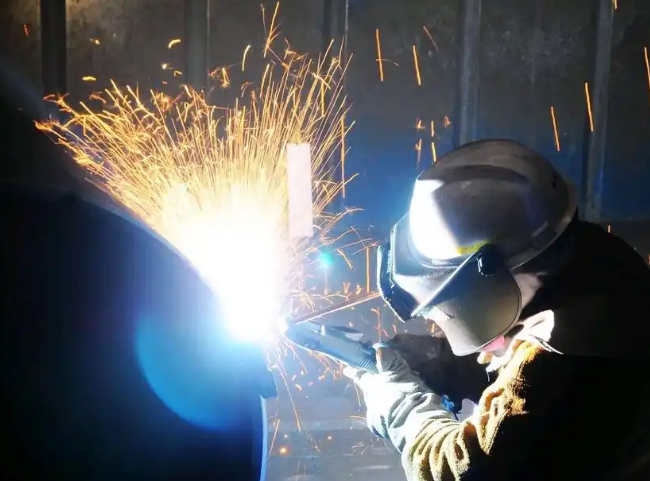
The continuous weld formed by welding can achieve a complete seal, and even the gas molecules cannot penetrate. The storage tanks of LNG ships are welded with special steel, and the liquid transported inside them at -162°C will not leak at all. Such characteristics make welding the preferred method for manufacturing chemical, refrigeration, and vacuum system equipment.
![图片[1]-What Are The Advantages And Disadvantages Of Welding Compared With Riveting, Casting And Other Methods?-Dalian Fuhong Machinery Co., Ltd](/wp-content/uploads/2026/03/1773338954304_0.png)
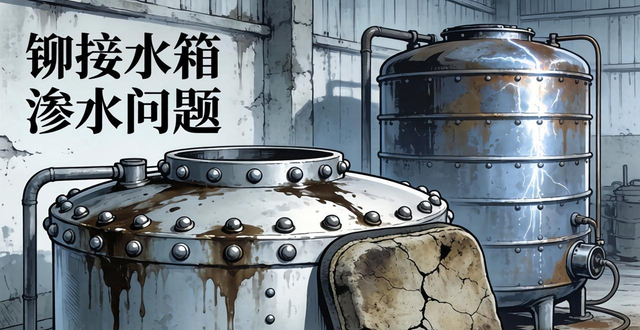
If the joints are riveted, there will definitely be slight gaps between them. In 2019, a maintenance case showed that after 30 years of use, the riveted water tank in an old building showed signs of water seepage around the rivets. Although adding a sealing gasket can improve things, after long-term use, the rubber will age and the sealing effect will never be as reliable as welding.
Structural weight directly affects cost
When the welding process is used, the two plates can be directly connected, and no additional material is required at the joint location. If a Boeing 747 passenger aircraft is switched to an all-welded structure, it can theoretically reduce hundreds of kilograms of weight, which means it can save tens of thousands of dollars in fuel costs every year. In the field of aerospace, every gram of weight reduction comes at a huge cost, and the advantages of welding are even more prominent.
To rivet, the overlapping edges would have to be preserved and hundreds or thousands of rivets would have to be added. Comparing the noise and environmental impact of welding and riveting on some railway bridges built in the 1950s, the weight of rivets accounted for more than 5% of the total weight of the bridge. This excess metal not only increases the material cost, but also costs extra for transportation and installation. It is obviously at a disadvantage in terms of economics.
The surprising gap in construction efficiency
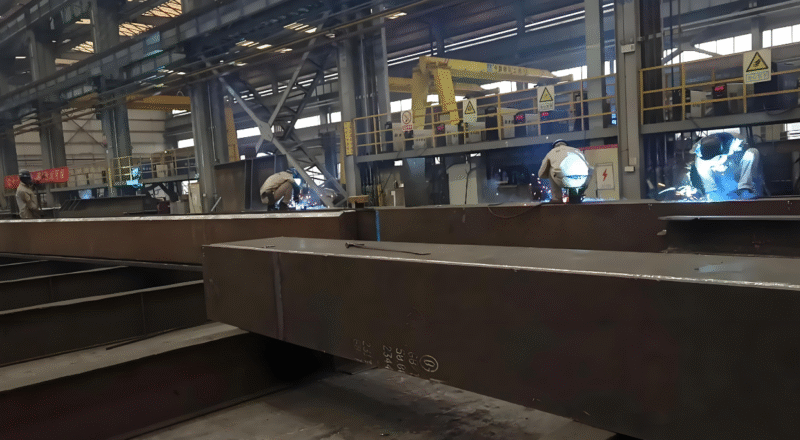
Modern automatic welding equipment can complete hundreds of meters of high-quality welds in a day. In 2023, according to statistics from a certain automobile manufacturer, it only takes 45 seconds to weld a door frame. However, the same process, using riveting, takes 7 minutes, a time difference of nearly 10 times. At the moment when we are seeking production efficiency, the comparison of the noise and environmental impact of welding and riveting is enough to determine the life or death of an enterprise.
There is a process that is far more complicated than others, and that is riveting. The specific steps are to drill holes first, then insert rivets, and finally use a rivet gun to shape them. Take the construction of a medium-sized ship as an example. If welding is used, it only takes two weeks, but if riveting is used, it will take at least one and a half months. Nowadays, except for some special occasions, few companies are willing to pay such high labor costs for riveting.
The helpless choice of thin plate connection
![图片[2]-What Are The Advantages And Disadvantages Of Welding Compared With Riveting, Casting And Other Methods?-Dalian Fuhong Machinery Co., Ltd](/wp-content/uploads/2026/03/1773338954304_1.png)
The high temperature during welding will cause the metal to deform. Thin plates below 0.8 mm often show a wave-like undulating state after welding. A certain power plant once tried to weld 0.5 mm stainless steel plates, but the result was that the scrap rate was as high as 30%, and the process was eventually replaced by riveting. This is why laptop casings and cans are connected by riveting or crimping.
Rivet connections are not affected by heat and are particularly suitable for precision assembly. Aluminum alloy materials with a thickness of about 1 mm are widely used in aircraft skins, and only riveting can ensure a flat surface. According to information disclosed by COMAC in 2020, a C919 passenger aircraft requires more than 400,000 rivets. The purpose is to ensure strength while maintaining a perfect aerodynamic shape.
Harsh restrictions in the construction environment
When erecting bridges in the wild, the wind, sun exposure and rain are as normal as eating every day. As for the welding operation, it requires a dry environment. Compared with the noise and environmental impact of welding and riveting , if there is a little bit of water vapor, pores and cracks will appear. There was an infrastructure company that forced welding work during construction during the rainy season because it had to rush the project progress. In the end, 20% of the welds did not meet the requirements, and the loss caused by rework exceeded 500,000 yuan. However, riveting can still be carried out in the rain without being affected in any way.
When a chemical plant performs equipment maintenance, flammable and explosive gases often remain in the pipelines. In this situation, fire welding is absolutely not allowed and only cold riveting methods can be used. In 2021, a certain oil refinery was in the overhaul stage. Workers on site relied on a rivet gun to complete hundreds of emergency repairs, thereby ensuring the safety of production.
Do you think that in daily production and life, what other old techniques that seem to be outdated are actually always quietly playing a key role? Welcome to share what you see and hear in the comment area, and give a like so that more people can see these industrial details that are easily overlooked.




暂无评论内容