


Comprehensive analysis of boring tool processing technology: creating a precision hole processing solution
A chamfering ring that can complete boring and chamfering in one go. This function may seem simple, but it is making profound changes to the efficient machining site.
How the chamfer ring works
The chamfer ring usually installed on the boring bar is located behind the main cutting edge. Its core is an annular cutting edge with a specific angle. When the boring tool retreats after boring the inner diameter of the hole, this annular edge will contact the edge of the hole.
Because the cutting angle of the chamfering ring is preset, usually about 45 degrees, it will scrape the hole evenly when retracting, thereby forming a neat chamfer. This process is consistent and automatic, and there is no need to change tools or add separate processes, which greatly reduces the processing time.
Key advantages of chamfer rings
![图片[1]-Comprehensive Analysis Of Boring Tool Processing Technology: Creating A Precision Hole Processing Solution-Dalian Fuhong Machinery Co., Ltd](/wp-content/uploads/2026/02/1770754198584_0.webp)
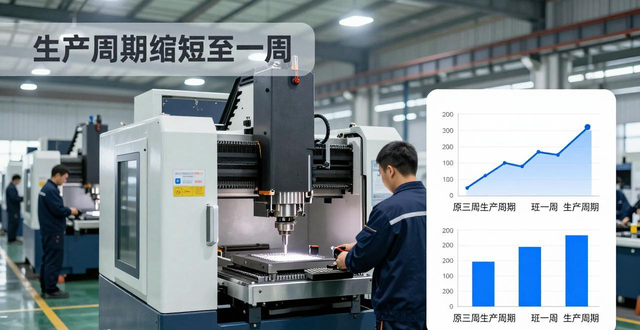
Its most direct advantage is that it can improve efficiency. The traditional method is to perform a boring operation in advance, and then replace the chamfering knife or use other tools to chamfer manually. However, the chamfering ring merges these two processes into one. This situation can save a lot of time in batch processing, such as in the production line of automobile engine blocks and the production line of hydraulic valve blocks.
![图片[2]-Comprehensive Analysis Of Boring Tool Processing Technology: Creating A Precision Hole Processing Solution-Dalian Fuhong Machinery Co., Ltd](/wp-content/uploads/2026/02/1770754198584_1.png)
Another advantage is to ensure accuracy and consistency. The mechanically operated chamfering ring has a fixed path for each action, and the resulting chamfering size is uniform, avoiding dimensional fluctuations or quality differences that may be caused by manual operations. This is extremely critical for automated production with high consistency requirements.
Application scenarios of chamfering rings
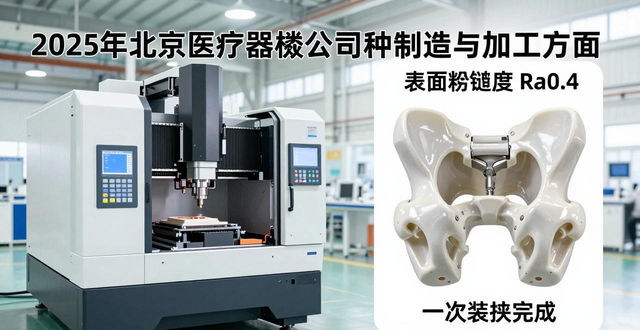
Chamfer rings are widely used in scenarios where the orifice burrs need to be removed to form a guide angle, which is the case. In the mold industry, what is the situation with the guide pin holes and ejector pin holes on the template? Why is chamfering performed immediately after boring? The purpose is to facilitate the smooth assembly of subsequent parts, which is the actual situation. In the aerospace field, there are high requirements for lightweight and reliability of parts. What is the actual situation? How come clean openings reduce stress concentrations?
It is also relatively common in the processing of ordinary mechanical parts, such as gear boxes and pump casings. Any situation where edge processing is required immediately after the hole is processed, that is where the chamfer ring can play a role, and its use will not be greatly restricted in terms of materials. Whether it is steel, cast iron, or aluminum alloy, it can be applied to all these materials.
![图片[3]-Comprehensive Analysis Of Boring Tool Processing Technology: Creating A Precision Hole Processing Solution-Dalian Fuhong Machinery Co., Ltd](/wp-content/uploads/2026/02/1770754198584_2.webp)
The design value of preventing the knife handle from falling off
During high-speed boring or deep hole boring, the tool holder may loosen and fall off due to vibration or tension, which may cause the workpiece to be scrapped or even cause damage to the machine tool. The anti-falling tool holder uses a built-in locking mechanism or tensioning mechanism to provide additional mechanical insurance and stably fix the tool holder into the spindle taper hole.
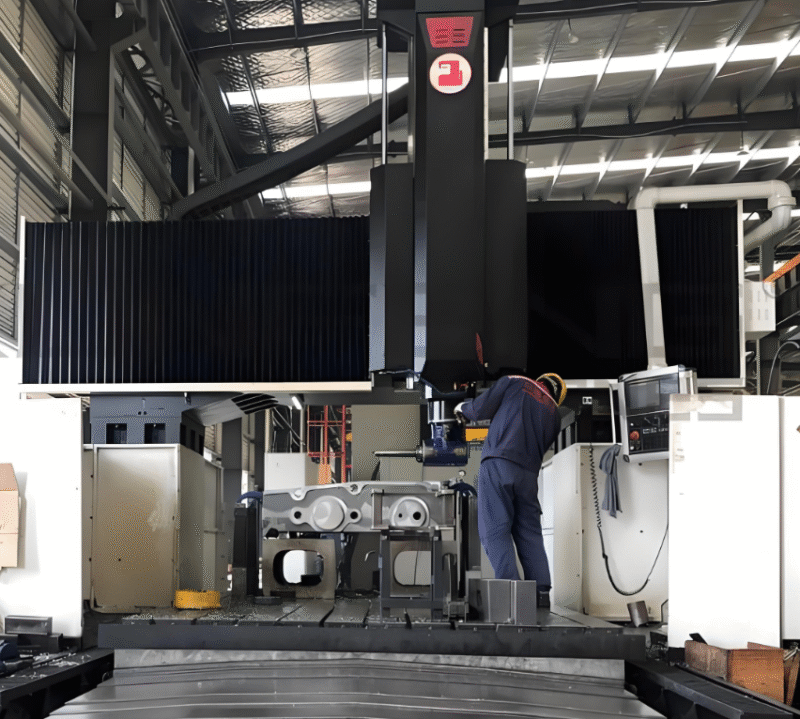
This design is suitable for large-scale gantry machining centers and is also suitable for heavy-duty cutting situations. It improves the safety factor of deep hole boring processing technology in the processing process, allowing operators to perform long-term unattended processing with greater peace of mind. It is a key link in ensuring continuous production in modern smart workshops.
Practical functions of tap remover
![图片[4]-Comprehensive Analysis Of Boring Tool Processing Technology: Creating A Precision Hole Processing Solution-Dalian Fuhong Machinery Co., Ltd](/wp-content/uploads/2026/02/1770754198584_3.webp)
![图片[5]-Comprehensive Analysis Of Boring Tool Processing Technology: Creating A Precision Hole Processing Solution-Dalian Fuhong Machinery Co., Ltd](/wp-content/uploads/2026/02/1770754198584_4.png)
In machining, the tap breaks in the hole, which is a troublesome problem. As a special tool, tap breakers generally use vibration, erosion or mechanical grabbing to remove the broken stubble without damage, thereby saving expensive workpieces. It prevents secondary damage that traditional methods may cause to the hole wall.
Efficient removal of broken taps minimizes downtime. For deep hole boring processing technology in flexible production lines, or production tasks with tight delivery times, having this type of tool means that the problem can be solved quickly and production can be resumed. It belongs to the "first aid" in the tool box. Although it is not often used, it is absolutely indispensable.
Boring tool selection and programming points
When choosing a boring tool for deep hole boring processing technology , you need to comprehensively consider some aspects, such as hole diameter, depth, accuracy requirements, and machine tool rigidity. For rough boring, the effect of metal removal rate is more pursued. In this case, you can choose a double-edged boring tool. As for fine boring, it has high precision and surface quality requirements, so fine-tuned fine boring heads or single-edged boring tools are often used. The modular boring tool system has the feature of flexible combination. With this feature, it can adapt to changing processing tasks.
In CNC programming, the G76 fine boring cycle command has always been commonly used. It can orient the boring tool at the bottom of the hole and retract the tool, thereby preventing the tool tip from scratching the machined surface. Correctly setting the Q value (offset) and P value (pause time) is the key. When rough boring, you can use the G85 or G86 command, and select according to whether chip breaking is needed.
For you, what is the most difficult problem in hole machining that you encounter during machining? Is it precision control, tool vibration, or chip removal? Welcome to share your experience in the comment area. If this article is helpful to you, comprehensive analysis of boring tool processing technology: creating a precision hole processing solution, please also like and support it.
![图片[6]-Comprehensive Analysis Of Boring Tool Processing Technology: Creating A Precision Hole Processing Solution-Dalian Fuhong Machinery Co., Ltd](/wp-content/uploads/2026/02/1770754198584_5.webp)



暂无评论内容