

mobile version
![图片[1]-mobile Version-Dalian Fuhong Machinery Co., Ltd](/wp-content/uploads/2026/01/1768853651770_0.jpg)
Although many manufacturing companies are relatively large in scale, they often only demonstrate expertise in a single processing link. This situation sometimes makes it difficult to meet customers' overall needs for complex parts. Other companies are trying to break through this limitation, integrating design and production, and trying to provide "one-stop" solutions from drawings to finished products.
Technology accumulation and team composition
A company has been operating in the field of precision machining for eight years. Its value is not limited to the span of time, but is mainly reflected in the practical experience accumulated bit by bit over time and the ability to solve various process problems. Such an accumulation based on long-term offline environment shows that the team has most likely processed thousands of different metals or non-metallic materials, and has also become familiar with the characteristics of various processing equipment.
A strong technical team is the core carrier of this precipitation. This type of team is generally formed by experienced master craftsmen and engineers who master modern software programming. They can quickly interpret complex drawings and select the most appropriate processing path based on product characteristics to ensure that design intentions are accurately transformed into physical objects, while also taking into account efficiency and cost.
Financial strength and equipment investment
![图片[2]-mobile Version-Dalian Fuhong Machinery Co., Ltd](/wp-content/uploads/2026/01/1768853651770_1.png)
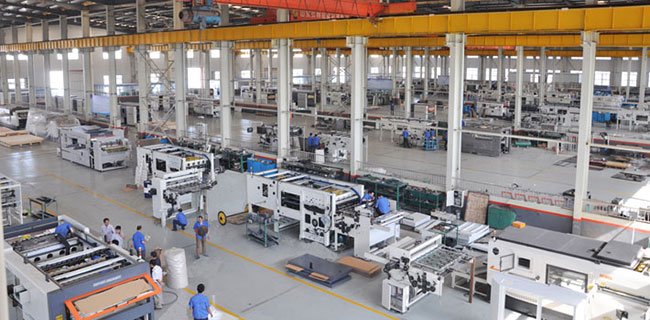
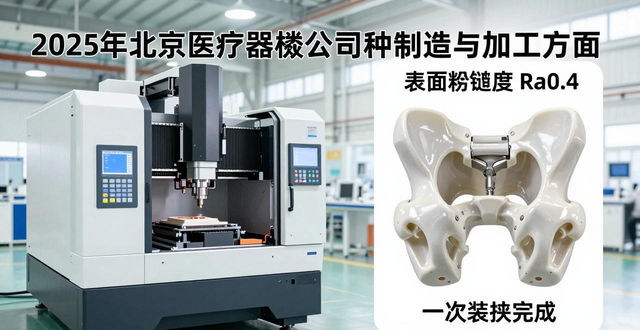
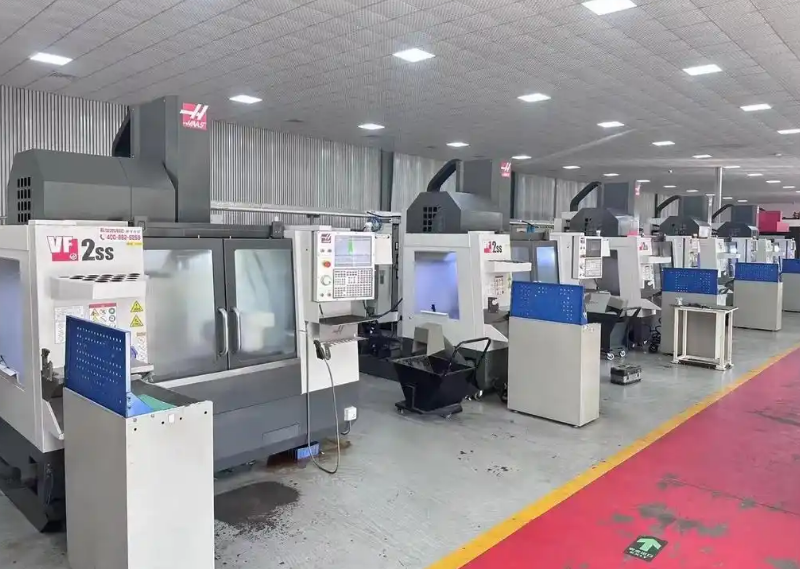
The strong financial support is not just the book figures, but is directly reflected in the hardware configuration of the production workshop. For example, it has six imported machining centers, which shows that the company has significant production capacity and quality advantages when faced with high-precision and high-efficiency complex curved surface processing. These equipment are usually from brands such as Germany and even Japan, and the value of a single unit can reach millions of yuan.
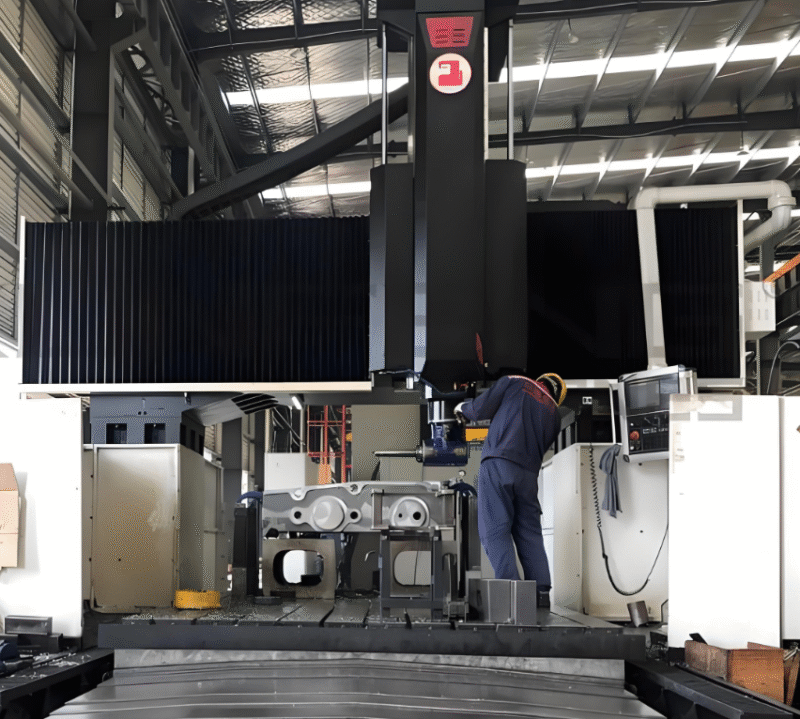
What shows the specific financial strength is the equipment detailed list. Two CNC gantry milling machines are suitable for processing large boxes or molds: six fast and slow wire cutting machine tools are used to process precision special-shaped holes and upper and lower special-shaped parts. What are the precision machining equipment? By adding CNC lathes, ordinary machine tools, and argon arc welding, a complete processing chain covering milling, turning, grinding, cutting, and welding is formed, allowing the company to undertake comprehensive orders with complex process requirements.
Advantages of integrated design and production
The model that integrates design and production has changed the relatively passive situation of traditional order-taking production. The design department is no longer an isolated unit that only performs drawing work. They have a deep understanding of the back-end processing capabilities and specific cost components, and can comprehensively and fully consider the feasibility of process implementation and economic rationality at the design stage.
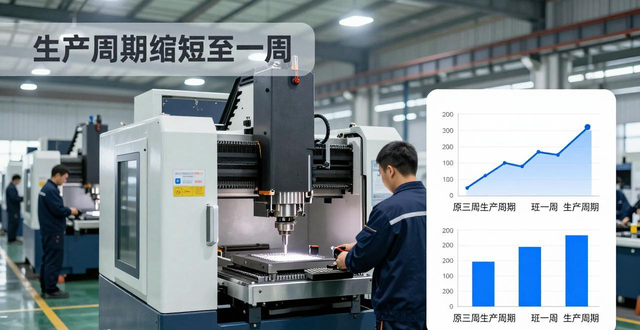
The most direct benefit brought by this integration is shortening the research and development cycle and reducing communication costs. When a product just starts from a concept sketch, the design team, process team, and production team can immediately collaborate simultaneously and provide real-time feedback on difficulties encountered during the processing process to adjust the plan. In this way, repeated modifications caused by the disconnect between the design draft and the production capacity are avoided, 和 the entire process of the product from the drawing stage, through the sample stage, and finally to mass production is accelerated.
Comprehensive machining capability matrix
Multiple processes, such as CNC machine processing, CNC lathe processing, grinder processing, etc. shown by the company, are not simply listed. Each one covers a professional field. For example, CNC machine tools, also commonly known as machining centers, are good at processing multi-process and complex three-dimensional parts, while CNC lathes specialize in the processing of rotating surfaces such as shafts and disc sleeves.
A more comprehensive capability is embodied in special processes such as laser cutting and wire cutting. Laser cutting is extremely fast, so it is suitable for blanking sheets. In the case of wire cutting, the processing accuracy is quite high and it can process high-hardness materials or ultra-fine shapes. It is precisely because these processes are combined with each other that the company can act like a "universal hospital" to solve various "parts symptoms" ranging from routine to precision, thereby providing customers with integrated manufacturing solutions.
The role of quality management systems
![图片[3]-mobile Version-Dalian Fuhong Machinery Co., Ltd](/wp-content/uploads/2026/01/1768853651770_2.png)
The institutional guarantee for product consistency and reliability lies in having a complete and scientific quality management system. This system generally runs through the entire process, which begins with the raw material incoming inspection, followed by the first inspection and inspection of the process, and ends with the final inspection of the finished product. Moreover, this system is supported by high-precision testing equipment, such as three-dimensional coordinate measuring machines, profilometers, etc.
Scientific quality management is not simply about inspection after the fact, but focuses more on process control and prevention. It uses standard operating procedures, statistical process control and other methods to integrate quality requirements into every processing step, thereby reducing reliance on final inspection. This ensures that even in mass production, each product can meet the tolerance range and technical requirements specified in the drawings.
The realistic basis for large-scale production
The nineteen pieces of equipment currently listed mainly for processing form the physical basis for large-scale production. Among them, six machining centers imported from abroad and two CNC gantry milling machines together form the main group capable of precision machining. Moreover, they can operate continuously in three shifts, thus supporting a considerable monthly production capacity.
Scale does not only mean the ability to undertake large orders, it also brings flexibility in production scheduling. When faced with orders of multiple varieties and small batches, the rich variety of equipment resources allows for higher-quality production scheduling operations, allowing ordinary machine tools to be responsible for rough machining, while high-value CNC equipment is dedicated to finishing, thereby improving the overall equipment utilization rate and delivery on-time rate, and erecting double protective barriers of production capacity and speed in market competition.
For you, as a manufacturing company, in order to gain long-term and stable customer trust, is it more important to have a full range of equipment processing capabilities, or is it more advantageous to go deep into a specific segment to achieve perfection? Welcome to share your opinions in the comment area . What are the precision machining equipment? If you find the analysis of this article helpful, please feel free to like and forward it.



暂无评论内容