


What is riveting welding
In modern industrial manufacturing, how to connect metal parts firmly and consistently is one of the most critical technical problems. The riveting process is one of the key ways to solve this problem. It combines the advantages of mechanical connection and welding into one place.
Basic principles of riveting welding process
Riveting welding is not a simple welding operation, it belongs to a composite process. The process begins with pre-drilling or punching holes in the metal sheets or structural components to be joined. After that, the rivet is placed into the hole. The rivet usually has a pre-made head on one end.
By applying external force to hammer or pressure equipment, the other end of the rivet is squeezed, causing it to deform and form another nail head rivet weldment , thereby clamping and locking the workpiece. The key welding step is often completed at the contact interface between the rivet and the workpiece hole wall, or in a local area surrounding the rivet head, in order to form a metallurgical bond and further strengthen the locking effect.
Materials and equipment required
Special materials are required to carry out riveting and welding-related operations. The rivets themselves have a variety of options to choose from. Common ones include carbon steel, aluminum alloy and stainless steel rivets. Its material must match or be compatible with the workpiece. The workpiece is usually a variety of steel structures, steel plates or profiles.
When it comes to equipment, in addition to the basic drilling machine, you must also have riveting tools, such as manual riveting guns, and pneumatic or hydraulic riveting machines.
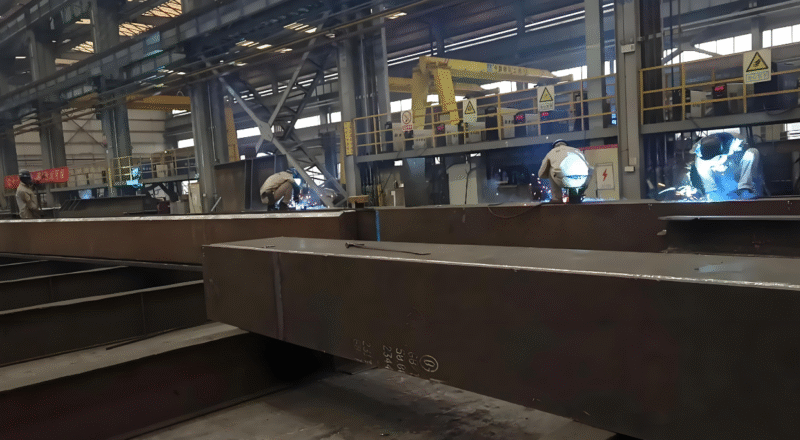
Main technical methods and steps![图片[2]-What Is Riveting Welding-Dalian Fuhong Machinery Co., Ltd](https://endlfh.com/wp-content/uploads/2025/11/QQ20251002-201940-1.png)
Common riveting methods include hot riveting and cold riveting. Hot riveting heats the original rivets to a red-hot state before riveting. This method is mostly used in large steel structures such as bridges. Cold riveting is performed at room temperature and is suitable for materials that are sensitive to deformation or are relatively thin.
Its standard steps are roughly divided into four steps. The first is setting out and marking, and the location of the hole must be accurately determined. The second is drilling or punching, where the hole diameter and verticality need to be controlled. Then the rivets are inserted and initially fixed. Finally, formal riveting and necessary local welding are carried out to form the final connection.
Applications in core industrial areas
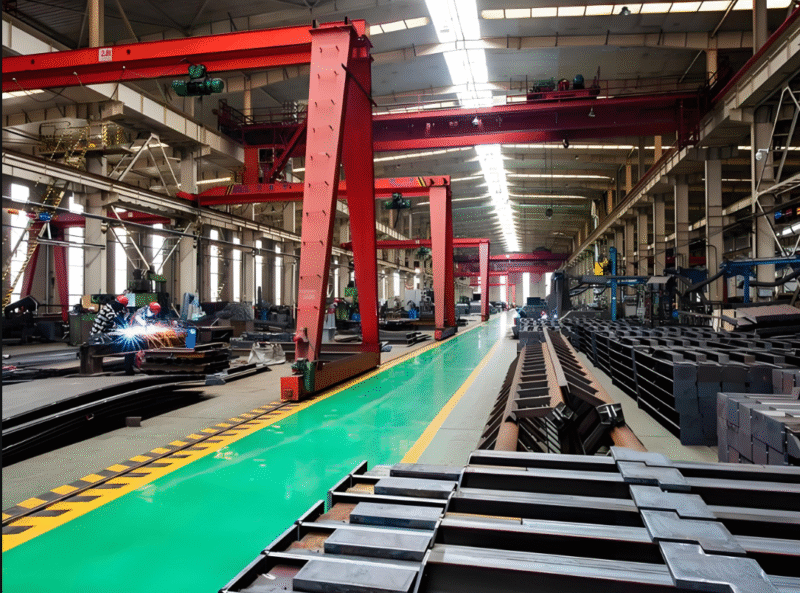
In the manufacturing of heavy equipment, the position of riveting welding cannot be replaced. What is riveting welding? In the field of ship manufacturing, hot riveting is used extensively to connect hull steel plates to keels and ribs. The purpose is to ensure the structural integrity under seawater corrosion and wind and wave impact. Historically, the hull of the Titanic was connected with a large number of rivets.
In the electric power industry, the structural construction of boiler steel frames of large thermal power plants and high-voltage transmission towers also relies on riveting and welding. These structures are subject to extremely high static loads over long periods of time, as well as wind loads, and riveted joints can provide excellent fatigue resistance, ensuring safe operation for decades.
![图片[3]-What Is Riveting Welding-Dalian Fuhong Machinery Co., Ltd](https://endlfh.com/wp-content/uploads/2025/07/QQ20250713-201938.png)
Advantages compared to other connection methods
Compared with simple welding, rivet welding can reduce the deformation and residual stress of the workpiece caused by overall heating. Compared with a pure bolt connection, it forms a non-detachable permanent connection. There is no need to worry about the bolts loosening under vibration, and the sealing performance is also better.
Especially in situations that need to withstand impacts and alternating loads, such as the carriage parts of railway freight cars and the boom parts of mining machinery, riveted joints show higher reliability. It has the shear resistance of riveting and the pull-out strength of welding. It is a composite connection solution that can achieve complementary advantages.
Key points of process quality control
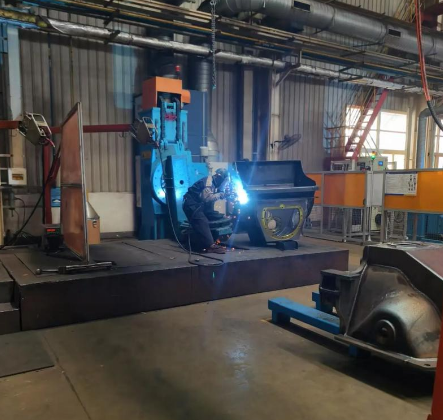
First, check the rivet material and size to see if it meets the drawing requirements to ensure the quality of the rivet welding. When riveting, for temperature, the heating temperature of the rivet must be controlled. For force, the riveting force must be controlled. For appearance, the appearance of the final nail head must be paid attention to. The nail head should be plump and closely fit the surface of the workpiece.
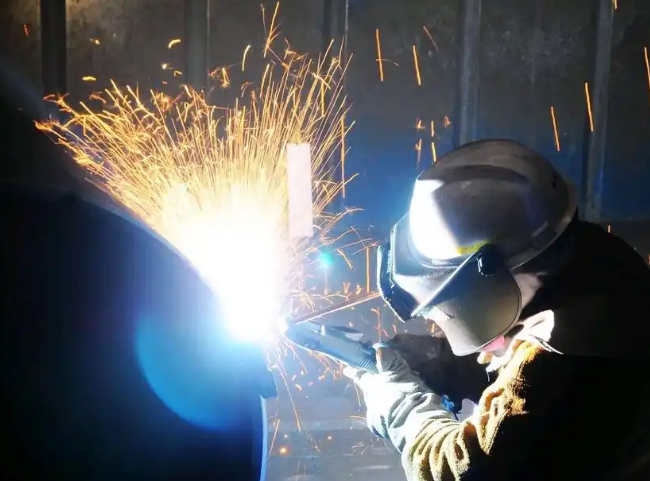
When welding is carried out, it must be done by welders with corresponding qualifications. Moreover, non-destructive testing may also be carried out, such as ultrasonic flaw detection on the welds in key parts. This is done to check for defects such as internal pores or lack of fusion. After completion, samples are often taken for destructive testing to verify its load-bearing capacity.
In your work or life, have you ever come into contact with various products or architectural objects that use riveting technology? Do you think such a classic craft will be completely replaced by more advanced technology in the future? You are welcome to share your deepest opinions in the comment area. If you think this article is helpful, please give it a like to support it.





暂无评论内容