Tag: Production safety

  • B. The General Contractor And Subcontractors Bear Unlimited Joint And Several Liability For The Safety Production Of Subcontracted Projects.

    B. The General Contractor And Subcontractors Bear Unlimited Joint And Several Liability For The Safety Production Of Subcontracted Projects.

    B. The general contractor and subcontractors bear unlimited joint and several liability for the safety production of subcontracted projects.

    Division of production safety responsibilities under the general contracting model

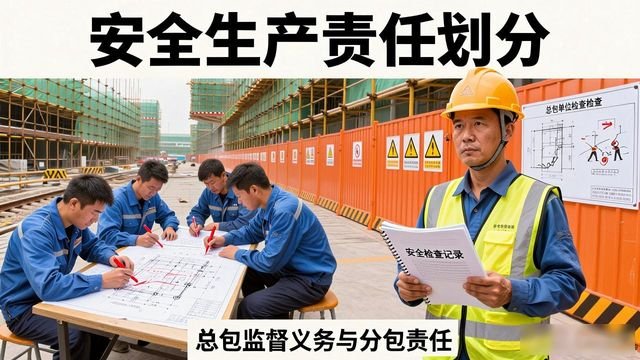
    When carrying out a construction project, the unit that assumes general contracting responsibility must take overall responsibility for safety production at the construction site. According to the "Construction Project Safety Production Management Regulations", as the general contractor in the general subcontracting relationship, the management of safety production activities of all subcontracting units must be coordinated to ensure that on-site safety measures can be effectively implemented. For example, there was a super high-rise residential project in Shenzhen in 2025. Because the general contractor failed to effectively supervise the lifting operations of its subcontractors, a hoisting accident occurred, and it was eventually ordered to stop work for three months for rectification.

    The general contractor cannot transfer the responsibility for production safety to subcontractors. Even if the subcontracting unit operates in violation of regulations, the general contractor still has to bear joint and several liability for management negligence. For example, in a factory expansion project in Daxing District, Beijing, the subcontractor was not equipped with fire extinguishers when performing welding operations. The general contractor failed to inspect and make rectifications. As a result, it was fined 200,000 yuan and had to pay medical expenses to the injured workers.

    Misunderstandings about joint and several safety responsibilities between general contractors and subcontractors

    1. Many people have a misunderstanding and believe that the general contractor and subcontractors will bear unlimited joint and several liability. 2. However, in fact, the law clearly stipulates that "joint and several liability" is not "unlimited". 3. Joint and several liability means that the responsible party must bear compensation based on the proportion of fault, and there is no limit. 4. Just like in a shopping mall renovation project in Shanghai in 2024, the subcontractor caused a fire due to illegal use of flammable materials. 5. In this case, the general contractor only bears 40% of the compensation, not all losses.

    大型项目铆焊按总包还是按日工_建设工程安全生产管理条例 总承包单位 分包单位连带责任

    The general contractor is responsible for the safety management of subcontracted projects, but its scope of responsibility is limited. If the subcontractor carries out completely independent work and the general contractor has fulfilled its supervisory obligations, the responsibility for the accident will mainly be borne by the subcontractor. For example, in a subway station construction project in Hangzhou, the subcontractor independently changed the construction plan and caused a collapse. Since the general contractor had complete inspection records, it was only given a warning penalty.

    Misunderstanding that subcontracting units have overall responsibility for site safety

    When carrying out general contracting of construction projects, the main body responsible for on-site safety is the general contractor, not the subcontracting unit. The subcontracting unit is only responsible for that part of the contract, but the general contractor must make comprehensive plans and arrangements to control the overall situation. For example, in a bridge project in Chongqing in 2023, the subcontractor failed to install temporary supports during the installation of steel beams, and the general contractor was judged to bear the main responsibility because it failed to detect hidden dangers in time.

    If the subcontracting unit assumes the overall responsibility for safety on its own, it will easily lead to management chaos. The reason is that the general contractor controls the overall progress and resource allocation, and only it has the ability to coordinate cross-operation risks between different subcontractors. For example, in a commercial complex project in Guangzhou, the general contractor formulated a unified welding fire protection plan, thus avoiding risks caused by subcontractors acting according to their own ideas.

    Responsibility for subcontracting units’ disobedience to management

    If the subcontracting unit does not obey the safety production management of the general contracting unit and an accident occurs, then the subcontracting unit shall bear the main responsibility, not the general contracting unit. This is the law stipulating whether riveting and welding of large projects is based on general contracting or daily labor . B. The general contractor and the subcontracting unit bear unlimited joint and several liability for the safety production of the subcontracted project. The subcontracting unit must obey the general contracting management, otherwise it will have to bear the consequences on its own, just like, In an industrial plant project in Chengdu in 2025, the subcontractor refused to implement the general contractor's requirements for explosion-proof ventilation, which triggered a gas explosion. In the end, the court ruled that the subcontractor must bear 70% of the compensation liability.

    The general contractor will not be exempted from liability because the subcontractor disobeyed management, but the proportion of its liability will be significantly reduced. For example, in an expansion project of a chemical plant in Nanjing, the subcontractor dismantled the scaffolding without the consent of the general contractor, and the general contractor only assumed 30% of the responsibility because it failed to effectively stop it. However, the subcontractor paid the main loss.

    Main structure construction obligations of the general contractor

    For the construction of the main structure of the construction project, the general contractor must complete it by itself, because this is a legally mandated requirement. The main structure is closely related to the overall safety of the building, so it cannot be subcontracted or subcontracted. For example, there was a high-rise residential project in Zhengzhou in 2024, in which the general contractor subcontracted the concrete pouring to an unqualified team. As a result, the building tilted. In the end, the unit was revoked and fined 5 million yuan.

    If the general contractor violates this provision, it will face severe penalties, which include revocation of qualification certificates, orders to suspend work, and even criminal liability. For example, in a sports stadium project in Wuhan, the general contractor subcontracted the steel structure installation, but in the end the welding quality failed to meet the corresponding standards. Furthermore, the acceptance inspection failed, so the general contractor was included in the industry blacklist.

    Based on the above analysis, it can be seen that in the "Construction Project Safety Production Management Regulations", there are errors in options B, C, and D. Among them, whether the riveting and welding of large-scale projects should be based on general contracting or daily labor . The error in option B is that there is an error in the term "unlimited joint and several liability". The correct one is joint and several liability; the error in option C is that it is unreasonable to mention that the subcontracting unit bears overall responsibility. In fact, it is the general contractor who should bear overall responsibility; the error in option D is that it is wrong to say that the general contractor bears the main responsibility. The actual situation is that the subcontracting unit bears the main responsibility. Options A and E are correct because the general contractor has the overall responsibility for site safety and must also complete the construction of the main structure by himself.

    During the process of managing the riveting and welding of that large-scale project, did you encounter a situation where the responsibilities of the general contractor and the subcontractor were unclear? You are welcome to share your experience in the comment area, like and bookmark this article, so that more people can avoid pitfalls!

  • What Qualifications Are Required For Pressure Vessel Installation?

    What Qualifications Are Required For Pressure Vessel Installation?

    What qualifications are required for pressure vessel installation?

    Directly related to production safety and personnel life safety is how to choose a riveting and welding unit with pressure vessel design qualifications for pressure vessel installation. According to the special equipment statistics released by the State Administration for Market Regulation in 2025, a total of 23 accidents related to pressure vessels occurred nationwide that year, and more than 60% of the accidents were related to the installation unit's incomplete qualifications or illegal operations. The installation qualification is not just a piece of paper, but the first line of defense to ensure the safe operation of the equipment.

    Manufacturing license is a hard barrier to entry

    Pressure vessel installation units must first hold pressure vessel manufacturing qualifications. This means that the company must pass a nationally recognized quality management system certification and obtain a pressure vessel manufacturing license issued by the market supervision department. Without this certificate, there is no installation qualification. How about Jiangsu Province? How to choose a riveting welding unit with pressure vessel design qualifications ? The province's special equipment safety supervision report in 2025 showed that 7 installation units were ordered to stop work for rectification because they did not have a manufacturing license, and the total fine exceeded 800,000 yuan.

    Different levels of manufacturing licenses correspond to containers of different pressure levels and media categories. For example, units that install high-temperature and high-pressure reactors must hold a Class A manufacturing license, while ordinary air storage tanks only need Class D qualifications. When companies choose installation units, they must check whether the scope of the license covers the type of required installation equipment. In March 2026, a chemical factory in Zhejiang was ordered to dismantle and reinstall by the local supervisory department because it selected a unit with only Class D qualifications to install high-pressure vessels.

    Pipe installation qualifications are also critical

    压力管道安装资质要求_如何选择有压力容器设计资质的铆焊单位_压力容器安装资质要求

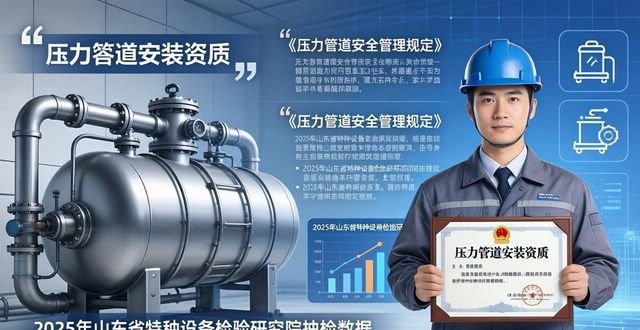
    Pressure Vessels Frequently Connected to Piping Systems What qualifications are required for pressure vessel installation? , the installation unit must have pressure pipeline installation qualifications, and this qualification requires both quality management system certification and a special installation license. According to the "Pressure Pipeline Safety Management Regulations", different levels of pipeline installation qualifications such as GC1, GC2, and GCD correspond to different installation scopes and difficulties. Sampling inspection data provided by the Shandong Special Equipment Inspection Institute in 2025 shows that about 30% of pressure vessel installation quality problems occur at the connection welds between the vessel and the pipeline.

    If the installation unit only has container manufacturing qualifications but no pipeline installation qualifications, then the pipeline connection part will fall into the category of illegal construction. In actual operation situations, some units will take the edge and subcontract pipeline connections to unqualified teams. This will cause great hidden dangers for subsequent operations. In 2024, there was a food factory in Foshan, Guangdong, because the installation unit did not have pipeline qualifications, which caused the steam pipeline interface to leak, eventually causing two workers to be scalded.

    Production safety license ensures construction safety

    The production safety license is the basic prerequisite certificate that the installation unit relies on to legally carry out construction. This certificate is issued by the housing and urban-rural development department or the emergency management department. It can prove that the enterprise has the conditions for safe production and the ability to effectively prevent accidents. Those units that do not hold a production safety license often lack a standardized safety management system and environmental support at their construction sites. In this way, it is very easy for a series of accidents such as falling from a height, being struck by an object, or getting an electric shock to occur. Nationwide in 2025, a total of 11 cases of personal injury and death occurred during the installation process of special equipment. Eight of these accidents involved units that had not obtained production safety licenses.

    Before starting construction, the installation unit must prepare a special safety construction plan and then submit it to the supervision unit and construction unit for review. There are some safety measures, including isolation of work areas, provision of personal protective equipment, emergency drill records, etc. In January 2026, there was an installation company in Shanghai. During the hoisting operation of a large storage tank, due to insufficient safety protection, the sling broke. The tank fell and damaged the ground pipeline. Fortunately, no casualties were caused. However, because this unit did not have a production safety license, it was included in the list of serious dishonesty.

    Personnel qualification determines installation quality

    压力管道安装资质要求_压力容器安装资质要求_如何选择有压力容器设计资质的铆焊单位

    No matter how good the qualification certificate is, it still has to be carried out by people. Welders, crane workers, non-destructive testing personnel, etc. who are engaged in pressure vessel installation must hold corresponding technical titles and job certificates. According to national regulations, pressure vessel welders must pass the special equipment welding operator examination. , so as to obtain a welder qualification certificate, and the certificate items must match the material, thickness, and location of the actual welding. In a nationwide spot inspection conducted by the State Administration for Market Regulation in 2025, it was found that about 15% of the installation sites had expired welder certificates or inconsistent identity certificates.

    The on-site technical person in charge, in addition to the welder, should have the title of engineer or above, and the quality inspector should have a non-destructive testing certificate of level two or above. Before starting construction, the construction unit shall verify the original qualification certificates of all installation personnel and keep copies for future reference. In February 2026, it was discovered during the completion acceptance of a pressure vessel installation project in Tianjin that the welders actually performing the welding were completely different from the ones reported on the list. The certificates of two of the welders had expired. The project was ultimately judged to be unqualified, and the installation unit compensated the owner for losses of more than 2 million yuan.

    Filing, approval and supervision and inspection cannot be omitted

    Complete qualifications are only a basic requirement. Before installation, notification procedures and construction registration must be completed with the local market supervision department. According to Article 23 of the Special Equipment Safety Law, before a pressure vessel is installed, the installation unit shall notify the special equipment safety supervision and management department of the municipality or districted city in writing, and submit relevant materials such as qualification certificates, construction plans, and equipment certificates. If any construction work is carried out without notification, a fine of not less than 10,000 yuan but not more than 100,000 yuan may be imposed.

    During the installation process, and after the installation is completed, the special equipment inspection agency will carry out supervision and inspection. The inspection content covers data review, physical inspection, pressure test, leakage test, etc. Only when the supervision inspection is passed can the pressure vessel be put into use. In 2025, the nationwide More than 2,000 pressure vessels were required to undergo rectification because they failed to pass the inspection during the installation process. About 10% of them were eventually judged to be scrapped. The construction unit must not omit these legal procedures in order to meet the construction deadline. Otherwise, if an accident occurs, all the responsibilities will be borne by themselves.

    After looking at the qualification requirements in the above five aspects, which qualification do you think is most easily overlooked when selecting a pressure vessel installation unit? Welcome to leave a message in the comment area to share your experience, and don’t forget to like and repost it so that more people in the same industry can see this article.