Tag: Illustrations

  • How To Improve The Production Efficiency Of Riveting And Welding Assembly

    How To Improve The Production Efficiency Of Riveting And Welding Assembly

    How to improve the production efficiency of riveting and welding assembly

    In the riveting and welding workshop, it is difficult to increase the production capacity, delivery times are always delayed, and the workers are very tired, but they cannot do much work. So, how should this problem be solved?

    Many factories are worried about the efficiency of riveting and welding assembly. Although they have sufficient personnel and brand-new equipment, they are unable to produce results. The root cause is chaotic processes, poor coordination, and lack of standards.

    The process route should be straightened out

    When riveting is produced, the process is often complicated. How to improve the production efficiency of riveting assembly? How to improve the production efficiency of riveting assembly? The process of cutting materials, assembling this process, welding process, and correcting this process need to be completed continuously to increase the speed. If each process has to wait until the previous process is completed before starting, then time will be wasted waiting for this matter.

    Enterprises need to build a clear process roadmap and clearly determine the completion standards and handover requirements for each node. With the help of reasonable process interleaving and parallel operations, waiting time is reduced and overall circulation efficiency is improved.

    Tooling is the key

    奈何怎么办_如何提高铆焊装配的生产效率_如何如何

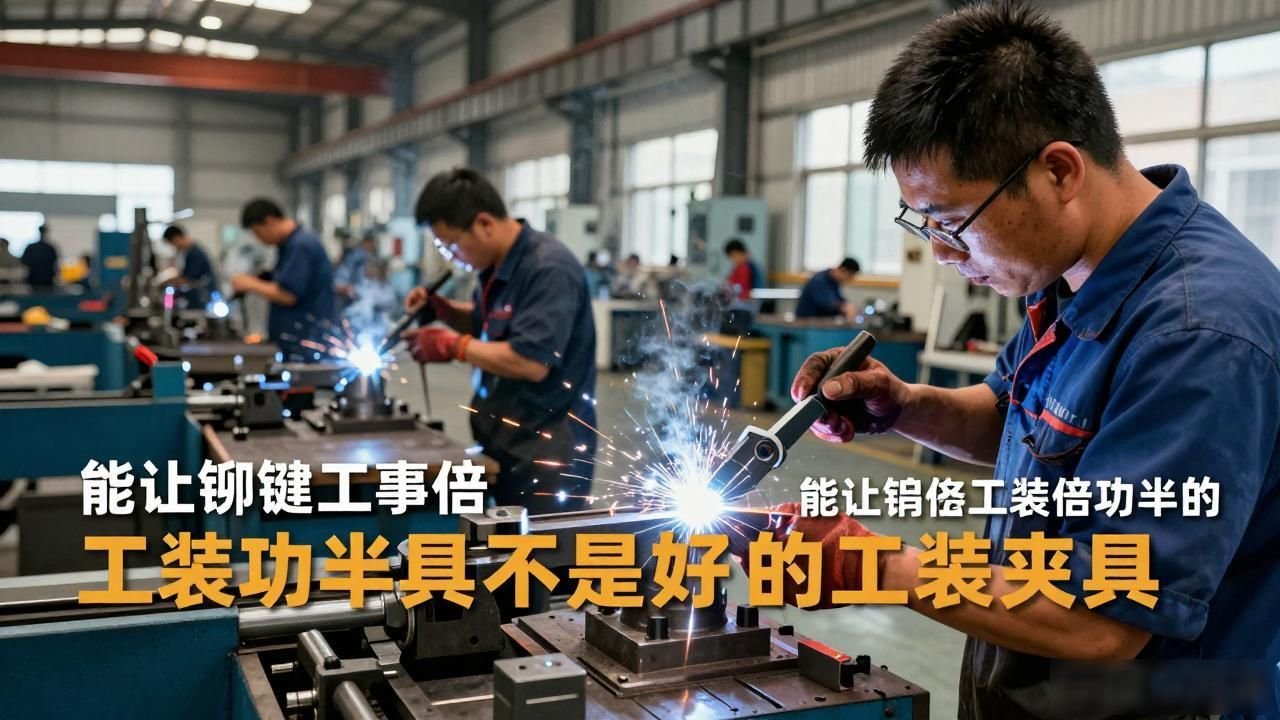
    The tooling fixture that can make riveting welding work half the time is not a good tooling fixture. Its positioning is not accurate enough and it does not show the characteristics of fast clamping. It cannot effectively control welding deformation. Without special fixtures, each workpiece needs to be re-measured and aligned , which is slow and error-prone.

    Carry out the development of standardized fixtures around commonly used product series, so that they can be used for a long time after a single investment, thereby significantly shortening the auxiliary time. The design of the fixture needs to take quick clamping and versatility into consideration to adapt to the production characteristics of multiple varieties and small batches.

    Personnel cooperation must be tacit understanding

    Riveting and welding generally requires the cooperation of many people. One riveter must be paired with one or more welders. Only when they cooperate with each other can they move forward efficiently. If everyone does their own thing and communication is not smooth, not only will the efficiency be very low, but it will also be particularly prone to rework.

    Create a fixed team pattern so that partners who know each other can collaborate for a long time and build a consistent work rhythm. At the same time, complementary skills training is strengthened, so that one person is proficient in multiple tasks and can be flexibly deployed and supplemented when manpower is tight.

    Standard work rules

    如何如何_奈何怎么办_如何提高铆焊装配的生产效率

    Failure to work according to standards leads to differences in everyone's approach, which leads to unstable quality, high rework rate, and slows down the overall progress. Establishing a series of operating specifications such as welding parameters, assembly accuracy and inspection standards is the basis for improving efficiency.

    The mature operating experience is solidified into standard work instructions, so that new workers can be trained according to the standards before taking up their posts, and old workers can operate according to the standards. Standards should be reviewed regularly and revised, and working methods should be continuously improved.

    Just relying on a single breakthrough is not enough. Improving the efficiency of riveting and welding assembly is a systematic project, which requires efforts in technology, tooling, personnel, and standards, so that it can exert its influence in many aspects at the same time.

    Which is the most prominent obstacle to efficiency in your workshop at the moment? Is it the long wait time, the frequent rework, or the unsmooth collaboration between personnel? Feel free to share your experiences and confusions in the comment area.

  • Precision Means

    Precision Means

    Precision means

    Accuracy Definition and Misunderstandings

    When many people hear about precision machining, the first thing that pops into their minds is an extremely high level of accuracy. In fact, "precision" has three meanings in Chinese. It is not just precision at the numerical level, but also covers the meticulousness of the structure.

    Ancient literature often mentions that the intention is very precise. This precision refers to extremely meticulous thinking. In the category of modern industry, it refers more to the ability of the equipment to control the small size. Understanding the specific meaning of this word is the first step in selecting equipment. You cannot just look at the superficial parameters.

    Common precision processing equipment

    Turning equipment is basic, like high-precision CNC lathes. It has the responsibility of rotating the workpiece and cutting cylindrical parts through the tool. This type of equipment plays a dominant role in the manufacturing of shaft parts and has a wide range of applications.

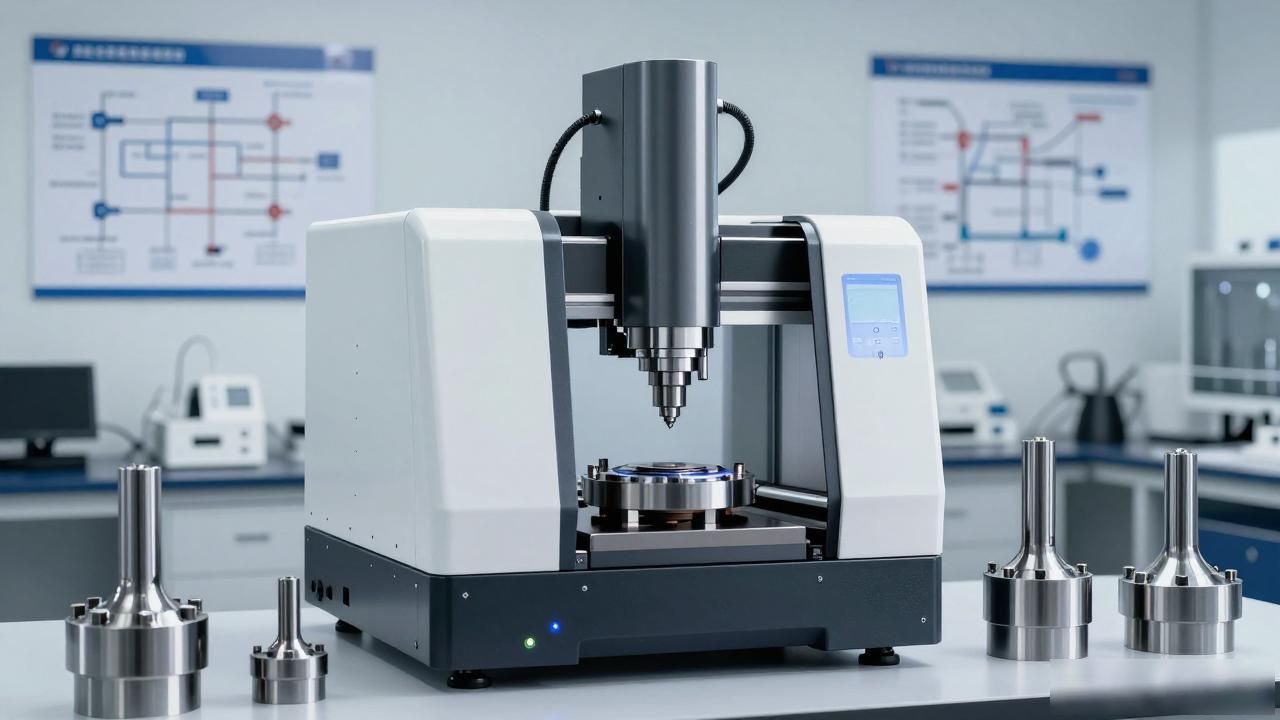
    Milling equipment is of equal importance, whether it is a horizontal machining center or a vertical machining center. They are suitable for processing planes, grooves and complex curved surfaces. With the help of multi-axis linkage, they can achieve the purpose of higher-dimensional precision molding, thereby meeting diversified production needs.

    Grinding and Special Machining

    精密机械加工设备有哪些_精密细密 汉语词汇 精确周密

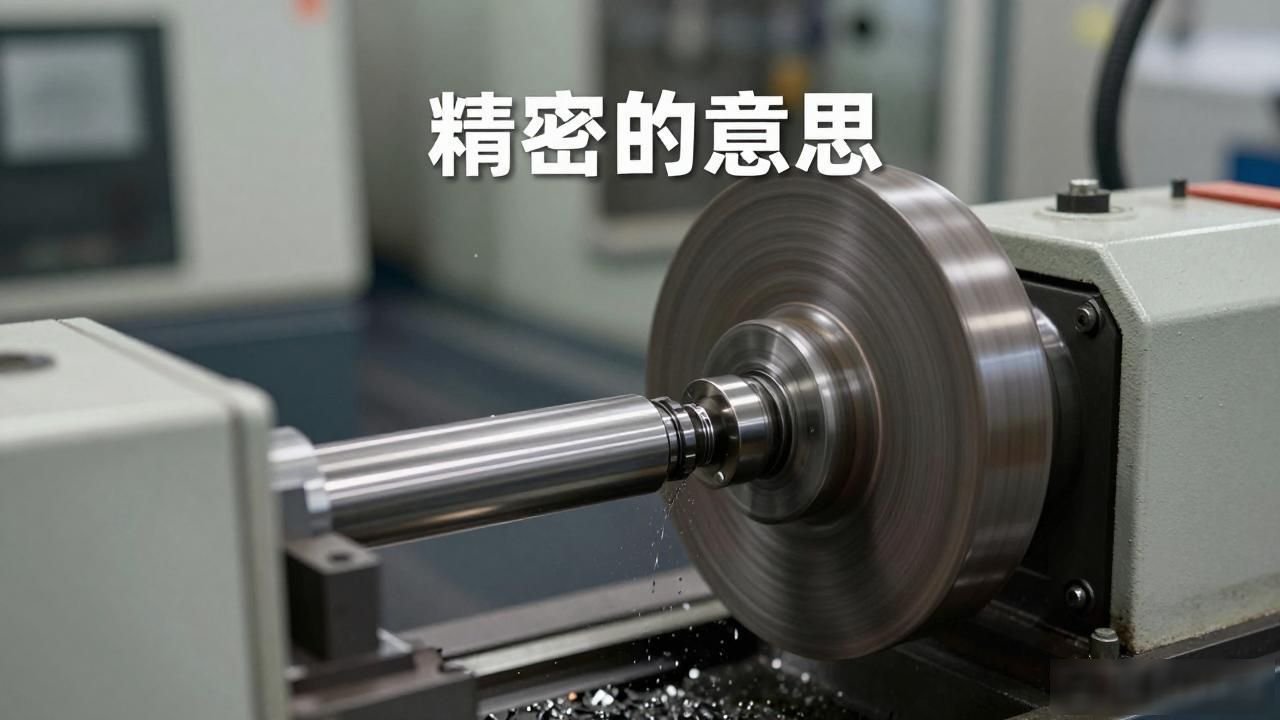
    The key is that the grinding machine can improve the accuracy, especially for external cylindrical grinding and internal cylindrical grinding. The high-speed rotation of the grinding wheel is used to remove trace amounts of material, thereby achieving micron-level or even nano-level surface roughness. This is a process step that cannot be replaced by ordinary cutting.

    For superhard materials, it is often difficult for traditional tools to intervene. EDM and laser processing are special methods. These methods use energy beams to remove materials to achieve processing tasks. Although they are less efficient, they are indispensable in the fields of molds and aerospace.

    The importance of testing equipment

    Processing income does not mean that it is qualified, and testing this link is extremely important. The three-dimensional coordinate measuring machine can accurately determine spatial coordinates and evaluate the geometric errors of parts. If there is no high-precision detection method, the processing quality cannot be verified, and blind production will only lead to waste.

    Image measuring instruments are used for rapid screening of two-dimensional dimensions. Non-contact measurement of thin sheets or small parts can avoid deformation. Combined with sensor feedback, a closed-loop control is formed to ensure that each process is within the control range.

    Core selection considerations

    When choosing equipment, you must first clarify your product tolerance requirements. If you only need millimeter-level precision, ordinary machine tools will be fine. If you need micron-level precision, you must invest in high-end systems. When the budget is limited, you should prioritize ensuring core functions instead of pursuing all-round capabilities.

    Secondly, we should pay attention to the stability of the equipment and the repeatability of positioning accuracy. High single-shot accuracy does not mean that it is stable in batches. Thermal deformation will affect the final result, and vibration will also affect the final result. It is of more practical significance to understand the manufacturer's cases and its after-sales service capabilities than simply comparing parameters.

    Future trends and recommendations

    The inevitable trend is automation and intelligence, integrating automatic loading and unloading and online inspection, reducing human intervention and significantly improving consistency. Enterprises should gradually transition to digital workshops and use data to optimize process flows and reduce scrap rates.

    It is recommended that novices who have just started to get involved start with small batch trial production operations, and then expand the production scale after accumulating relevant experience. You must not blindly pursue the most novel technology. The best equipment is suitable for your own process chain. Regular maintenance work should be carried out to extend the service life of the equipment, which is also the key to controlling costs.

    Which factor do you think is most easily missed when selecting precision processing equipment? We sincerely invite you to leave a message in the comment area to start a discussion. Don’t forget to like and share!

  • Precision Means

    Precision Means

    Precision means

    The price behind accuracy

    Many people think that machining is equivalent to cutting metal, and the prices corresponding to high and low precision are roughly similar. In fact, this idea is completely wrong. Precision machining has extremely high requirements for equipment. Ordinary machine tools cannot achieve micron-level dimensional control, so high-precision CNC machine tools must be used.

    This type of equipment is expensive to build, and the maintenance costs are equally high. The environment in which it operates requires constant temperature and humidity, and even a vibration-isolating foundation. Such hardware investment directly increases the basic cost significantly. Each process requires stricter monitoring and control, and the investment in manpower and time is much higher than that of ordinary processing.

    Tool and consumable costs

    The tools used in precision machining are completely different from the tools used in ordinary machining. In ordinary machining, carbide tools can be used to quickly remove material. However, precision machining requires the use of diamond tools or ceramic tools. The unit price of such tools is extremely high, and their lifespan is relatively short, and the frequency of replacement is very fast.

    It takes multiple tool passes to achieve the dimensional requirements necessary for precise machining, which involves more tool wear and higher expenditure on consumables. The requirements for coolants and lubricants are also becoming more stringent, and special media with quite high purity must be used, which increases the material cost.

    Testing and quality inspection links

    精密的出处和例证_精密的汉语词汇释义_精密机械加工与普通加工成本差异

    Ordinary machining may only require rough measurements with calipers, but precision machining must use a three-dimensional coordinate measuring machine. The price of this testing equipment can easily reach hundreds of thousands, and its operation is complicated and time-consuming. Each batch of products must undergo strict dimensional inspection and geometric tolerance verification.

    Those engaged in quality inspection must have extremely high professionalism and be able to interpret complex drawings and technical specifications. This link not only increases labor costs, but also prolongs the production cycle. Many times, the time spent on quality inspection is even longer than the actual processing time, which leads to a decrease in overall efficiency.

    Technical talent salary

    Meticulous processing is not a type of work that just anyone can control. It requires highly skilled professionals with rich experience. These professionals must not only understand the writing of programs, but also know the relevant knowledge of various mechanics of materials and deformation under thermal conditions. Generally speaking, they have many years of practical operation experience, and their salary level is much higher than that of ordinary workers engaged in operation.

    If companies want to retain such talents, they often have to provide more competitive salary and benefits. The cost of training is a considerable amount of money, and new employees must go through a long period of learning before they can take up the job independently. There are differences in labor costs, which will ultimately be reflected in the unit price of the product.

    Production efficiency and yield

    精密机械加工与普通加工成本差异_精密的出处和例证_精密的汉语词汇释义

    Even though it takes a long time to precisely process a single object, its most important value lies in high yield and consistency. Ordinary processing methods are very likely to result in cost differences between batch precision machining of scrap products and ordinary processing . However, precision machining relies on strict control of variables to ensure that each product can meet standard standards. This kind of stability will reduce the problems that arise during the subsequent assembly process, thereby reducing the overall risk cost.

    However, in order to maintain a high yield, the production line must always maintain extremely high cleanliness and stability. No matter how small the vibration or the change in temperature is, it is very likely to cause waste products. Therefore, enterprises must invest more resources to maintain the stability of the production environment, and this part of the hidden costs cannot be ignored.

    How to choose processing method

    When choosing a processing method, the cost difference between precision machining and ordinary processing must not be focused solely on the unit price, but the comprehensive cost should be considered. If the product does not have excessive requirements for accuracy, ordinary processing is sufficient to meet the demand, and there is no need to blindly pursue extreme precision. However, once key components are involved, the reliability improvement brought by precision processing is irreplaceable.

    This is a suggestion to use the product use as a basis to rationally select the processing technology. For non-critical parts, tolerances can be moderately relaxed to reduce costs. Regarding the cost difference between precision machining of components at the core and ordinary machining , we should face and accept the high price and precision brought by precision machining, so as to ensure product quality and brand reputation. Balancing cost and performance is a wise choice and a wise approach.

    Do you think that in the work you are engaged in, should you take the lead in controlling costs or ensuring accuracy? Welcome to leave a message in the comment area to share your views.