タグ: Boring

  • Boring Operations: Definition, Process, Uses And Types

    Boring Operations: Definition, Process, Uses And Types

    Boring operations: definition, process, uses and types

    Differences in Selection of Lathes and Milling Machines

    In the category of boring processing, lathes and milling machines are the two dominant equipment. During the operation of the lathe, the workpiece is in a rotating state and the tool is in a fixed state. This situation is suitable for processing parts with symmetrical characteristics. The situation of milling machines is the opposite. The workpiece is in a fixed state and the tool is in a rotating stage, which can more flexibly cope with the processing needs of complex positions. In 2025, a survey conducted by a mechanical processing factory showed that 70% of the factories will be equipped with both types of boring equipment in order to cope with the requirements of various orders.

    Which equipment to choose is determined by the location of the hole and the shape of the workpiece. For example, when processing engine blocks, milling machines are more commonly used because the holes are distributed in multiple planes. However, when processing shaft parts, the efficiency of lathes is higher. The operator needs to make judgments based on the specific drawings, otherwise the accuracy may be affected.

    Tool selection is a critical step

    Before carrying out the boring operation, the operator must select the appropriate tool according to the hole diameter and material. Among them, carbide tools are suitable for cutting steel parts, while ceramic tools are specially used for high-temperature alloy processing. According to the 2024 industry report, if the tool selection is incorrect, it will cause the scrap rate to exceed 15%, thereby increasing costs.

    The size of the tool also needs to be accurately matched. For example, the diameter of the pre-drilled hole is 20 mm, the development trend of the boring processing industry , then the diameter of the tool should be slightly smaller than this value, and the tool holder must be tightened during installation to avoid vibration. There was once a factory where the inner hole was scratched due to loose tools, and the time spent on rework wasted 3 shifts.

    Don’t be careless when clamping workpieces

    镗孔加工车床操作_镗孔铣床加工步骤_镗削加工行业发展趋势

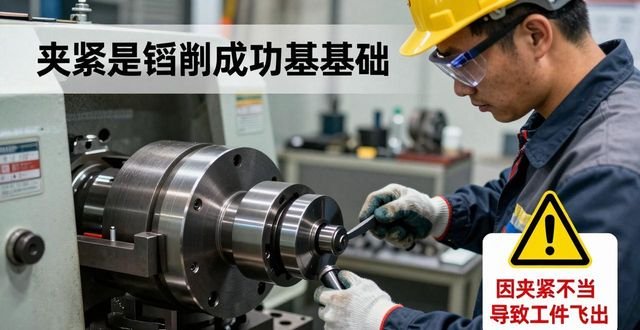
    The basis for successful boring is workpiece clamping. When using a lathe, the chuck or collet must be firmly fixed to prevent displacement during rotation. Milling machines often use a vise or pressure plate to ensure that the workpiece is in a stationary state. According to the accident records of a machinery factory in 2023, workpieces flying out due to improper clamping accounted for 12% of equipment accidents.

    The clamping force needs to be checked regularly. For example, for thin-walled parts, excessive clamping will cause deformation. Operators should use a torque wrench to keep it within standard limits. In daily maintenance, it is also very important to clean the clamping surface. To prevent oil stains from affecting the friction, the punctuation is full stop.

    Cutting parameters must be set accurately

    Spindle speed, feed rate and cutting depth have a direct impact on processing quality. For small apertures, high rotational speed is more appropriate; for large apertures, low rotational speeds are more appropriate; if the feed rate is too fast, the tool will be damaged; if the feed rate is too slow, efficiency will be reduced. According to what industry data shows in 2024, optimizing parameters can improve production efficiency by 20%.

    The hardness of the material is the main basis for setting parameters. For example, when processing aluminum alloy materials, the rotation rate can reach 3,000 rpm. However, when processing stainless steel materials, the rotation rate needs to be reduced to 800 rpm. The person responsible for this operation should refer to the table recommended by the tool manufacturer and make minor adjustments based on the actual test cutting results.

    Operating details of the boring process

    镗削加工行业发展趋势_镗孔加工车床操作_镗孔铣床加工步骤

    When boring is performed on a lathe, the boring bar is inserted into the pre-drilled hole, the workpiece rotates, and the tool cuts the inner wall. The operator must control the feed rate so that the depth of each cut does not exceed 0.5 mm. A training case presented in 2025 showed that the tool broke due to excessive depth when operated by a novice, and the cost of replacing the tool reached 200 yuan.

    Milling machine boring is achieved by the spindle rotating boring bar, and the tool advances the boring process industry development trend along the axial direction, increasing the hole diameter step by step. It is necessary to pay attention to the continuous supply of coolant to avoid overheating. A certain workshop uses an automated cooling system, which increases the tool life by 30%.

    Industry trends bring new changes

    Boring processing is moving towards automation and intelligence. Market research shows that in 2025, CNC boring machine sales will increase by 15% year-on-year, and manual operations are gradually reducing. Multi-axis linkage technology allows complex hole systems to be formed at one time, thus saving clamping time.

    Industry standards are also in a state of upgrading. For example, the ISO 9001 quality certification has more stringent requirements for tolerance control. For this purpose, the factory has invested in online testing equipment and equipment to monitor the aperture in real time. In the future, operators will need to have programming skills to adapt to the uncontrolled workshop environment. This situation provides a new direction for enterprises to reduce costs and improve efficiency.

    As for your factory, have you already begun to introduce CNC equipment to improve the boring efficiency? You are welcome to share your relevant experience in the comment area, and through likes and forwarding, so that more peers can see it!


  • A Heavy Weapon Integrating Attack And Defense In Ancient Times——boring

    A Heavy Weapon Integrating Attack And Defense In Ancient Times——boring

    A heavy weapon integrating attack and defense in ancient times——boring

    The origin and ceremonial identity of boring

    In the field of ancient cold weapons, Boring is truly a latecomer. It was not until the Sui and Tang Dynasties that it gradually emerged on the historical stage. It did not arise out of thin air without any basis, but evolved from the shape of the spear, but in the end it took on a very different and unique appearance. Although its appearance is quite similar to the fork used by farmers every day, it has no blood relationship with the fork and is completely a self-contained weapon system.

    镗削加工行业发展趋势_中国古代兵器镗_镗的形制特点

    When it was first born, the boring machine was not immediately sent to the battlefield. Like many heavy-duty cold weapons, it was initially placed in celebrations and ceremonies as a ceremonial tool to show majesty and ceremony. At that time, the boring machine was more like a decorative item for power rather than a tool for killing enemies.

    The transition to actual combat during the Ming and Qing Dynasties

    It was not until the Ming and Qing Dynasties that as the war situation changed, the boring machine began to be gradually used in actual combat. However, it has never become a mainstream weapon on the battlefield. Compared with swords, spears and halberds, which have always been the main force, the scope of use of the boring machine is much narrower. In more cases, it is used in small-scale battles such as suppressing bandits, rather than large-scale frontal confrontations.

    In the late Qing Dynasty, firearms entered the battlefield in large numbers, and the status of cold weapons was quickly compressed. The actual combat role of the boring weapon also disappeared. It had to return to its original role as a ceremonial weapon and became a decoration in military parades and celebrations. This return meant that the actual combat history of the boring weapon officially ended.

    镗的形制特点_中国古代兵器镗_镗削加工行业发展趋势

    中国古代兵器镗_镗削加工行业发展趋势_镗的形制特点

    Boring’s unique structure and weight threshold

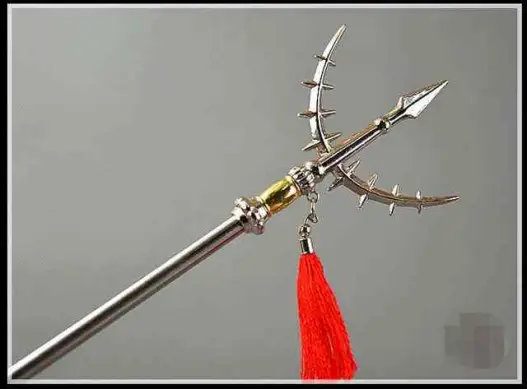
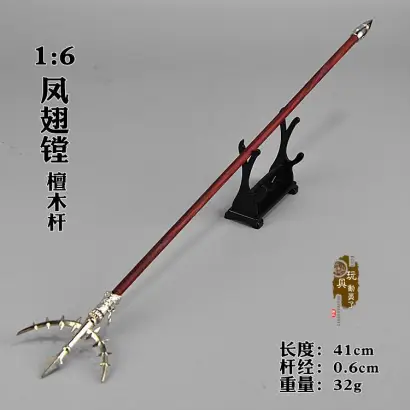
    The shape and structure of the boring is very distinctive. Although it originated from a gun, its appearance is more like an enlarged three-pronged fork. The boring head is made of metal. The straight blade in the middle is called the front. On both sides of the front, there are two blades that are bent diagonally upward. Their shape is very special. This design gives it the ability to stab like a gun and parry defense like a hook.

    Because of the complex structure and abundant materials, the overall weight of the boring machine is extremely large. There are precise records in ancient documents, and it does not mean that people with strong strength or height cannot use it. In other words, people who lack height and strength are simply unable to wield this weapon. This high requirement has also become one of the key reasons restricting the promotion of boring in the military.

    Various types and usage routines of boring

    There is not a single type of boring machine. There are many categories such as phoenix-wing boring machine, goose-wing boring machine, ox-head boring machine, dragon-bearded boring machine, night battle boring machine, and distilled gold boring machine that have left their names in the course of history. Each subtle change in the shape of the ancient heavy weapon of attack and defense – boring, corresponds to different usage methods and battle scenes. Interested friends can search for more details themselves.

    镗的形制特点_中国古代兵器镗_镗削加工行业发展趋势

    The moves and routines possessed by Boring have their own complete system, which mainly cover five basic movements: thrust, slap, pick, frame and cross. After a long period of exploration by successive generations of users, postures and routines such as the "Zha Nian Shi", "Zhong Ping Shi" and "Dragon Riding Shi" have been summarized. Among them, one of the most famous moves is called Swallowtail Wing, which is a classic technique in the boring method.

    Boring and generals in "The Romance of the Sui and Tang Dynasties"

    镗的形制特点_镗削加工行业发展趋势_中国古代兵器镗

    Although the threshold for using boring is very high, the generals who can control it are often extremely fierce. When talking about boring, many people will first think of Yuwen Chengdu in the Romance of the Sui and Tang Dynasties. This Tianbao general holds a fictional phoenix-winged gold boring, which is said to weigh 400 kilograms. He was awarded the gold medal of "the most brave and invincible in the world" by Emperor Yang of the Sui Dynasty. His military value is second only to Li Yuanba, who is born with supernatural power.

    In the Romance of the Sui and Tang Dynasties, there was a boring man named Wu Tianxi, who was a younger brother of Wu Tianzhao. Wu Tianxi used a pair of mixed iron boring machines, each weighing two hundred kilograms, and ranked sixth on the list of heroes. Unfortunately, these two boring masters were defeated by Li Yuanba one after another, and they were unable to reach the next level. It is really a pity.

    中国古代兵器镗_镗的形制特点_镗削加工行业发展趋势

    The imprint of cold weapon boring in Chinese culture

    There are many kinds of cold weapons in our country, and each one has left its own unique story over the long years. Although the boring weapon has not become the central protagonist on the battlefield like the sword, it still accompanies our ancestors and fights bravely in the battles. From opening up the territory to protecting the mountains and rivers, it has appeared in a certain corner of history.

    Some ordnances move toward glory, while others slowly decline, but at least they all have left traces in the history and culture of the Chinese nation. One sentence: "Why don't men bring Wu hooks and collect the fifty states in Guanshan?" This is enough to make countless Chinese people feel excited. Our nation has never been a flower growing in a greenhouse. It is a legacy inherited from generation to generation holding weapons and fighting hard.

    What else do you know about the development trends of the boring and processing industry of ancient cold weapons that were once a niche but are extremely powerful? You are welcome to share your personal views on the development trends of the boring and processing industry in the comment area. Through likes and forwarding, more people can learn about these precious things with historical preservation value.

  • What Are The Common Machining Processes For Titanium Alloys?

    What are the common machining processes for titanium alloys?

    Due to its high specific strength and good corrosion resistance, the use of titanium alloys in the aerospace and medical implant fields continues to grow. However, many factories have repeatedly encountered troubles during turning and boring. The three problems of high cutting temperature, rapid tool wear, and large chip rebound have caused many operators extreme headaches. In fact, as long as the appropriate processing conditions are controlled, turning and boring are not as difficult as rumored.

    Carbide tools are preferred for continuous cutting

    For continuous cutting of titanium alloy parts or titanium alloy parts for mass production, as well as titanium alloy parts with large amounts of metal removal, carbide cutting tools will be the preferred choice for most factories. This material has the ability to withstand higher cutting temperatures and maintain a stable cutting edge at high speeds. There is an aviation parts factory in Jiangsu that conducted actual measurements at the end of 2025. It used carbide tools to turn TC4 titanium alloy, and finally found that the tool life was increased by 5 times compared with high-speed steel.

    When intermittent processing such as forming cutting, grooving or cutting is required, high-speed steel cutting tools have more advantages. High-speed steel has better toughness and can withstand impact loads during cutting. There is a medical device company in Shenzhen. When processing the undercut grooves of titanium alloy bone screws, the chipping rate was reduced by 80% after switching to high-speed steel tools.

    Applicable scenarios for cermet tools

    In titanium alloy finishing, cermet cutting tools are being used more and more, especially in those situations where good surface finish is required. This kind of tool has the characteristics of high hardness for boring processing , and its friction coefficient is also low for boring processing , which can effectively reduce the heat accumulation in the cutting area. A precision machinery factory in Chengdu used cermet tools to boring titanium alloy thin-walled sleeves during the test in January 2026, and the surface roughness reached Ra0.8 microns.

    However, cermet cutting tools are relatively sensitive to cutting parameters and are not suitable for heavy-duty roughing. Its bending strength is lower than that of cemented carbide, and if the feed rate is too large, it will easily cause the cutting edge to peel off. Therefore, it is recommended to use it in the finishing stage. The cutting speed needs to be controlled in the range of 40 to 60 meters per minute, and the feed per revolution cannot exceed 0.08 mm.

    Forced feed and cutting parameter selection

    Always use a constant forced feed method to prevent any kind of cutting interruption. This is one of the core principles of titanium alloy processing. If a sudden stop or deceleration occurs during the cutting process, the tool will rub on the hardened surface, immediately producing very high temperatures and severe tool wear. When programming, the operator should ensure that there are no pause points in the entire tool path.

    Before forging, the oxygen-rich layer on the surface of the original bar needs to be turned, which requires the use of carbide tools, and the cutting depth must be greater than the thickness of the oxygen-rich layer. In actual production, the depth of the oxygen-rich layer of titanium alloy bars is generally between 0.3 and 0.5 mm, so the cutting depth of the first knife is recommended to be set at 0.8 to 1.0 mm. The recommended cutting speed is 20 to 30 meters per minute, and the feed rate should be controlled at 0.1 to 0.2 mm per revolution.

    The correct method of cooling and lubrication

    Do not use dry cutting when turning and boring titanium alloys. Sufficient cooling must be carried out. The purpose of cooling is to take away the cutting heat, reduce the adhesion between the tool and the chips, and prevent titanium chips from forming built-up edge on the rake face of the tool. Many workshops have found that when the coolant supply is insufficient for boring processing , the wear of the tool flank surface will accelerate rapidly.

    It is recommended to use two coolants, one is a 5% sodium nitrate aqueous solution, and the other is a soluble oil emulsion diluted to 1/20. Sodium nitrate solution can effectively inhibit the chemical reaction between titanium and tool materials, and soluble oil emulsion has better lubrication performance. The coolant flow rate should reach 15 to 20 liters per minute and must be sprayed directly into the cutting area, not just poured on the left chips.

    Tips for preventing burning and deformation during boring processing

    In titanium alloy finishing, boring is an important process, especially for thin-walled products. It shoulders two key tasks, namely preventing burns and ensuring that parts are clamped without deformation. Thin-walled titanium alloy parts have poor rigidity. If the clamping force is too large, the workpiece will be out of round. After boring, the dimensions will exceed the tolerance range due to springback. When processing titanium alloy thin-walled shells, an aerospace company in Shanghai used low-stress soft claws and axial compression methods to successfully control the clamping deformation within 0.01 mm.

    Rely on controlling cutting heat and sufficient cooling to prevent burns. During boring, the cutting speed should not be too high. The recommended value for rough boring is twenty to twenty-five meters per minute, and the recommended value for fine boring is twenty to twenty meters per minute. Five to thirty meters, the boring tool needs to use a blade with a sharp positive rake angle, and ensure that the arc radius of the tool tip does not exceed 0.2 mm. After each part is processed, check whether the cooling nozzle is aligned with the position of the boring tool tip.

    Details that are easily overlooked in actual production

    An invisible killer in titanium alloy processing is that the cutting springback is very large and the elastic modulus of the material is low. The machined surface will rebound outward during cutting, which causes continuous friction between the flank surface and the workpiece. The heat generated by this friction is more concentrated than the chip deformation heat, which accelerates the bonding wear and diffusion wear of the tool. To solve this problem, the clearance angle must be kept small enough and a sharp cutting edge must be used.

    When machining, try not to cut, but maintain sufficient cooling. This statement is easily misunderstood. The correct understanding is that do not stop cutting to clean the chips. Use high-pressure coolant to directly wash away the chips. The cutting speed, feed rate and The three cutting depths must be matched reasonably. A proven starting parameter is that the cutting speed is 25 meters per minute, the feed is 0.12 mm per revolution, and the cutting depth is 1.5 mm, and then fine-tuned according to the tool wear.

    What are the common machining processes for titanium alloys when turning titanium alloys? , what is the most troublesome and difficult tool wear problem you have ever encountered? When boring titanium alloys, what is the most difficult and particularly difficult tool tip wear condition you have encountered? Welcome to share the parameters you use during processing and the processing methods you adopt in the comment area. The three friends with the highest likes will receive an electronic version of the titanium alloy processing manual.