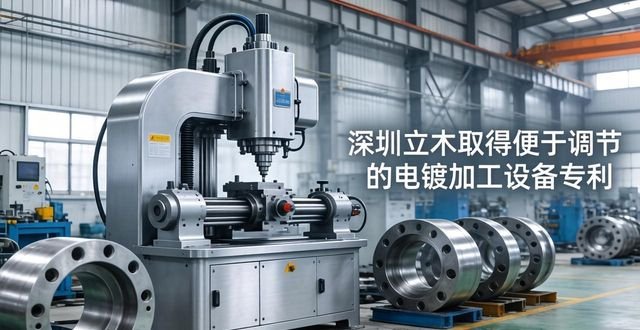


Shenzhen Lemu has obtained a patent for electroplating processing equipment that is easy to adjust, significantly improving the overall processing efficiency of electroplated parts.
In the field of electroplating processing, the clamping of large parts takes time, and the waiting time has always been the key to limiting efficiency. During this period of December 2024, the State Intellectual Property Office announced a brand new patent. The patent has a name such as "an easily adjustable electroplating processing equipment", and the authorization announcement number has been officially released. This patent comes from a metal products company in Shenzhen that has been established for 22 years. This company has a registered capital of 1 million and already has 12 pieces of patent information.
Two sets of clamping mechanisms work in turn, eliminating the waiting time of a single clamp.
The original traditional electroplating equipment only had a single set of clamping mechanisms. After the parts were electroplated, they had to stop to perform disassembly and re-clamping operations. As for this new equipment, a fixed plate is installed on the side of the electroplating processing chamber, and a limit chute is cut out on the front and rear walls of the same side. These two chutes can each be equipped with a set of clamping mechanisms , one of which works inside the plating chamber, and the other set loads and unloads parts outside the chamber.
Each set of clamping mechanisms is composed of a support frame, a connector, an inclined plate, a limit slider, a limit ring, and a tension spring. One end of the support frame is fixed with a connector, and a sloping plate is welded below the connector. A limit slider is placed on the inside of the shaft on the side of the support frame away from the inclined plate. This slider is just stuck in the corresponding limit chute on the outer wall of the electroplating processing chamber. It can slide up and down.
The limit ring is fixed at the end of the support frame away from the inclined plate, and a tension spring is hung below it. When one set of clamping mechanisms carrying parts enters the electroplating solution, another set of clamping mechanisms holding parts is in a waiting state outside. Workers can pre-install the next batch of parts on the external clamping mechanism, and directly switch the positions of the two sets of mechanisms after the electroplating process in the cavity is completed.
The tension spring cooperates with the limit chute to achieve rapid lifting and position locking.
The lifting stroke of the clamping mechanism is determined by the length of the limit chute . During the operation, the worker pushes the support frame, and the limit slide moves in the up and down direction in the chute. The tension spring has the function of supplying a certain tension, which can reduce the force required by the worker to lift the clamping mechanism, and can also prevent the clamping mechanism from suddenly falling.
In order to facilitate workers to push and pull the support frame from the side, the inclined plate design is designed. When the clamping mechanism wants to enter the electroplating solution, the worker presses the inclined plate to apply force downward, and the support frame sinks into the liquid in the electroplating processing chamber with the parts. After the electroplating is completed, the worker presses the inclined plate and pulls it upward. The tension spring assists the lift when contracting, and the limit slide block automatically gets stuck when it moves to the top of the chute.

This mechanical limit structure does not require additional power or pneumatic control and has a low failure rate. For processing plants that process dozens of batches of large parts every day, reducing one electrical component is equivalent to reducing one possible point of failure. This company in Shenzhen has been engaged in the production of metal products since 2003, and has an extremely accurate grasp of the actual operational needs of the factory.
The fixed plate and outer wall chute are integrated to reduce the equipment footprint.
On one side of the electroplating processing chamber, at the lower end, a metal plate is fixed. Shenzhen Limu has obtained a patent for easy-to-adjust electroplating processing equipment, which significantly improves the overall processing efficiency of electroplated parts. This metal plate plays two functions. First, it serves as an operating platform, allowing workers to stand next to the metal plate and operate the clamping device. Secondly, it serves as a counterweight to prevent the entire equipment from shaking when the two sets of clamping devices move alternately.
The limit chute is not separately welded to the guide rail, but is directly installed on the outer wall of the electroplating processing chamber. Such an integrated design not only saves space, but also reduces the number of connections between the guide rail and the cavity. For small and medium-sized electroplating processing plants with limited factory floor area, every 10 cm of equipment width saved can allow for the next row of equipment.
This company in Shenzhen has a registered capital of only 1 million, but it was able to participate in two bidding projects. This shows that the company's products have entered the supply chain of government procurement or large-scale projects. Moreover, it has a total of 12 patent information and 11 administrative licenses, which fully proves the company's persistence in compliance operations and the corresponding capabilities for continuous research and development in the metal products industry.
Two sets of mechanisms operate alternately, doubling the processing efficiency of large parts
For large parts with a length exceeding 50 centimeters, a single electroplating often takes more than 30 minutes. If a traditional single clamping mechanism is used, workers can start disassembly and clamping operations only after the electroplating is completed. However, during this time, the equipment is completely idle. However, the two sets of clamping mechanisms with new patented technology can, to a certain extent, keep the equipment in an almost uninterrupted operation.
The actual operation process presents the following situation: First, the first set of clamping mechanisms takes part A into the chamber where electroplating operations can be performed, and then starts the electroplating-related operations. During this period, the worker quickly clamped part B on the second set of clamping mechanisms. After 30 minutes, the original first set of mechanisms slowly rose, and then the workers disassembled Part A. Then the second set of mechanisms takes part B into the chamber used for electroplating. After that, the workers have to start the clamping operation of part C on the first set of mechanisms that has been vacated. This cycle is carried out over and over again, so that the electroplating chamber is always in a working state.
This model is very effective for parts of the same specification that require electroplating in large quantities. If each batch of parts takes 5 minutes to load and unload, the traditional equipment can process one batch every 35 minutes, while the new equipment can process one batch every 30 minutes. Calculating based on working 8 hours a day, the traditional equipment can process 13.7 batches, and the new equipment can process 16 batches, and its efficiency has increased by about 17%.
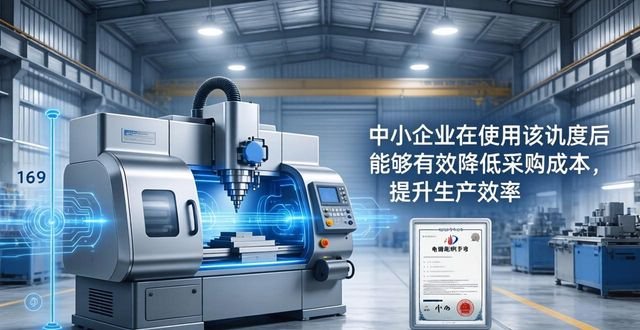
Small and medium-sized enterprises in the metal products industry use patented technology to reduce equipment procurement costs
The amount required to invest in a large electroplating equipment is often in the range of 300,000 to 500,000 yuan. For those small and medium-sized processing plants with an annual output value of less than 5 million, if they want to purchase a second piece of equipment to increase production capacity, the financial pressure is very huge. This patent provides a lower-cost solution: using two sets of alternating clamping mechanisms, allowing one device to achieve an output close to that of two devices.
This company in Shenzhen targets small and medium-sized processing plants in the metal products industry. The typical characteristics of these processing plants are that they have small sites and insufficient funds but unstable orders. Sometimes they receive large orders and in order to meet the deadline, it is not cost-effective to purchase new equipment. If they do not purchase it, they cannot deliver the goods. An electroplating equipment that can work alternately can just meet this elastic market demand.
According to patent information, this company also holds 11 additional patents, which shows that it is always making improvements in the field of electroplating equipment. It has 11 administrative licenses, which cover key aspects such as environmental protection and production safety. For processing plants that purchase equipment, selecting suppliers with complete qualifications will make subsequent environmental inspections and safety production acceptance smoother.
The upgrading and automation transformation of the electroplating industry in 2026 starts from the clamping link
In 2026, the domestic electroplating industry is under dual pressure of environmental protection and efficiency. The Pearl River Delta region has promulgated more stringent electroplating wastewater discharge standards, requiring companies to improve electroplating efficiency and reduce the amount of bath liquid taken out. The Yangtze River Delta region shows the same situation. The rapidly alternating clamping structure can shorten the length of time parts stay in the air and reduce waste and pollution caused by droplets falling.
The quality of electroplating is directly affected by the matching accuracy between the limited slider and the chute. If the gap between the slider and the chute is too large, the parts will shake when entering the plating solution, resulting in uneven coating thickness. The patent of this Shenzhen company solves this problem with the help of the structural design of the support frame and the limit ring to ensure the verticality of the lifting process.
For those large parts processing plants that are considering equipment upgrades, this patent gives a clear and definite direction for improvement. It is not necessary to spend a high price to purchase a fully automatic electroplating line, but to modify the clamping mechanism first, you can obtain significant efficiency improvements. Since the patent application was filed in December 2024 until 2026, this technology has most likely entered the small-volume trial production stage.
When purchasing electroplating equipment for a large parts processing factory, do you think the price of the equipment should be given priority, or should you pay more attention to the number of processes that can be achieved per hour? Welcome to share your own practical experience in the comment area. If the number of likes exceeds 1,000, I will write another detailed calculation table about the return on investment of electroplating equipment.



暂无评论内容