

If the copper sheet needs to be spot welded, should I choose nickel plating or tin plating?
When many people use spot welders to weld copper sheets, they find that tin-plated workpieces are extremely easy to weld, but nickel-plated workpieces always have problems. How to choose between these two coatings has become a headache for manufacturers involved in battery pack processing and hardware manufacturing.
Tin plating welding has obvious advantages
This is a medium frequency inverter DC spot welding machine. When welding tinned copper sheets, the melting point of the tin layer is only 232 degrees Celsius. The tin layer will melt quickly during welding, thus forming a good conductive contact surface. Feedback from many factories engaged in the production of lithium battery connecting sheets says that using tinned copper sheets will basically not cause a false soldering problem.
Taking a power battery pack factory in Shenzhen as an example, throughout 2025, it completed the welding work of 500,000 battery packs using tinned copper sheets. Their technical supervisor said that when the welding parameters are properly adjusted, the yield rate can reach 99.7%. The soft properties of tin also significantly reduce the wear of the electrodes. A pair of electrode tips can weld more than 8,000 points.
Nickel plating has better corrosion resistance
Nickel has a melting point as high as 1455 degrees Celsius and does not melt during the spot welding process. This results in nickel-plated copper sheets showing excellent performance in humid or salt spray environments. A marine battery manufacturer in Zhejiang has done a comparative test. The nickel-plated samples lasted 500 hours in the salt spray test without rusting.

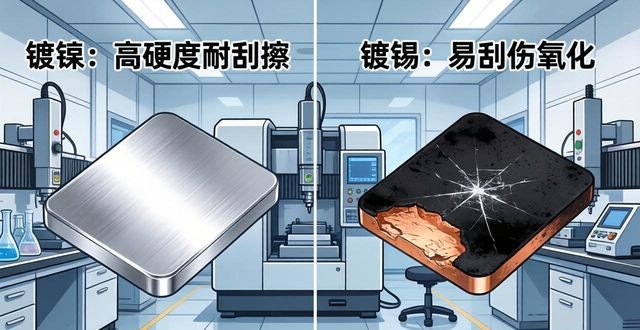
It has a high-hardness nickel plating layer and is highly scratch-resistant. A power tool company in Jiangsu reported that during the vibration test of its battery pack, no copper was exposed on the nickel-plated connecting piece. In contrast, the tin-plated layer, which is easily scratched, will quickly oxidize and turn black when the copper is exposed.
Nickel plating is dominant in high-temperature environments
If the operating temperature exceeds 200 degrees Celsius, the tin layer will soften the copper sheet. If spot welding is required, should I choose nickel plating or tin plating? , even flow. An energy storage system integrator in Anhui encountered this problem. After their containers were exposed to the sun in the summer of Xinjiang, the internal temperature reached 75 degrees Celsius. Coupled with the heat of the battery, the tin-plated connecting pieces began to creep, causing the screws to loosen.
The nickel layer begins to oxidize significantly only when the temperature is above 600 degrees Celsius. As for battery packs or high-power charging equipment used near the engine compartment, nickel plating is the most popular option from a safety perspective. The data obtained from the test by a charging pile company is considered to show that when it is at a temperature of 120 degrees Celsius, the temperature of the connecting piece is reached under the condition of continuous charging of 250A, and the state of the nickel-plated workpiece shows a stable state.
Tin plating has metal whisker risks
Affected by long-term pressure and temperature cycles, pure tin plating will grow tin whiskers that may cause short circuits. In a laptop battery recall incident, some failures were caused by these small metal whiskers. Although adding a small amount of other metals can suppress them, the cost will increase.
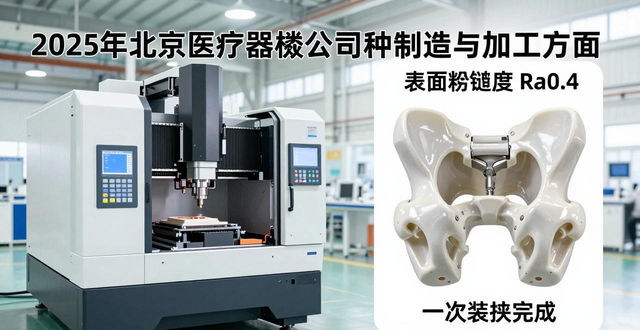
Nickel will not grow into metal whiskers, and almost all aerospace and medical equipment battery packs have nickel plating requirements. A medical device company in Beijing revealed that the connecting sheets of their implantable device batteries must use nickel-plated copper sheets, and must undergo a 200-hour high-temperature aging test to confirm the risk of tin whiskers.
Cost factors cannot be ignored
One process is tin plating, which is convenient and relatively affordable. How to choose the riveting method and welding materials according to the metal composition ? The processing fee is about 30% lower than that of nickel plating. The quotation given by an electroplating factory in Dongguan can show that for the same copper sheets of the same size, tin plating charges 2.5 yuan per kilogram, while nickel plating charges 3.8 yuan per kilogram. For those large factories that consume hundreds of kilograms of materials every day, they can save hundreds of thousands of dollars in a year.
Nickel plating requires higher currents, longer plating times, and multiple layers of primer. However, in view of the cost of rework and customer complaints, many companies engaged in the production of export products would rather spend more money to choose nickel plating. There is a lamp factory in Foshan, but because it used tin-plated parts for export to Europe, it failed the salt spray test and was returned.
How to choose the most suitable one
Let’s look at the usage environment. Choose tin plating when it is indoors in a dry environment. It is cheap and easy to solder. Nickel plating must be used outdoors, in humid, high-temperature or salt-spray locations. Looking at the welding equipment, only the medium frequency inverter DC spot welder can weld the nickel plating well, and the AC welder basically cannot weld it.
Check the life of the product. For those products that require more than three years, nickel plating should be selected. Because the tin layer will gradually oxidize and become dull, its contact resistance will slowly increase. Check the certification requirements. Safety certifications such as UL and CE have strict requirements for tin whiskers. It is best to confirm the standard terms in advance.
Are the products you use currently using nickel plating or tin-plated copper? During actual production, what welding problems or reliability problems did you encounter? Welcome to share your own experience in the comment area . How to choose riveting welding methods and welding materials based on metal composition. How to choose riveting welding methods and welding materials based on metal composition . Don’t forget to like it and forward it to more friends who are engaged in spot welding processing to take a look.



暂无评论内容