


Automatic in-line inner diameter measurement of CNC machine tools, automatic on-machine measurement equipment during the machining center process
Currently, CNC milling automatic measurement technology , a technology that can complete the measurement itself inside the machine, is changing the previous post-inspection model that had to wait until it was disassembled after processing to know whether the inner diameter of the part is qualified. It directly embeds quality control into the processing process. Now we no longer have to do that.
![图片[1]-Automatic In-line Inner Diameter Measurement Of CNC Machine Tools, Automatic On-machine Measurement Equipment During The Machining Center Process-Dalian Fuhong Machinery Co., Ltd](/wp-content/uploads/2026/03/1774894284318_0.jpg)
Measurements are taken directly on the machine tool
The key to this technology is to transform the measuring instrument into a special tool, which is placed in the tool magazine of the machine tool. When the part enters the processing stage that requires inspection, the machine tool will automatically replace the measuring head and measure the inner diameter directly on the machine tool without having to disassemble the part and send it to the inspection room. This design integrates manufacturing and quality assurance.
The system inside this measurement is mainly composed of an inner diameter measuring instrument and a wireless transmission module, both of which are arranged and equipped on a standard tool holder. At the moment of measurement, the head used for measurement can enter the internal hole of the workpiece that is in the manufacturing process. After the head of the instrument used for detection and measurement hits the innermost wall, the data obtained by the measurement is sent to the receiving device in time by means of a wireless signal. The entire process is carried out in an active and automatic manner within the processing program.
Wireless transmission breaks the shackles of connections
In the past, if you wanted to measure it on a machine tool, the most prominent difficulty was the signal line. The tool is rotating at high speed, dragging the thread and unable to rotate at all. This system is implemented using wireless transmission. Communication between the measuring head and the receiver is carried out by radio, which completely resolves the connection problem during rotation.
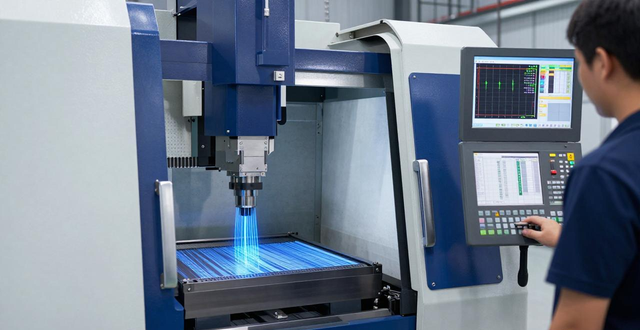
The measurement data sent from inside the machine tool is directly transmitted to the measurement computer. At the same time, this data can also be fed back to the machine tool control system. At the operation panel, the operator can directly see the measurement results without opening the protective door or holding a manual measuring tool to measure. The entire process will not cause any interruption in the processing rhythm.
Repeatability reaches micron level accuracy
For parts with high requirements for machining accuracy, the stability of the inner diameter size is key. The repeatability of this measurement system reaches a very high level, and it can stably detect micron-level changes. This shows that the same measuring head repeatedly measures the same size, and the data obtained shows a high degree of consistency.
The stable and repeatable characteristics provide a reliable basis for process control. When the system detects a slight deviation in the measurement value, it can determine whether it is caused by tool wear or temperature changes, and then make corresponding adjustments in a timely manner. This level of accuracy is fully sufficient to meet the processing requirements from precision molds to aerospace parts.
Combination of dynamic and static measurements
During the machining process, the CNC machine tool automatically measures the inner diameter inside the machine. During the machining center process, the machine automatically measures the equipment. There are two methods of measurement: dynamic and static. Dynamic measurement is a rapid detection action carried out during the machining gap. Its main function is to pay attention to the direction of dimensional changes, so as to avoid batch overruns. Static measurement is to carry out multiple measurements and verifications after the workpiece has stopped running, in order to obtain more complete dimensional data information.
These two measurement methods can be used flexibly together. Dynamic measurement is used for process control, with the purpose of detecting abnormalities in time, while static measurement is used for comprehensive confirmation and verification after the key processes are completed. Using the two together can not only ensure the operating efficiency of CNC milling automatic measurement technology , but also ensure product quality, thereby avoiding adverse effects on the production rhythm due to too long measurement times, resulting in problems in the production process.
Scrap rate reduced by up to half
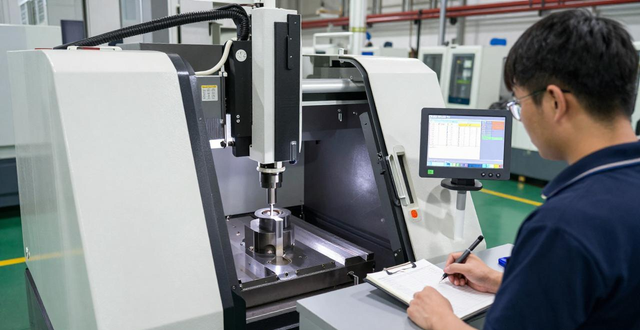
Compared with traditional post-measurement methods, the greatest value of this online measurement is to reduce the number of scraps. In the past, when a problem condition was detected, a batch of parts that were out of the tolerance range were often continuously produced . In this case, the only option was to scrap or rework them. But now it is different. Every product can be inspected during the processing. Once a problem is found, the machine will be stopped immediately and adjustments will be made.
According to the actual application data, after adopting this automatic measurement technology, the scrap rate has been reduced, and the degree of reduction can reach 50%, showing a downward trend. This not only reduces material waste, but also achieves the reduction of subsequent rework hours and inspection costs. For mass production, this means that the total operating cost has shown a significant decrease.
Suitable for various machine tools and size ranges
This system has strong compatibility and will not be restricted by the machine tool brand. Whether it is a turning center, a milling machining center, or a grinder, as long as it has a standard tool holder interface, it can be installed and used. The size coverage of the measuring head is extremely wide, starting from small holes with a diameter of less than three millimeters to large holes with a diameter of more than 200 millimeters.
The measuring head with a floating chuck can compensate for the positioning error during tool exchange, thereby ensuring that the measuring head can smoothly enter the inner hole of the workpiece. At the same time, the system has an over-limit protection function. If the probe encounters resistance, it will send a signal to stop the machine tool to avoid damage. It has a immersion-free purge function that can remove chips in the hole and achieve stable measurement conditions.
For processing companies that are engaged in automation and quality improvement, what does a technology that can directly cut the number of scraps in half mean? What method does your workshop currently rely on to control the inner diameter size?




暂无评论内容