

Precision grinding within millimeters
After more than 20 years, Hong Jiaguang has grown from an ordinary technician to a dual-qualified senior technician; he has successfully overcome the world-class problem of aero-engine blade processing; and has also created hundreds of millions of benefits for the country! His story conveys a message to us: all truly unique skills are honed by "seeing, listening, and smelling" day after day.
The big world in small parts
In 1998, Hong Jiaguang, who was 19 years old at the time, entered Liming Company by virtue of his first place in technical school. At the beginning, what he did every day was to process some inconspicuous small parts. Young people will inevitably be impetuous and think that such work is too simple and has no technical content at all.
A master saw what he was thinking and told him meaningfully: Despite the small size of these parts, even extremely small errors may cause the entire large machine to malfunction. This sentence made Hong Jiaguang wake up from a dream. From then on, he began to calm down and start practicing from the most basic grinding of turning tools.
Basic skills on the whetstone
In the professional field of lathe, knife sharpening is a basic task and is also a very challenging skill. Hong Jiaguang has been grinding on the whetstone for many years. The knives he grinds are extremely accurate, and the surfaces of the parts he produces are bright, smooth and smooth.
![图片[1]-Precision Grinding Within Millimeters-Dalian Fuhong Machinery Co., Ltd](/wp-content/uploads/2026/03/1773425788201_0.png)
He realized that it was impossible to be hasty when sharpening a knife. He had to use force to keep it even and the angle had to be accurately grasped, all relying on the feeling in his hands. Gradually, he figured out the secret and at the same time honed his patience, laying a solid foundation for overcoming the difficult problems of high-precision machining in the future.
Three unique tricks to tell the difference
After more than 20 years of practical operation, Hong Jiaguang has summarized a unique set of "seeing, listening and smelling" mental techniques. The so-called "seeing" refers to focusing on the size of the sparks generated by the grinding wheel during grinding operations and the color characteristics displayed to prevent burns on the grinding surface . With this, one can judge at a glance whether the accuracy of the processing link reaches the corresponding standard.
Listening means erecting your ears to distinguish the sound produced by the rotation of the grinding wheel. Once the sound appears abnormal, make adjustments immediately to avoid excessive cutting force. Smell is to use your nose to capture that special pungent smell, which is the signal sent by the burnt workpiece. These three tricks enable him to judge the processing status by himself without the help of instruments.
Detailed work on hair
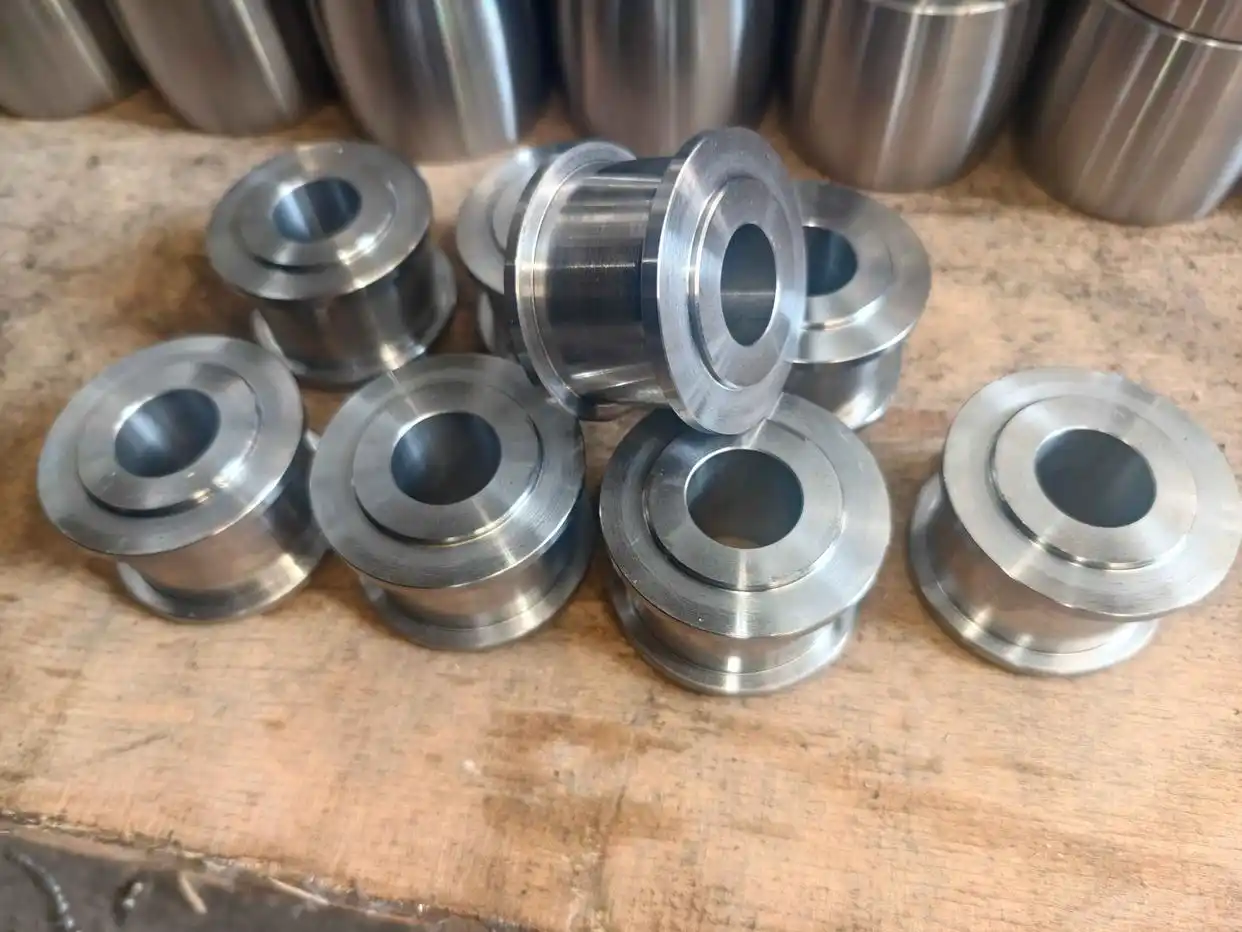
In 2002, the factory received an urgent task. This task was to process diamond rollers for correction tools, and these diamond rollers for correction tools were used for aircraft engine blades. The precision requirements for that kind of blade are extremely high, and its dimensional tolerance must be within 0.003 mm. This 0.003 mm is equivalent to one-twentieth of a human hair.
Hong Jiaguang took the initiative to undertake this task. When he started to carry out the first process, the products produced were almost all waste products. Looking at the parts that did not meet the requirements on the floor, he did not choose to back down. Instead, he asked the masters one by one for advice, working in front of the machine tools for more than ten hours every day.
Five years of mastery of grinding
This continued for more than ten days, and he finally found a way. However, the real way to overcome the correlation has just begun with precision grinding within millimeters. In order to complete the entire technical process, Hong Jiaguang led the team to conduct more than 1,500 tests.
After five years, they finally developed mature precision grinding technology for aeroengine blade rollers, increasing the manufacturing accuracy from 0.02 mm to 0.005 mm. It is this technology that enabled Hong Jiaguang to win the second prize of the National Science and Technology Progress Award, and also increased the benefits of the enterprise by hundreds of millions of yuan.
Unique skills must be passed down from generation to generation
Today, in Yu Hong Jiaguang's studio, there are young people following him to learn how to prevent surface burns in manual grinding . He has written more than 20 years of experience into teaching materials and recorded teaching videos to teach everyone how to do it in a step-by-step manner.
From 2015 to 2019, his team successfully obtained 32 utility model patents and completed 86 technological innovations. He often preaches that technicians must not rely solely on inherited skills to make a living. They must continue to think about innovation during the work process, so that they can truly master the technical skills at home.
To what extent do you think the spirit of craftsmanship like Hong Jiaguang can play a role in modern factories? You are welcome to leave a message in the comment area to prevent surface burns in grinding processing . Express your opinions and give a like, so that more people can see these silently dedicated skilled workers.





暂无评论内容