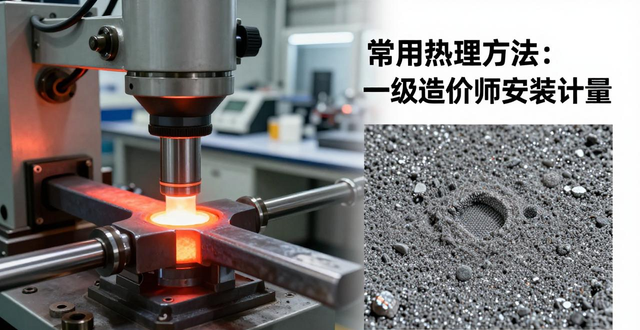


Commonly used heat treatment methods: installation and measurement by a first-level estimator
Mastering the correct heat treatment method is crucial to ensure the long-term safe and reliable operation of welded structures. Especially when manufacturing pressure vessels, pipelines and other pressure-bearing equipment, process selection is directly related to project quality and lifespan.
The key role of preheating before welding
Preheating before welding is a process of heating the workpiece before the start of welding. The main purpose of pre-welding preheating and post-welding insulation for hull riveting welding is to increase the starting temperature of the welding area, thereby significantly reducing the temperature difference between the high-temperature weld metal and the low-temperature base metal. Controlling this temperature difference can effectively reduce the cooling rate of the weld and prevent the formation of a hard and brittle martensite structure in the welding heat-affected zone due to excessive cooling rate.
The temperature buffering effect produced by preheating is helpful to reduce the local hardening phenomenon in the welding area, thereby improving the plasticity of the material. At the same time, because the cooling rate is relatively slow, the gas and slag in the molten pool have more time to escape. This can directly reduce the probability of common defects such as pores and slag inclusions in the weld, laying the foundation for obtaining high-quality welds.
The purpose of post-weld heat treatment
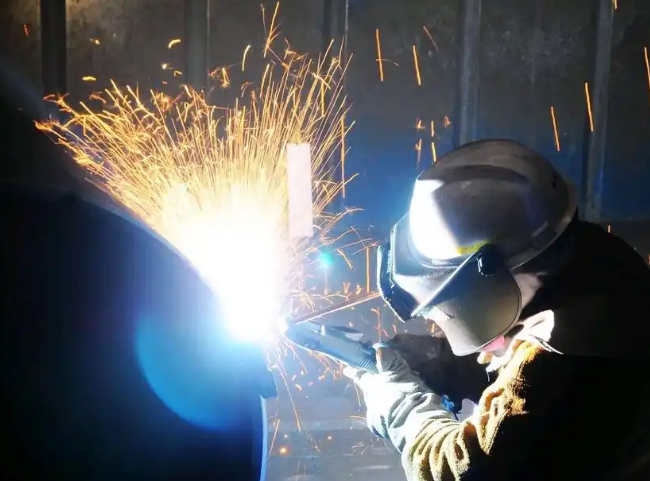
Heat treatment after welding is focused on steel materials with a tendency to delayed cracks. Such cracks in the pre-weld preheating and post-weld insulation of hull riveting may not appear for several hours or even days after the welding is completed. Therefore, carrying out corresponding heat treatment operations in a timely manner after welding is a key step to prevent such potential hazards. Heat treatment can effectively eliminate or reduce the residual stress existing inside the welded joint, and these stresses are the main reasons for structural deformation and cracking.
![图片[1]-Commonly Used Heat Treatment Methods: Installation And Measurement By A First-level Estimator-Dalian Fuhong Machinery Co., Ltd](/wp-content/uploads/2026/02/1770725965101_0.png)
Post-weld heat treatment can improve the metallographic structure of the welded joint after a specific heating and cooling cycle, thereby improving its comprehensive mechanical properties, such as toughness and plasticity. As for dehydrogenation treatment, heat treatment can help hydrogen atoms diffuse and escape from the metal, thereby preventing the occurrence of hydrogen-induced delayed cracks. This process is very important in many low-alloy high-strength steels.
Commonly used heat treatment methods
It mainly includes common post-weld heat treatment methods such as annealing, normalizing, tempering and quenching. Annealing is to heat the workpiece to a suitable temperature, and then slowly cool it after insulation to reduce the hardness and remove internal stress. Normalizing is to air-cool after heating, which can refine the structure and improve strength and toughness.
After quenching or normalizing, the tempering operation will be carried out, heating and maintaining at medium or high temperatures, and then cooling to achieve the purpose of stabilizing the structure, eliminating residual stress and obtaining the required properties. Quenching is a rapid cooling process after heating. It is generally used to increase the hardness and strength of steel. However, it should be used with caution in post-welding treatment because it may introduce new stress.
High temperature tempering and normalizing plus high temperature tempering
Single high-temperature tempering is one of the most commonly used processes in post-weld heat treatment. It heats the welded joint below the Ac1 line of the steel, usually to a temperature above 450°C, holds it for a sufficient time and then slowly cools it. This method can effectively eliminate most of the welding residual stress and stabilize the structure. It is suitable for a variety of low-alloy steel welded structures.
For occasions with higher requirements, normalizing and high-temperature tempering are often used. Normalizing treatment is first carried out to refine the grains and make the structure uniform, and then high-temperature tempering is carried out to eliminate stress and improve toughness. This combined process can obtain better comprehensive mechanical properties and is often used in the manufacturing of key components such as power station boilers and chemical equipment.
Specific applications of medium temperature tempering
For large ordinary low-carbon steel containers assembled on the construction site, such as the assembly girth welds of large storage tanks, a single medium-temperature tempering has its specific scope of application. The processing temperature is generally between 250°C and 450°C. The heat preservation is followed by air cooling. The purpose of this process is clear, which is to partially eliminate the welding residual stress and promote the escape of hydrogen.
Instead of choosing high-temperature tempering, choose medium-temperature tempering, which is generally based on limited site conditions and cost-effective considerations. For ordinary low-carbon steel, medium-temperature tempering can already meet the basic needs of stress removal and hydrogen removal. Commonly used heat treatment methods: first-level cost engineer installation and measurement, and the process is simpler and energy consumption is lower. It is suitable for on-site treatment of large structures. However, it cannot achieve the thorough structural improvement effect of high-temperature tempering.
Factors influencing process selection
The choice of heat treatment process is not always fixed. It is determined by many factors. The chemical composition and type of steel are the first major factors to be determined . The pre-welding preheating and post-welding insulation of hull riveting welding , just like alloy steel, often require more rigorous heat treatment. The thickness and restraint of the welded structure and the working conditions during use, such as whether it is under pressure or in a low-temperature environment, also directly affect the formulation of process parameters.
In actual projects, cost and construction period are also factors that must be weighed. If the multi-stage heat treatment is complicated, although the performance will be better, the equipment investment will be large, the energy consumption will be high, and the cycle will be long. Engineers must select the most cost-effective heat treatment solution while ensuring safety regulations and design standards to achieve the best balance between quality, cost and schedule.
Have you ever had quality problems caused by improper heat treatment during welding construction or equipment maintenance? Welcome to share your experience and insights in the comment area. If you find this article helpful, please give it a like and support it.





暂无评论内容