

Machine Tool Selection: A Cornerstone Investment in Enterprise Production Capacity
OneCNC machine toolsThe average service life of CNC machine tools extends to 15-20 years, with procurement decisions often determining a company’s manufacturing capabilities for the subsequent decade. The global CNC machine tool market is projected to reach US$100 billion by 2024. Faced with hundreds of brands and thousands of models, how can purchasers make informed decisions amidst such complexity? Industry surveys indicate that 65% of enterprises experience varying degrees of decision-making errors in machine tool procurement, resulting in an average loss of 23% of expected value. This article adopts a practical approach, delving into five core selection dimensions and providing objective comparisons of leading brands to establish a scientific decision-making framework for enterprise machine tool procurement.
Part One: Precision Performance Metrics — Practical Considerations Beyond Nominal Data
1.1 Positioning Accuracy and Repeatability
Interpretation of International Standards
ISO 230-2 Standard: The International Benchmark for Machine Tool Acceptance
Test method: Full-length measurement using a laser interferometer, with data compensated per metre.
Industry benchmark value:
Conventional machine tools: Positioning accuracy ±0.01 mm, repeatability ±0.005 mm
Precision machine tools: Positioning accuracy ±0.003mm, repeat positioning accuracy ±0.0015mm
Ultra-precision machine tools: Positioning accuracy within ±0.001mm
Practical considerations![图片[1]-购买CNC数控机床时需要考虑的五大关键指标与品牌对比-大连富泓机械有限公司](https://cndlfh.com/wp-content/uploads/2025/12/QQ20251102-193724-1.png)
Temperature influence: Nominal accuracy is typically obtained at a constant temperature of 20°C. In actual workshop conditions, variations arising from a ±2°C temperature differential must be considered (approximately 0.002 mm/m).
Full-stroke repeatability: Focusing on precision variation across the entire travel range, high-quality machine tools should exhibit a deviation of ≤150% relative to the nominal value.
Long-term stability: Accuracy decay within six months shall be ≤20%
Testing recommendations:
Require suppliers to provide third-party test reports
On-site test cutting of ISO standard specimens (such as NAS 979 specimens)
Testing accuracy retention under varying load conditions
1.2 Geometric Accuracy and Dynamic Accuracy
Key geometric error terms:
Straightness: ≤0.008 mm/m within the XY plane (Precision Grade)
Verticality: Verticality between shafts ≤ 0.008 mm/500 mm
Spindle radial runout: ≤0.003mm (near end), ≤0.006mm (at 300mm)
Dynamic precision performance:
Roundness test: Under cutting conditions, roundness of ∅100mm ≤ 0.01mm
Profile accuracy: Actual contour error in complex surface machining
High-speed precision: Accuracy degradation tested at 80% of maximum speed
Case Comparison:
A motor vehicle moulding enterprise tested three brands of machine tools of identical specifications:
Brand A (Germany): Dynamic roundness 0.008mm, price 2.8 million yuan
Brand B (Japan): Dynamic roundness 0.012mm, price ¥1.9 million
Brand C (Taiwan): Dynamic roundness 0.018mm, price 1.2 million yuan
Final selection: Procure one unit of Brand A for finishing operations and three units of Brand C for rough machining, balancing precision and cost.
Part Two: Rigidity, Power and Thermal Stability
2.1 Structural Rigidity Analysis
Bed Frame Structural Design:
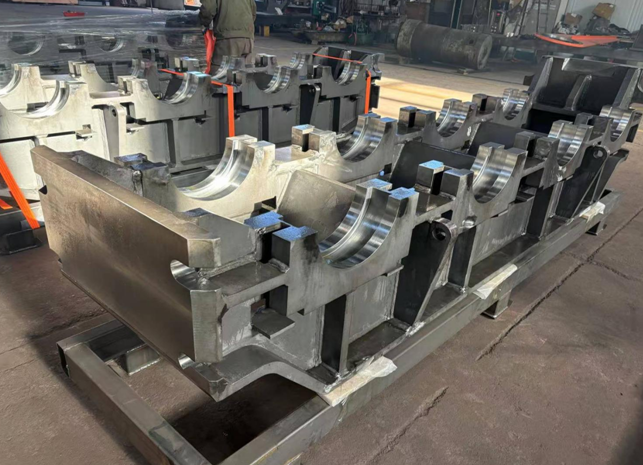
Material selection:![图片[2]-购买CNC数控机床时需要考虑的五大关键指标与品牌对比-大连富泓机械有限公司](https://cndlfh.com/wp-content/uploads/2025/12/QQ20251102-193613.png)
Cast iron: A traditional choice offering excellent damping properties (HT300 and above)
Polymer concrete: An emerging material with vibration attenuation rates 6 to 10 times higher than cast iron.
Steel plate welding: lightweight design, suitable for high-speed machine tools
Structural Optimisation: Finite element analysis optimises stiffener plate layout, achieving a top-tier brand stiffness-to-weight ratio 30-50% higher than ordinary brands.
Spindle system rigidity:
Spindle nose displacement: Deformation under rated cutting force
Typical values: Hard-rail machine tools ≤0.015mm, Linear-guide high-speed machine tools ≤0.025mm
Test method: Apply radial force and measure displacement using a dial gauge.
Guide rail and lead screw configuration:
Hard rails vs linear rails: Hard rails offer 3-5 times the load capacity, while linear rails achieve 2-3 times the speed.
Lead screw diameter: ∅40mm and above constitutes heavy-duty cutting configuration
Preload adjustment: Dual-nut preloading eliminates backlash
2.2 In-depth Assessment of Spindle Performance
Power and Torque Curve:
Constant power range: Wide range (e.g., 1:8) is preferable to narrow range.
Maximum torque: Focus on torque at low rotational speeds, such as the torque value at 200 rpm.
Overload capacity: Short-term overload capacity (e.g. 150%, 30 minutes)
Spindle Type Selection:
Gear-driven spindle: High torque, heavy-duty cutting capability, but maximum rotational speed is limited (typically ≤6000 rpm).
Direct-drive electric spindle: High rotational speed (12,000–40,000 rpm), high precision, but relatively low torque.
Hybrid spindle: Two-stage design, combining high speed with high torque
Cooling and Thermal Management:
Spindle oil cooling: Temperature control accuracy ±1°C
Adaptive adjustment of bearing preload: Mitigating thermal elongation effects
Thermal symmetry design: Reducing spindle tilt
Actual performance data comparison:
Brand/Model Power (kW) Maximum Torque (Nm) RPM Range Constant Power Range Price Range
Muye S500 22/26 140 50-12000 1:10 1.8-2.2 million
DMU50 27/34 170 30-12000 1:8 1.6-1.9 million
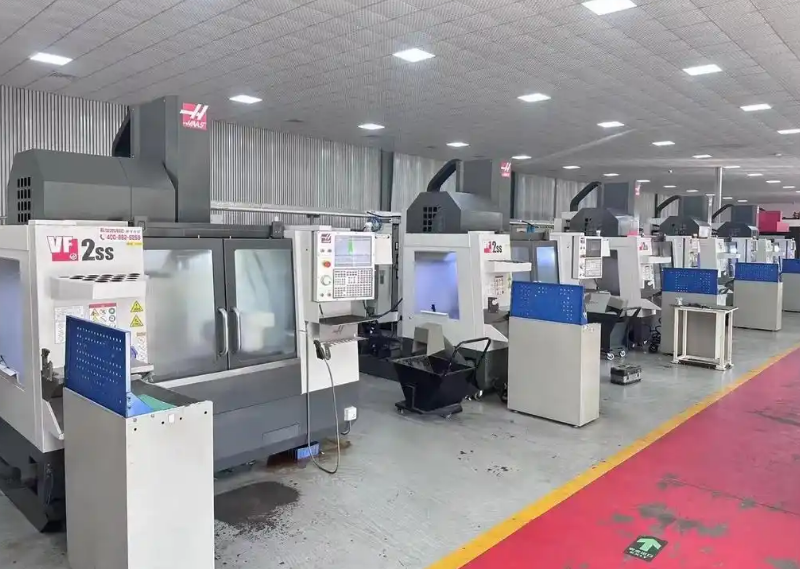
Hass VF4 22/26 122 50-7500 1:5 800,000-950,000
2.3 Thermal Stability Engineering
Temperature control strategy:
Critical components maintained at constant temperature: spindle, ball screw, bearings with forced cooling
Thermal symmetry design: minimising uneven thermal deformation
Environmental Adaptation: Equipped with temperature sensors for automatic compensation
Thermal drift specification:
Accuracy variation during 4-hour continuous operation: Precision machine tools ≤0.008mm
Precision variation between hot and cold operation: Premium machine tools ≤0.005mm
Ambient temperature compensation: Automatic compensation within the range of 5–35°C
Part Three: Control Systems and Intelligent Functions
3.1 Comparison of Mainstream Control Systems
Three major system factions:
Siemens SINUMERIK (Germany):
Market share: Approximately 35% of the global premium market
Advantages: Five-axis machining, turning-milling integration, digital integration
Representative models: 840D sl (high-end), 828D (mid-range)
Intelligent Functions: Adaptive Control, Process Cycle Management, Digital Twin Support
FANUC (Japan):
Market share: Approximately 45% in the global mid-to-high-end market
Advantages: High stability, excellent usability, well-established ecosystem
Representative models: 31i-B5 (high-end), 0i-F (mid-range)
Intelligent Functions: AI Thermal Compensation, AI Profile Control, Servo Optimisation
HEIDENHAIN (Germany):
Market share: Approximately 25% in the European high-end market
Advantages: Excellent human-machine interaction, high-precision control
Representative models: TNC7 (high-end), iTNC530 (mid-range)
Intelligent functions: Dynamic efficiency, collision protection, intelligent tool management
Progress in Domestic Control Systems:
Huazhong CNC: Domestic market approximately 15%, offering excellent value for money.
Guangzhou CNC: The mainstay of the budget market, with enhanced stability
Technological gap: Five-axis simultaneous control and high-speed, high-precision control still lag behind by 5-8 years.
3.2 Assessment of the Actual Value of Intelligent Functions
Adaptive control function:
Load Adaptive: Adjusts feed rate based on cutting force Typical benefits: Tool life extended by 30-50% TP3T
Vibration Suppression: Active flutter control to enhance surface finish
Thermal Compensation: Real-time Compensation Based on Models and Sensors
Predictive Maintenance System:
Spindle Health Monitoring: Bearing Condition Analysis, Early Warning
Screw Wear Prediction: Lifespan Calculation Based on Load and Stroke
Tool Monitoring: Multi-dimensional monitoring of load and acoustic emission
Digital integration capabilities:
OPC UA Interface: Enabling Data Exchange with MES/ERP Systems
Remote diagnostics: Manufacturer remote service response
Data acquisition: Automatic recording of production and quality data
Return on Investment Analysis:
Basic Intelligentisation Package: Additional investment of 8-151 million yuan, payback period of 1.5-2 years
Advanced Intelligent Package: Increases investment by 15-25%, with a payback period of 2-3 years.
Long-term value: Reducing reliance on operator experience and enhancing consistency
Part IV: Reliability, Maintainability and Service Support
4.1 Quantification of Reliability Metrics
Mean Time Between Failures (MTBF):
Industry benchmark: ≥2000 hours
Average proficiency: 1200–1800 hours
Testing Method: The manufacturer shall provide a third-party verification report.
Date of first major overhaul:
First major overhaul of the spindle: ≥20,000 hours (premium brand)
Replacement interval for guide rails and lead screws: ≥50,000 hours
Major overhaul interval: ≥60,000 hours
Actual User Data Survey (Based on Feedback from 300 Enterprises):
German brands: Average annual number of faults: 1.2 Average repair time: 3.5 days
Japanese brands: Average annual failure rate: 1.5 incidents Average repair time: 2.8 days
Taiwanese brands: Average annual failure rate: 2.3 incidents Average repair time: 4.2 days
Domestic first-tier brands: Average annual number of faults: 2.8 Average repair time: 5.5 days
4.2 Design for Ease of Maintenance
Maintainability scoring criteria:
Protective Design: Effectiveness of Guide Rail and Lead Screw Protection
Accessibility: The ease with which key components can be replaced
Modular design: Module replacement rather than repair
Diagnostic Assistance: Intelligent diagnostic system guides maintenance
Maintenance Cost Estimate:
Annual Preventative Maintenance Costs: 1.5–31% of equipment value
Spare Parts Cost Comparison: German-brand spare parts typically cost 30-50% more than Japanese-brand equivalents.
Downtime costs: £200–£800 per hour on average (depending on equipment value)
4.3 Service Support System Evaluation
Manufacturer Service Capability Metrics:
Response time: On-site response within 4 hours for critical faults
Technical Personnel Proficiency: Proportion of Certified Engineers ≥70%
Spare Parts Inventory: Local stock level for commonly used spare parts ≥85%
Training System: Systematic operational, programming, and maintenance training
Third-party service marketplace:
Independent service providers: Costs are 30-50% lower than original manufacturers, but quality varies considerably.
Remanufacturing Market: Enhancing the performance of ageing equipment at 40-60% of new machinery costs.
Part V: Total Cost of Ownership and Return on Investment Analysis
5.1 Breakdown of Initial Investment Costs
Standard configuration price range (three-axis vertical machining centre, 800×500mm worktable):
Ultra-premium (Germany/Switzerland): ¥1.8–3 million
High-end (Japan): ¥1.2–1.8 million
Mid-to-high-end (Taiwan): NT$700,000–1,200,000
Economy Class (Domestic First-Tier): ¥400,000–700,000
Entry-level (domestic second-tier): ¥200,000–400,000
Identification of Hidden Costs:
Installation and commissioning: 2-5% of equipment cost
Foundation modifications: ground load-bearing capacity, electrical systems, compressed air systems, etc.
Initial spare parts: It is recommended to stock commonly used spare parts, amounting to 3-5% of the equipment value.
Training Fees: Operational and Programming Training
5.2 Operational Cost Analysis
Energy consumption costs:
Standby power consumption: 2–5 kW
Processing energy consumption: Spindle power × Load factor × Electricity tariff
Auxiliary system energy consumption: cooling, lubrication, chip removal, etc.
Case Comparison: Annual energy consumption differences among similar equipment can reach 15–251 TP3T.
Cutting tools and consumables:
Cutting fluid: Annual consumption per machine: 3,000–8,000 yuan
Filters, etc.: Annual consumption of 2,000–5,000 yuan
Lubricating oils/greases: Annual consumption of 1,000–3,000 yuan
Personnel costs:
Operator requirements: High-end equipment necessitates operators with superior skills, commanding salaries 20-40% higher.
Programmers: Complex equipment requires specialist programmers.
5.3 Productivity and Return on Investment
Capacity Comparison Model (Taking Aluminium Alloy Component Machining as an Example):
Brand Level Average Cutting Speed Tool Change Time Positioning Time Theoretical Productivity Index
Ultra-premium 1.0 (base) 1.2 seconds 0.8 seconds 100
High-end 0.85 1.5 seconds 1.0 seconds 82
Mid-to-high-end 0.70 2.0 seconds 1.5 seconds 68
Economy Class 0.60 2.5 seconds 2.0 seconds 55
Return on Investment Calculation:
Simple payback period = Total investment ÷ Annual net benefit
Discounted payback period: Taking into account the time value of money
Case Study: A company procures a German-made machine tool for £1.6 million versus a Japanese-made machine tool for £950,000
German model: Annual additional benefit of 650,000, payback period of 2.5 years
Japanese model: Annual additional benefit of ¥480,000, payback period of 2.0 years
Taking all factors into account: opting for Japanese brands offers greater capital efficiency.
Part Six: Comprehensive Comparison of Mainstream Brands and Selection Strategies
6.1 Brand Tier Analysis
First tier: Technology leaders
Representative brands: DMG MORI, GROB, MAKINO
Core strengths: integrated solutions, complex process capabilities, digital integration
Price range: ¥1.5–5 million+
Suitable for: Aerospace, precision moulds, high-end automotive components
Second tier: Balanced performers
Representative brands: MAZAK, OKUMA, HAAS
Core strengths: High reliability, excellent value for money, global service network
Price range: ¥800,000–2,000,000
Suitable for: General machinery, automotive components, medical devices
Third tier: Value providers
Representative brands: Yeong Jin, Tongtai, FFG
Core strengths: Flexible configuration, competitive pricing, rapid delivery
Price range: ¥500,000–1,200,000
Suitable for: Small and medium-sized enterprises engaged in batch production and specialised modifications.
Fourth tier: Economical and practical models
Representative brands: Haitian Precision Machinery, Neway CNC, Shenyang Machine Tool
Core strengths: Localised service, competitive pricing, meeting fundamental requirements
Price range: £25,000–£80,000
Suitable for: Start-ups, educational institutions, simple component machining
6.2 Special Considerations for Five-Axis Machines
Comparison of Five-Axis Technology Approaches:
Dual-rotary table: Workbench rotation, suitable for small components
Swing-head type: Spindle oscillates, suitable for large components
Hybrid: turntable + pan-tilt, offering the highest flexibility
Accuracy Retention Challenges:
Rotary axis precision degradation: Requires recalibration every two years, with costs amounting to approximately £1,000–£3,000.
Dynamic accuracy: Actual contour accuracy under five-axis simultaneous motion
Test standard: VDI/DGQ 3441, ISO 10791-7
Brand Comparison:
German brands: Five-axis simultaneous machining accuracy leads Japanese brands by an average of 30%.
Price difference: For five-axis machine tools of equivalent specifications, German models command a premium of 40-60% over Japanese counterparts.
6.3 Special-purpose machine tools and production lines
Multi-spindle machine tools:
Application scenario: Mass production of symmetrical components
Efficiency improvement: 2-4 times higher than single-spindle systems
Investment Risk: Poor Adaptability to Product Changes
Turning-milling composite machine tool:
Technical Difficulty: B-axis precision, synchronisation control, programming complexity
Return on investment: reduced equipment expenditure, enhanced precision, and shortened lead times.
Leading brands: INDEX, WFL, TSUGAMI
Part Seven: Procurement Decision Process and Negotiation Strategies
7.1 Systematised Procurement Process
Phase One: Requirements Analysis and Specification Development (2–4 weeks)
Current and Future Component Analysis: Materials, Dimensions, Precision, Batch Size
Process capability requirements: Maximum cutting force, speed range, number of interlinked axes
Capacity Demand Calculation: Based on Business Forecasts for the Next 3-5 Years
Budget formulation: Total cost of ownership perspective, not merely the purchase price
Stage Two: Supplier Screening and Evaluation (3–6 weeks)
Shortlist 5-8 suppliers: covering different tiers
Technical Evaluation: On-site inspection, sample cutting tests, technical presentation
Commercial Evaluation: Pricing, Delivery, Payment, Terms of Service
User research: Visit 3–5 existing users (preferably within the same industry)
Stage Three: In-depth Negotiations and Contract Signing (2–4 weeks)
Technical Agreement: Defining Acceptance Criteria and Performance Guarantee Values
Commercial Contract: Payment Milestones, Liability for Breach, Confidentiality Clauses
Service Agreement: Response Times, Warranty Coverage, Training Content
Spare Parts List: Recommended Stock Levels and Price Locking
7.2 Key Negotiation Points and Techniques
Price Negotiation Strategy:
Obtain multiple quotes: create a competitive environment
Itemised quotation: Requires a detailed breakdown of costs to identify inflated charges.
Bulk purchasing: Negotiate discounts for multiple units (typically 5-15 units)
Off-season purchasing: Additional discounts may be available at year-end or quarter-end.
Technical Terms Negotiation:
Acceptance Criteria: Specify test methods, conditions, and acceptance criteria.
Performance guarantee: Requires a written undertaking, linked to payment.
Upgrade Path: Price Lock for Future Feature Upgrades
Training Content: Specify duration, subject matter, and number of participants
Terms of Service Optimisation:
Extended warranty period: Aiming for 24–36 months (standard 12 months)
Response time: Explicit time commitment stipulated in the contract
Spare Parts Pricing: Locking in Key Spare Parts Prices for the Next Three Years
Software Updates: Free Update Period and Subsequent Charges
7.3 Risk Mitigation Measures
Technical risks:
Sample part trial cutting: Must actually machine one’s own typical components.
Payment by instalments: Retain at least 10-20% of the final payment, to be settled upon acceptance.
Performance guarantee: Requires a performance guarantee of 5-10%.
Delivery risk:
Penalty for Delayed Delivery: Daily penalty (typically 0.05–0.11% of the contract value)
Acceptance period: Completion within a reasonable timeframe following delivery.
Domestic stock: Prioritise models with domestic stock availability.
Long-term risks:
Technology obsolescence: Consider technological trends over the next 3-5 years
Supplier stability: Assessing the financial standing of manufacturers
Exit costs: the ease of disposing of equipment and its residual value
Conclusion: Rational decision-making, strategic investment
The acquisition of CNC machine tools represents one of the most significant capital investments for an enterprise, with the quality of this decision directly impacting its manufacturing capabilities and market competitiveness for years to come. Through systematic evaluation and rational selection, businesses can maximise the value of their investment.
Specific recommendations for different enterprises:
Start-ups/Small-batch, high-variety production:
Priorities: Flexibility, ease of use, low initial investment
Recommended configuration: Taiwanese brands or domestic first-tier brands, three-axis machining centres
Investment budget: 20-30% of equipment value allocated for fixtures, cutting tools and other peripherals.
Growth-stage enterprises/medium-volume production:
Priority considerations: reliability, productivity, scalability
Recommended configuration: Mid-range Japanese brand, with optional basic automation features.
Special focus: Enhancing equipment utilisation and rapid changeover capability
Mature enterprises/mass production:
Priority considerations: overall efficiency, automation integration, quality consistency
Recommended configuration: High-end brand-specific machine or flexible manufacturing unit
Strategic Considerations: Establish strategic partnerships with suppliers and participate in equipment customisation.
Technology-driven enterprises:
Priority considerations: technological advancement, complex process capabilities, digitalisation level
Recommended configuration: Premium German brand, five-axis or mill-turn combination machine
Innovation Direction: Collaborate with manufacturers to develop new processes and establish technological barriers.
Regardless of a company’s size, remember this golden rule: the most suitable is the best. Do not blindly pursue the highest precision or fastest speed; instead, match the machine tool’s capabilities to your own product requirements, process characteristics, and staff skills.
Against the backdrop of digital transformation, modern machine tools are not merely processing equipment but also data nodes and intelligent terminals. Selecting devices with open data interfaces that support digital integration lays the groundwork for enterprises’ future smart manufacturing strategies.
Finally, it is recommended to establish a long-term mechanism for equipment procurement: formulate a 3-5 year equipment investment plan, establish standardised procurement evaluation procedures, and cultivate an internal team of equipment assessment specialists. By accumulating experience and refining standards with each procurement, equipment investment decisions can be transformed from one-off transactions into an ongoing process of building the enterprise’s core competitiveness.


暂无评论内容