Tekijä: hfc87

  • Cutting-edge Technologies And Applications Of Precision Machining Promote Industrial Upgrading

    Cutting-edge Technologies And Applications Of Precision Machining Promote Industrial Upgrading

    Cutting-edge technologies and applications of precision machining promote industrial upgrading

    Precision machining is reshaping modern industry with unprecedented precision. Its technological breakthroughs are directly related to the competitiveness and upgrade speed of many high-end industries.

    The nano world of ultra-precision processing

    The precision of mechanical manufacturing has been pushed to the nanometer scale by ultra-precision machining. This technology can produce key parts with extremely smooth surfaces and minimal dimensional errors. For example, the mirrors used in photolithography machines will have a surface roughness of a few tenths of a nanometer in 2025, which is equivalent to being smooth at the atomic level, full stop.

    This kind of precision is critical for integrated circuit manufacturing and is equally critical for high-end optical instruments. Without ultra-precision processing, there is no way to produce cutting-edge chips that can support current computing power needs. The cutting-edge technology and application of precision machining of this technology promotes industrial upgrading and has become a key indicator to measure a country’s high-end manufacturing capabilities. It also continues to promote the iteration of the semiconductor and precision instrument industries.

    Ultra-precision machining technology_Precision machining_What is the highest precision of precision parts processing?

    Five-axis linkage to conquer complex surfaces

    When faced with increasingly complex part geometries, five-axis linkage machining technology provides a solution. It allows the tool to move together in five directions, thereby enabling precision milling of complex curved surfaces to be completed in one go. What is the highest precision in precision part machining that can be achieved? , like blisks or artificial joints.

    What is the highest accuracy of precision parts processing? _Precision machining_Ultra-precision machining technology

    In the field of aero-engines, turbine blades have complex aerodynamic surfaces. The five-axis machining center can complete all finishing machining in a single clamping, which ensures the accuracy and consistency of the blade shape. This directly improves the fuel efficiency and thrust of the engine. This technology is standard for high-end aerospace component manufacturing.

    Integration of additive and subtractive manufacturing

    Combining 3D printing and precision machining creates a new hybrid manufacturing approach with complementary characteristics. Additive manufacturing is good at quickly shaping complex inner cavity structures, but traditional subtractive processing can give excellent dimensional accuracy and surface quality.

    In actual operations, metal 3D printing is often used to produce part blanks, especially those with internal conformal flow channels, and then precision turning or milling is used to achieve the final shape of key parts. This kind of integration method shortens the development cycle of complex components and is widely used in the medical device and mold industries.

    Process control of intelligent systems

    In precision machining workshops, intelligent manufacturing technology has been deeply penetrated. Various sensors are integrated on machine tools to collect cutting force, vibration and temperature data in real time, and algorithms are also used to analyze and predict.

    How high can the system automatically compensate for errors caused by tool wear or thermal deformation? What is the maximum machining accuracy of precision parts? , thereby achieving independent optimization of the processing process. In 2026, there will be such an intelligent monitoring system in modern factories, which greatly reduces the scrap rate, improves the overall efficiency of the production line, and significantly enhances the quality stability during mass production.
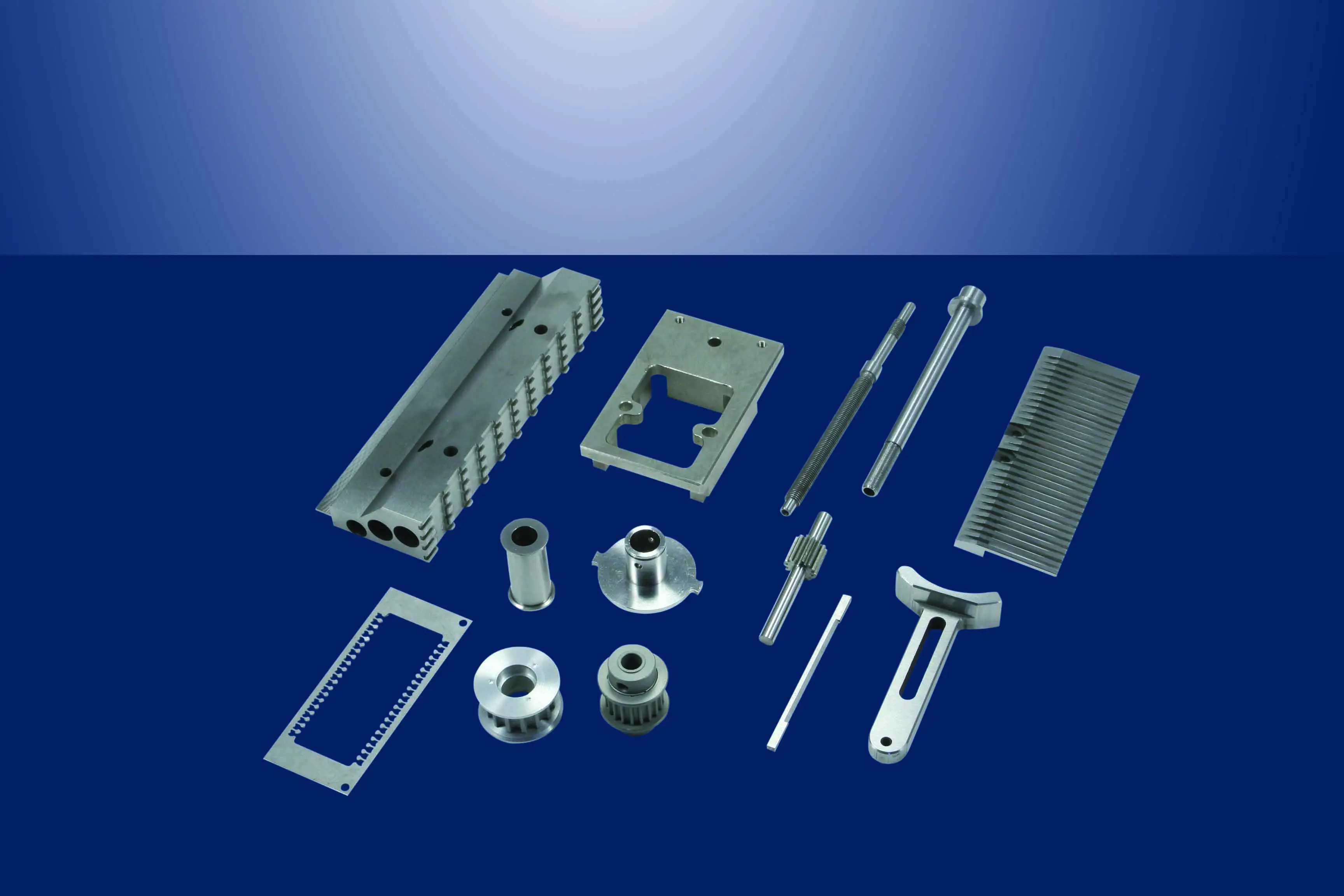
    What is the highest accuracy of precision parts processing? _Precision machining_Ultra-precision machining technology

    Processing Challenges of Materials Advances

    Precision machining_What is the highest accuracy of precision parts processing? _Ultra-precision machining technology

    New materials are constantly emerging, which continue to put forward new requirements for precision machining. For example, carbon fiber composites, ceramic matrix composites and high-temperature alloys are widely used in aerospace. However, due to their hard and brittle or high-strength characteristics, processing is extremely prone to defects.

    For these materials, special special tool coatings must be developed, special cooling processes must be developed, and personalized cutting parameters must be developed. Processing technology breakthroughs develop together with material innovations, which together determine the performance boundaries of the final product.

    Broad application prospects in many fields

    The reach of precision processing technology has extended to many cutting-edge areas. In the medical industry, it is used to manufacture precision orthopedic instruments and surgical robot parts that are implanted in the body. In the new energy field, it is the key to fuel cell bipolar plates and photovoltaic silicon wafer cutting.

    Those cross-industry applications not only promote the progress of the technology itself, but also give birth to new interdisciplinary and business models. As a technology that lays the foundation for empowerment, the degree of development of precision machining directly limits the innovation rate of downstream high-end industries.

    Regarding the future situation of the manufacturing industry , what is the highest precision that can be achieved in precision parts processing? , which field do you think the demand for fine processing will grow most rapidly, whether it is medical implants, micro-robots or next-generation chip production? Welcome to share your views in the comment area. If you find this article helpful, please like it to support it.

  • A Brief Discussion On Safety Protection And Measures For Riveting And Welding Machinery

    A Brief Discussion On Safety Protection And Measures For Riveting And Welding Machinery

    A brief discussion on safety protection and measures for riveting and welding machinery

    Working on riveting and welding machinery may seem ordinary on the surface. However, there are multiple dangerous factors such as high temperature, high pressure, and radiation hidden behind it, which pose a threat to the life safety of operators at all times.

    Comprehensive protection against heat hazards

    The temperature of the arc, or flame, generated by riveting welding operations is extremely high and can reach thousands of degrees Celsius in an instant. The splashed metal droplets and the hot workpiece surface can easily cause severe burns to the skin, or the clothing can catch fire. Operators must wear special overalls, gloves, and protective shoes and socks made of flame-retardant materials.

    In addition to basic protection, emergency facilities such as fire sand, fire extinguishers, etc. should be equipped near the work site. High-temperature environments can easily lead to heat stroke and fatigue . What equipment does a large-scale riveting and welding processing plant need? The work site needs to ensure good ventilation, and the work and rest time must be reasonably arranged. Tools that come into contact with hot parts should be placed properly to prevent injury from accidental contact.

    Strict management and control of high-pressure risks

    The gas cylinders and pipelines used in riveting and welding, as well as some equipment, contain high-pressure gas or liquid. Once there is a leak or rupture, it may cause a physical explosion or cause high-speed impact damage. All high-pressure devices must be clearly marked with the working pressure, medium, and inspection date.

    What equipment is needed in a large riveting welding processing plant_Safety protection measures for riveting welding machinery_Hazardous factors and countermeasures for riveting welding

    Pressure vessels that are defective or have exceeded the inspection period are strictly prohibited from use. The connected pipelines need to be regularly inspected for air tightness. The valves should be able to open and close flexibly. Operators are not allowed to enter the high-pressure operating area. Thorough pressure relief must be carried out before equipment maintenance to ensure complete energy isolation.

    Effective isolation of radiation damage

    The riveting arc can produce strong ultraviolet rays, strong infrared rays, and strong visible light radiation. If unprotected eyes are exposed for a short period of time, there is a possibility of causing electro-optical ophthalmia. A brief discussion of the safety protection and measures for riveting and welding machinery work. If the eyes are exposed for a long time, it may lead to cataracts. If the skin is exposed to radiation for a long time, it will also cause burns and even risk canceration.

    The most effective measures are to set up separate welding cubicles or use movable screens for physical isolation. Operators must wear professional welding masks with corresponding shading numbers or goggles. Others working nearby should also be equipped with radiation protection glasses to protect themselves from damage caused by scattered arc light.

    Prevention of Noise and Mechanical Injury

    In the process of riveting and welding, there are tapping, grinding and equipment operation, which will produce continuous high-intensity noise. If you are exposed to an environment exceeding 85 decibels for a long time, it will lead to irreversible hearing loss. Priority should be given to the use of low-noise equipment on site, and sound insulation packages should be provided to target noise sources.

    Mechanical injuries are mainly caused by rotating rollers, moving parts and vibrating tools. The protective covers of all moving parts must be intact and firmly fixed. Before the equipment is started, a sound must be sounded as a warning. During maintenance, the tagout and lockout procedures must be followed to prevent others from misoperation.

    Safety regulations for work processes

    Hazardous factors and countermeasures for riveting welding_What equipment is needed for a large riveting welding processing plant_Safety protection measures for riveting welding machinery

    Before officially commencing work, the work area must be thoroughly cleaned and all flammable and explosive items must be removed. Check the power cord and the gas pipeline to ensure that the grounding is reliable. Operators need to confirm with each other whether the protective equipment is complete, and clarify their respective responsibilities and emergency contact information.

    When performing work, you must strictly follow the process procedures. You must not simplify the steps just to save trouble, or use the equipment excessively beyond the specified load. Keep yourself focused at all times and never work while tired. After the operation is completed, all energy switches should be turned off one by one, tools should be neatly arranged and secure, and a safety inspection should be carried out on site to ensure that there is no fire left behind.

    Security Awareness and Emergency Management

    To cultivate safety awareness, we cannot rely solely on system constraints, but must internalize it into behavioral habits. Enterprises should organize regular accident case analysis meetings so that employees can intuitively understand the consequences of illegal operations, promote safety behavior observation and communication, and encourage colleagues to remind and supervise each other.

    The site must be equipped with a conspicuous emergency evacuation plan, and the passage must be unobstructed and smooth. The items in the first aid kit should be checked and updated regularly, and personnel in key positions need to master first aid skills such as cardiopulmonary resuscitation. At least one targeted fire or injury accident emergency drill must be organized every six months to test the operability of the plan.

    In your riveting and welding work experience, which safety measure do you think is easily overlooked, but is extremely critical? If you find this article valuable , please give it a thumbs up and support it.

  • How To Understand Mechanical Drawings?

    Miten ymmärtää mekaanisia piirustuksia?

    How to understand mechanical drawings?

    Where to start to quickly grasp key information is a problem you will face after getting a part drawing. It is directly related to whether subsequent production can proceed smoothly, and workers in every link must understand it accurately.

    Maximum overall dimensions on the drawing

    The first is the length, width and height dimensions marked on the part drawing. This is the primary information. Then, based on these data, the cutting workers must select blank materials of appropriate specifications from the inventory. For example, whether to choose round steel with a diameter of 100 mm or round steel with a diameter of 120 mm, which directly determines the utilization rate of raw materials.

    Machining workers care about whether the machine tool table can accommodate parts. For a shaft part with a length of more than two meters, if it is placed on a CNC lathe with a stroke of only 1.8 meters, it will be impossible to complete the processing. Heat treatment workers also have to check the effective size of their own furnace to ensure that the parts can be put in for quenching or tempering.

    Clear identification of part materials

    On the drawings, the materials used in the parts will be clearly stated, such as 45 steel, 6061 aluminum alloy or 304 stainless steel. Job shops select tools based on the material’s characteristics. For processing stainless steel, wear-resistant carbide blades are needed. However, for processing aluminum alloys, high-speed steel tools can be used. How to read mechanical drawings? , and must be matched with a larger cutting speed.

    Look at the drawings of parts and materials_Machining drawings_Look at the drawings of parts dimensions

    When doing assembly, the characteristics of the material are also very important. When assembling soft copper parts, if excessive torque or inappropriate tools are used, it is extremely easy to cause the threads to slip or the parts to deform. On the contrary, when assembling high-strength alloy steel parts, sufficient preload force is required to ensure reliable connection.

    Detailed interpretation of technical requirements

    In the technical requirements section, all the key instructions given by the designer for the manufacturing process are gathered. For example, it is clearly marked as “quenching and tempering to HRC28 – 32”. This means that after the parts are rough-machined, they must be quenched and high-temperature tempered to obtain comprehensive mechanical properties.

    This part can also cover geometric tolerances, surface roughness, and specific specifications such as unmarked chamfers, such as “all sharp edge chamfers C0.5”, which prompts the operator to perform unified corner processing during processing to prevent scratches and meet safety requirements. If any of these are ignored, it is very likely to cause batch quality problems.

    Dimensional tolerances and fit relationships

    Generally speaking, the dimensions on the drawing are not isolated numbers, but have a tolerance range, such as φ50±0.01. This clearly defines the precise manufacturing range of the part, and also determines how it fits with other parts, whether it is a clearance fit, a transition fit, or an interference fit.

    For example, there is a situation where a shaft is matched with the inner hole of a bearing. If the drawing mark shows an interference fit, then the hot fitting or press-in process needs to be used during assembly. If the machining behavior is incorrectly carried out according to the clearance fit, it will cause the bearing to slip during operation, thus causing the entire equipment to lose effectiveness.

    Surface treatment and special technology

    Look at the drawings of parts and materials_Machining drawings_Look at the drawings of parts dimensions

    According to the requirements of technical regulations, surface treatment methods are often specified, such as “galvanizing”, “blue”, or “spray coating”. This will not only affect the surface appearance and corrosion resistance, but may also cause the final dimensions of the part to change. Because the electroplated layer will thicken the dimensions, for precision parts, machining drawings need to reserve a margin for the coating in advance when processing.

    Requirements for special processes, such as welding, casting flaw detection, dynamic balancing testing, etc., will also be explained here. There is a high-speed rotating fan impeller. If the dynamic balance requirements are ignored, severe vibration will occur during operation, which will cause safety hazards.

    Views and sections express intent

    A complete drawing uses multiple views of the machining drawing , including the front view, top view, left view, and cross-sectional view to show the parts three-dimensionally. The cross-sectional view can clearly show the internal hole structure, rib thickness and other details that cannot be directly observed from the outside.

    People who are proficient in reading pictures can quickly convert two-dimensional machining drawings into three-dimensional solid shapes, and understand the processing sequence of each feature. For example, if you see a blind hole inside with the help of a cross-sectional view, you must drill holes before processing the external features.

    After reading these, has your understanding of part drawings become clearer? In actual work, in which part of the drawing are you most likely to misunderstand or miss details? You can come to the comment area to share your experience. If you find it useful, please like it to show your support!

  • AI Large Model + Cloud Native: Shushang Cloud’s 2026 Technical Architecture Outlook, How To Support A Trillion-level B2B Transaction Ecosystem?

    AI Large Model + Cloud Native: Miten tukea biljoonatason B2B-transaktioiden ekosysteemiä?

    AI large model + cloud native: Shushang Cloud’s 2026 technical architecture outlook, how to support a trillion-level B2B transaction ecosystem?

    Currently, the transaction scale of B2B e-commerce has exceeded US$26 trillion. However, what really supports this huge value is the underlying technology architecture that continues to evolve behind it. This underlying technology architecture determines whether the platform can stably handle massive transactions and provide intelligent services.

    Cloud native architecture lays a solid foundation

    Shushang Cloud adopts a model that combines microservices and containerization to achieve high system availability. It splits the huge e-commerce system into hundreds of independent service units, such as user authentication, inventory query, payment gateway, etc. Each such unit can be run and updated independently. This architecture avoids the risk of the entire system being paralyzed due to a single module failure and ensures the continuity of core transactions.

    When encountering sudden traffic, the importance of elastic scaling cannot be underestimated. Shushang Cloud’s platform has the ability to self-regulate the computing resources allocated to each microservice based on transaction peaks and valleys. During the promotion season, the system will immediately put more containers into operation to support the sharp increase in order processing tasks. During normal periods, redundant resources will be released to control costs. Such dynamic adjustments ensure efficient use of resources and a stable user experience.

    AI large models empower intelligent decision-making

    ShuShang Cloud native architecture_Digital twin platform architecture_ShuShang Cloud AI large model application

    What goes deep into the key links of the supply chain is the large AI model. At the level of demand forecasting, the digital twin platform architecture analyzes historical transaction data, market trends, and even social media public opinions. This analysis is used to provide enterprises with accurate suggestions on procurement and production. In smart customer service scenarios, one technology is natural language processing technology that can understand complex industry terms to automatically answer questions about product specifications and contract terms. This technology greatly improves communication efficiency.

    Another core application is smart matching. Finding the right and suitable suppliers in traditional B2B procurement takes time and effort. Nowadays, AI models can deeply analyze and analyze the descriptions of buyers’ needs, and accurately match and find objects that meet the conditions in terms of qualifications, production capacity, geographical location and credit ratings from a massive supplier database. This kind of matching is not only fast, but also greatly reduces the search costs of both parties.

    Deep integration creates synergistic value

    The integration and innovation of technical architecture is reflected in the synergy between cloud native and AI. The cloud native platform provides a flexible computing power pool for AI model training and reasoning. When large-scale data model training needs to be carried out, the system can quickly schedule many GPU resources. When carrying out daily predictive analysis, more cost-optimized CPU resources are used. Such flexibility in computing power gives the digital twin platform architecture , which is a prerequisite for large-scale application of AI capabilities.

    With the help of building a unified intelligent decision-making center, AI large model + cloud native: Shushang Cloud’s 2026 technical architecture outlook, how to support a trillion-level B2B transaction ecosystem? , the data and AI capabilities in each link can be connected. For example, the intelligent warehouse management system automatically generates replenishment instructions based on sales forecasts, and these instructions are synchronized with the procurement system and logistics scheduling system in real time. The entire chain shows a collaborative response, optimizing traditional serial processes into a parallel intelligent decision-making digital twin platform architecture , achieving a leap from simple informatization to value chain reconstruction.

    Industry solutions achieve deep adaptation

    In response to the complex needs of the manufacturing industry, Shushang Cloud has proposed a series of solutions to support customized production. This system has the ability to manage the entire process from drawing submission, through process review, to batch production, and can also seamlessly connect with the enterprise’s ERP and MES systems. For those industries with strict traceability requirements, this platform integrates blockchain technology to ensure that the source of parts, production batches, and quality inspection records will not be tampered with.

    Regarding the field of cross-border e-commerce, the platform integrates many functions, such as multi-language support, intelligent tariff calculation, and global logistics path optimization. It can calculate product taxes and customs clearance requirements in real time according to the policies of the destination country, and will also push the optimal logistics combination plan for sellers. Such deep adaptation allows companies in different industries to find tools that fit their own business characteristics on a common platform.

    Security and compliance build the cornerstone of trust

    In this regard, in order to face the increasingly complex cyber attack threats, the platform implements and relies on encrypted transmission and storage from one endpoint to another endpoint in terms of data security. This ensures that any business contracts, transaction flows, and customer information related to sensitive privacy undergo heavy encryption and protection to ensure security. At the same time, access rights are also strictly controlled, and security audits are regularly conducted and penetration and immersion tests are arranged.

    Data regulations are becoming increasingly stringent around the world, and compliance has become a must for cross-border transactions. Shushang Cloud took into account the differences in regulations in different regions when designing its architecture. Among them, it specifically covers the GDPR applicable in the European Union and the data security law implemented in China. The platform provides the option of localized storage of data and is also equipped with compliant data transfer tools. With the help of these, enterprises can build cross-border data circulation solutions that comply with regulatory requirements, thereby building solid business trust.

    Future evolution and ecological co-construction

    Shushang Cloud is promoting the computing power-as-a-service model. Enterprises no longer need to invest in expensive hardware, but can use AI computing power and special algorithms according to needs, just like using water and electricity. This model allows small and medium-sized enterprises to lower the threshold for using cutting-edge technology, and is conducive to the popularization of intelligent applications throughout the entire ecosystem.

    In the face of sustainable development, an issue of global significance, green computing is actively included in the blueprint planned for technological evolution. The platform effectively optimizes algorithm energy efficiency, adopts a liquid-cooled data center structure, and improves the efficiency of server resource utilization. A series of specific measures , is committed to fully reducing the carbon emissions generated during each transaction, and working with partners to build a green supply chain-related system. This not only responds to social responsibilities, but also meets the environmental protection requirements of an increasing number of large purchasers for suppliers.

    In the industry you are engaged in, which specific business pain point do you think can be solved first by introducing a B2B platform that deeply integrates AI and cloud native? Welcome to share your views in the comment area. If you find this article inspiring, please like it to support it.

  • Mikä on niittaushitsaus

    What is riveting welding

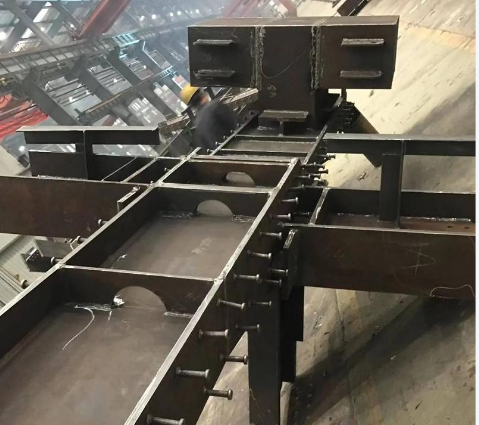
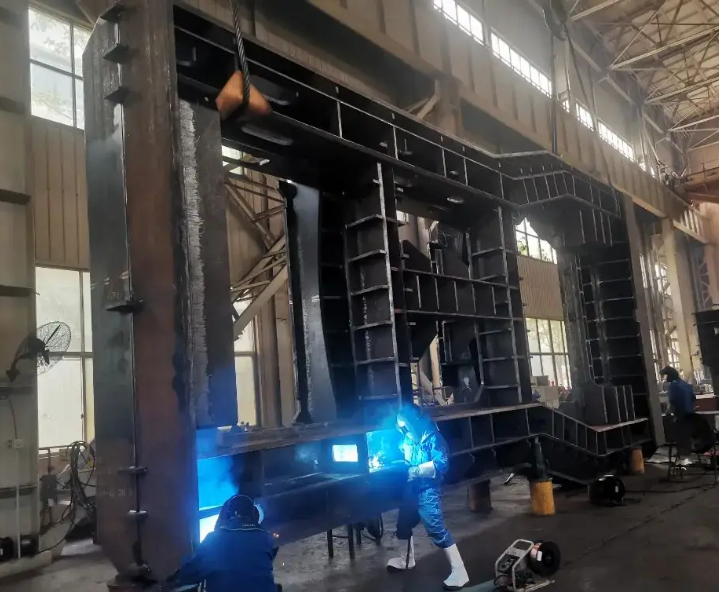
    In many sites of mechanical manufacturing and metal processing, the key technology for connecting heavy metal parts relies on the riveting welding process. This process relies on a basic tool called a riveting welding platform. It can be said that this basic tool is the cornerstone of the riveting welding process.

    Technical characteristics of riveting welding process

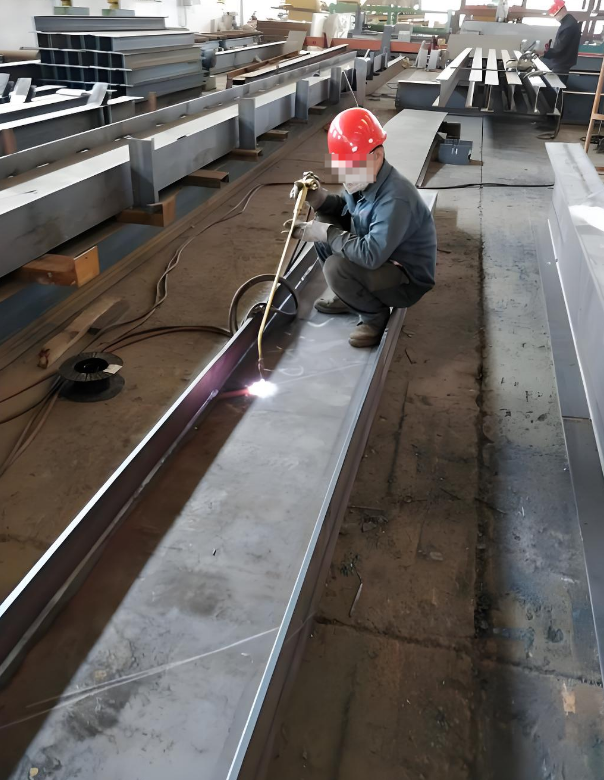
    Riveting welding is a specific application of electric welding. The key is to use the welding rod to melt it and penetrate it deeply into the workpiece to be welded, thereby forming a stable connection. This method is particularly suitable for joining thicker metals such as steel plates and large structural parts because it can provide sufficient penetration depth and weld strength to ensure the stability of the structure. In the field of shipbuilding, heavy machinery and steel structure engineering, riveting and welding technology has been widely used. It can effectively cope with working conditions of large loads and strong vibrations, and is an indispensable link in the manufacturing process of many heavy equipment.

    Core functions of riveting welding platform

    This is a workbench specially designed for riveting welding operations. It is called a riveting welding platform. Its primary function is to provide a reference plane, which must be stable and accurate. Its working surface is generally designed with through holes and T-shaped slots. These structures are of great practical use. Through holes can facilitate the cleaning of oxide scale, welding slag and other waste generated during welding, thereby keeping the work surface clean. T-shaped slots can be used to install positioning blocks, clamps and other fixtures to quickly and firmly fix the workpieces to be welded on the platform, thereby creating conditions for precise welding.

    Platform structure and materials

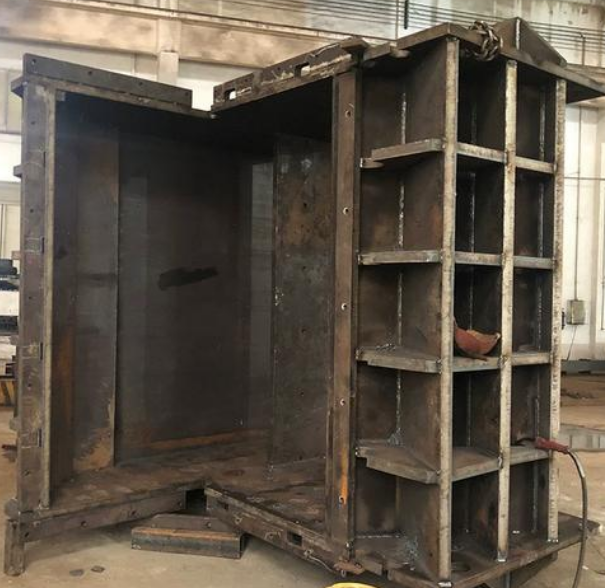
    In order to ensure the load-bearing capacity and long-term stability, most of the riveting and welding platforms adopt a ribbed or box-type structure with reinforced ribs inside. This design ensures very high rigidity while reducing its own weight. Its material is usually HT200-250 grade high-strength cast iron, which is wear-resistant and has small deformation. The working surface is finished by scraping and other finishing, and the hardness is controlled between Brinell hardness HB160 and 210, which makes it resistant to scratches from welding tools and maintains long-lasting plane accuracy.

    Platform manufacturing and aging processing

    After the casting is completed, a qualified riveting welding platform must undergo a strict heat treatment process. Usually, artificial annealing is performed at a temperature of 600 to 700 degrees Celsius to eliminate the internal stress of casting. Subsequently, two to three years of natural aging treatment is required to allow the internal structure of the cast iron to slowly stabilize in the natural environment. This can minimize future deformation of the stress relief platform and maintain accuracy for a long time.

    Standards and accuracy levels followed

    The production and manufacturing of riveting welding platforms is not carried out randomly. It strictly follows the national machinery industry standard JB/T 7974-2000 and is manufactured in accordance with relevant national standards. The platform is divided into multiple levels according to its flatness accuracy, such as 00, 0, 1, 2, 3, etc., among which level 00 accuracy is the highest. In addition, in addition to the common scraping working surface, there are also platforms using precision planing technology. Users can choose according to different accuracy requirements and budgets.

    Platform specifications and selection applications

    The riveting and welding platforms have various specifications, including small ones of 100 mm × 100 mm, and large ones of 3000 mm × 6000 mm. Is it profitable to process riveting welding parts ? It can even be customized according to the user’s special design drawings. Its working surface includes rectangular, square or circular, equipped with processable V-shaped, T-shaped grooves and various round holes and long holes. It can adapt to work fixation and welding needs of different shapes, and is widely used in various fields from equipment maintenance to large component assembly.

    When you look back on your work experience and choose a riveting and welding platform, what is most important to you is its accuracy level, its specifications and dimensions, or its unique special structural design? You are welcome to share your insights in the comment area, and remember to like it and forward it to your colleagues who may need this information.

  • Sheet Metal hitsaus osat, Square Tube hitsaus osat, niittaus hitsaus osat, ei-standardi myynti, Luoyang hitsaus valmistaja toimittaa piirustusten mukaan

    Sheet metal welding parts, square tube welding parts, riveting welding parts, non-standard sales, Luoyang welding manufacturer supplies according to drawings

    When conducting industrial manufacturing, many companies encounter a problem. Standard parts cannot meet the unique needs of complex equipment. So where to find a reliable partner who can provide one-stop service from drawings to finished products?

    Professional team and core technology

    Here you go: We have technical, production and assembly teams with experienced team members. The core members have an average of more than fifteen years of practical experience in the industry . These people are not only proficient in mechanical principles, but also have a deep understanding of the special working conditions of customers in different industries. From drawing review to process formulation, every link is strictly controlled by senior engineers.

    The relationship between team and technology is that of mutual assistance and mutual promotion. Our engineers here will conduct an in-depth analysis of every drawing provided by the customer, identify the processing difficulties, and formulate solutions in advance to deal with it. It is such an in-depth technical docking capability that ensures that even the most complex non-standard designs can find the optimal implementation path, reducing customer communication costs and management costs from the root.

    Large critical processing equipment

    Equipment is the foundation of manufacturing capabilities. We are equipped with a number of large-scale key CNC equipment, including machining centers, and four-axis linkage CNC gantry milling machines ranging from 3 meters to 6 meters. These gantry milling machines are equipped with side milling heads, which can efficiently complete complex processing work on multiple sides of large workpieces, and multiple processes can be completed in one clamping.

    Our equipment list includes CNC floor boring machines, large CNC vertical lathes and sleeping lathes. For example, sheet metal welding parts, square tube welding parts, riveting welding parts, non-standard sales, Luoyang welding manufacturers supply according to drawings, CNC floor boring is excellent in processing precision hole systems of large box parts, Luoyang riveting welding external processing manufacturers , however, CNC vertical lathes specialize in turning large disk and ring parts. It is these high-precision equipment that together build a hardware support system for processing large-sized and difficult workpieces.

    One-stop solution process

    A drawing or a concept starts our service. From the initial suggestion of raw material selection, we are involved. Based on the final use environment of the part, we recommend the most cost-effective material model to help customers balance performance and budget.

    Services are present throughout the entire production chain. Responsible for coordinating all processing steps, performing quality control tasks, and ultimately completing component assembly and debugging. This shows that customers do not need to connect with multiple suppliers. They only need to make a single contact with us to get complete finished parts, which greatly simplifies the supply chain.

    Core products and application areas

    Our product line mainly focuses on key components of heavy machinery, including various types of gears, transmission shafts, large box structural parts and complex welded components. These products are widely used in fields that require extremely high reliability and durability.

    In the field of mining equipment, we produce vulnerable spare parts such as crusher liners and drum shafts; in the petrochemical industry, we manufacture key components such as reactor stirring shafts and large flanges. We also undertake the customization and manufacturing of large molds and non-standard complete sets of equipment to meet customers’ personalized production needs.

    Quality control and accuracy assurance

    Quality does not just stop at the final inspection stage. We carry out quality control throughout the entire process, starting from the re-inspection of the raw materials after they enter the factory, until each process is individually inspected. The entire process has clear standards and corresponding records. For those critical dimensions, we use precision instruments such as three-dimensional coordinate measuring machines to inspect them.

    Rigorous processes and stable equipment are relied upon to ensure accuracy. We carry out regular maintenance and accuracy calibration for all large-scale CNC equipment to ensure that it is in the best working condition for a long time. At the same time, the tolerance requirements and control methods of each place will be clearly marked in the process documents, so that the machining accuracy can be quantified and managed.

    Industry experience and customer value

    Over the past many years, we have provided in-depth services in many industries such as mining, petrochemicals, and heavy machinery, and thus accumulated a large number of cross-industry knowledge bases. We know the working conditions of mining equipment with strong impact characteristics, and we are also familiar with the strict requirements for corrosion resistance of petrochemical equipment, and these experiences can be directly transformed into more reasonable design optimization suggestions.

    “Safety of worry” and “reliability” are the core values ​​we deliver to our customers. By handing over the entire complex manufacturing of large-scale non-standard parts to us, customers can focus more on the research and development of their core products and market development, thus improving overall operational efficiency and achieving a win-win partnership.

    In your project, have you ever experienced delays in construction due to the inability to find a supplier that can completely handle large non-standard parts from design to assembly? Welcome to share your experience or questions in the comment area. If you think this kind of one-stop service can solve your actual problems, please like it and share it with your peers.

  • Mikä on niittaushitsaus

    What is riveting welding

    When many people see the word riveting, they usually picture the scene of sparks flying in the factory in their minds, and then think that it is just nailing metals together. But to be precise, this is a technology that is closely related to the safety of buildings, plays a key role in the stability of bridges and even the ability of aircraft to fly in the sky. Its importance far exceeds your original imagination of it, and it is more important.

    Definition and core principles

    A technique that firmly combines metal parts is riveting. It often uses rivets and welding at the same time. To understand simply, rivets are used to penetrate and fix two metal plates like a stapler. Sometimes welding is also performed at the seams, thus forming a double guarantee. Yes, it is double insurance. It forms a double insurance.

    This approach combines the advantages of mechanical connection with the advantages of metallurgical bonding. Rivets can provide reliable physical engagement and have an effective effect on resisting shear force. Welding will integrate the materials at the molecular level, which enhances the integrity. This combination is particularly suitable for complex and changing stress conditions.

    Main application areas

    In heavy equipment manufacturing, this kind of technology can be encountered everywhere. For example, on the hull of a large cargo ship, as well as the steel frame riveting and welding processing order platform of an oil drilling platform, neat rows of rivets are often seen where the two are connected, and welds are added around them to ensure that the structure will not crack in the case of strong winds and waves.

    Many railway bridges and high-voltage transmission towers belong to the field of public facilities and they also rely on rivet welding. These structures are outdoors for a long time and have to withstand vibration, temperature changes, and wind and rain erosion. The durability of the connection is extremely high, and the fatigue resistance of the connection is also extremely strong. The rivet welding process can well meet these harsh conditions.

    Significant advantages of the process

    The biggest advantage is riveting with extraordinary reliability and load-bearing capacity. Once the rivets are riveted and welded together, the connection points will become extremely strong and can withstand huge vibrations and impact loads for a long time, and are not prone to sudden brittle fractures.

    It has very good sealing properties. Properly processed riveted joints can effectively prevent gas or liquid from leaking out of the joints, which makes it very suitable for chemical containers, pipelines, aircraft fuselages and other occasions that have strict sealing requirements.

    Challenges and limitations

    Well, this process requires very high skills for the operators . Workers must accurately control the timing and strength of drilling, riveting and welding. No matter which link there is an error in the riveting and welding processing order platform , it is very likely to lead to hidden quality risks. Therefore, related technicians generally need to undergo a long period of professional training and qualification certification.

    During riveting and welding, generally speaking, the noise is quite loud and smoke and dust are generated. Today’s factories must be equipped with complete ventilation, dust removal and hearing protection measures. For some ultra-thin or special alloy materials, riveting may not be the best choice.

    Detailed explanation of process flow

    A complete riveting and welding operation begins with precise preparations. Workers must first mark the location of the drill holes on the metal plate according to the drawings, and then use a special drill machine to drill holes with precise dimensions. This is the key to ensuring that the rivets can pass through smoothly and fit tightly.

    Insert a red-hot rivet or a room-temperature rivet into the hole, and use a pneumatic or hydraulic rivet gun to impact the tail of the rivet, causing it to deform and expand, forming a “head” on the other side to lock the plate. Finally, depending on the actual situation, arc welding or gas shielded welding is used to strengthen and strengthen the joints.

    Future development trends

    The continuous advancement of automation technology has made robot riveting and welding systems gradually popular. On the automobile manufacturing production line, robotic arms can accurately and efficiently complete riveting and welding work, greatly improving the consistency of production and reducing labor intensity. This is a key step for the industry to move towards smart manufacturing.

    Process innovation is being driven by new materials. To connect dissimilar materials such as carbon fiber composites and aluminum alloys, engineers have developed new rivets and low-temperature welding technology. These innovations continue to broaden the application boundaries of rivet welding, allowing it to continue to be revitalized in modern industry.

    After reading this, has your impression of riveting and welding changed? Are there any common facilities or items around you that you think may use this kind of “double insurance” connection technology? Feel free to share your findings in the comment area. If you find this article helpful, please give it a like and support.

  • Mikä on niittaushitsaus

    What is riveting welding

    In modern industrial manufacturing, how to connect metal parts firmly and consistently is one of the most critical technical problems. The riveting process is one of the key ways to solve this problem. It combines the advantages of mechanical connection and welding into one place.

    Basic principles of riveting welding process

    Riveting welding is not a simple welding operation, it belongs to a composite process. The process begins with pre-drilling or punching holes in the metal sheets or structural components to be joined. After that, the rivet is placed into the hole. The rivet usually has a pre-made head on one end.

    By applying external force to hammer or pressure equipment, the other end of the rivet is squeezed, causing it to deform and form another nail head rivet weldment , thereby clamping and locking the workpiece. The key welding step is often completed at the contact interface between the rivet and the workpiece hole wall, or in a local area surrounding the rivet head, in order to form a metallurgical bond and further strengthen the locking effect.

    Materials and equipment required

    Special materials are required to carry out riveting and welding-related operations. The rivets themselves have a variety of options to choose from. Common ones include carbon steel, aluminum alloy and stainless steel rivets. Its material must match or be compatible with the workpiece. The workpiece is usually a variety of steel structures, steel plates or profiles.

    Rivet welding technology_Is the processing of rivet welding parts profitable_Riveting welding technology

    When it comes to equipment, in addition to the basic drilling machine, you must also have riveting tools, such as manual riveting guns, and pneumatic or hydraulic riveting machines.

    Main technical methods and steps

    Common riveting methods include hot riveting and cold riveting. Hot riveting heats the original rivets to a red-hot state before riveting. This method is mostly used in large steel structures such as bridges. Cold riveting is performed at room temperature and is suitable for materials that are sensitive to deformation or are relatively thin.

    Its standard steps are roughly divided into four steps. The first is setting out and marking, and the location of the hole must be accurately determined. The second is drilling or punching, where the hole diameter and verticality need to be controlled. Then the rivets are inserted and initially fixed. Finally, formal riveting and necessary local welding are carried out to form the final connection.

    Applications in core industrial areas

    In the manufacturing of heavy equipment, the position of riveting welding cannot be replaced. What is riveting welding? In the field of ship manufacturing, hot riveting is used extensively to connect hull steel plates to keels and ribs. The purpose is to ensure the structural integrity under seawater corrosion and wind and wave impact. Historically, the hull of the Titanic was connected with a large number of rivets.

    In the electric power industry, the structural construction of boiler steel frames of large thermal power plants and high-voltage transmission towers also relies on riveting and welding. These structures are subject to extremely high static loads over long periods of time, as well as wind loads, and riveted joints can provide excellent fatigue resistance, ensuring safe operation for decades.

    Advantages compared to other connection methods

    Compared with simple welding, rivet welding can reduce the deformation and residual stress of the workpiece caused by overall heating. Compared with a pure bolt connection, it forms a non-detachable permanent connection. There is no need to worry about the bolts loosening under vibration, and the sealing performance is also better.

    Especially in situations that need to withstand impacts and alternating loads, such as the carriage parts of railway freight cars and the boom parts of mining machinery, riveted joints show higher reliability. It has the shear resistance of riveting and the pull-out strength of welding. It is a composite connection solution that can achieve complementary advantages.

    Key points of process quality control

    First, check the rivet material and size to see if it meets the drawing requirements to ensure the quality of the rivet welding. When riveting, for temperature, the heating temperature of the rivet must be controlled. For force, the riveting force must be controlled. For appearance, the appearance of the final nail head must be paid attention to. The nail head should be plump and closely fit the surface of the workpiece.

    When welding is carried out, it must be done by welders with corresponding qualifications. Moreover, non-destructive testing may also be carried out, such as ultrasonic flaw detection on the welds in key parts. This is done to check for defects such as internal pores or lack of fusion. After completion, samples are often taken for destructive testing to verify its load-bearing capacity.

    In your work or life, have you ever come into contact with various products or architectural objects that use riveting technology? Do you think such a classic craft will be completely replaced by more advanced technology in the future? You are welcome to share your deepest opinions in the comment area. If you think this article is helpful, please give it a like to support it.

  • Mitä on Riveting?

    What is riveting?

    Many people don’t know that the core secret of sturdy airplanes, cars, and bridges lies in a connection process called riveting.

    What is riveting welding

    The process of permanently bonding metal parts, that is, riveting, uses molten metal or the use of rivets to connect two or more metal parts. This process is different from bolting. The joint formed is generally irremovable and is integral. It uses high temperature or pressure to achieve a bond between atoms, thereby obtaining extremely high connection strength. It is one of the cornerstones of modern industrial manufacturing.

    In essence, this riveting is divided into two categories, one is the welding and riveting processing order platform , and the other is riveting. Welding uses heating to melt and fuse the base material, while riveting relies on the mechanical deformation of the rivets to generate locking force. Both methods can cope with huge tensile, shear and vibration loads to ensure the reliability and safety of the structure during long-term use. They are indispensable technologies for many key equipment.

    Main process types

    Commonly seen welding methods include arc welding, gas shielded welding and laser welding. Arc welding uses arcs to generate high temperatures, and gas shielded welding uses gas to block air to avoid oxidation. What is riveting welding? Laser welding uses high-energy beams to achieve precision processing. Each method has its own suitable material thickness, production efficiency and cost calculation factors. The factory will select it according to the needs of the specific product.

    The riveting process is divided into solid rivets and blind rivets. Solid rivets need to be struck from both sides, while blind rivets only need to be operated from one side. The tool is used to pull off the core rod to allow the rivet to expand. In occasions where the assembly space is limited, such as aircraft skin installation, blind rivets are widely used, greatly improving assembly convenience and efficiency.

    Process implementation steps

    Before carrying out riveting welding, preparation is of extremely critical importance. The operator needs to clean the surface of the workpiece to remove oil stains and oxides, and select matching welding rods or rivets based on the characteristics of the material. For welding, parameters such as current and voltage must be properly adjusted; for riveting, it is necessary to determine the appropriate rivet length and hole diameter. These subtle links will directly affect the final connection quality.

    During the actual operation, the welder must hold a welding gun or operate a robotic arm and move along a predetermined path to form a weld; the riveter must use a rivet gun or pneumatic hammer to quickly hit the rivets to form them. After this work is completed, be sure to carefully inspect the connections to see if there are any defects such as cracks, lack of fusion, or loose rivets to ensure that every connection point is flawless.

    key advantages

    The biggest advantage of the riveting welding process is the strength and sealing of its connection. Welding can fuse different parts into one, and the force will be uniform. Qualified riveting points can withstand alternating loads for a long time without loosening. For example, the hulls of ships and high-pressure pipelines must use this process to prevent leakage or breakage of the riveting welding processing order platform and ensure the safety of personnel and equipment.

    This type of process has the ability to connect metals of different materials and thicknesses, and its adaptability is extremely outstanding. It can achieve automated production, like the robot welding station on the automobile production line, which can complete thousands of solder joints accurately and at high speed, ensuring the consistency of product quality in mass production situations, which is difficult to achieve with other connection methods.

    Examples of application areas

    In the aerospace industry, riveting is widely used in many parts of the aircraft fuselage. Why is this? The reason is that aluminum skin is not suitable for high-temperature welding processes. However, riveting can provide high-strength conditions without damaging the material properties. For the rocket engine, its complex components require the use of special welding technology in order to withstand thousands of degrees of high temperature and strong vibration environment riveting and welding processing order platform . Here, every solder joint is closely related to the success or failure of the mission.

    In normal days, the frame and chassis of a car are connected with the help of spot welding robots. Many of the steel beam nodes in the steel structure building we live in use high-strength bolts and are welded together. Even the production lines of steel furniture and electrical appliance shells at home are inseparable from the efficient riveting and welding process, which silently constructs the material world we live in.

    Develop new trends

    At present, riveting welding technology is developing in the direction of intelligence and greening. Intelligent welding robots are equipped with visual sensors, which can automatically identify weld seams and adjust parameters. New “green welding” technologies such as friction stir welding have low energy consumption and no smoke, which are more in line with environmental protection requirements. These advances continue to promote the upgrading of the manufacturing industry.

    At the same time, advances in materials science have brought new challenges: the increased demand for joining aluminum alloys and composite materials has led to the emergence of corresponding new technologies, such as laser riveting, self-piercing riveting and other new processes. In the future, with the further development of Industry 4.0, the riveting and welding process will be more closely integrated with digital twins and online monitoring to achieve full process traceability and precise control of quality.

    In the field of work or life where you are, have you ever noticed which objects or facilities significantly use the riveting and welding process? Has its sturdiness ever left a deep impression on you? You are welcome to share your observations and related stories in the comment area. If you find this article helpful, please give it a like and support.

  • Jiangsu niittaus ja hitsaus Platform

    Jiangsu riveting and welding platform

    When purchasing riveting and welding platforms online, all kinds of price information is complicated and diverse. However, did you ever know for sure? There are likely to be potential risks hidden behind these marked prices. Under normal circumstances, the platform will not bear corresponding responsibility for this.

    Source and responsibility for price information

    The riveting welding platform quotation on the Panyu riveting welding processing quotation inquiry network on the website is generally uploaded and published by each supplier. The implication of this is that starting from the material fee, through the processing fee and until the final price, these are all numbers produced unilaterally by the supplier. The platform serves as a venue for information display, and its role is more of an information intermediary than a direct participant in the transaction.

    Therefore, once you see the “Disclaimer” on the page of Panyu Riveting Welding Processing Quotation Inquiry Network , you must be clear: the responsibility for the accuracy of the price and the actual condition of the product belongs to the supplier company that released the information. The platform clearly declares that it does not assume any guarantee responsibilities, which clarifies the scope of rights and responsibilities at the legal and commercial levels.

    The prevalence of low price traps

    In the purchase of industrial products, too low a price is often a dangerous signal. Some merchants who adhere to a dishonest business philosophy may use prices that are far lower than the market average to attract inquiries. The purpose is to obtain the customer’s contact information, and then use other channels to increase prices or sell low-quality products in the subsequent stage. For example, for a riveting and welding platform with conventional specifications, if its price is more than 30% lower than that of mainstream manufacturers, then this deserves a high degree of vigilance.

    This trap will cause the purchaser to waste time and energy. If the product quality is not up to standard, it is very likely to cause production safety risks. Therefore, in the face of extremely attractive low prices, the first principle is to remain rational and vigilant.

    Proactive verification is a key step

    It is not enough to just browse the information on the web. The most direct and effective way is to call the supplier directly according to the contact information provided on the page. Through phone communication, you can confirm whether the current price is still valid, and you can also ask whether taxes, freight, and specific delivery date are covered.

    At the same time, it is necessary to ask the other party for detailed product specifications, detailed material certificates or past cooperation cases during the call. Proactive questioning can effectively filter out those merchants who have not done enough preparations or have bad intentions, and place the risks faced by procurement in advance.

    Prioritize certified suppliers

    Many B2B platforms have member certification systems, such as “VIP member” or “gold supplier” and other logos. These marks often mean that the supplier has passed the preliminary review of the platform and paid a deposit. Its credibility and operational stability are relatively more guaranteed.

    When choosing this type of supplier, although the price may not be the lowest, transaction security and product quality will be more guaranteed. In 2023, according to statistics from an industrial products platform, the transaction dispute rate of suppliers with certification marks is nearly 70% lower than that of non-certified suppliers.

    Evaluate suppliers from multiple dimensions

    When inspecting suppliers, in addition to looking at certifications, you also have to inspect them from many different aspects. You can check the company’s establishment year, the company’s registered capital, and whether the company has a physical factory. Use map software to verify the authenticity of its business address. If conditions permit, you can also verify the authenticity of its business address through on-site inspections.

    It is also very effective to conduct word-of-mouth inquiries in the industry. Ask peers or upstream and downstream partners to learn about the supplier’s actual performance in terms of delivery on-time, product quality, and after-sales service. This kind of information is often of higher value than online promotion.

    Build a secure procurement process

    A safe procurement process should include clear requirements identification, price comparison among multiple parties, sample testing (if possible), and review and reading of contract terms. In the contract, product specifications, quality standards, acceptance methods, payment conditions, and liability for breach of contract must be clearly stated.

    For first-time cooperation or large-amount orders, consider paying in stages, and retain a portion of the balance to pay after the acceptance reaches the qualified standard. In this way, it can not only constrain the supplier to perform the contract, but also control a certain amount of initiative when problems arise.

    When you purchase industrial equipment, which aspect of a supplier is most important to you, the completely low price, or the comprehensive reputation and after-sales service with reliable quality? I look forward to you sharing your experience and opinions in the comment area.