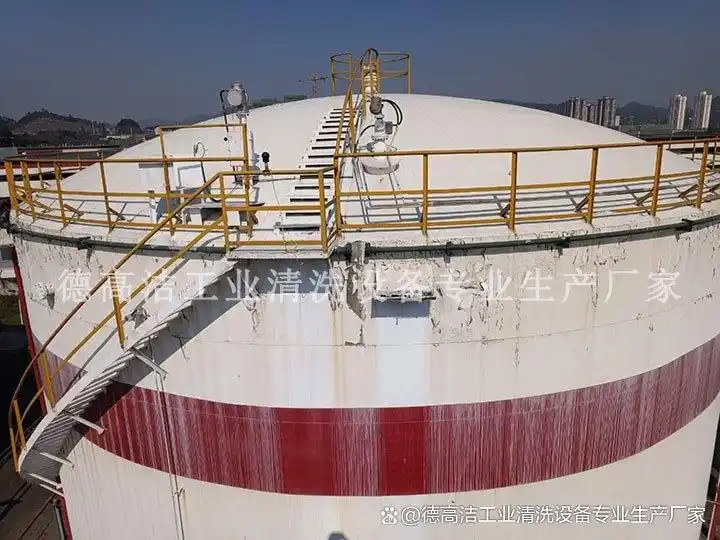


Selection and construction methods of anti-corrosion coating for the outer wall of large storage tanks
The outer wall of the storage tank is exposed to the industrial atmosphere of petrochemical companies all year round. Harmful gases such as sulfur dioxide and hydrogen sulfide combine with rainwater to form a corrosive electrolyte film, causing continuous electrochemical corrosion on the metal surface. If this problem is not solved, the service life of the storage tank will be greatly reduced. In the industry, it is recognized that the most effective method is coating anti-corrosion.

Three major culprits of industrial atmospheric corrosion
In the area surrounding petrochemical companies, in the atmospheric environment, the concentrations of harmful gases such as sulfur dioxide, hydrogen sulfide, and nitrogen dioxide are much higher than in ordinary areas. The gases contained in it are corrosive. Once it encounters water vapor in the air, or when it rains, a thin layer of water film will be formed on the surface of the outer wall of the storage tank.
This water film is not ordinary water. It dissolves acids, alkalis, salts and other impurities and turns into a conductive electrolyte. Under the action of this electrolyte, countless tiny galvanic cells will be formed on the metal surface. Electrochemical reactions continue to occur between the positive and negative electrodes, causing the metal to be gradually corroded from the surface.
The core logic of coating anti-corrosion
The principle of coating anti-corrosion is actually not complicated. It is to build an isolation barrier between the tank surface and the corrosive environment. This barrier must be dense enough to prevent water vapor and corrosive gases from penetrating into the metal surface, and it must have sufficient adhesion to ensure that it will not fall off due to temperature changes or mechanical vibration during the use of the storage tank.
In the industrial atmospheric corrosive environment, the three-layer matching solution of epoxy zinc-rich primer, epoxy mica iron intermediate paint, and acrylic polyurethane topcoat is the most widely used. The zinc powder in the primer plays a cathodic protection role, the intermediate paint increases the coating thickness and shielding effect, and the topcoat is responsible for UV resistance and gloss and color preservation. The three layers perform their respective duties.
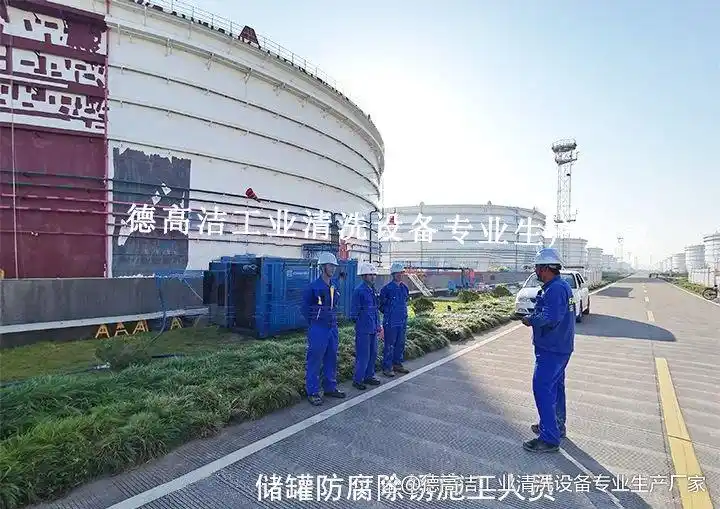
Rust removal determines the success or failure of anti-corrosion
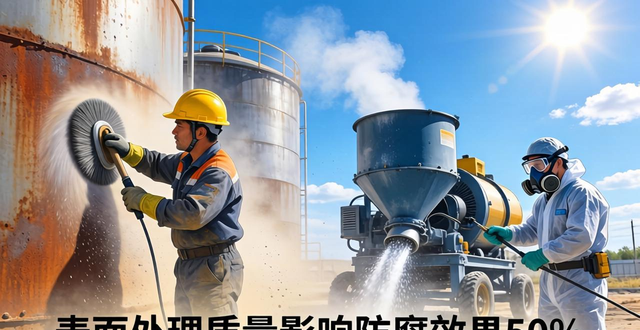
The quality of surface treatment accounts for up to 50% of the anti-corrosion effect. This data shows that if the rust removal work is not done well, no matter how good the paint is, it will have no effect. Traditional methods of rust removal include manual grinding and sandblasting. However, these methods are either inefficient, have a large amount of dust, and are extremely risky when working at high altitudes.
In recent years, ultra-high-pressure water jet rust removal technology has continued to increase in popularity by painting the inner and outer walls of large tanks for corrosion protection after riveting and welding. The principle is to pressurize ordinary water to a pressure of more than 2,500 bar; and then use the huge impact of this high-pressure water flow to achieve Now the rust and old paint layer are peeled off; this process will not produce dust, and the waste water and waste residue can be recycled; the rust removal grade can reach the SA2.5 standard for the selection and construction method of anti-corrosion coating for the outer wall of large storage tanks, which means that the metal surface will show a uniform metal color.
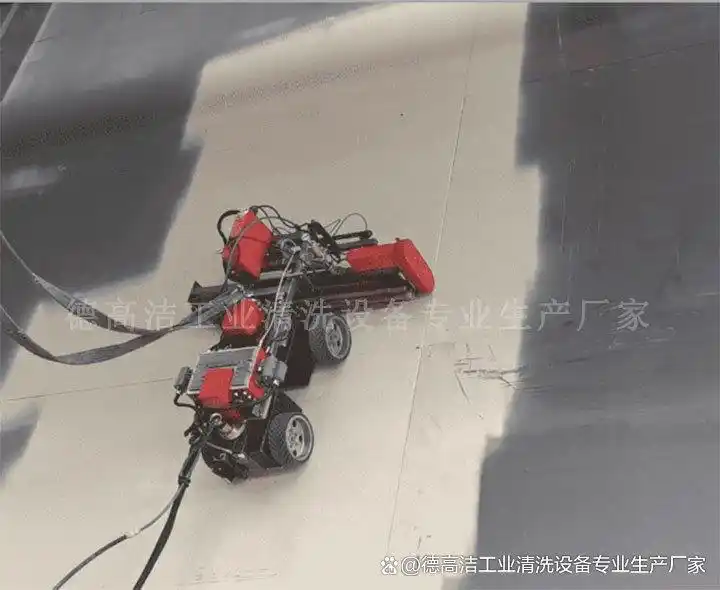
The MG280 rust removal robot, which integrates a walking mechanism, wall-mounted device, jet system and vacuum recovery system, can adsorb to the surface of the tank and walk automatically like a gecko. It can complete rust removal operations of 50 to 70 square meters per hour, and it can be removed and dried immediately without causing secondary rust return.
Spraying operations move towards the robot era
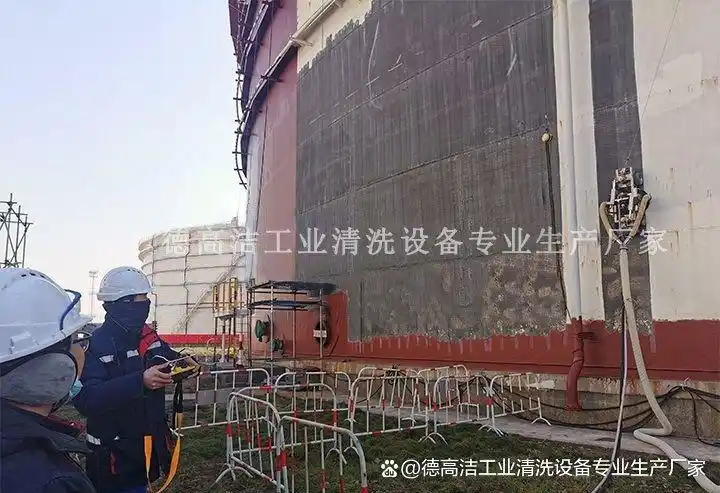
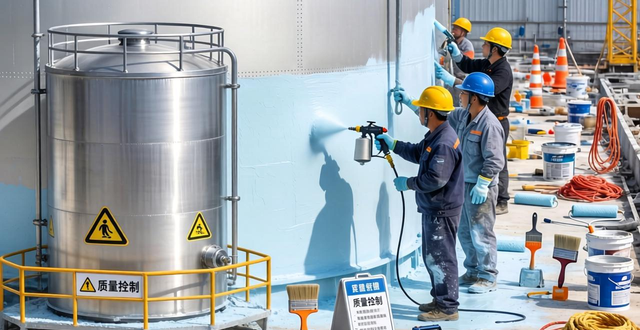
There are three shortcomings when manual hand-held spray guns are used at high altitudes. The construction period is relatively long, the spray thickness is uneven, and the health risks faced by spray painters are great. Especially on the curved surface of the tank and the welding seam position, manual spraying is difficult to ensure that the paint film thickness in every place meets the design requirements, and these relatively weak points are precisely where corrosion first begins.
When the paint wall-climbing robot is equipped with a spray gun, it can accurately control the spray angle and movement speed to ensure uniform coverage of the coating. A paint film thickness gauge can also be installed on the robot . After the large tank is riveted and welded, the inner and outer walls are spray-painted for anti -corrosion. The thickness can be detected while the spraying operation is being carried out. The data obtained from the detection will be transmitted back to the operating platform in real time. Once problems are discovered, adjustments can be made immediately.
A typical case is the Degojie painting robot, which can walk freely on the vertical wall of the tank and move freely on the horizontal surface. The operator performs remote control operations in a safe area, thus avoiding the risk of falling from high altitudes and staying away from organic volatiles in the paint, thus ensuring health and safety.
Quality control grasps three key points
In the weight of anti-corrosion effect, the quality of surface treatment accounts for 50%. This is the first step. After rust removal, the surface of the tank must reach the specified cleanliness and roughness. If there are any residual oil stains, rust spots, or old paint layers, the adhesion of the coating will decrease, and it will easily bubble or fall off later.
The paint film thickness is controlled according to the 90 – 10 principle, that is, at each point measured. 90% of the points must reach the design thickness, and the remaining 10% of points must also reach more than 90% of the design thickness. The local thickness should not exceed 200%. The inner and outer walls of large tanks should be spray-painted to prevent corrosion after riveting and welding . If they are too thin, the protection will not be enough. If they are too thick, they will easily crack.
Pre-coating is easily overlooked by many people, but it directly affects 30% of the anti-corrosion effect. Welds are most likely to accumulate corrosion, as are corners. Corrosion is also likely to accumulate at joints. During painting, these areas need to be brushed once and then sprayed as a whole to ensure that the protective capabilities of these weak points are not inferior to those of large areas.
Pay attention to these details during on-site construction
The coating weather conditions on the day of construction will directly affect the film quality. When the relative humidity exceeds 85%, or the tank surface temperature is within 3 degrees Celsius below the dew point temperature, it is not suitable for construction. Since epoxy coatings are relatively sensitive to temperature, their curing speed will slow down significantly when the temperature is below 5 degrees Celsius. In this case, heating measures need to be taken.
Before the paint is used, the proportioning and stirring operations must be carried out in strict accordance with the instructions given by the manufacturer. The curing time must be sufficient, but it must be used up within the applicable period. Parameters such as the pressure of the spray gun, the diameter of the nozzle, and the width of the spray width all need to be adjusted according to the conditions on site to ensure the atomization effect and prevent dry spraying or sagging.
For you, what difficult problems have you encountered during the construction process of the storage tank anti-corrosion project? Is it because the rust removal is not complete, or is it difficult to control the thickness of the paint film? Welcome to leave a message in the comment area to share your experience.





暂无评论内容