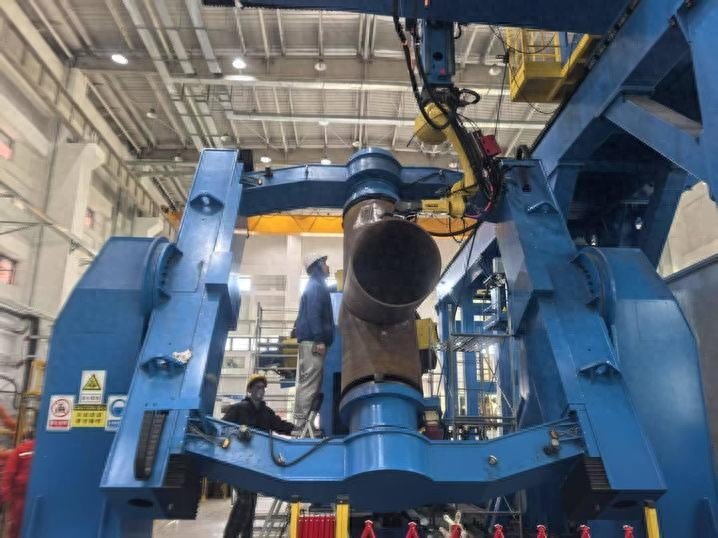


The world's first set! "Steel Tailor" robot brings offshore oil and gas platform construction into the intelligent era
What does the birth of "Steel Tailor" Ocean Blue mean? It means that in the construction of offshore oil and gas platforms, there are the most dangerous links, and there are also links that rely most on manual experience, and these links are being completely rewritten by China's independently developed intelligent equipment. Tianjin University has this technological breakthrough. What effect does this technological breakthrough bring? It not only reduces the risk of high-altitude welding to zero, but also increases the efficiency by 20%.
How difficult is the "skeleton" of offshore oil and gas platforms to weld?
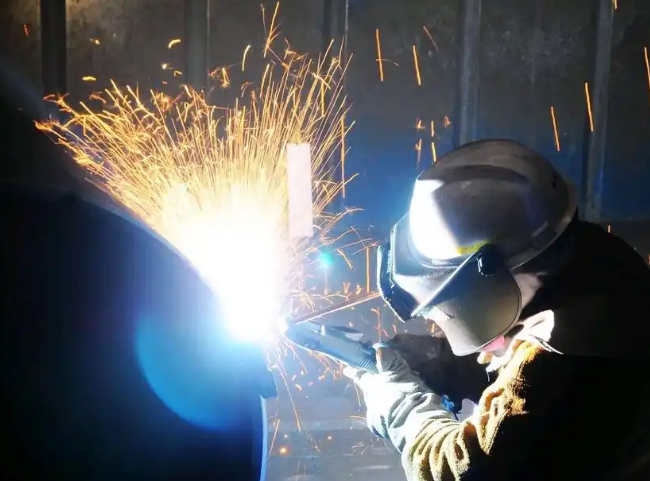
The support structure of offshore oil and gas platforms is the jacket, which is equivalent to the skeleton of the entire platform and is welded by hundreds of steel pipes of different thicknesses. The connection points of these steel pipes are called T-type, Y-type, K-type or X-type In the past few decades, the welding of these nodes was entirely manual. Welders had to work at altitudes of tens or even hundreds of meters. Faced with irregular welds and harsh sea conditions, they had to rely only on their eyesight and feel to complete the welding. A node weighs several to dozens of tons, and the shape of the weld is complex. Multi-layer and multi-pass welding must be completed continuously. A slight mistake may cause defects, affecting the service life of the platform for decades.

From high-altitude scaffolding to workshop assembly line
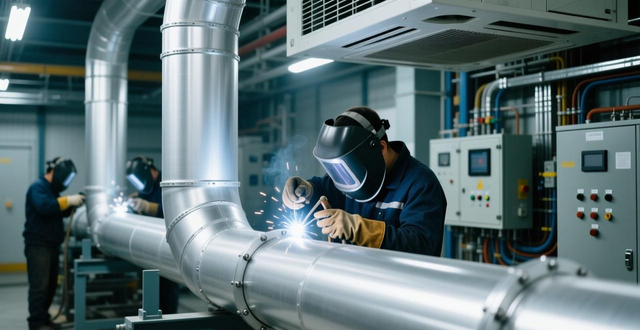
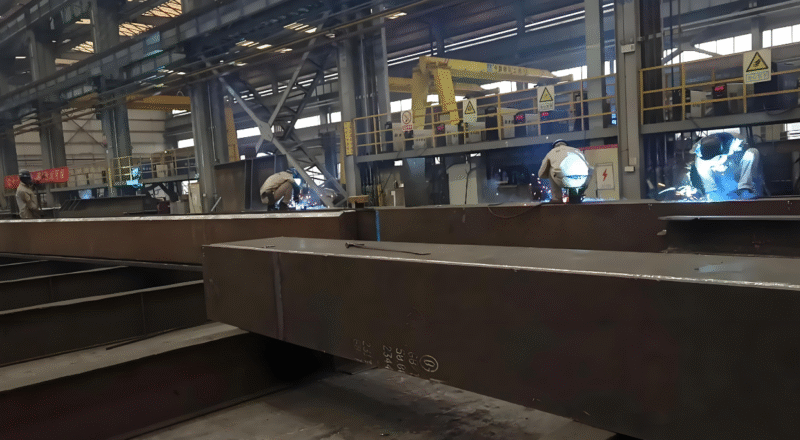
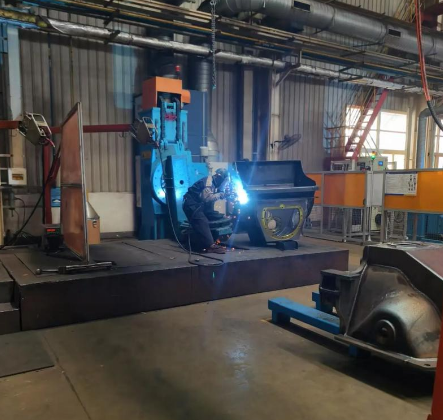
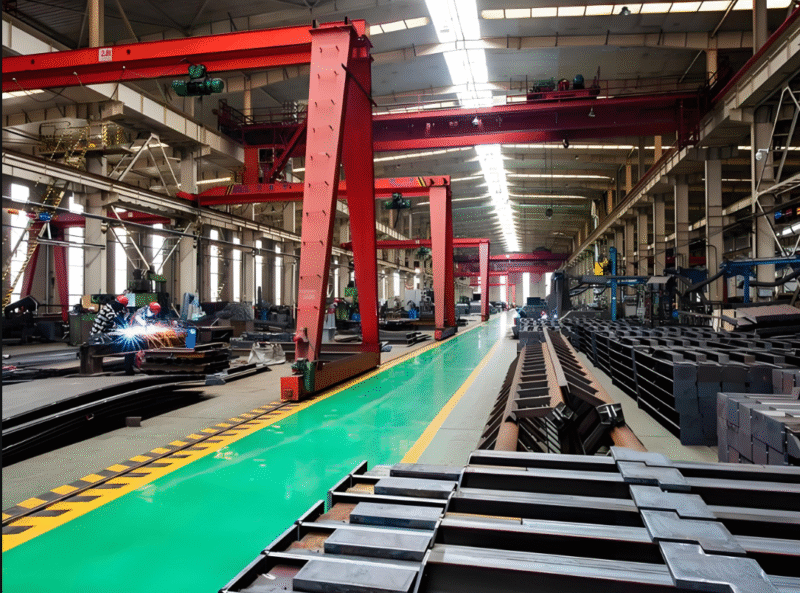
The set of intelligent equipment developed by Professor Xu Lianyong's team at the School of Materials Science and Engineering of Tianjin University has moved the welding tasks that used to be carried out in the open air to the factory workshop. The core of this sea-blue equipment is a high-precision robotic arm. This robotic arm is equipped with a visual measurement system and intelligent algorithms to automatically Automatically identify irregular welds and plan welding paths. The application of metal riveting in the manufacturing of robot skeletons in the laboratory of Tianjin University has completed multiple trial welds. On April 8, the team announced that the world's first set of T/K/Y tube node intelligent welding equipment will be officially delivered for engineering applications. This shows that the construction mode of offshore oil and gas platforms is changing from the traditional manual welding on site to the "assembly" model of prefabrication in the workshop and then final assembly on site.
Three core technological breakthroughs turn robots into masters
To achieve smart welding, the team successfully overcame three technical difficulties. The first difficulty is the design and accuracy compensation of the mechanical system. There is such a set of equipment that can process ultra-large pipe node components of more than 30 tons, and the compensation technology is used to ensure the welding accuracy. The second difficulty is the self-developed visual measurement system. This system enables the robot to accurately identify various irregular welds like the human eye, eliminating the need for manual pre-marking of weld bead positions. The third difficulty is the intelligent algorithm, which relies on the robot to plan the welding path on its own based on the actual shape of the weld seam, rather than mechanically executing a fixed program. The combination of these three technologies gives the robot the ability to flexibly respond to complex working conditions and has such capabilities.
Overcoming world-class problems: multi-layer and multi-pass adaptive welding
Taking all technical difficulties into consideration, the most difficult one to overcome is the adaptive intelligent welding of multi-layer and multi-pass welds with variable cross-sections and a spatial curve shape. This type of weld is not a simple straight line or regular curve, but as the number of welding layers increases and the number of passes increases, the shape of its cross section will continue to change, and it belongs to the category of spatial curves. In the past, in response to this situation, experienced welders could only rely on their own feel to make adjustments. With the help of algorithm innovation, Xu Lianyong's team has given the robot the ability to "adapt to changes". No matter how the weld seam changes, the system can adjust the welding parameters in real time to ensure that every layer and every weld joint can meet the quality standards. This breakthrough application of metal riveting welding in the manufacturing of robot skeletons has solved the problems that have long plagued the industry, making China stand at the forefront of the world in the field of intelligent welding.
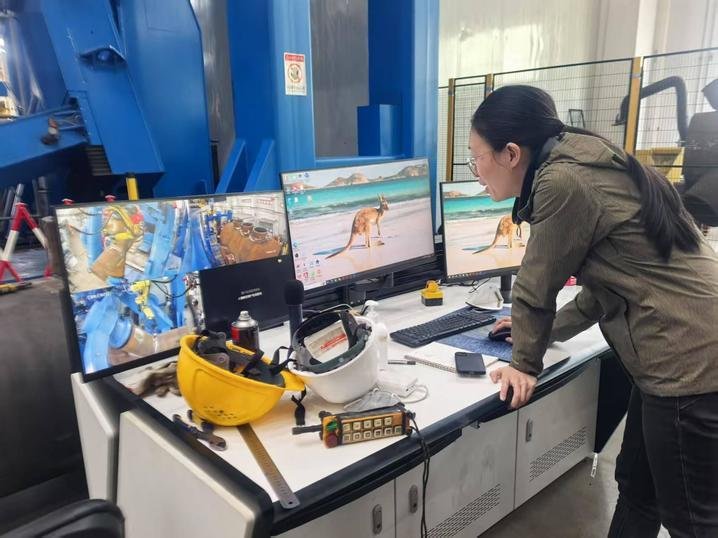
Efficiency and safety under real-time monitoring
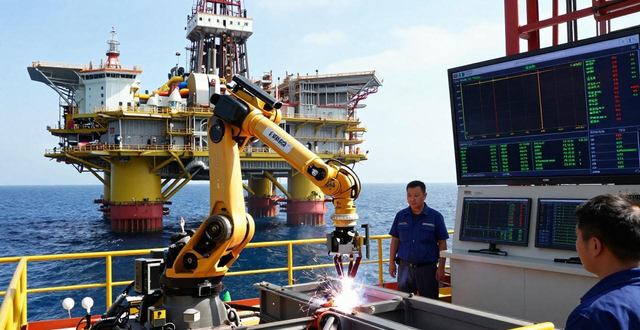
At the laboratory demonstration site, when the smart equipment is performing welding operations, various parameters such as current, voltage, welding speed, and temperature are displayed in real time on the nearby computer screen. Engineers can monitor the welding process at any time and implement manual intervention when necessary. Compared with traditional manual welding, this equipment increases efficiency by more than 20% and eliminates quality fluctuations. What’s more important is the world’s first set! The "Steel Tailor" robot brings offshore oil and gas platform construction into the intelligent era, completely eliminating the risks of high-altitude operations. The team explained that it is now possible to complete extremely difficult and complex node welding prefabrication in the workshop, and then assemble it in the open air like building blocks. In this way, the originally dangerous high-altitude work has become a safe level assembly.
From offshore oil and gas to more heavy equipment
The application scenarios of this set of intelligent welding equipment are not limited to offshore oil and gas platforms. In the field of ship manufacturing, it has promotion value. In the field of wind power installation, it also has promotion value. In the field of large bridges, it also has promotion value. In fields such as marine engineering that require a large amount of complex steel structure welding, the application of metal riveting in the manufacturing of robot skeletons still has promotion value. As the first set of equipment enters engineering applications, China's intelligence level in the field of heavy equipment manufacturing will further improve. Key processes that used to rely on manual experience and were limited by the operating environment are being replaced by autonomous and controllable intelligent equipment. This not only means that production efficiency will be improved and operational risks will be reduced, but also that core competitiveness in the high-end manufacturing field will be enhanced.
After reading this set of hard-core "steel tailoring" technologies, what unexpected application spaces do you think there are in fields such as shipbuilding and wind power installation? Welcome to share your views in the comment area.


暂无评论内容