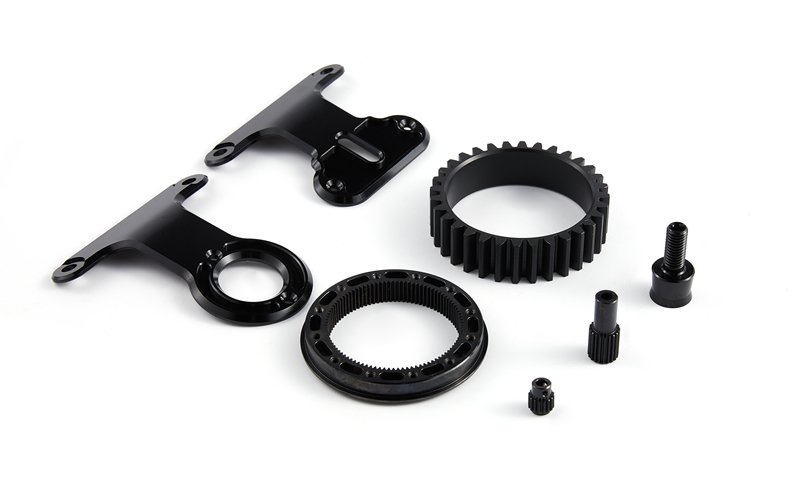


The importance of CNC turning and milling combined processing for precision parts processing manufacturers
The competition in the precision parts processing industry is highly intense. A large number of workshop-style CNC processing shops are making a strong impact at low prices, causing many companies of a certain scale to feel heavy pressure to survive. If there is no significant gap with them in terms of technology and processing capabilities, customer losses and corporate crises will follow. For those manufacturers trying to survive in the fiercely competitive environment, mastering CNC turning and milling composite processing technology is actually building a vital protective barrier for themselves.
Turning and milling are not just equipment upgrades
Many bosses think that purchasing a turn-milling machine tool means they have mastered this technology. However, after the equipment is purchased, it cannot show its true value. The key to turning-milling combined processing lies in process integration capabilities, not simply equipment accumulation. It requires technicians to be familiar with turning, understand milling, and also be familiar with programming and tool path optimization .
There is a medium-sized precision parts factory in Dongguan. In 2024, it spent 3 million to introduce two turning and milling composite equipment. However, half a year later, it was discovered that the improvement in efficiency was not very significant. Later, they realized that the problem lay with the craftsmen, so they re-established a technical team to conduct research specifically on composite processing technology. It was not until the following year that there was a significant breakthrough in the number of orders.
The efficiency revolution brought about by one-time card installation
![图片[1]-The Importance Of CNC Turning And Milling Combined Processing For Precision Parts Processing Manufacturers-Dalian Fuhong Machinery Co., Ltd](/wp-content/uploads/2026/03/1773432499555_0.jpg)
![图片[2]-The Importance Of CNC Turning And Milling Combined Processing For Precision Parts Processing Manufacturers-Dalian Fuhong Machinery Co., Ltd](/wp-content/uploads/2026/03/1773432499555_1.png)
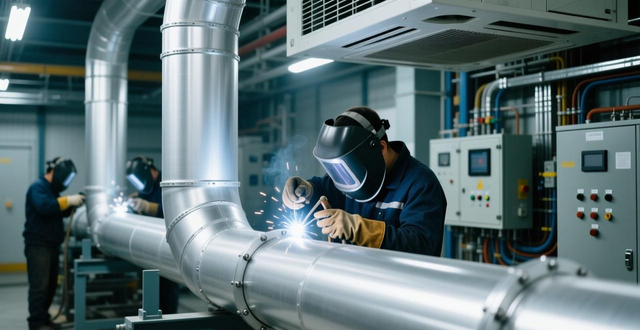
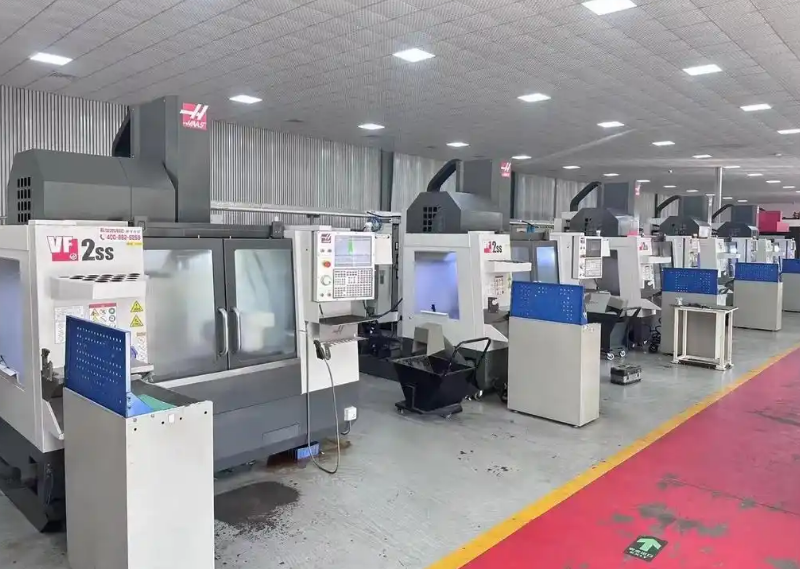
In traditional machining, a complex part often has to be transferred multiple times between lathes, milling machines and grinders. Each time it is loaded, it has to be corrected again, which consumes a huge amount of time. The most direct advantage of turning-milling combined processing is that it can complete the entire process flow of parts on one piece of equipment, without the need for repeated loading and unloading actions. The efficiency improvement brought about by such a change appears on a geometric level.
A certain supplier of medical parts in Shenzhen once compared the two processing methods. There was an orthopedic implant that originally used 4 pieces of equipment and 3 loading times. The total time required was almost 8 hours . Looking forward to the future of turn-milling combined processing . After turning and milling combined processing, all the processes were completed in one loading, and the time was shortened to 3.5 hours, and there was no need for intermediate transfers and waiting.
Precision control is more reliable in composite machining
The direct benefit of fewer clamping times is that the accuracy is more stable. Each clamping will cause positioning errors. Even the most precise fixture cannot achieve absolute coincidence. Turn-milling combined processing avoids multiple reference conversions, allowing all processing features to be completed during the same clamping period, and dimensional consistency is greatly improved.
In 2025, a manufacturer in Suzhou that is engaged in the production of aerospace parts received a batch of shell orders. This batch of orders has extremely high requirements for shape and position tolerances. With the help of turn-milling equipment and an online measurement system, this manufacturer implemented real-time detection of key dimensions during the processing process and was able to make timely compensation. In the end, the product's qualification rate increased from the original 82% to more than 96%.
Complex structural parts are no longer a technical barrier
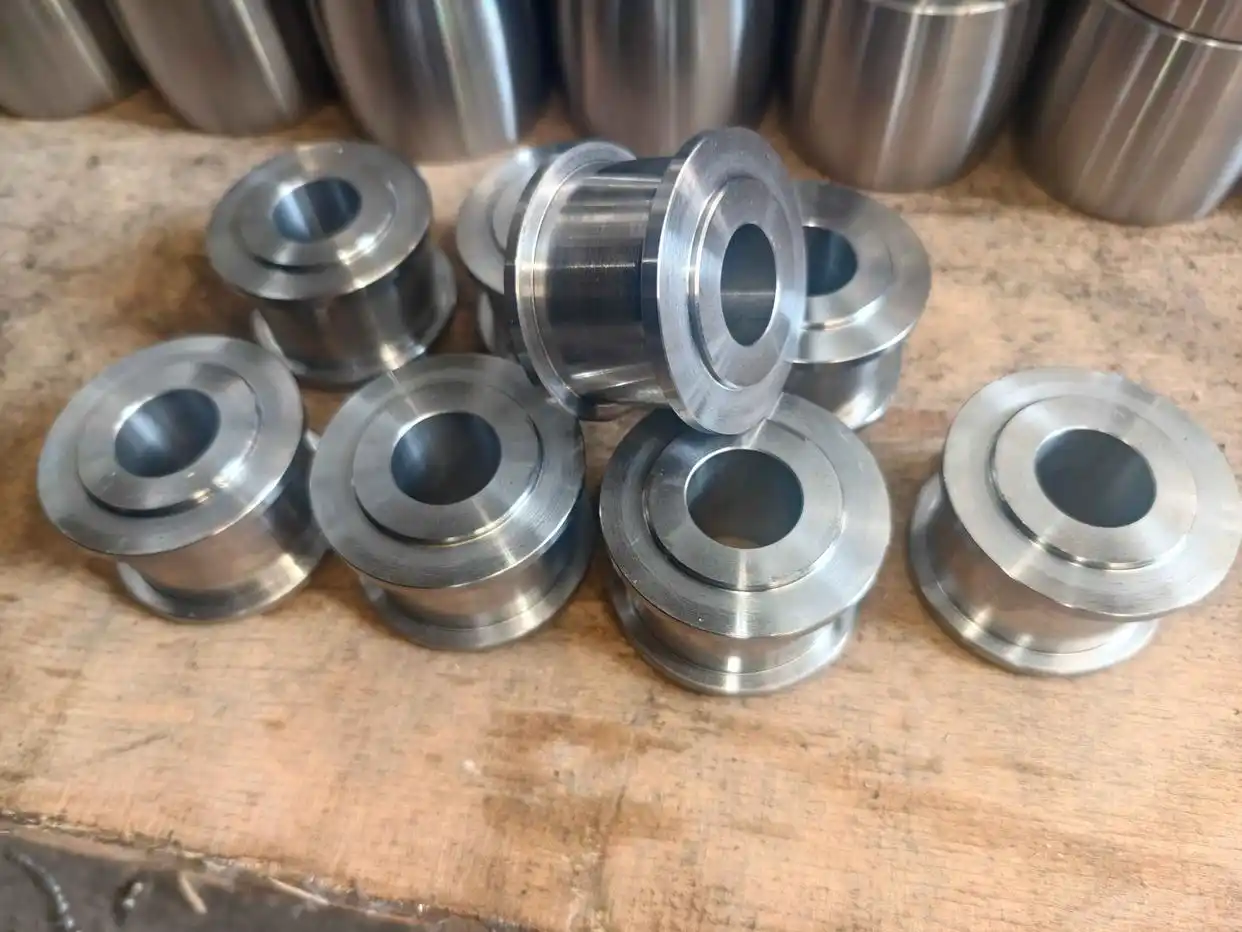
Product design is developing in the direction of becoming more and more lightweight and integrated, and the structure of precision parts is becoming more and more complex. Many parts have both high-precision surfaces of rotation and complex milling features, such as eccentric holes, inclined oil holes, special-shaped grooves, etc. Traditional equipment often has no way to deal with these features and can only choose to outsource or perform multiple installations.
A hydraulic parts company located in Zhejiang encountered such a problem. The customer proposed to process spiral grooves and multiple radial holes on a valve core at the same time. After using the five-axis turning and milling compound center programming to optimize it, they achieved all the features at once. Not only did they get the order, but they also entered the list of high-end hydraulic parts suppliers.
![图片[3]-The Importance Of CNC Turning And Milling Combined Processing For Precision Parts Processing Manufacturers-Dalian Fuhong Machinery Co., Ltd](/wp-content/uploads/2026/03/1773432499555_2.png)
The overall cost is actually lower than expected
Quite a few people are frightened by the high unit price of turning and milling composite equipment. An imported piece of this type of equipment often costs two to three million, or even more. However, if we calculate the total accounts, the reduction in the number of equipment, the savings on fixtures, the streamlining of personnel, and the reduction in the number of work-in-progress, these hidden costs accumulate, and the comprehensive cost of composite processing is more advantageous.
A factory in Foshan engaged in the production of communication parts has conducted calculations. When processing a base station radiator, it required 6 pieces of equipment and 4 operators. The workshop occupied an area of 60 square meters. After replacing with two turn-milling composite equipment, only one technician is responsible for taking care of the future of turn-milling composite processing . The workshop area has been reduced to 25 square meters, and the cost of a single product has been reduced by about 18%.
The key bargaining chip for differentiated competition
While many small workshops are still competing for the price of single-piece processing, manufacturers with turning and milling capabilities are already able to undertake orders for more valuable complex parts. This technical threshold naturally screens out low-end competitors, prompting companies to get rid of the dilemma of price wars and instead devote themselves to the competition of technology and solutions.
At the end of 2024, there was a centering machine processing factory in Dongguan. It relied on the turning and milling composite process to win a batch of precision shaft orders from Japanese customers. The unit price of the order was four times the unit price of ordinary parts. The owner of the processing plant said frankly that without those composite equipment and a team that understands the process, such an order would not even be qualified for a quotation.
When asked how far the company is from the technical threshold of turning-milling combined processing, what do you think? You are welcome to share your views in the comment area. If you think this article is helpful to your colleagues, please like it and share it so that more people can see it.




暂无评论内容