

What is riveting welding
When many people see the word riveting, they usually picture the scene of sparks flying in the factory in their minds, and then think that it is just nailing metals together. But to be precise, this is a technology that is closely related to the safety of buildings, plays a key role in the stability of bridges and even the ability of aircraft to fly in the sky. Its importance far exceeds your original imagination of it, and it is more important.
Definition and core principles
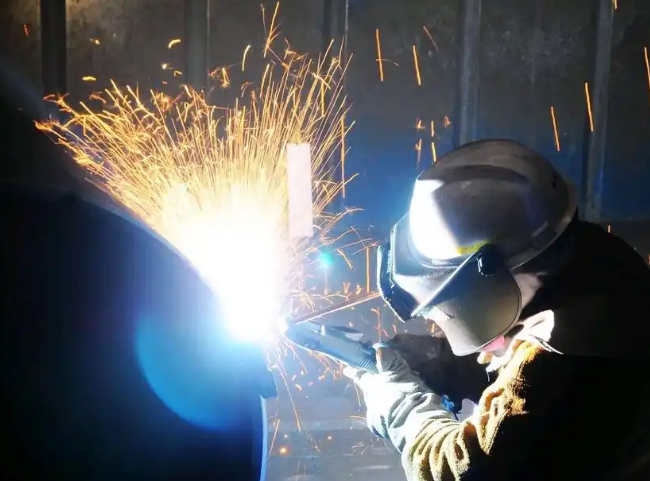
A technique that firmly combines metal parts is riveting. It often uses rivets and welding at the same time. To understand simply, rivets are used to penetrate and fix two metal plates like a stapler. Sometimes welding is also performed at the seams, thus forming a double guarantee. Yes, it is double insurance. It forms a double insurance.
This approach combines the advantages of mechanical connection with the advantages of metallurgical bonding. Rivets can provide reliable physical engagement and have an effective effect on resisting shear force. Welding will integrate the materials at the molecular level, which enhances the integrity. This combination is particularly suitable for complex and changing stress conditions.![图片[1]-What Is Riveting Welding-Dalian Fuhong Machinery Co., Ltd](https://endlfh.com/wp-content/uploads/2026/01/QQ20251002-200922.png)
Main application areas
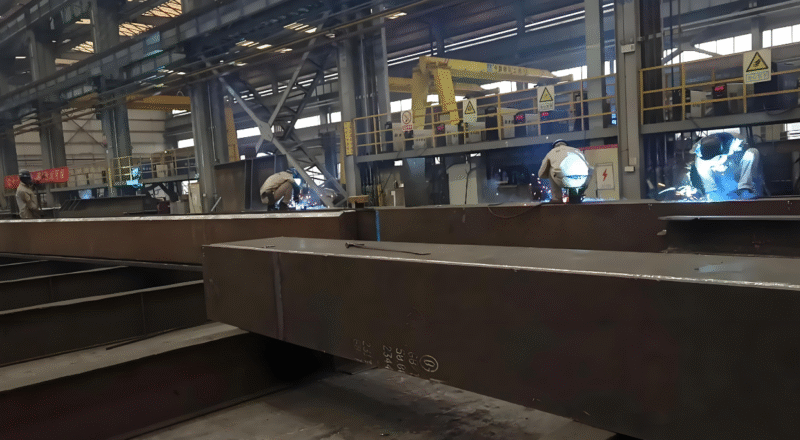
In heavy equipment manufacturing, this kind of technology can be encountered everywhere. For example, on the hull of a large cargo ship, as well as the steel frame riveting and welding processing order platform of an oil drilling platform, neat rows of rivets are often seen where the two are connected, and welds are added around them to ensure that the structure will not crack in the case of strong winds and waves.
![图片[2]-What Is Riveting Welding-Dalian Fuhong Machinery Co., Ltd](https://endlfh.com/wp-content/uploads/2025/11/QQ20251002-201135.png)
Many railway bridges and high-voltage transmission towers belong to the field of public facilities and they also rely on rivet welding. These structures are outdoors for a long time and have to withstand vibration, temperature changes, and wind and rain erosion. The durability of the connection is extremely high, and the fatigue resistance of the connection is also extremely strong. The rivet welding process can well meet these harsh conditions.
Significant advantages of the process
The biggest advantage is riveting with extraordinary reliability and load-bearing capacity. Once the rivets are riveted and welded together, the connection points will become extremely strong and can withstand huge vibrations and impact loads for a long time, and are not prone to sudden brittle fractures.
It has very good sealing properties. Properly processed riveted joints can effectively prevent gas or liquid from leaking out of the joints, which makes it very suitable for chemical containers, pipelines, aircraft fuselages and other occasions that have strict sealing requirements.
Challenges and limitations
Well, this process requires very high skills for the operators . Workers must accurately control the timing and strength of drilling, riveting and welding. No matter which link there is an error in the riveting and welding processing order platform , it is very likely to lead to hidden quality risks. Therefore, related technicians generally need to undergo a long period of professional training and qualification certification.
During riveting and welding, generally speaking, the noise is quite loud and smoke and dust are generated. Today’s factories must be equipped with complete ventilation, dust removal and hearing protection measures. For some ultra-thin or special alloy materials, riveting may not be the best choice.
Detailed explanation of process flow
![图片[3]-What Is Riveting Welding-Dalian Fuhong Machinery Co., Ltd](https://endlfh.com/wp-content/uploads/2026/01/QQ20251002-201423.png)
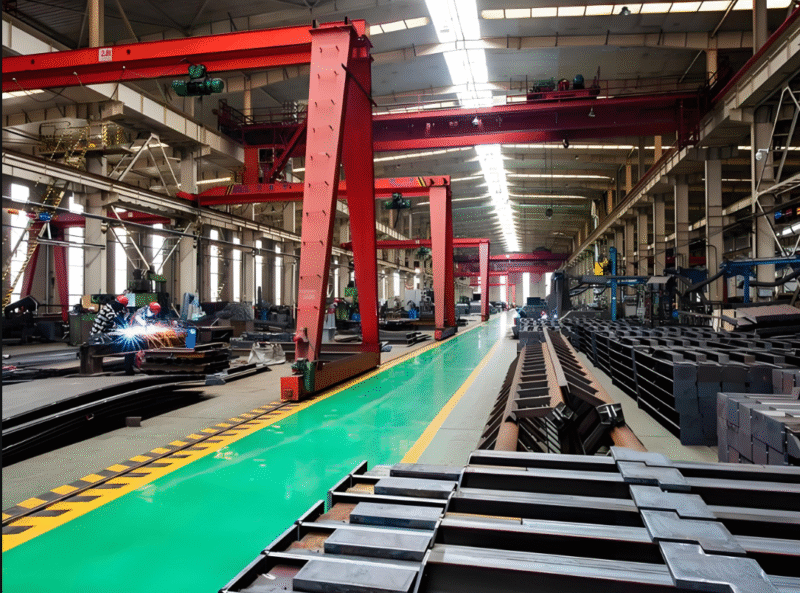
A complete riveting and welding operation begins with precise preparations. Workers must first mark the location of the drill holes on the metal plate according to the drawings, and then use a special drill machine to drill holes with precise dimensions. This is the key to ensuring that the rivets can pass through smoothly and fit tightly.
Insert a red-hot rivet or a room-temperature rivet into the hole, and use a pneumatic or hydraulic rivet gun to impact the tail of the rivet, causing it to deform and expand, forming a “head” on the other side to lock the plate. Finally, depending on the actual situation, arc welding or gas shielded welding is used to strengthen and strengthen the joints.
Future development trends
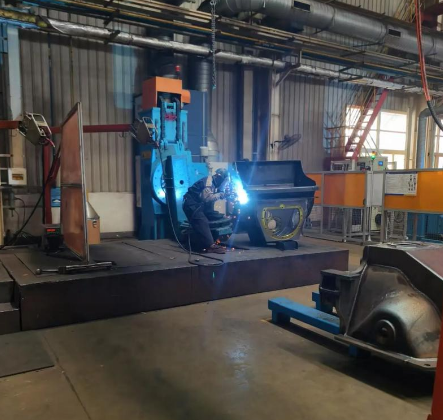
The continuous advancement of automation technology has made robot riveting and welding systems gradually popular. On the automobile manufacturing production line, robotic arms can accurately and efficiently complete riveting and welding work, greatly improving the consistency of production and reducing labor intensity. This is a key step for the industry to move towards smart manufacturing.
Process innovation is being driven by new materials. To connect dissimilar materials such as carbon fiber composites and aluminum alloys, engineers have developed new rivets and low-temperature welding technology. These innovations continue to broaden the application boundaries of rivet welding, allowing it to continue to be revitalized in modern industry.
After reading this, has your impression of riveting and welding changed? Are there any common facilities or items around you that you think may use this kind of “double insurance” connection technology? Feel free to share your findings in the comment area. If you find this article helpful, please give it a like and support.




暂无评论内容