CNC machiningMachining with CNC Boring Machines: Core Technology and Application Guide for Precision Manufacturing
In the wave of transformation of modern manufacturing to high precision and efficiency, theCNC machiningWith its automation and intelligence advantages, it has become a core process to support the development of high-end fields such as aerospace, automotive manufacturing and medical devices. AndCNC Boring Machine MachiningAs the CNC machining system for complex hole system, large workpiece key technology, but also to solve the traditional processing is difficult to break through the accuracy and efficiency bottleneck. In this paper, we will analyse the core value of CNC machining, CNC boring machine processing technology characteristics, as well as the two in the actual production of application scenarios for manufacturing enterprises to choose processing solutions to enhance the competitiveness of production to provide reference.
First, CNC machining: modern manufacturing “precision cornerstone”
1. What is CNC machining?
CNC Machining (CNC Machining) refers to the technology that drives the machine tool through the computer numerical control system (CNC system) to automatically complete the machining process of workpiece cutting, shaping, grinding and other machining processes in accordance with the preset procedures. Compared with traditional manual machining, it does not require manual real-time operation, but precisely controls parameters such as tool path, rotational speed, and feed through programming instructions, which fundamentally avoids human error in operation and realises “one-time programming, batch accurate production”.
2. Core advantages of CNC machining
Highly accurate and stable outputRepeatability: Repeat positioning accuracy of ±0.001mm, to meet the stringent tolerance requirements of precision parts (such as automotive engine spools, aerospace connectors), to solve the traditional machining of “inconsistent accuracy in the same batch” of the pain point.
High efficiency to reduce costs and increase efficiencyAutomated machining requires no human intervention, and a single machine can achieve 24-hour continuous production, increasing productivity by 3-5 times compared to traditional machine tools; at the same time, it reduces material wastage (scrap rate can be controlled within 5%) and lowers long-term production costs.
Highly flexible and adaptable to multiple categoriesThe machine is particularly suitable for small-lot, multi-variety customised production (e.g. medical device parts, industrial moulds), as the type of workpiece can be switched by modifying the program without frequent adjustments to the machine structure.
High safety for productionCNC system is equipped with overload protection and emergency stop functions to avoid safety accidents such as tool collision and workpiece dislodgement, which reduces the pressure of safety management in the workshop.
Second, CNC boring machine processing: complex workpiece “hole system processing experts”
1. Technical orientation of CNC boring machine processing
CNC boring machine processing is an important branch of CNC machining, specialising inComplex hole systems, large box-type workpieces, shaped structural partsThe machining requirements of the machine, through the boring tool rotary cutting and spindle precision feed, to achieve high-precision hole machining such as deep holes, step holes, threaded holes, as well as the milling of flat surfaces and inclined surfaces. Its core advantage lies in the fact that “it can guarantee the positional accuracy of holes while taking into account the machining uniformity of the overall structure of the workpiece”, making it an irreplaceable equipment for the machining of large equipment (such as machine tool beds and engine blocks).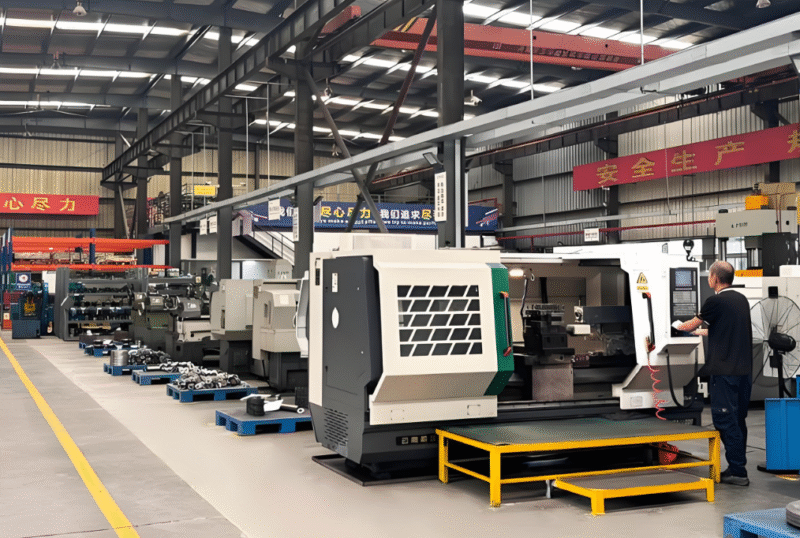
2. Key technical features of CNC boring machine processing
Leading accuracy in hole system machiningThe closed-loop servo control system is adopted, and the coaxiality and parallelism errors of the holes can be controlled within 0.005mm, solving the problem of “accumulation of deviation in multiple holes” of the traditional boring machine, and meeting the processing requirements of complex hole parts such as aero-engine magazines, hydraulic valve bodies, and so on.
High load capacity for large workpiecesCNC Boring Machines (especially floor-type CNC Boring Machines) with a table load of several tonnes can process large workpieces (e.g. chassis of construction machinery) with a length of more than 3 metres, and the workpieces do not need to be clamped frequently during the machining process, thus reducing the positioning errors.
Outstanding Composite Processing Capability: Modern CNC boring machine more integrated milling, drilling, tapping and other functions, can be a one-time completion of the workpiece “hole machining + plane milling + contour forming”, to avoid the loss of precision caused by the transit of multiple equipment, shorten the production cycle.
Intelligent function upgradeSome of the high-end CNC boring machines are equipped with probe inspection system, which can measure the workpiece processing size in real time and automatically compensate for the error; meanwhile, they support direct connection of CAD/CAM software, realising the seamless connection of “design drawings – processing procedures – production execution”.
III. CNC machining andCNC Boring Machine MachiningTypical application scenarios
The combination of the two not only covers the general machinery manufacturing, but also in the high-end field to show the irreplaceable value, the following is the core application scenario analysis:
Areas of application Core processing requirements CNC Machining Solutions Machining accuracy requirements
aerospace Complex structural parts made of difficult-to-machine materials such as titanium alloys and high-temperature alloys (e.g., aircraft landing gear, engine blade tongue and groove) CNC Boring Machine + 5-axis linkage technology for integrated machining of complex holes and spatial surfaces. Dimensional tolerance ±0.002mm, surface roughness Ra0.8μm
automobile manufacturing Batch hole machining of engine blocks and gearbox housings, and high-precision face milling of motor housings for new energy vehicles. CNC Boring Line (multiple machines) + automated loading and unloading system to meet mass production requirements. Hole coaxiality ≤ 0.01mm, flatness ≤ 0.005mm/m
medical equipment Curved surface moulding of artificial joints (made of titanium alloy), precision drilling of surgical instruments (e.g. orthopaedic drills) CNC machining (milling + drilling) + fine boring with CNC boring machine for biocompatibility and safety in use. Surface roughness Ra0.4μm, dimensional tolerance ±0.005mm
Mould Manufacturing Cavity milling and guide hole boring for large plastic moulds (e.g. car bumper moulds) CNC boring machine (large stroke table) + high speed milling function for shortening mould development cycle time Cavity size tolerance ±0.01mm, hole position accuracy ±0.005mm
Fourth, how to choose a reliable CNC machining and CNC boring machine processing service provider?
For manufacturing companies, the choice of a technically competent processing service provider is the key to guaranteeing product quality, focusing on the following four points:
Equipment and Technical Strength: Confirm whether the service provider is equipped with high-end CNC boring machines (e.g. Heidenhain from Germany, Fanuc system from Japan), five-axis machining centres and other equipment, as well as experience in machining difficult-to-machine materials (e.g. titanium alloys, stainless steel).
Quality Control System: Require quality certificates such as ISO9001, IATF16949 (automotive industry), etc., as well as knowledge of the availability of their testing equipment (e.g. CMMs, laser interferometers) to ensure that machining accuracy can be traced.
Cases and Word of MouthCheck the service provider’s past industry cases (e.g., whether it provides supporting processing for aerospace companies and automotive OEMs) and judge its service stability through customer evaluations, years of cooperation, and so on.
Customisation and responsivenessFor non-standard parts processing, you need to confirm whether the service provider has an independent programming team (which can quickly generate processing solutions based on drawings), and whether it can meet the delivery requirements of urgent orders (such as 72-hour rapid prototyping).
V. Conclusion: future trends in CNC machining technology
With the advancement of Industry 4.0CNC machiningIt is developing in the direction of “higher precision, smarter and greener” – the future CNC system will realise AI adaptive control (automatically adjusting cutting parameters according to the hardness of the material) to reduce tool loss; andCNC Boring Machine MachiningIt will further integrate digital twin technology to optimise machining paths and reduce trial and error costs through virtual simulation.
For manufacturing enterprises, mastering the core logic of CNC machining technology and choosing the appropriate machining solutions can not only enhance product competitiveness, but also take the lead in industrial upgrading. If you have CNC machining or CNC boring machine machining needs, welcome to contact us, we will provide from drawing analysis, process design to mass production of the whole process solutions to help your products to achieve “double breakthroughs in precision and efficiency”.
Blog
-
CNC-Bearbeitung und CNC-Bohrwerksbearbeitung: Kerntechnologie und Anwendungsleitfaden für die Präzisionsfertigung (Wie wählt man einen zuverlässigen Dienstleister für die CNC-Bearbeitung und CNC-Bohrwerksbearbeitung?)
-
Der vollständige Leitfaden für Bearbeitungsanlagen und Drehbänke: Prozess-, Auswahl- und Kostenanalyse (Kernkonzeptanalyse: Bearbeitungsanlagen und Drehbänke)
machine shopA comprehensive guide to machining on lathes: Processes, options and costs.
Einführung
In today’s manufacturing industry, machining plant as the core link of the industrial chain, its technology and ability is directly related to the quality and performance of various products. Among them, lathe machining, as a basic and crucial metal forming process, is a key indicator to measure the technical level of a machining plant. Whether you are a buyer looking for outsourcing services, or an engineer looking for an in-depth understanding of the industry, it is critical to understand the core capabilities of a machining plant and the details of the lathe machining process. This article will provide you with a comprehensive analysis and practical selection guide.I. Analysis of core concepts: machining plants and lathe processing
A professional machine shop usually integrates a series of capabilities such as design, programming, production and quality control, and is capable of precision machining of metals, plastics and other materials using a variety of machine tools and equipment according to the customer’s drawings or needs, to manufacture parts or products that meet the requirements.Lathe machining is one of the most common and fundamental processes in machining. It mainly refers to the process of cutting the surface of a rotating body on a lathe, using the relative motion of workpiece rotation and tool movement, so as to achieve a predetermined shape, size and surface accuracy. The modern sense of lathe machining mostly refers to CNC lathe machining, i.e., automated machining with high precision and efficiency through computer numerical control (CNC) technology.
Second, the main process flow of lathe processing
A complete lathe machining process consists of multiple precision steps, each of which directly affects the quality of the final product.Drawing review and process design: Engineers analyse in detail the 2D/3D drawings provided by the customer to determine the machining plan, tool path and cutting parameters.
Programming and simulation: CAD/CAM software is used to convert design drawings into G-code recognisable by the CNC machine and to simulate machining paths to avoid errors.
Material preparation and clamping: The suitable material (e.g. stainless steel) is prepared according to the requirements and is accurately positioned and clamped on the machine.
Roughing and Finishing: CNC lathes start with a roughing process for quick removal of allowances, followed by a precision finishing process to ensure the final dimensions and surface finish of the part.
Online Inspection and Compensation: During machining or after stage completion, online measurement may be carried out using probes and other equipment, and tool compensation is carried out based on the results to ensure accuracy.
Lower lathe post-processing: After parts are machined, subsequent processing such as deburring and cleaning may be required.
Final Quality Inspection: Use CMM, calipers, micrometers and other precision gauges to conduct full-size inspection of the finished product to ensure compliance with the drawings.
Three,Technology for lathe machiningAdvantages and areas of application
The lathe machining capabilities of a professional machine shop offer multiple significant advantages.![图片[1]-机械加工厂与车床加工全方位指南:工艺、选择与成本解析(核心概念解析:机械加工厂与车床加工)-大连富泓机械有限公司](https://cndlfh.com/wp-content/uploads/2025/06/9-800x538.png)
Zentrale Stärken
High precision and consistency: CNC lathe machining is able to achieve micron-level (≤0.005mm) repeatable positioning accuracy through programme control, which is very suitable for the production of precision parts with strict tolerance requirements.High efficiency and low cost: Compared with the traditional manual lathe, CNC lathe can run continuously and automatically for a long time once the programme is set up, which greatly improves the production efficiency and is especially suitable for batch orders, which can effectively reduce the cost of each piece.
Powerful ability to process complex shapes: through the programming of CNC system, modern lathe can easily complete the processing of ellipse, parabola and other complex surfaces, which is difficult to achieve by traditional manual lathe.
High production flexibility: when changing the machined parts, usually only need to change the machining programme can be, so that the machining plant can quickly respond to changes in market demand, to adapt to small batch diversified production.
Hauptanwendungsbereiche
Automotive industry: engine parts, drive shafts, brake system parts, etc.Aerospace: Aircraft landing gear components, engine blades, avionics equipment shells and other high-performance requirements of precision parts.
Energy equipment: wind power bearing housings, hydraulic valve bodies, pump housings, turbine blades, etc.
General mechanical equipment: various shafts, bushings, flanges, threaded fittings, etc.
Electronic communications: precision connectors, heat sinks, mould inserts, etc.
IV. A practical guide to choosing a professional machine shop
In the face of the many machining factories on the market, how to screen their professionalism and make the right choice? Please focus on the following key points:Assessment of technical equipment
Examine whether the factory has advanced CNC lathes, machining centres and other core equipment.
Find out if their equipment has a mill-turn function, which enables more complex processes to be completed in a single clamping, ensuring accuracy.
Quality Assurance System
Confirm that the factory has passed the international quality management system certification such as ISO9001.
Understand its testing capabilities, whether it is equipped with three coordinate measuring machine, optical projector, surface roughness meter and other precision measuring equipment.
Engineering team experience
Evaluate the experience of their technical team, especially programming and process engineers, which is directly related to the ability to solve complex machining challenges and optimise costs.
Check out their success stories in your industry or with similar products.
Integrated service capacity
In addition to lathe machining, excellent factories can also provide multi-process integration services such as milling machine machining and grinding machine machining, providing you with one-stop solutions.
![图片[2]-机械加工厂与车床加工全方位指南:工艺、选择与成本解析(核心概念解析:机械加工厂与车床加工)-大连富泓机械有限公司](https://cndlfh.com/wp-content/uploads/2025/05/4-3-555x800.png)
The table below summarises the core elements to look for when choosing a machine shop:
Dimensions Key Indicators Mandatory Items and Potential Problems
Technical equipment Equipment brand, degree of newness, degree of automation CNC system model, whether there is a combination of turning and milling, robotic loading and unloading
Processes and qualifications Quality management system certification, process document integrity ISO certificate, process cards, operating instructions
Quality control Inspection equipment configuration, pass rate control standards Coordinate report, the first piece of inspection records, final inspection standards for finished products
Integrated services Design support, on-time delivery, rapid response capability Provide DFM (Design for Manufacturing) analysis, production schedule visibility
V. Frequently Asked Questions (FAQ) about Machining Plants and Lathe Processing
Q1: What is the main difference between CNC lathe machining and traditional manual lathe machining?
A: The main difference lies in the method of control and the degree of automation. While traditional lathes rely on the skill and experience of the operator for manual control, CNC lathes are automatically executed through pre-programmed routines, providing significant advantages in terms of machining accuracy, efficiency consistency, and the ability to process complex parts.Q2: What factors affect the final cost of a lathe-machined part?
A: The main factors include: type and amount of material, part structure and accuracy requirements (the tighter the tolerance, the higher the cost), order batch size, surface treatment requirements, and the urgency of the machining cycle.Q3: How can I initially judge whether the quality of lathe machining of a machine shop is reliable?
A: We can make preliminary judgement by the following points: communication professionalism – whether we can understand your drawings quickly and provide reasonable suggestions; sample quality – ask for samples for size and appearance checking; factory visit – to observe whether the production site is neat and orderly and how well the equipment is maintained. -Observe whether the production site is neat and orderly, and how to maintain the equipment.Q4: Can a machine shop undertake R&D projects for small quantities and multiple varieties?
A: Absolutely. The flexible production characteristics of modern machining factories, especially those that specialise in CNC lathe machining, are ideal for taking on small-lot, multi-variety R&D sampling or trial orders. The key is to communicate clearly with the factory about your needs and understand that the cost per piece for small orders may be slightly higher than for large production runs.Schlussbemerkungen
Choosing a skilled and well-managed machine shop and taking full advantage of its lathe machining capabilities is key to ensuring the success of your project in terms of quality, cost and delivery. We hope that this guide will help you establish a clear understanding of these two core concepts and select the ideal partner for subsequent co-operation.Do you have specific lathe machining needs? Or what challenges have you encountered in previous collaborations? Feel free to share your insights and questions in the comments section and we’ll discuss it together.
-
Innovative Anwendungen des Auflösungsverfahrens in der Schweißtechnik: Grundlagen, Vorteile und Zukunftsperspektiven (Überlegungen zur Auswahl eines geeigneten Auflösungsschweißverfahrens)
Dissolution processInnovative applications in welding technology: principles, advantages and future perspectives
In modern industry, the development of welding technology is evolving towards high precision and low heat impact, and the dissolution process, as an advanced joining technology, is playing an important role in this evolution.
Welding as the cornerstone of modern manufacturing, its technical level directly affects product quality and performance. Among the many welding methods, the welding technology related to the dissolution process shows significant advantages in solving the welding problems of special materials through a unique connection mechanism.
In this article, we will analyse the application of the dissolution process in the field of welding to help you fully understand the principles, characteristics and practical applications of this advanced technology.
I. Dissolution processgelötetanalysis of the core concepts of
Dissolution process welding is a general term for a class of welding methods that utilise the intermediate layer of material to form a joint by mutual dissolution and diffusion with the base material. It achieves the joining of materials through a controlled physico-chemical process rather than the traditional method of complete melting and re-solidification.
Main types of technology
![图片[1]-溶解工艺在焊接技术中的创新应用:原理、优势与未来展望(选择合适溶解焊接工艺的考量因素)-大连富泓机械有限公司](https://cndlfh.com/wp-content/uploads/2025/06/QQ20250627-201220-2-800x605.png)
Dissolution-Diffusion Welding: Steel materials are prone to hard phases and cracks under fusion welding and fast-cooling conditions, and dissolution-diffusion welding as a non-melting joining method for base materials is conducive to solving this problem-1. This process achieves interdiffusion of interfacial atoms through the process of dissolution-diffusion of a liquid film at the appropriate temperatures (e.g., 700-800°C) to form a dense joining layer-6.
Transitional liquid-phase diffusion welding: Commonly used for joining dissimilar materials, e.g. aluminium matrix composites to mild steel. The process uses copper foils, etc., as an intermediate layer, which are held at a specific temperature (e.g., 590°C) to achieve a reliable connection through liquid phase formation and isothermal solidification processes-7.
Low-temperature penetration welding: mainly for the welding of metals made of aluminium, using low-temperature welding rods made of aluminium, silver and cadmium, the welding process can be completed at a relatively low temperature of 580 ℃. The surface of this process is particularly smooth after welding, leaving no traces, and does not require mechanical treatment -5.
II. Main process of dissolution welding
A complete dissolution process welding procedure consists of several precise steps:
1. Surface pre-treatment
The weld is first decontaminated to completely remove metal oxides and oil impurities. This step is essential to ensure the effectiveness of dissolution and diffusion and has a direct impact on the quality of the weld-5.
2. Intermediate material applications
Depending on the process requirements, it may be necessary:
Flux-5 for application
Addition of nickel-based alloy transition layer-2
Laying of interlayer materials such as copper foil – 7
3. Temperature control and welding
Precise control of the spray melting temperature is a key process parameter. It has been shown that in the dissolution-diffusion welding of steel materials, the spray melting temperature (700-800°C) corresponding to the static mirror-like liquid film state can optimise the process performance and weld zone performance-1.
4. Insulation and diffusion
At this stage, interfacial atomic interdiffusion is intensified and the thickness of the interfacial diffusion bonding layer increases. As in transition liquid-phase diffusion welding, a holding time of 30 minutes to 2 hours at a specific temperature (e.g., 590°C) is required to ensure adequate diffusion and reaction-7.
5. Post-welding treatment
Cool naturally to room temperature
Checking the quality of welding
Surface treatment where necessary
III. Key advantages of dissolution welding technology
Dissolution process welding offers multiple advantages over conventional welding techniques:
Small heat-affected zone: The connection is realised at a relatively low temperature, which significantly reduces the heat-affected zone and avoids damage to the properties of the base material-4
High joint strength: the metallurgical bond formed by interdiffusion between atoms at the interface gives the joint excellent mechanical properties-1
Suitable for dissimilar materials: enables the joining of dissimilar materials that are difficult to achieve with conventional welding, e.g. aluminium matrix composites with mild steel-7
Low distortion and low residual stresses: the low-temperature process characteristics lead to a significant reduction in weld distortion and residual stresses.
Good surface quality: especially low-temperature penetration welding, smooth surface after welding, no need for mechanical reprocessing – 5
IV. Application areas of dissolution welding technology
1. Steel material connectionsDissolution Diffusion Welding TechnologyIt is particularly suitable for joining steel materials, and can effectively avoid hard phases and cracks-1. The technology has been successfully applied to weld repair of medium and large cast iron parts, through the combination of micro-alloyed cast iron wires without preheating gas welding, to achieve efficient, energy-saving, high-performance welding repair-2.
![图片[2]-溶解工艺在焊接技术中的创新应用:原理、优势与未来展望(选择合适溶解焊接工艺的考量因素)-大连富泓机械有限公司](https://cndlfh.com/wp-content/uploads/2025/10/QQ20250829-200957.png)
2. Aluminium and aluminium alloy welding
The low-temperature penetration welding process is mainly aimed at welding aluminium metal, using special low-temperature welding rods (which can be dissolved at 580°C) to make the welding process safer and more efficient -5.
3. Dissimilar material connections
Transitional liquid-phase diffusion welding shows unique value in joining aluminium matrix composites with dissimilar materials such as mild steel, where differences in physicochemical properties between materials are addressed by the design of intermediate layers-7.
4. High-end manufacturing
In high-end manufacturing areas such as semiconductors and biomedicine, autosoluble welding technology can be used to connect clean fluid piping to meet the stringent requirements of “nanoscale cleanliness” and “aseptic transport”-4.
V. Considerations for selecting a suitable dissolution welding process
The table below summarises the core elements to look at when selecting a dissolution welding process:
Consideration Dimension Key Indicators Applicable Scenarios
Material type Steel, aluminium alloys, composite materials, etc. Dissolution diffusion welding is suitable for steel materials; low-temperature penetration welding is suitable for aluminium alloys; transition liquid-phase diffusion welding is suitable for dissimilar materials.
Workpiece size Large, medium and small parts Medium and large cast iron parts can be welded with micro-alloyed wires without preheating gas welding process-2
Performance Requirements Strength, Sealability, Appearance Dissolution Diffusion Welding for high strength requirements; Low Temperature Penetration Welding for high appearance requirements.
Production conditions Equipment capacity, environmental requirements Clean environment can choose autolysis welding; general environment can choose low temperature penetration welding.
Cost budget Equipment investment, operating costs Low-temperature penetration welding requires low heat source, safe to use, lower cost-5
VI. Frequently Asked Questions (FAQ) on Dissolution Process Welding
Q1: What is the main difference between dissolution diffusion welding and conventional fusion welding?A: The main difference is the joining mechanism. Dissolution-diffusion welding joins by interfacial atomic interdiffusion without melting the base metal, whereas conventional fusion welding melts the base metal to form the weld. This difference results in a smaller heat-affected zone and better joint performance in dissolution-diffusion welding-1.
Q2: What factors affect the quality of the dissolution welding process?
A: The main factors include: quality of surface pretreatment, precision of temperature control, holding time, choice of intermediate layer material and protective atmosphere.
Q3: What are the advantages of using solution welding for aluminium parts?
A: Aluminium material is welded by low-temperature penetration welding, which has the advantages of simple process and easy operation, using low-temperature welding rods when welding, low requirements for heat source, safe to use, the biggest advantage is that the surface is particularly smooth after welding, leaving no traces, and does not require mechanical treatment -5.
Q4: Can dissolution welding technology be used to repair large components?
A: Yes. For example, medium- and large-sized cast iron parts can be repaired using a process that combines dissolved diffusion welding technology with the non-preheated gas welding of microalloyed cast iron wires to achieve highly efficient, energy-saving, high-performance weld repairs, obtaining welded patches with no white gouges or cracks, good colour consistency and excellent machinability – 2.
Schlussbemerkungen
As an important technological innovation in the field of welding, dissolution process welding, with its advantages of low heat input, high connection quality and wide material adaptability, has shown great potential in solving special material welding problems. With the continuous improvement of welding quality requirements in high-end manufacturing industry, dissolution welding technology is expected to be popularised and applied in more industrial fields.
Do you have a specific welding challenge to solve? Or have you encountered other confusion when selecting a welding process? Feel free to share your needs and insights in the comments section and we will be happy to provide you with professional advice.
-
Der ultimative Leitfaden für die Stahlverarbeitung und -bearbeitung: Eine vollständige Analyse von Prozessen, Anwendungen und Anlagenauswahl (Kernkonzeptanalyse: Stahlverarbeitung und -herstellung)
Der ultimative Leitfaden für die Verarbeitung und Fertigung von Baustahl: Eine vollständige Analyse von Verfahren, Anwendungen und Anlagenauswahl
Einführung
Strukturelle Stahlkonstruktionzusammen mitHerstellung von StahlkonstruktionenDer Stahlbau ist ein zentraler Aspekt des modernen Bau- und Ingenieurwesens und bildet das Gerüst für alle Arten von Gebäuden, von Wolkenkratzern bis hin zu großen Infrastrukturen. Angesichts der steigenden Anforderungen an Qualität, Effizienz und Sicherheit ist ein tiefgreifendes Verständnis des Stahlbauprozesses vom Rohmaterial bis zum fertigen Produkt und die Auswahl eines professionellen Partners für den Projekterfolg von entscheidender Bedeutung. Dieser Artikel soll Ihnen einen umfassenden Interpretations- und Auswahlleitfaden für die Branche an die Hand geben.
I. Analyse des Kernkonzepts: Stahlverarbeitung und -herstellung
Kurz und bündig.Strukturelle StahlkonstruktionDabei geht es in der Regel um das Schneiden, Schweißen und Bohren von Stahl, um die erforderlichen Komponenten gemäß den Konstruktionszeichnungen herzustellen. WährendHerstellung von StahlkonstruktionenDabei handelt es sich um ein umfassenderes Konzept, das eine Reihe von Prozessen von der Rohstoffbeschaffung über die vertiefte Konstruktion, Verarbeitung und Produktion bis hin zur Oberflächenbehandlung, Qualitätsprüfung und sogar Vormontage vor der Auslieferung umfasst.
Eine typischeHerstellung von StahlkonstruktionenDer Prozess besteht aus den folgenden Präzisionssegmenten:
-
Intensive Gestaltung und Detaillierung: Auf der Grundlage von Architekturzeichnungen werden die Bauteile mit spezieller Software wie Tekla und Xsteel vertieft, um genaue Bearbeitungszeichnungen zu erstellen.
-
Vorbereitung und Korrektur von Rohstoffen: Beschaffung von konformem Stahl (z.B. Q235B, Q345B) und Richten, um die Ebenheit des Materials zu gewährleisten.
-
Musterfreigabe und -führung: 1:1 Projektion der Abmessungen und Formen aus den Konstruktionszeichnungen auf das Rohmaterial.
-
Schneiden: CNC-Brenn-/Plasmaschneiden, Laserschneiden oder Sägen werden eingesetzt, um Stahl in die gewünschte Form zu bringen.
-
Umformen und Kantenbearbeiten: Umformung von Bauteilen durch Biegen, Walzen usw. und Bearbeitung von Schweißfasen.
-
Montage und Nietverfahren: Präzise Vormontage von mehreren Teilen durch Heftschweißen, Nieten oder Verschrauben.
-
gelötet: Schweißen der Karosserie durch geprüfte Schweißer mit Unterpulverschweißen, Schutzgasschweißen und anderen Verfahren.
-
Kieferorthopädie und plastische Chirurgie: Beseitigung von Verformungen und Spannungen, die durch den Schweißprozess entstehen.
-
Rostentfernung und Anstrich: Kugelstrahlen/Sandstrahlen zur Entfernung von Rost und Auftragen von Rostschutz- und Feuerschutzfarbe nach Bedarf.
-
Vormontage und Inspektion: Werkseitige Vormontage komplexer Bauteile und zerstörungsfreie Prüfung mittels Ultraschall-Fehlererkennung und anderer Techniken.
-
Kennzeichnung und Versand: Abschließende Kennzeichnung, Verpackung und Versand zur Baustelle.
II. Kernprozess der Stahlverarbeitung
Strukturelle StahlkonstruktionseinHerstellung von StahlkonstruktionenSie ist das Kernstück des Prozesses, und ihre Genauigkeit entscheidet direkt über die Qualität des Endprodukts.
-
Schneidevorgang: ModernStrukturelle Stahlkonstruktionweit verbreitetCNC-SchneidenTechnologien wie CNC-Plasmaschneiden und CNC-Brennschneiden, die hohe Präzision und Effizienz garantieren. Für höhere Präzisionsanforderungen und dickere Bleche ist dieLaserschneidenwobei in bestimmten Bereichen auch das Wasserstrahlschneiden eingesetzt wird.
-
Verbindungsprozess: Schweißen und Verschrauben sind die wichtigsten Verbindungsarten. Beim Schweißen.Automatisches UnterpulverschweißenWeit verbreitet in langen Schweißnähten aufgrund seiner hohen Qualität und Effizienz, während dieSchutzgasschweißenEs ist besser geeignet für Installationen vor Ort und an komplexen Standorten. Für einige spezifische Anwendungen ist dieNietschweißenEs werden auch Verfahren eingesetzt, um bestimmte Anforderungen an die Festigkeit oder Vibrationsbeständigkeit zu erfüllen.
-
Formgebungsverfahren: Mit Hilfe von Anlagen wie Biegemaschinen, Blechwalzmaschinen usw. werden Stahlbleche zu den gewünschten Bögen oder Winkeln verarbeitet, die in derHerstellung von StahlkonstruktionenDie Leitungen, Behälter und Gebäudeoberflächen sind von entscheidender Bedeutung.
![图片[1]-钢结构加工与制造终极指南:工艺、应用与选厂全解析(核心概念解析:钢结构加工与制造)-大连富泓机械有限公司](https://cndlfh.com/wp-content/uploads/2025/09/QQ20250927-182317-800x593.png)
III. Technische Vorteile und Anwendungsbereiche des Stahlbaus
Herstellung von StahlkonstruktionenDas Produkt, das zum Rückgrat der modernen Technik geworden ist, beruht auf einer Reihe von unersetzlichen Vorteilen.
Zentrale Stärken
-
Hohe Festigkeit und geringes GewichtDurch die hohe Festigkeit des Stahls ist der Querschnitt der Stahlkonstruktionskomponenten klein, wodurch das strukturelle Eigengewicht wirksam reduziert und die Kosten für das Fundament gesenkt werden können. Dies ist besonders für Gebäude mit großer Spannweite und Hochhäuser geeignet.
-
Gute Zähigkeit und hervorragende seismische Eigenschaften: Die gute Plastizität und Zähigkeit von Stahl ermöglichen es, seismische Energie wirksam zu absorbieren und ein ausgezeichnetes seismisches Verhalten zu zeigen.
-
Kurze Bauzeit: Die meisten Bauteile werden in Fabriken vorgefertigt und müssen auf der Baustelle nur noch montiert werden, was hochgradig industrialisiert ist und die Bauzeit erheblich verkürzen kann.
-
grün: Gebäude in Stahlrahmenbauweise weisen nach dem Rückbau eine hohe Wiederverwertungsquote auf, was mit dem Konzept des grünen Bauens und der nachhaltigen Entwicklung in Einklang steht.
-
Gleichbleibende Qualität und hohe Zuverlässigkeit: Der Stahlproduktionsprozess ist kontrolliert, das Material ist einheitlich und isotrop, das Berechnungsmodell stimmt gut mit der Realität überein und die Struktur ist zuverlässig.
Hauptanwendungsbereiche
-
Bauwesen: Bürohochhäuser, große Einkaufszentren, Sportstadien, Flughafenterminals und Industrieanlagen.
-
Infrastruktur: Große Brücken (z. B. Stahlhohlkastenbrücken, Stahlbogenbrücken), Kraftwerksbauten, Wasserbauwerke, Übertragungsmasten.
-
Besondere Strukturen: Petrochemische Plattformen, Hafenkräne, große Lagerregale und verschiedene Bergbauanlagen.
![图片[2]-钢结构加工与制造终极指南:工艺、应用与选厂全解析(核心概念解析:钢结构加工与制造)-大连富泓机械有限公司](https://cndlfh.com/wp-content/uploads/2025/09/QQ20250927-182050-800x518.png)
IV. Wahl des FachgebietsStahlbau HerstellerEin praktischer Leitfaden
Angesichts der zahlreichen MarktStrukturelle StahlkonstruktionDienstleistern ist es wichtig, eine fundierte Wahl zu treffen. Bitte achten Sie auf die folgenden Punkte:
-
Bewertung der technischen Ausrüstung und der Kapazitäten
-
Prüfen Sie, ob das Unternehmen Fortschritte gemacht hatCNC-Schneidenundaufstellenundgelötetim Gesang antwortenLivree (auf Fluggesellschaft oder Firmenfahrzeug)Produktionslinie.
-
Verständnis von Business HeavyHerstellung von StahlkonstruktionenFähigkeiten, wie z. B. die Fähigkeit, dicke Platten und große Querschnitte zu bearbeiten.
-
-
Qualitätssicherungssystem und Zertifizierung
-
Vergewissern Sie sich, dass das Unternehmen nach ISO 9001 für Qualitätsmanagementsysteme zertifiziert ist und über branchenspezifische Zertifizierungen verfügt (z. B. eine Zertifizierung für Baustahl).
-
Prüfen Sie, ob das Unternehmen über perfekte physikalische und chemische Laboratorien und zerstörungsfreie Prüfgeräte verfügt.
-
-
Technische Leistung und Erfahrung
-
Erkundigen Sie sich nach bisherigen Erfolgen, insbesondere nach Projekterfahrungen in Ihrer Branche oder ähnlichen Strukturformen.
-
Wenn möglich, sollten Sie die Produktionsstätte besuchen, um sich ein Bild vom Niveau des Managements und der Prozessausführung vor Ort zu machen.
-
-
Vertiefung des Designs und technische Dienstleistungskapazität
-
gutHerstellung von StahlkonstruktionenDie Unternehmen sollten in der Lage sein, die Vertiefung zu planen, technische Unterstützung zu leisten und das Planungsschema in der Vorprojektphase zu optimieren.
-
Die nachstehende Tabelle fasst die wichtigsten Elemente zusammen, auf die Sie bei der Auswahl eines Stahlbauunternehmens achten sollten:
Umfrage-Dimension Schlüsselindikatoren Erforderliche Elemente und mögliche Probleme Technische Ausstattung Automatisierungsgrad der Ausrüstung, Verarbeitungsgenauigkeit, maximale Verarbeitungsspezifikationen CNC-Bohrmaschine, Portalschweißanlage, Sandstrahl- und Entzunderungsanlage Verfahren und Qualifikationen Bewertung von Schweißverfahren, Schweißerqualifikation, Korrosionsschutz und Brandschutzverfahren Inspektionsberichte von Dritten, Bestehensquoten von Inspektionen, Farbmarken und Unterstützungssysteme Qualitätskontrolle Integrität des QC-Prozesses, Laborkonfiguration, Standards für die Erfolgsquote Bericht über die Wiederholungsprüfung von Rohstoffen, Aufzeichnungen über die Prozesskontrolle, Normen für die Endkontrolle von Fertigerzeugnissen Integrierte Dienste Vertiefung der Designfähigkeiten, pünktliche Lieferung, Zusammenarbeit vor Ort Empfehlungen zur Designoptimierung, Produktionspläne, Programme zur Anleitung der Installation vor Ort V. Häufig gestellte Fragen (FAQ) zur Stahlbauverarbeitung
Q1: Welche Stahlsorten werden üblicherweise in der Stahlherstellung verwendet? Wie wähle ich sie aus?
A: In China wird am häufigsten normaler Kohlenstoffbaustahl (Q235) und hochfester, niedrig legierter Baustahl (Q345) verwendet. Die Auswahl muss auf der Grundlage der Bedeutung der Struktur, der Belastungseigenschaften, der Verbindungsmethode und der Arbeitsumgebung usw. und in strikter Übereinstimmung mit den Konstruktionsunterlagen erfolgen.
F2: Welches sind die wichtigsten Faktoren, die sich auf Angebote für die Stahlherstellung auswirken?
A: Zu den wichtigsten Faktoren gehören:Stahlsorten und MarktpreiseundStrukturelle Komplexität und StahlverbrauchundFormular für die KnotenverbindungundAnforderungen an die MalereiundTechnische Schwierigkeiten bei der VerarbeitungzuBatch bestellenusw.
F3: Wie kann ich beurteilen, ob die Fertigungs- und Schweißqualität von Stahlbauteilen qualifiziert ist?
A: Ein vorläufiges Urteil lässt sich anhand der folgenden Punkte fällen:äußerer Zustand-Die Schweißnaht ist gleichmäßig und schön geformt, ohne offensichtliche Mängel wie scharfe Kanten, Porosität, Schlackeneinschlüsse usw;Größen-Einhaltung der Zeichnungstoleranzen. Das Wichtigste ist, den Hersteller um folgende Angaben zu bittenBericht über die Ultraschallprüfung durch eine dritte Parteibis zuPhysikalischer und chemischer Prüfbericht.
F4: Wie geht man mit Korrosion und Brandschutz von Stahlkonstruktionen um?
A. KorrosionsschutzIn der Regel wird das zusammengesetzte Beschichtungssystem "Rostschutzgrundierung + Zwischenanstrich + Deckanstrich" verwendet, wobei sich Dicke und Art der Beschichtung nach der korrosiven Umgebung richten.FeuerschutzStattdessen wird dies in erster Linie durch das Aufsprühen (oder Auftragen) von Brandschutzbeschichtungen erreicht, um die Feuerwiderstandsdauer von Stahlbauteilen auf die in den Bauvorschriften geforderte Zeit zu erhöhen.
Schlussbemerkungen
Strukturelle Stahlkonstruktionzusammen mitHerstellung von StahlkonstruktionenEs handelt sich um eine technologieintensive Branche mit strengen Qualitätsanforderungen. Wir hoffen, dass dieser Leitfaden Ihnen hilft, den Wert Ihres Prozesses vollständig zu verstehen und Ihnen bei der Auswahl eines Partners eine klare Orientierung zu geben. Wenn Sie Ihr nächstes Projekt in Angriff nehmen, empfiehlt es sich, eingehende Gespräche mit mehreren spezialisierten Anbietern zu führen, um gezielte technische Lösungen und detaillierte Bewertungsangebote zu erhalten.
Haben Sie schon einmal mit einem Stahlkonstruktionshersteller gearbeitet? Oder sind Sie bei der Durchführung eines Projekts auf andere Unklarheiten gestoßen? Teilen Sie uns Ihre Erkenntnisse und Fragen in den Kommentaren mit und lassen Sie uns gemeinsam darüber diskutieren.
-
-
Der ultimative Leitfaden für die Nietschweißverarbeitung: Eine vollständige Analyse der Prozesse, Anwendungen und Optionen (Was ist Nietschweißverarbeitung?) Kernkonzepte erklärt)
NietschweißenThe Ultimate Guide: Processes, Applications and Options Explained
Einführung
At the heart of modern industrial manufacturing, riveting and welding processes continue to play an irreplaceable role as a fundamental and vital joining technique. Whether you’re a buyer looking for reliable machining services or an engineer looking to gain a deeper understanding of the process, it’s vital that you have a good understanding of the nuts and bolts of riveting and welding. In this article, we’ll provide you with a comprehensive overview of riveting and welding processes, application scenarios, and a practical guide to choosing a supplier to help you make an informed decision.I. What is riveting and welding processing? Core concept analysis
Riveting, in essence, is a combination of two joining processes, riveting and welding. It joins two or more metal parts into a strong whole by a combination of mechanical riveting and thermal welding.The essence of the process: the use of the mechanical bite of the rivet and the metallurgical bonding of the weld to jointly bear the load.
Key features: Combined riveted and welded joints typically have higher fatigue strength and better vibration resistance than a single process.
Applicable materials: widely used in the connection of carbon steel, stainless steel, aluminium alloy and other alloy steel.
Second, riveting and welding processing of the main process flow
A complete riveting process consists of multiple precision steps, each of which directly affects the quality of the final product.Design and drawing review: Engineers determine the layout, number of riveted joints and welding parameters based on workpiece load requirements.
Material pre-treatment: The metal surfaces to be connected are cleaned, degreased and descaled to ensure the quality of the connection.
Positioning and fixing: the parts are fixed precisely to the intended position using special fixtures.
Riveting process: Pressure riveting, hammer riveting or pulling riveting are used according to the demand to complete the mechanical connection part.
Welding operations: Welding is carried out by licensed welders in accordance with the requirements of the process, commonly arc welding, gas-shielded welding, etc.
Post-welding treatment: Removal of slag, spatter and necessary orthopaedics.
Quality inspection: non-destructive flaw detection, size inspection and strength testing of finished products to ensure compliance with standards.
III. Key Advantages and Application Areas of Rivet Welding Technology
Rivet welding processing has gained favour in many industrial sectors because of its unique technological advantages.![图片[1]-铆焊加工终极指南:工艺、应用与选择全解析(铆焊加工是什么?核心概念解析)-大连富泓机械有限公司](https://cndlfh.com/wp-content/uploads/2025/08/QQ20250822-201809-800x512.png)
Zentrale Stärken
High connection strength: dual combination of mechanical and metallurgical, load bearing capacity far exceeds that of a single process.Good sealing: can form a gas-tight or liquid-tight connection, suitable for the manufacture of pressure vessels.
Excellent durability: excellent fatigue and vibration resistance to extend equipment life.
Wide applicability: can connect metal parts of different materials and thicknesses.
Hauptanwendungsbereiche
Heavy machinery and equipment: engineering machinery skeleton, mining equipment structural parts, agricultural machinery chassis.Rail transport: train bodies, bogies, buffer beams.
Architectural steel structure: trusses of large venues, bridge support structures, connection nodes of high-rise buildings.
Aerospace: aircraft ailerons, hatches, internal support structures.
Shipbuilding: hull sections, deckhouses, mast bases.
IV. A Practical Guide to Choosing Professional Rivet Welding Processing Services
Faced with numerous riveting service providers in the market, how to screen their professionalism? Please focus on the following key points:Bewertung der technischen Kapazität
Check the company’s processing equipment list and pay attention to the sophistication and automation of its riveting and welding equipment.
Ask about the experience of the main technical team, especially your case studies on similar products.
Quality Assurance System
Confirm that the company is certified by a quality management system such as ISO 9001.
Understand its quality testing equipment configuration and factory inspection standards.
Typical Service Cases
Ask to see past success stories, especially projects similar to your needs.
If possible, make a site visit to their production plant and quality control process.
Comprehensive cost considerations
Compare the details of offers from different suppliers and be wary of offers that are well below market levels.
Understand the balance between “price – quality – service” and make optimal decisions.
The table below summarises the core elements to look at when choosing a riveting service provider to help you make an efficient decision:
Dimensions Key Indicators Mandatory Items
Technology Equipment Equipment automation rate, equipment accuracy, equipment processing range Welding robot, CNC riveting machine
Level of craftsmanship Diversity of welding methods, maximum thicknesses to be processed, experience with special materials Process evaluation reports, welder’s qualification certificates
Quality control Integrity of QC process, advanced testing equipment, pass rate standard Flaw detection equipment, mechanical property testing capability
Service Assurance On-time delivery, after-sales response mechanism, technical support capability Customer testimonials, emergency handling process
V. Frequently Asked Questions (FAQ) on Rivet Welding Processing
Q1: What is the main difference between riveting and just welding?
A: The main difference lies in the joining mechanism and resistance to dynamic loads. Rivet welding combines the mechanical fixation of rivets and the metallurgical bonding of welds, which results in a more uniform stress distribution when subjected to shock or vibration loads, and the fatigue resistance is usually superior to that of welding alone.Q2: What factors affect the cost of riveting and welding process?
A: The main factors include: material type and thickness, structural complexity, process requirements (e.g. whether non-destructive testing is required), order batch size and special requirements such as surface treatment.Q3: How can I tell if a riveted and welded part is of acceptable quality?
A: can be through the following preliminary judgement: appearance – weld forming uniform, no bite edge, porosity and other obvious defects; size – in line with the drawing tolerance requirements; strength – to meet the design of the Load. The most critical thing is to ask the supplier to provide a third-party test report.Q4: Can aluminium parts be riveted and welded?
A: Yes. Aluminium and aluminium alloys are common riveting materials, but due to their high thermal conductivity and easy oxidation, they require specific welding process parameters and special rivet materials, and have higher technical requirements for operators.Schlussbemerkungen
NietschweißenAs a well-established industrial joining technology, its value has been well proven in countless practical applications. We hope this guide will help you gain a comprehensive understanding of the riveting process and provide you with a clear direction when selecting a fabrication service. If you have specific product needs, we recommend consulting with multiple specialised manufacturers for targeted process solutions and quotes.Do you have any experience with Rivet Welding Processing? Or have you encountered other confusion when choosing a service provider? Feel free to share your insights and questions in the comments section!
-
Bearbeitungsgießereien: die versteckten Champions und Partner der modernen Fertigung (wie man qualifizierte Bearbeitungsgießereien auswählt)
Zerspanung OEM: Stealth Champions und Partner in der modernen Fertigung
Hinter den Kernkomponenten von High-End-Medizinprodukten und Präzisionsteilen für die Luft- und Raumfahrt stehen zerspanende Gießereien, die sich mit ihrer Spitzentechnologie zu einer Schlüsselkraft in der hochwertigen Fertigung entwickeln.Mit der zunehmenden Spezialisierung der Arbeitsteilung in der verarbeitenden Industrie sind spanabhebende Gießereien zu einem unverzichtbaren Bestandteil des modernen Industriesystems geworden. Diese spezialisierten Fabriken kombinieren Präzisionsbearbeitungstechnologie, fortschrittliche Managementkonzepte und flexible Produktionsmöglichkeiten, um Kunden aus einer Vielzahl von Branchen ein umfassendes Dienstleistungsangebot von der Musterfertigung bis zur Massenproduktion zu bieten.
Ganz gleich, ob es sich um ein komplexes Teil in der Luft- und Raumfahrt oder um ein anspruchsvolles Präzisionsbauteil in einem medizinischen Gerät handelt, Bearbeitungsgießereien sind in der Lage, Konstruktionszeichnungen mit ihren Spezialausrüstungen und ihrem gesammelten Know-how in hochwertige physische Produkte umzusetzen.
01 Kernkompetenzen und Unterscheidungsmerkmale für zerspanende Gießereien
Die Wettbewerbsfähigkeit einer Gießerei basiert auf der dreidimensionalen Grundlage von technischer Ausrüstung, Prozesswissen und Qualitätsmanagement. Im Gegensatz zu traditionellen Verarbeitungsbetrieben legen OEM-Fabriken mehr Wert auf eine flexible Produktion und schnelle Reaktionsfähigkeit.Hochwertige CNC-Ausrüstung ist ein wichtiger Indikator für die Bearbeitungsfähigkeit einer Gießerei. Führende Gießereien sind in der Regel mit fünfachsigen verketteten Bearbeitungszentren, Fräs-Dreh-Maschinen und hochpräzisen Schleifmaschinen ausgestattet. Das deutsche Unternehmen BAM Machinery beispielsweise verfügt über 12 Bearbeitungszentren, von denen 11 die Fünf-Achsen-Technologie nutzen und in der Lage sind, komplexe Oberflächen präzise zu bearbeiten.
Die Anhäufung von Prozesstechnologie hat es hervorragenden Gießereien ermöglicht, sich von einfachen Implementierern zu Anbietern von Fertigungslösungen zu entwickeln. Das von Taichung Precision Machinery eingerichtete Anwendungszentrum für Kundenwertschöpfung ist in der Lage, den Kunden Gesamtlösungen anzubieten, von der Maschinenauswahl bis hin zur Konfiguration von Vorrichtungen und Werkzeugen, um ihnen bei der Lösung komplexer Probleme bei der Bearbeitung von Werkstücken zu helfen.
Die digitale Managementplattform ist das Gehirn der modernen Gießerei. YESCAP Precision hat seine Lieferrate von 50% auf 90% durch die Einführung des Express-Work-Order-Produktionsmanagementsystems erhöht, das Prozessstandardisierung, leichtgewichtige Informationen, Echtzeit-Fortschritt und einfache Rückverfolgbarkeit ermöglicht und damit die Produktionseffizienz erheblich verbessert.
02 Wie man eine qualifizierte Gießerei auswählt
Die Wahl einer Gießerei ist eine Entscheidung, die umfassende Überlegungen erfordert und sich direkt auf die Produktqualität, die Kosten und die Vorlaufzeit auswirkt.Die Übereinstimmung der technischen Fähigkeiten ist die wichtigste Überlegung. Beurteilen Sie, ob die Verarbeitungsmöglichkeiten der Gießerei den Produktanforderungen entsprechen, einschließlich:
Maximale Bearbeitungsgröße und Genauigkeitsbereich
Erfahrung in der Werkstoffbearbeitung (z. B. Aluminiumlegierungen, Edelstahl, Sonderlegierungen)
Spezielle Bearbeitungsmöglichkeiten (z. B. Tieflochbohren, Präzisionsbohren und -schleifen)
Konfiguration von Prüf- und Qualitätskontrollgeräten
Ein Qualitätszertifizierungssystem ist die Grundlage für die Gewährleistung der Produktkonsistenz. Qualifizierte Gießereien sollten über eine Zertifizierung des Qualitätsmanagementsystems nach ISO 9001 sowie über spezielle Zertifikate für bestimmte Branchen (z. B. Medizintechnik oder Luft- und Raumfahrt) verfügen. Die Fähigkeit der BAM, komplexe Bauteile in kurzer Zeit zu verarbeiten und zu liefern, ist zum Teil auf ihre strengen Qualitätskontrollverfahren zurückzuführen.
Die Fähigkeit zur digitalen Zusammenarbeit ist zu einem neuen Kriterium für die Auswahl einer Gießerei geworden. Gießereien mit einem hohen Digitalisierungsgrad ermöglichen eine Fortschrittsverfolgung in Echtzeit und eine Rückverfolgbarkeit der Qualität. Das System von YOSKEI Precision ermöglicht es den Kunden, den Produktionsfortschritt in Echtzeit zu verfolgen, und diese Transparenz stärkt das Vertrauen der Kunden erheblich.
03 Wege der digitalen Transformation für zerspanende Gießereien
Die digitale Transformation ist für die spanabhebenden Gießereien zum wichtigsten Weg geworden, um ihre Wettbewerbsfähigkeit zu verbessern. Diese Transformation ist nicht nur ein technologisches Upgrade, sondern auch eine umfassende Innovation der Managementmethoden und der Geschäftsphilosophie.Die Datenerfassung und -analyse ist die Grundlage der Digitalisierung. Durch die automatische Erfassung von Maschinenbearbeitungsdaten durch das Maschinenvernetzungssystem kann die Gießerei den Status der Maschine und den Bearbeitungsfortschritt in Echtzeit überwachen. Unternehmen F erhält die Bearbeitungsdaten von der CNC-Steuerung über Ethernet durch die OPC-Funktion der Maschine, die eine Informationsunterstützung für das Lean Management bietet.
Ein intelligentes Planungssystem verbessert die Ressourcenauslastung erheblich. Der intelligente Algorithmus, der die traditionelle manuelle Planung ersetzt, kann eine Vielzahl von Einschränkungen wie Liefertermin und Prozesspriorität berücksichtigen, um eine dynamische Planung zu erreichen. Die Praxis zeigt, dass ein hervorragendes Planungssystem die Produktionseffizienz um 20% und die Pünktlichkeit der Auftragslieferung um 95% verbessern kann.
![图片[1]-机加工代工厂:现代制造业的隐形冠军与合作伙伴(如何甄选合格的机械加工代工厂)-大连富泓机械有限公司](https://cndlfh.com/wp-content/uploads/2025/09/QQ20250927-184140.png)
Prozessvisualisierung und Rückverfolgbarkeit in Echtzeit schaffen ein transparentes Umfeld in der digitalen Fabrik. Wenn Daten für jeden Prozessschritt aufgezeichnet und analysiert werden, ist die Gießerei in der Lage, den Übergang von "erfahrungsgesteuert" zu "datengesteuert" zu vollziehen. Diese Umstellung ermöglicht es Unternehmen F, eine genaue Historie der Bearbeitung jedes Teils zu erhalten, einschließlich der Bearbeitungszeiten, der Form- und Materialwechselzeiten und der Wartezeiten zwischen den Prozessen.
04 Positionierung und Marktstrategien von Gießereien unterschiedlicher Größe
Der OEM-Markt für die zerspanende Fertigung weist mehrstufige, spezialisierte Merkmale auf, und Fabriken unterschiedlicher Größe haben ihre eigene klare Positionierung und ihren eigenen Zielmarkt.Große Gießereien sind in der Regel auf komplexe Teile und Bereiche mit hoher Wertschöpfung spezialisiert. Mazak beispielsweise bietet High-End-Bearbeitungslösungen für die Luft- und Raumfahrt, die Automobilindustrie, den Energiesektor und die Medizintechnik an und bedient High-End-Märkte mit fortschrittlichen Anlagen und technologischen Vorteilen. Diese Art von Fabriken investieren oft beträchtliche Ressourcen in die technologische Entwicklung, um ihre branchenführende Position zu halten.
Kleine und mittelgroße Gießereien versuchen, sich durch spezialisierte Positionierung und flexible Produktion Marktanteile zu sichern. Die Chongqing Hongbubu Machinery Manufacturing Co., Ltd. ist eine "Fabrik in der Fabrik" mit nur 26 Mitarbeitern, die sich auf den Guss und die Bearbeitung von Grundausstattungsteilen konzentriert und durch Geschäftsmodellinnovationen (z. B. Wechsel vom OEM- zum BS-Geschäftsmodell) ein erhebliches Umsatzwachstum erzielt hat.
Die regionale Clusterbildung hat sich zu einer wirksamen Strategie für kleine und mittlere Gießereien entwickelt, um ihre Wettbewerbsfähigkeit zu verbessern. Taichung Precision unterstützt seine Kunden bei der Verringerung des Investitionsrisikos durch die Einrichtung von "5-Achsen-Gießereizentren" - die Kunden können zunächst Gießereien in Betrieb nehmen, wenn das Auftragsvolumen gering ist, und dann die Ausrüstung und die Prozesse übertragen, wenn der Auftrag stabil ist. Dieses Modell ist besonders für kleine und mittlere Unternehmen geeignet, die in den Bereich der High-End-Bearbeitung einsteigen wollen.
05 Typische Fallstudien von erfolgreichen Gießereien
Das deutsche Unternehmen BAM Maschinenbau zeigt, wie die Digitalisierung das Geschäftsmodell der Gießerei umgestaltet. Die kleine Fabrik, die einst nur acht Mitarbeiter hatte, hat sich durch die tiefe Integration von Digitalisierungs- und Automatisierungstechnologien unter der Leitung von Marco Bauer, der einen Hintergrund in Informatik hat, zu einem modernen Präzisionsfertigungsbetrieb mit 170 Mitarbeitern entwickelt.Die Innovation von BAM ist das automatisierte Online-Angebotssystem: Kunden laden 3D-CAD-Daten hoch und erhalten innerhalb von 5-10 Sekunden ein Angebot, und komplexe Bauteile können innerhalb von drei Tagen geliefert werden. Hinter dieser schnellen Reaktionsfähigkeit stehen eine hochautomatisierte Prozesskette und die technische Unterstützung durch ein 30-köpfiges Software-Team.
Die Effizienzverbesserung durch die Digitalisierung des Produktionsmanagements wird in YESCAP Precision verkörpert. Durch die Einführung eines Systems für schnelle Arbeitsaufträge hat das Unternehmen die vier Hauptprobleme "chaotische Produktion, komplizierte Kommunikation, verworrene Fortschritte und schwierige Rückverfolgung" gelöst.
Das System verfestigt den Standardprozessweg, ermöglicht das Scannen von Codes, um Verarbeitungsparameter und Zeichnungen zu erhalten, und spart 2.000 Stück A4-Papier pro Monat, während die Effizienz der Rückverfolgbarkeit um mehr als das Zehnfache steigt. Diese Umstellung verbessert nicht nur die interne Effizienz, sondern führt auch dazu, dass die Kundenerneuerungsrate im Vergleich zum Vorjahr um 40% steigt.
06 Zerspanung OEMzukünftige Entwicklungstendenzen
Die Integration von Intelligenz und Automatisierung wird die Hauptrichtung der Entwicklung in den Gießereien sein. Mit dem Fortschritt der künstlichen Intelligenz und der Technologie des maschinellen Lernens werden künftige Bearbeitungsmaschinen anpassungsfähiger sein und in der Lage sein, Schnittparameter automatisch zu optimieren und Bearbeitungsstrategien in Echtzeit anzupassen. Die deutsche BAM hat die Zeit für die automatisierte CAM-Programmierung um 70%-80% reduziert und damit die Effizienz der Programmierung erheblich verbessert.Der dienstleistungsorientierte Wandel ist ein wichtiger Weg für Gießereien, ihre Position in der Wertschöpfungskette zu verbessern. Führende Gießereien wandeln sich von reinen Bearbeitungsdienstleistungen zu Anbietern integrierter Lösungen. Das "Customer Value Application Centre" von Taichung Precision verkauft nicht mehr nur Werkzeugmaschinen, sondern bietet eine ganze Reihe von Dienstleistungen an, darunter Prozessdesign, Werkzeugauswahl und Prototyping.
Nachhaltigkeit wird zu einer der Kernkompetenzen der Gießerei. Durch die Optimierung von Zerspanungsprozessen zur Senkung des Energieverbrauchs, die Durchführung von Werkzeugrecyclingprogrammen und die Verwendung umweltfreundlicher Kühlmittel können Gießereien nicht nur ihre Betriebskosten senken, sondern auch die wachsenden Umweltanforderungen ihrer Kunden weltweit erfüllen.
Die globale Fertigungslandschaft ist im Umbruch, und die Gießereien sind nicht mehr nur passive Auftragsausführer, sondern werden zu wichtigen Partnern bei der Innovation ihrer Kunden. In den nächsten fünf Jahren, wenn Technologien wie digitale Zwillinge und die additive und subtraktive Bearbeitung von Verbundwerkstoffen ausgereift sind, wird die Gießerei eine engere Co-Design-Beziehung zu ihren Kunden aufbauen.
OptionBearbeitungWenn Sie eine Gießerei suchen, sollten Sie nicht nur auf den Preis achten, sondern auch ihre technischen Fähigkeiten, ihr Qualitätssystem und ihre Innovationskultur umfassend bewerten. Eine exzellente Gießerei kann zur erweiterten F&E-Abteilung Ihres Unternehmens werden, und gemeinsam können sie die technischen Herausforderungen meistern und die erste Chance im harten Marktwettbewerb gewinnen.
© Copyright-Erklärung -
Zerspanung: Kerntechnologien und Anwendungen für die moderne Fertigung
Bearbeitungen (Bearbeitung): Kerntechnologien und Anwendungen für die moderne Fertigung
Die spanabhebende Bearbeitung ist ein Fertigungsverfahren, bei dem Werkstücke durch mechanische Einrichtungen geschnitten, geformt und anderweitig bearbeitet werden, um die gewünschte Form, Größe und Oberflächenqualität zu erhalten. Als grundlegender Fertigungsprozess wirkt sich die Zerspanungstechnik direkt auf die Produktqualität, Leistung und Produktivität aus.Hauptklassifizierungen und Methoden der Bearbeitung
Konventionelles Schneiden
Drehen: Werkstückrotation, Werkzeugbewegung, geeignet für Wellen, ScheibenteileFräsen: Das Werkzeug rotiert und das Werkstück bewegt sich, geeignet für ebene Flächen und Nuten.
Bohren: spezialisiert auf die Bearbeitung von Bohrlöchern, einschließlich Bohren, Reiben, Aufbohren usw.
Schleifen: für hochpräzise Oberflächenbearbeitung bis zu einer Genauigkeit von IT6
Moderne Spezialitätenverarbeitung
EDM: für komplexe Profile in hochharten Materialien.Laserbearbeitung: hohe Präzision, berührungslose Eigenschaften
Ultraschallbearbeitung: Präzisionsbearbeitung für spröde Materialien
Wasserstrahlschneiden: keine Wärmeeinflusszone, umweltfreundlich und effizient
Anwendung der CNC-Technologie bei der Bearbeitung
Die Popularität von Werkzeugmaschinen mit numerischer Steuerung (CNC) hat die Bearbeitung ins digitale Zeitalter gebracht. Durch Computerprogrammierung und -steuerung wird der Bearbeitungsprozess automatisiert und intelligent:Bearbeitungsgenauigkeit bis zu ±0,005 mm
Steigerung der Produktivität um das 3-5fache
Eine Person kann mehrere Maschinen bedienen
Signifikante Verbesserung der Stabilität der Produktqualität
Technische Schlüsselparameter für die Bearbeitung
Drei Elemente des Schneidens
Schnittgeschwindigkeit: Je nach Materialhärte gewähltVorschub: beeinflusst die Oberflächenrauhigkeit
Schnitttiefe: bestimmt die Effizienz der Bearbeitung
Genauigkeit Klassifizierung
Roughing: IT12-IT11Halbfertigstellung: IT10-IT9
Endbearbeitung: IT8-IT7
Superfinish: IT6 und höher
Qualitätskontrollsystem für die Bearbeitung
Prozesskontrollpunkte
System zur Prüfung des ersten ArtikelsProzess-Inspektionssystem
Verwaltung der Werkzeugstandzeiten
Regelmäßige Kalibrierung der Ausrüstung
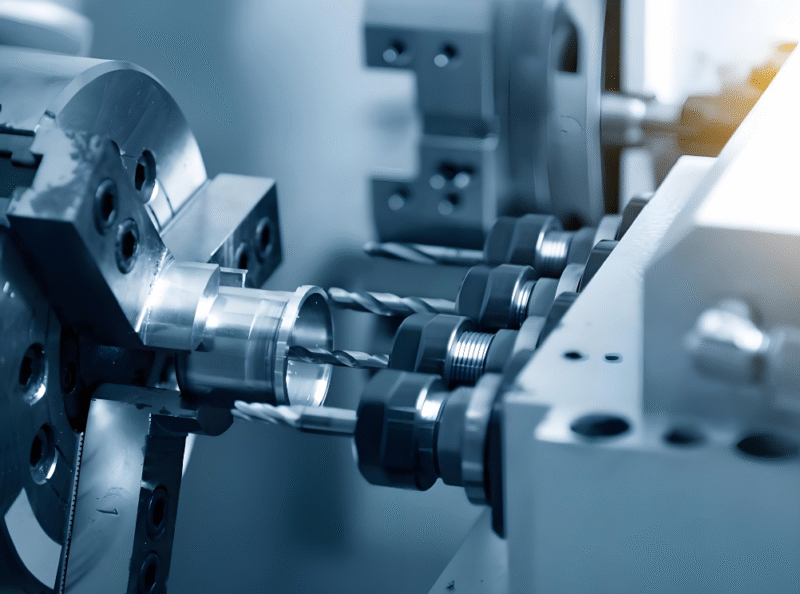
Mittel zum Nachweis
KoordinatenmessmaschineOptischer Projektor
Oberflächenrauhigkeitsmessgerät
Härteprüfgeräte
Anwendungsbereiche der zerspanenden Industrie
Luft- und Raumfahrt
Bearbeitung von TriebwerksschaufelnHerstellung von Strukturbauteilen für die Luft- und Raumfahrt
Genauigkeitsanforderungen: 0,005-0,01 mm
Automobilbau
Motorblock ZylinderkopfGetriebe
Jahresproduktion von mehr als einer Million Stück
medizinische Ausrüstung
Endbearbeitung chirurgischer InstrumenteHerstellung von Implantaten
Anforderungen an die aseptische Umgebung
Überlegungen zur Auswahl von Bearbeitungsdienstleistungen
Bewertung der technischen Kapazität
Gerätemarken und -modelleMaximale Verarbeitungsgröße
Fähigkeit zur Gewährleistung der Genauigkeit
Erfahrung in der Verarbeitung spezieller Materialien
Zertifizierung des Qualitätssystems
ISO9001-QualitätssystemIATF 16949 (Automobilbranche)
ISO13485 (medizinische Geräte)
Kapazität der Dienstleistungsgarantie
LiefertermintreueReaktionsgeschwindigkeit im Notfall
Technischer Support Level
Entwicklungstrend der Bearbeitung
Intelligente Richtung
Anwendungen der Internet der Dinge TechnologieAdaptive Verarbeitungssysteme
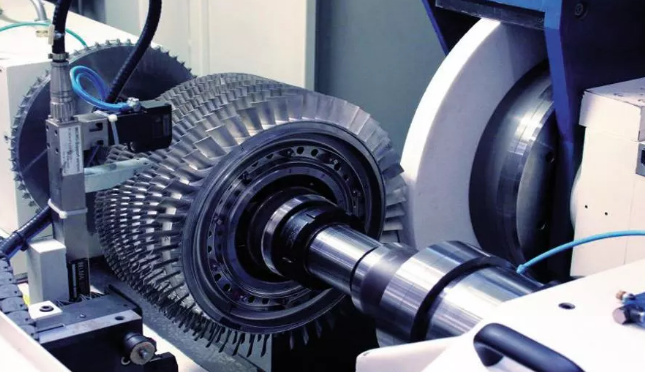
digitaler Zwilling
grüne Produktion
TrockenschneidetechnikWerkzeug-Recycling
Überwachung des Energieverbrauchs
Komposit-Verarbeitung
Dreh- und FräszentrumKombination aus additivem und subtraktivem Material
Integration der Online-Prüfung
Schlussbemerkungen
ZerspanungDie Zerspanung spielt als grundlegender Prozess der Fertigung eine unersetzliche Rolle in der modernen industriellen Produktion. Mit dem kontinuierlichen Aufkommen neuer Technologien und Werkstoffe entwickelt sich die Zerspanungstechnologie in Richtung höherer Präzision, höherer Effizienz und intelligenter. Bei der Auswahl eines professionellen Zerspanungsdienstleisters müssen seine technische Stärke, sein Qualitätssystem und seine Servicefähigkeiten umfassend berücksichtigt werden, um optimale Bearbeitungslösungen zu gewährleisten. -
Zerspanungstechnik: eine tragende Säule der modernen Fertigung (technische Schlüsselparameter und Qualitätskontrolle der Bearbeitung)
BearbeitungTechnologie: ein zentraler Pfeiler der modernen Fertigung
Von winzigen medizinischen Geräten bis hin zu riesigen Stromgeneratoren - die 80%-Industrieprodukte der Welt werden alle von der Zerspanungstechnik unterstützt.Die spanabhebende Bearbeitung ist ein Fertigungsverfahren, bei dem Werkstücke mit Hilfe mechanischer Geräte geschnitten, geformt oder anderweitig bearbeitet werden, um ihre Abmessungen oder Eigenschaften zu verändern. Als Eckpfeiler der modernen Fertigung deckt die Zerspanungstechnologie ein breites Spektrum an Bereichen ab, von der traditionellen manuellen Bearbeitung bis hin zur numerischen Computersteuerung (CNC), und ist ein wichtiges Bindeglied bei der Umwandlung von Produkten aus Konstruktionszeichnungen in physische Objekte.
Mit dem Aufkommen der Industrie 4.0-Ära hat sich die maschinelle Bearbeitung weiterentwickelt und integriert die Digitalisierung, die Automatisierung und die intelligente, fortschrittliche Fertigungstechnologie, um Präzisionskomponentenlösungen für die Luft- und Raumfahrt, den Automobilbau, medizinische Geräte und andere Bereiche bereitzustellen.
01 Grundlegende Klassifizierung und Prozessmerkmale der Bearbeitung
Die spanabhebende Bearbeitung lässt sich nach der Art der Bearbeitung in zwei Hauptkategorien unterteilen: die traditionelle Bearbeitung bzw. die singuläre Bearbeitung und die nicht-traditionelle Bearbeitung. Jede Art der Bearbeitung hat ihre eigenen einzigartigen Anwendungsszenarien und technischen Vorteile.Traditionelle BearbeitungSchlüsselbestandteile:
Drehen: Werkstückrotation, Werkzeuglinearbewegung, geeignet für Wellen, Scheibenteile
Fräsen: Werkzeugrotation, Werkstück feststehend oder beweglich, geeignet für flache und gekrümmte Oberflächenbearbeitung
Bohren: Spezialisiert auf die Bearbeitung von Löchern für Bohr-, Reib- und Aufbohrarbeiten.
Schleifen: Feinschleifen mit Schleifmitteln für hohe Präzision und gute Oberflächenqualität.
nicht-traditionelle Verarbeitungstechnologien (spezialisierte Verarbeitung) umfassen:
EDM: Metallerosion durch elektrische Entladung, geeignet für die Bearbeitung komplexer Formen von Materialien mit hoher Härte.
Laserbearbeitung: Schneiden, Markieren, Schweißen mit hochenergetischen Laserstrahlen
Ultraschallbearbeitung: Für die Präzisionsbearbeitung von spröden Materialien wie Glas und Keramik.
Wasserstrahlschneiden: Schneiden von Werkstoffen mit einem Hochdruckwasserstrahl ohne Wärmeeinflusszone
02 CNC-Werkzeugmaschinen in modernen Bearbeitungsanwendungen
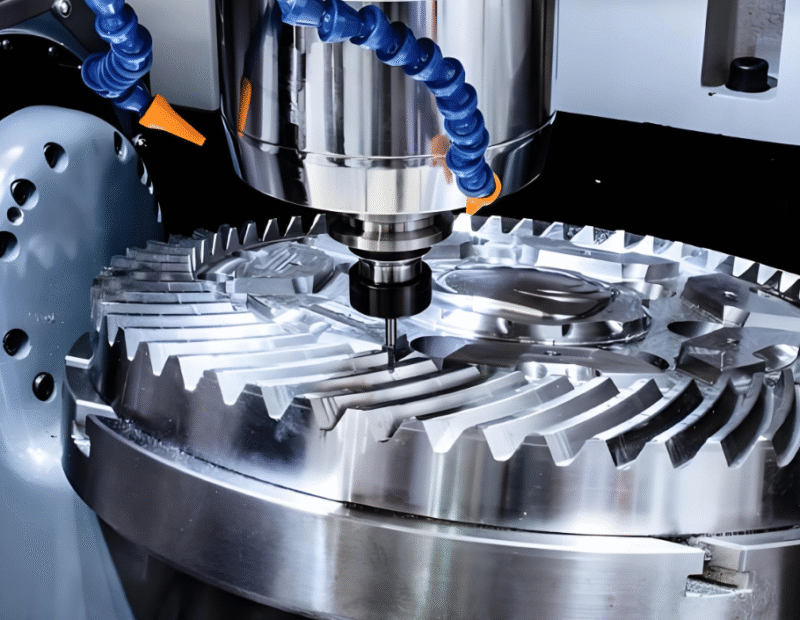
Die CNC-Technologie (numerische Steuerung) ist ein revolutionärer Durchbruch auf dem Gebiet der maschinellen Bearbeitung. Durch die Steuerung von Maschinenbewegungen durch digitale Programmierung erreicht die CNC-Bearbeitung dieHohe Präzision, hohe Effizienz, hohe KonsistenzDas Produktionsmodell.CNC-BearbeitungszentrumEs ist das Herzstück einer modernen Maschinenwerkstatt und umfasst typische Konfigurationen:
Vertikal Bearbeitung Zentrum: Geeignet für die Bearbeitung von Platten- und Formteilen
Horizontale Bearbeitungszentren: für die Mehrseitenbearbeitung von Kastenteilen
5-Achsen-BearbeitungszentrumKomplexe gekrümmte Flächen können in einer einzigen Aufspannung bearbeitet werden, um mehrere Prozesse abzuschließen.
CNC-ProgrammierungEs ist ein wichtiger Aspekt der CNC-Bearbeitung. Moderne CAD/CAM-Software ermöglicht eine nahtlose Umwandlung von 3D-Modellen in Bearbeitungscodes, wodurch die Effizienz und Genauigkeit der Programmierung erheblich verbessert wird. Fortgeschrittene Programmiertechniken wie Hochgeschwindigkeitsfräsen oder singend-adaptive Bearbeitung verbessern die Effizienz und Qualität der Bearbeitung zusätzlich.
Zu den Genauigkeitsindikatoren für CNC-Maschinen gehören in der Regel:
Positioniergenauigkeit: innerhalb von ±0,005 mm
Wiederholgenauigkeit der Positionierung: innerhalb ±0,002 mm
Oberflächenrauhigkeit: Ra0,8μm oder weniger (Schlichten)
03 Technische Schlüsselparameter und Qualitätskontrolle der mechanischen Bearbeitung
Die Bearbeitungsgenauigkeit ist ein wichtiger Indikator für das Niveau der Bearbeitung. Zu den Faktoren, die sich auf die Genauigkeit auswirken, gehören die Maschinengenauigkeit, die Werkzeugauswahl, die Schnittparameter und der Prozessplan.Optimierung der SchnittparameterEs ist der Schlüssel zur Verbesserung der Bearbeitungsqualität:
Schnittgeschwindigkeit: Optimaler Bereich je nach Werkstückmaterial und Werkzeugtyp
Vorschubgeschwindigkeit: Wichtige Faktoren für die Bearbeitungseffizienz und Oberflächenqualität
Schnitttiefe: Rationale Auswahl auf der Grundlage der Maschinensteifigkeit und Werkzeugstärke
QualitätskontrollsystemGewährleistet, dass die bearbeiteten Produkte den Konstruktionsanforderungen entsprechen:
Prozessüberwachung: Erstmusterprüfung, Inspektionssystem zur Gewährleistung der Produktionsstabilität
Endkontrolle: Vollständige Prüfung mit Hilfe von CMMs, optischen Messgeräten usw.
Qualitätsdokumentation: Vollständige Prüfprotokolle und Rückverfolgbarkeitssystem
Moderne Maschinenbaubetriebe verwenden häufig Methoden der statistischen Prozesskontrolle, um durch Datenanalyse und Prozessüberwachung eine präventive Qualitätskontrolle zu erreichen, die Ausschussrate zu senken und die Produktkonsistenz zu verbessern.
04 Beispiele für Bearbeitungsanwendungen in verschiedenen Branchen
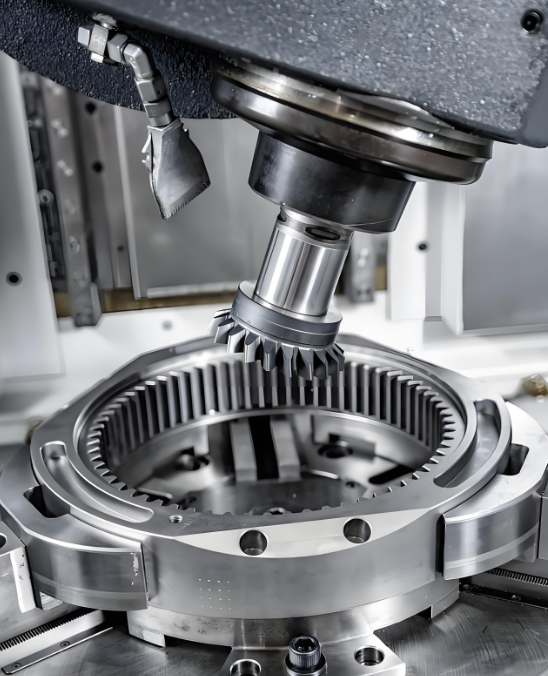
ZerspanungDie Zerspanung ist eine grundlegende Fertigungstechnologie, die fast alle Industriezweige durchdringt. Verschiedene Branchen haben spezifische technische Anforderungen und Qualitätsstandards für die Bearbeitung.Luft- und RaumfahrtEs ist eine Konzentration von High-End-Bearbeitungstechnologie:
Triebwerksschaufeln für Flugzeuge: Präzisionsfertigung mit 5-Achsen-Bearbeitungszentren
Komponenten der Flugzeugstruktur: umfassende Verwendung von hochfesten Aluminiumlegierungen und Verbundwerkstoffen
Extrem hohe Präzisionsanforderungen, oft bis in den Mikrometerbereich
AutomobilbauEs ist der größte Anwendungsmarkt für Zerspanungstechnik:
Motorblock, Zylinderkopf: Hocheffiziente Verarbeitung mit spezieller Fertigungslinie
Getriebezahnräder: Hochpräzises Schleifverfahren erforderlich
Formenbau: Für alle Stanzformen wie z. B. Automobilabdeckungen
Herstellung medizinischer GeräteBesondere Anforderungen an die Bearbeitung:
Chirurgische Instrumente: klein, komplex, hochpräzise
Implantate: Endbearbeitung von biokompatiblen Materialien wie Titanlegierungen
Extrem strenge Anforderungen an Sterilität und Oberflächenqualität
05 Wie man einen professionellen Bearbeitungsdienstleister auswählt
Die Auswahl eines qualifizierten Zulieferers für die spanende Bearbeitung erfordert eine umfassende Prüfung der technischen Fähigkeiten, des Qualitätssystems, der Lieferkapazität und anderer Faktoren.Bewertung der technischen KapazitätenSchlüsselpunkte sind:
Ausrüstungsliste: Marke der Werkzeugmaschine, Modell, Präzisionsgrad
Technisches Team: Ingenieure, Programmierer, Bediener Qualifikationsniveau
Prozesserfahrung: Erfahrung und Lösungen für die Verarbeitung ähnlicher Produkte
QualitätszertifizierungssystemEs ist eine grundlegende Sicherheit:
Zertifizierung des Qualitätsmanagementsystems nach ISO9001
Branchenspezifische Zertifizierungen (z. B. Luft- und Raumfahrt AS9100, Medizintechnik ISO13485)
Konfiguration der Prüfgeräte und messtechnisches Kalibrierungssystem
ProduktionsmanagementkapazitätAuswirkungen auf die Lieferleistung:
Produktionsplanungssystem und Kapazitätsstatus
Kapazitäten für das Management der Lieferkette
Mechanismus zur Bearbeitung von Aufträgen unter Vorbehalt
06 Trends und Zukunftsperspektiven der Zerspanungstechnik
Die Bearbeitungstechnologie bewegt sich in Richtung intelligent, grün und kompositorisch, neue Technologien treiben den Wandel in der Fertigung weiter voran.Die intelligente Fertigung ist die Hauptrichtung der Entwicklung:
IoT-Technologie ermöglicht die Vernetzung von Geräten und die Sammlung von Daten
Künstliche Intelligenz bei der Optimierung von Prozessparametern und der Vorhersage von Fehlern
Digitale Zwillinge bauen virtuelle Bearbeitungsumgebungen
Ökologische ProduktionWerden Sie zum Branchenkonsens:
Trockenschnitt- und Mikroschmierungstechnologie zur Reduzierung der Umweltbelastung
Energieüberwachung und -optimierung zur Senkung des Energieverbrauchs
Recycling von Werkzeugen und Kühlschmierstoffen
Composite Processing TechnologyErhöhte Produktivität:
Dreh-Fräs-Bearbeitungszentren zur Prozesskonzentration
Kombinierte additive und subtraktive Fertigung (3D-Druck + Bearbeitung)
Integration von Inline-Messung und -Verarbeitung
Die maschinelle Bearbeitung als Eckpfeiler der Fertigungsindustrie wird tief in neue Technologien integriert und treibt die industrielle Modernisierung und den Wandel voran. Mit künstlicher Intelligenz, Big Data und digitalen Zwillingen wird die maschinelle Bearbeitung in Zukunft ein höheres Maß an Automatisierung und Intelligenz erreichen und neue Wachstumspunkte für die Fertigungsindustrie schaffen.
Bei der Auswahl eines professionellen Zerspanungsdienstes ist es wichtig, nicht nur auf die Fähigkeiten der Ausrüstung zu achten, sondern auch auf die Technologieakkumulation, die Qualitätskultur und das kreative Bewusstsein des Anbieters.
-
Nietbetriebe und Niet-Zulieferbetriebe: die zentrale Produktionsbasis der modernen Fertigung
Rivet welding workshopWorkshops with riveting and welding substitutes: the core production base for modern manufacturing
A first-class rivet shop is the cornerstone of the manufacturing industry, and the quality of industrial products above 60% depends directly on the professionalism of its production workshop.
Rivet welding workshop is an operation place specialised in joining and manufacturing of metal structures, integrating the complete production process of material preparation, welding processing and quality inspection. The riveting and welding substitution workshop, on the other hand, pays more attention to theFlexible production capacityim Gesang antwortenCustomised requirementsWe are able to provide professional welding services to multiple customers at the same time.
The modern riveting workshop is no longer a “welding workshop” in the traditional sense, but a combination of automated equipment, digital management system and standardised processes.Advanced Manufacturing Unit.
01 Planning and Layout of a Modern Rivet Welding Shop
A scientific and reasonable workshop layout is the basis for guaranteeing productivity.Functional area divisionis a primary consideration in the design of a rivet shop.
A typical rivet shop should contain the following core areas:
-
material storage area: For storage of raw materials such as steel plates, profiles, etc., with shelving systems and clear labelling management
-
Unloading preparation area: Setting up equipment such as shears, plasma cutters, etc. for preliminary processing of materials
-
welding area: Different workstations such as manual welding area and robot welding area according to product type.
-
Semi-finished goods turnaround area: Temporary storage areas between processes to ensure smooth flow of logistics
-
Finished product inspection area: Equipped with various testing equipment for quality verification
-
Surface treatment area: Follow-up treatments such as sandblasting, spraying, etc.
Logistics path designDirectly affects workshop efficiency. Excellent workshop layout adopts U-shape or linear material flow pattern to reduce material handling distance and frequency. Welding station spacing is usually maintained at 3-5 metres, not only to ensure that the operating space, but also to facilitate the passage of material handling equipment.
Environmental control is also an important part of workshop design.ventilation systemWelding fume emission standards must be met, and each workstation is equipped with a local exhaust device;Lighting systemsIt is necessary to ensure that the illumination of the working surface is not less than 300 lux;Power ConfigurationTo meet the demand for simultaneous use of high-power welding equipment.
02 Rivet Welding Substitute WorkshopCore equipment configurations
The level of equipment directly determines the technical capability of the foundry.Diversification of welding equipmentIt is the basis for meeting the needs of different customers.
Modern riveting and welding foundry shops are usually equipped with the following combination of equipment:
-
Robotic Welding Systems: For high volume, highly repeatable products to ensure consistency
-
Gantry automatic welding machine: for long weld seams on large structural parts
-
Portable welding equipment: meets the needs of on-site maintenance and special-position welding
-
laser welding machine: Precision welding for high precision and small deformation requirements
Auxiliary equipmentEqually important. The workshop should be equipped with metal processing equipment such as large coiler (which can handle steel plates with a thickness of more than 30mm), hydraulic bending machine (with a pressure of more than 1,000 tonnes), and a series of cranes (with a lifting capacity of 5-50 tonnes), to form a complete processing capacity.
The level of testing equipment reflects the level of quality assurance in the workshop.Three-dimensional measuring instrumentUsed to check the dimensional accuracy of large structural parts;Ultrasonic Flaw Detectorim Gesang antwortenMagnetic particle flaw detection equipmentFor weld quality inspection;Mechanical Performance TesterUsed for sampling and testing the strength of welded joints.
03 Production process and management system of the riveting and welding shop
Standardised processes are key to ensuring consistent product quality.Production Planning ManagementIt is the starting point of workshop operation. OEM workshop needs to establish multi-project parallel management mechanism, reasonable scheduling, to ensure that each customer order is delivered on time.
The complete riveting process includes:
-
Drawing Process Review: Analyse product manufacturability and determine optimal process solutions
-
Material Preparation: Preparation of base materials and welding consumables according to process requirements
-
Bevelling: Welding bevels by mechanical or plasma machining
-
pairwise positioning: Use of special tooling to ensure assembly accuracy
-
Welding implementation: Perform welding operations in accordance with welding procedures
-
weld treatment: Grinding and cleaning of welds, cosmetic repairs
-
Qualitätskontrolle: Perform non-destructive testing and dimensional inspection
-
Surface protection: Sandblasted and coated on request.
Site management levelIt directly affects production efficiency and safety. The implementation of 6S management (sorting, straightening, cleaning, cleanliness, quality and safety) is the basic requirement of an excellent riveting and welding workshop. The equipment is placed in a fixed position, tools are managed in a fixed position, and the area is clearly labelled to create an orderly production environment.
04 Quality control system for riveted and welded foundry shops
Quality is the lifeblood of the foundry.Total Quality ControlThe system should cover every step of the process from raw materials to finished products.
Welding consumables management is the source of quality control. Workshop needs to establish welding consumables warehouse, control the temperature and humidity of the warehouse (temperature ≥5℃, relative humidity ≤60%). Welding rods and fluxes are dried and kept warm according to the requirements, and there are complete records of issuance and recovery to prevent moisture from affecting the welding quality.
Key points for welding process control include:
-
Management der Schweißerqualifikation: Ensure that every operator is licensed and regularly reviewed
-
Process discipline inspections: Monitor welding parameters for compliance with process regulations
-
Process self-inspection and mutual inspection: Checks and confirms when the operator has completed each process.
-
Non-destructive testing applications: Selection of appropriate test methods and ratios according to product requirements
Quality traceability system is the core advantage of the OEM workshop. Through the implementation of the product identification system, the material batch, process parameters, operators, inspection results and other information of each workpiece are recorded, so that the whole process can be traced. When quality problems occur, the cause can be quickly located and corrective measures taken.
05 Staffing and Skill Requirements for Specialised Rivet Welding Shops
Human resources are the workshop’s most important asset.Rationalisation of team structureIt is the basis for keeping the workshop running.
A typical rivet shop should be staffed with the following professionals:
-
Welding Engineer: Responsible for process design, problem solving and technological innovation
-
Production Supervisor: Responsible for production plan implementation and site management
-
welder: Different levels of qualification: primary, secondary and tertiary.
-
quality control personnel: Responsible for raw material, process and finished product inspections
-
Equipment maintenance staff: Responsible for routine maintenance and troubleshooting of equipment
Skills training systemIt is the key to remain competitive. Excellent workshops have well-established training mechanisms, including:
-
pre-service training: New employees must receive safety and skills training and pass the test
-
On-the-job training: Regularly organise training in new technologies and techniques
-
accreditationOrganisation of welders for international certification (e.g. ISO 9606)
-
skills competition: Promoting Skill Exchange and Enhancement through Competitions
Foundry shops also need to develop their employees’Customer Service AwarenessTechnical staff need to be able to communicate effectively with customers to understand requirements and provide professional advice. Technical staff need to be able to communicate effectively with customers, understand needs and provide professional advice; production staff need to establish the concept of “the next process is the customer” to ensure that each product meets the requirements.
06 How to chooseQualified Rivet Welding Substitute Workshop
When choosing a partner, the overall capabilities of the foundry need to be assessed in a number of dimensions.on-site inspectionIt is the most intuitive way to assess.
It should be focused on when visiting the workshop:
-
device status: Equipment is in good condition and maintenance records are complete
-
On-site management: Material is arranged in an orderly manner, and aisles are clear.
-
product quality: Sampling of in-process and finished products for appearance quality
-
Employee Operation: Observe whether employees are operating in accordance with procedures and whether protection is in place
Qualificationis the basic threshold. Qualified foundry shops should have:
-
Zertifizierung des Qualitätsmanagementsystems nach ISO9001
-
Industry-specific qualifications (e.g. pressure vessel manufacturing licence)
-
Welding system certifications (e.g. EN 15085 Railway Welding Certification)
-
Environmental and Occupational Health and Safety Management System Certification
Cooperation CasesIt is the best proof of ability. The workshop is required to provide successful cases of similar products, and it is better to visit the use of delivered products on the spot. At the same time, understand the workshop’s main customer groups and industry reputation, and choose partners with good reputation.
With the advent of Industry 4.0 era, intelligent riveting workshop is becoming a trend. By introducingInternet of Things (IoT) technologyThe welding parameters can be monitored in real time and the quality data can be analysed automatically.digitaler ZwillingProduction processes can be optimised in a virtual environment before being put into production.
Choosing a professional riveting and welding foundry is essentially choosing aReliable external production sites. Excellent workshop can not only provide high quality welding products, but also become a strategic partner of the customer enterprise, to deal with the market challenges together, to achieve win-win development!
-
-
Nietschweißwerk & Nietschweiß-Zulieferer: Ihr idealer Fertigungspartner
Specialised riveting factory withRivet welding subcontractor: Your Ideal Manufacturing Partner
In modern manufacturing, more than 65% companies choose to outsource riveting to specialised manufacturers to reduce production costs and improve product quality.Rivet welding factories are specialised in the joining and fabrication of metal structures, with advanced welding equipment, professional technicians and strict quality management systems. And the rivet welding subcontracting factory goes a step further, providing customers withCustomised turnkey or all-inclusive production servicesWe provide one-stop solutions from design optimisation, material sourcing to finished product delivery.
By choosing a professional riveting subcontractor, companies are able to focus their resources on their core business and at the same time obtain riveting products that are more technologically advanced and of more consistent quality.
01 Core competencies and equipment configuration of a specialised riveting plant
A qualified riveting plant must be equipped with comprehensive hardware facilities and technical teams.High-end welding equipmentIt is the primary measure of the degree of professionalism of a rivet factory.Modern riveting plants often have a wide range of welding equipment to cater for different materials and processes:
Automated welding robots: for high volume, high precision repetitive welding tasks
Laser welding systems: Precision welding of thin sheet materials and stainless steel
Plasma arc welding equipment: for welding thick plates and special alloys
TIG/MIG welding machineHigh-quality welding of aluminium alloys, stainless steel and other materials.
Testing and quality control equipmentEqually indispensable. The professional riveting factory is equipped with CMM, ultrasonic flaw detector, X-ray inspection equipment, etc. to ensure that every product meets the design standards and customer requirements.
The technical team of a rivet welding plant should include welding engineers, process designers and quality control specialists. A good rivet welding plant will provide regular training to its staff to ensure that they are up-to-date with the latest welding technology and standards, such as ISO 3834 welding quality system and EN 15085 rail vehicle welding certification.
02 Rivet WeldingService model and advantages of the plant
The main difference between a rivet welding foundry and a traditional rivet welding factory is itsFlexible service modelrespond in singingCustomer orientated workflow.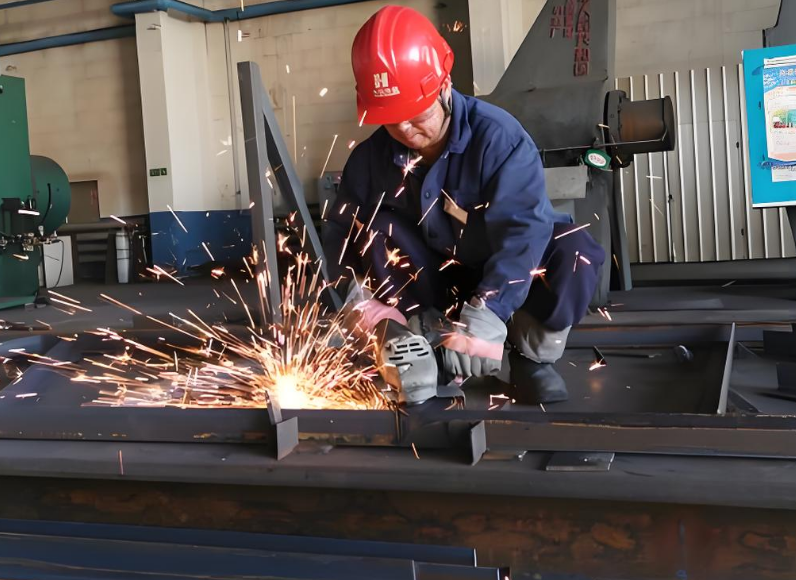
Incoming material processing modelIt is the most common form of co-operation for OEM factories. The customer provides the raw materials and design drawings, and the OEM is responsible for welding, manufacturing and surface treatment. This model is suitable for those who already have a mature product design and want to control material costs.
All-inclusive production servicesIt is more comprehensive, with the OEM taking full responsibility from the procurement of materials:
Design review and process optimisation
Raw material procurement and quality inspection
Welding fabrication and process control
Quality inspection and surface treatment
Finished product assembly and packaging for dispatch
The core advantages of choosing a rivet welding subcontractor arecost controlrespond in singingExpertiseThe company does not need to invest a lot of money to buy expensive equipment, hire professional technicians. Enterprises do not need to invest a lot of money to buy expensive equipment, hire professional and technical personnel, and do not have to worry about the risk of equipment obsolescence brought about by the renewal of the welding process.
03 How to identify quality rivet welding subcontracting plants
There are several dimensions to consider when choosing a reliable rivet welding foundry.QualificationIt is the basic threshold that an excellent OEM should have ISO9001 quality management system certification, as well as industry-specific relevant qualifications, such as pressure vessel manufacturing licences, professional contracting qualifications for steel structure works, and so on.Case experienceIt is an important basis for assessing the actual capability of the OEM factory. Powerful manufacturers usually will:
Provide success stories of similar products
Showcase of famous clients served
Provide a tour of the production plant and sample room
Technical communication skillsEqually critical. At the initial contact stage, a good OEM technical team can quickly understand the customer’s needs, make reasonable process suggestions, and point out possible welding problems in the product design.
When evaluating a foundry, you should also consider itsProduction capacity and lead times. Enquire about the number of existing customers, the number of production lines and the capacity to handle urgent orders to ensure that they can meet the demands of your production schedule.
04 Details of the co-operation process of riveting and welding substitution processing
Partnerships with riveting and welding subcontractors often follow standardised processes to ensure smooth project progress.Requirements analysis phaseIt is the starting point of co-operation. The OEM factory will understand the customer’s product use, working environment, quality requirements and budget range in detail. At this stage, the customer should provide as much detailed technical parameters as possible, such as material specifications, structural dimensions, force requirements and so on.
Technical evaluation and quotationAt this stage, the OEM’s technical team analyses the manufacturability of the product design, suggests possible optimisations and provides a detailed quotation based on material costs, processing difficulty and lead time requirements.
After the official co-operationproduction processIncluded:
Process documentation: development of detailed welding process protocols
Tooling design: Design of specialised fixtures for specific products.
Trial production and sample confirmation: small batch trial production for customer verification
Batch production and in-process inspection: production according to plan and quality control throughout the process
Final Inspection and Delivery: Shipments after full inspection and approval
05 Industry applications: which companies need riveting subcontracting services
Rivet welding subcontracting services are widely used in major industrial sectors, and different industries have specific technical requirements for subcontractors.
Construction Machinery IndustryIt is an important customer for rivet welding subcontracting. Large structural parts of excavators, loaders and other equipment require specialised welding processes to ensure their strength and durability. Excellent subcontractors are able to deal with welding distortion control of high-strength steels and ensure that the products meet the requirements of demanding working environments.
Manufacture of automotive parts and componentsThe field, especially commercial truck frames, chassis and other safety components, has extremely high requirements for welding quality. OEMs need to master robotic welding technology to ensure the consistency and reliability of welds.
Other important areas of application include:
Environmental protection equipment: Large steel structures such as dust collectors, desulphurisation towers, etc.
Warehouse Logistics: Racks, conveyor frames, etc.
agricultural machinery: Structural parts of agricultural equipment such as harvesters, tractors, etc.
Power equipment: Transformer housings, switchgear frames, etc.
06 Quality Control: Professional Rivet Welding Factory Quality Assurance System
Quality is the core value of the riveting and welding substitution service, and excellent manufacturers have established a multi-level quality assurance system.Welding process controlIt is the focus of quality management. Starting from welding consumables management, including drying, holding, issuing and recycling the whole process control. Welding parameters such as current, voltage and speed need to be monitored and recorded in real time to ensure process stability.
Non-destructive testing applicationsIt is the key link to ensure the quality of the weld. Professional rivet welding factory will choose the appropriate testing method according to the product requirements:
ray detection: for detecting internal defects in welded seams
ultrasonic testing: For quality assessment of thick plate welds
Magnetic particle inspection: For inspection of surface and near-surface defects
Osmosis: for surface defect detection on non-magnetic materials
Quality Tracing SystemEach product has a complete “identity card”. By recording information such as material batch, welding parameters, operators and production time, the whole process can be traced, which facilitates problem analysis and continuous improvement.
In the next five years, with the deepening of intelligent manufacturing, professional riveting and welding plants will be introduced in large numbersInternet of Things and Big Data technologies. Real-time monitoring of welding parameters, quality prediction and analysis will become standard, further enhancing the technical threshold and service value of the riveting and welding sub-processing industry.
Choosing the right rivet welding foundry is not just about finding a supplier, it’s about building aLong-term, mutually beneficial technology partnerships. Excellent OEMs are able to become the external R&D department of the customer’s organisation and work together to promote product innovation and quality improvement.