

Stainless iron 430 fasteners passivated for 5 years to prevent rust
When many factories purchase 430 stainless steel screws, the most worrying thing is that rust spots will appear on the surface after half a year of use. 430 fasteners that have been passivated in a specific way can indeed exist in a state where the surface of the object is not corroded for up to 5 years. This technology has matured and been widely used in resisting corrosion on the surface of the object.
Why does 430 stainless steel rust easily?
430 is a ferritic stainless steel with a chromium content between 16% and 18%. This material has good strength and good hardness. However, its corrosion resistance is far inferior to that of 304 and 316. Its protective film is extremely thin and will quickly lose its protective effect in humid or salty environments.
In industrial applications, 430 fasteners are often used in indoor environment environments, such as home appliance assembly environments and furniture hardware environments. If it is placed outdoors, like bicycle screws or building components, rust spots may appear within a few months. This is why additional rust prevention treatment is required.

Cleaning and degreasing are the basis of the entire process
The first step of passivation treatment is to completely remove the oily stainless steel processing and anti-rust treatment on the surface of the workpiece. During the machining process, fasteners will be contaminated with cutting oil, tensile oil, or anti-rust oil. These oil films will block the contact between the passivation liquid and the metal, causing uneven passivation.
Factories generally use alkaline cleaning agents, the temperature is controlled between fifty and sixty degrees, and the soaking time is ten to fifteen minutes. For mass-produced fasteners, ultrasonic vibration is also used to shake out the oil stains in the thread gaps. If this step is not completed properly, all subsequent steps will be in vain.
Don’t be careless when crossing water for the first time
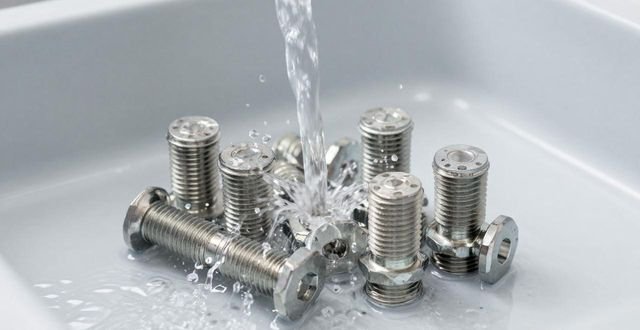
After cleaning and degreasing, you must use running water to rinse for three to five minutes. This step may seem simple on the surface, but many quality problems occur precisely in this place. If the remaining chemical solution is not washed away, it will pollute the subsequent passivation tank.
The key is water quality. It is best to use tap water, but there are lower requirements for turbidity. Some smaller factories, in order to save water resources, will reuse a pool of water. In this way, the passivation effect will be significantly reduced. The correct approach is to maintain a continuous flow of water so that the pH value on the surface of the workpiece returns to neutral.
Passivation is the core of forming protective film
Use a special passivation liquid for stainless steel, heat it to 65 to 75 degrees, and soak the fasteners for 30 minutes. This temperature range is obtained through a large number of experiments. If the temperature is low, the reaction will be insufficient. Stainless steel 430 fasteners are passivated for 5 years to prevent rust. If the temperature is high, it will cause damage to the surface of the workpiece. The nitric acid and chromic acid in the passivation liquid will react with the metal to form a dense chromium oxide film.
The thickness of this membrane is only a few nanometers, but it can effectively isolate oxygen and water vapor. A factory in Shenzhen that specializes in the production of fasteners has done comparative tests. The 430 screws after passivation can last for more than 120 hours in the salt spray test, while the screws without any treatment rusted in just 24 hours.
Coordination treatment makes the protective film more complete
The situation remains the same after the second water pass, and subsequent coordination processing must be carried out. To use a special complexing agent for stainless steel, heat it to the range of 45 degrees to 55 degrees, and then soak it for 15 minutes. This complexing agent has the function of filling the tiny pores in the passivation film, which is like applying a second coat of paint on the wall, thereby making the overall layer more uniform and dense.
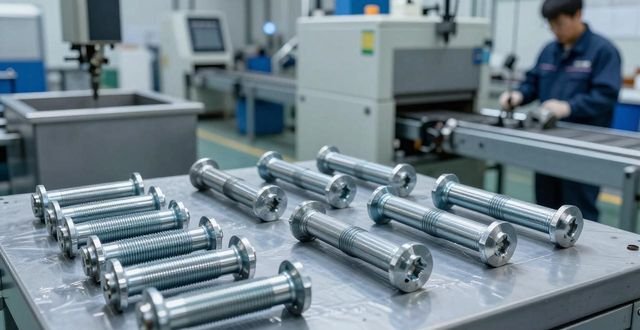
This step is omitted by many processing plants. They believe that passivation is enough, and adding another coordination step is a waste of time and medicine. However, for such fasteners that are required to be rust-free for 5 years, this step of stainless steel processing and anti-rust processing is extremely critical. The protective film after coordination has stronger adhesion and is less likely to be scratched.
Final cleaning and drying determine the quality of the finished product
After completing the coordination operation, it is necessary to carry out the third water-passing work, which is also cleaned with flowing clean water for 3 to 5 minutes. Afterwards, deionized water must be used for 3 to 5 minutes of cleaning. The purpose is to remove the calcium and magnesium ions in the water to prevent white watermarks from being left after drying. Many customers complained that the surface of the product was unclean because ordinary water was used for final cleaning.
Control the drying temperature within the range of 80 to 100 degrees, and set the time to 15 to 20 minutes. The temperature must not be too high, otherwise the protective film will crack. After drying, you must wait for the workpiece to cool completely before packaging, otherwise the residual heat will accelerate oxidation.
This process has been extensively verified
Starting from 2021, there is a hardware factory in Yongkang, Zhejiang, which uses this process to process 430 fasteners. Its products are exported to Southeast Asia and South America. After more than three years, customers reported that the rust rate is lower than three thousandths. According to the accelerated aging test, the rust prevention target can be fully achieved within 5 years.
However, there are prerequisites for this shelf life. Fasteners should not be used in strong acid and alkali environments, nor should they be immersed in water for a long time. Stainless steel processing is anti-rust . Under normal indoor use or outdoor scenes with occasional rain, the 5-year anti-rust condition is good. If your application environment is harsh, it is recommended to use 304 or 316 materials.
After reading this article, which products do you think 430 passivated fasteners are most suitable for? Welcome to share your views in the comment area. If the number of likes exceeds 500, I will write another article about stainless steel passivation detection methods.



暂无评论内容