

National Development and Reform Commission: Technology development trends in the entire machine tool industry
The machine tool industry worldwide is currently experiencing a technological revolution. New trends such as composite machining, direct drive technology, and micro-manufacturing will directly determine the competitiveness of enterprises in the next five years. The latest article published on the official website of the National Development and Reform Commission reveals six major trends, which every company engaged in mechanical processing must take seriously.
Composite processing technology becomes mainstream standard
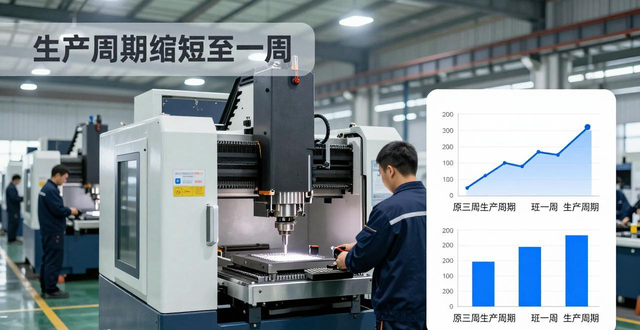
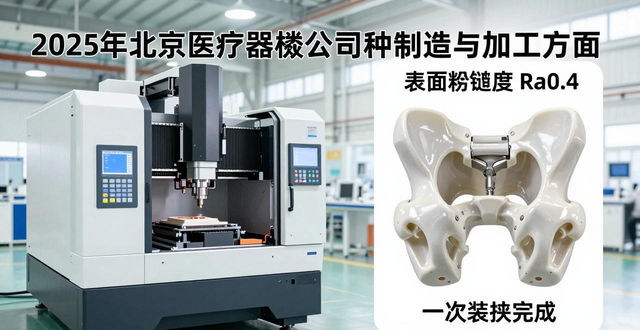
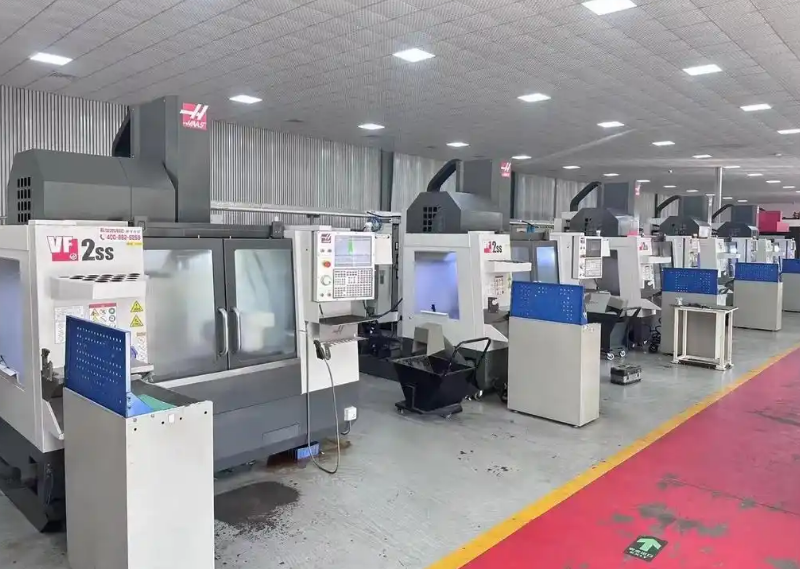
Turning and milling composite machine tools are not new. However, since 2025, new machine tools such as turning and grinding composite, gear machining composite, and turning and milling combined with five-axis linkage have been intensively launched on the market. More than 70% of the new products launched by leading companies such as Germany's DMG Mori Seiki and Japan's Mazak have applied composite processing designs. This technology enables companies to purchase one piece of equipment to complete work that previously required three or four pieces of equipment, and is extremely suitable for the manufacturing of small batch parts of various categories such as aviation blades and medical bone nails. There is a mold factory in Shenyang. After introducing domestic turn-milling machine tools, a part can be clamped once instead of three times, and its processing time has been shortened by 40%.
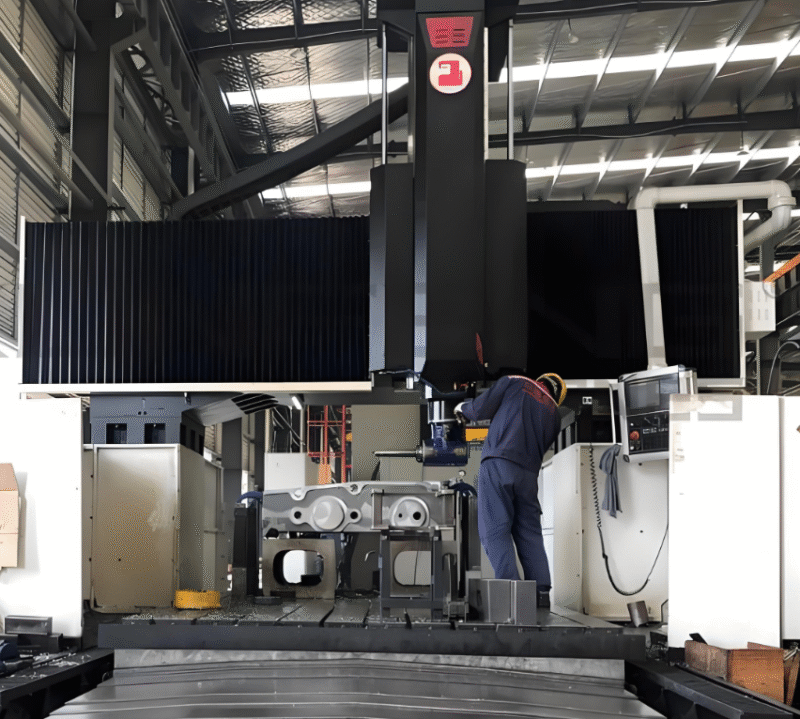
The field of large machine tools is also accelerating the process of compounding. The latest CNC heavy-duty horizontal lathes from companies such as Qizhong CNC and Wuzhong have added automatic replacement multi-functional attachment heads and large CNC turntables, which can simultaneously perform turning and milling of rolls weighing up to 50 tons. Cutting and drilling operations, the integration of metal cutting and special processing has also made substantial progress. TRUMPF Group and GF Machining Solutions have launched a composite machine tool that combines laser cutting and five-axis milling, which has more than doubled the efficiency when processing carbide molds.
Direct drive technology promotes revolution in machine tool structure
Nowadays, what is phasing out traditional ball screws and gear transmissions are linear motors and torque motor turning and milling composite processing technology solutions . At the 2026 Hannover Machine Tool Show, more than half of the new machine models exhibited by brands such as Swiss Starrag and German Henglun are driven by linear motors. This technology has the most The biggest advantage is that there is no backlash and transmission wear, the positioning accuracy can reach 0.001 mm, and the acceleration is 3 to 5 times that of traditional machine tools. There is a precision parts processing factory in Shenzhen that replaced two direct-drive five-axis machine tools last year. The efficiency of processing mobile phone middle frames increased by 60%, and the scrap rate was reduced from 3% to 0.5%.
The technology of electric spindle is in the process of rapid popularization. In the past, the spindle motor and the spindle were connected by belts or gears. However, at the current stage, the spindle itself has become the motor rotor. The electric spindles manufactured by companies such as Taijima Kenchun and Luoyang Shaft Research Institute can already reach the speed of more than 40,000 rpm and reach this standard. It has the advantage of less vibration and lower noise. The grating ruler and encoder are used as position feedback components, and their measurement accuracy reaches plus or minus 0.5 microns. This ensures that the closed-loop control stability of the direct drive system can be achieved. In the domestic field, more than ten machine tool factories have begun mass production of direct drive CNC machine tools, and their prices are more than 30% lower than similar imported products.
Microfabrication technology breaks through microprocessing bottlenecks
For micro-manufacturing technology for processing three-dimensional micro parts below the millimeter level, with funding from the European Union's Horizon 2020 program, Germany's Fraunhofer Institute, Italy's Politecnico di Milano and other institutions jointly developed ultra-precision five-axis linkage micro-machining equipment, which can process 0.1 mm in diameter. Micro turbines and biomedical microneedle arrays. This technology uses diamond and cubic boron nitride micro-cutters with a spindle speed of 150,000 rpm and a cutting depth controlled within 1 micron. A medical device company in Suzhou has introduced similar equipment to produce microstructures on heart stent molds.
For the consumer electronics industry, micro-manufacturing technology is of equally great significance. For parts such as smartphone camera brackets, smart watch internal gears, and micro-connectors, traditional processing methods are inefficient and accuracy is difficult to guarantee. Japan's FANUC and Switzerland's Mikron have launched commercial micro-machining centers. It occupies less than 1 square meter, but can operate unattended 24 hours a day. Domestic universities and research institutions are also following up. Harbin Institute of Technology and Tianjin University are both conducting research on key micro-milling technologies. National Development and Reform Commission: Technology development trends in the entire machine tool industry. It is expected that domestically produced equipment will be introduced to the market within three years.
Low-temperature processing technology solves the problem of difficult-to-cut materials
Difficult-to-machine materials such as titanium alloys, nickel-based high-temperature alloys, and ductile iron have long been a pain point in aviation and energy equipment manufacturing. The principle of cryogenic processing technology is to spray liquid nitrogen at minus 197 degrees Celsius in the cutting area, which suddenly reduces the plastic properties of the material, making the chips more likely to break. Actual data measured by DMG MORI in Germany and MAG in the United States show that after using low-temperature processing, the overall processing time of titanium alloy impellers was reduced from 8 hours to 2 hours, and the tool life was extended from processing 3 parts to 9 parts. Chengdu Aircraft Company has already tried low-temperature processing equipment in the manufacturing of some structural parts of the J-20 fighter jet.
The equipment cost of this technology is declining rapidly. The early low-temperature processing system turning and milling composite processing technology solution required additional liquid nitrogen storage tanks and transportation pipelines, with the entire investment exceeding 500,000 yuan. Starting from 2025, integrated micro liquid nitrogen generators have appeared in China. They are only the size of a refrigerator and can be installed directly next to machine tools. The price has dropped to less than 150,000 yuan. A ship parts factory in Dalian conducted low-temperature turning tests on ductile iron crankshafts. Compared with traditional emulsion cooling, the chip removal rate increased by 2.8 times, and the annual tool cost alone was saved by 400,000 yuan.
Green manufacturing has become a hard indicator of market competition
Green manufacturing is not an environmental slogan, but is actually a matter of cost competition. In the energy consumption of a CNC machine tool, the spindle drive and cooling system account for more than 70%. The e-series machining center recently launched by Makino, Japan, relies on the use of high-efficiency power services. The machine and intelligent standby function have reduced the energy consumption of the entire machine by 45% compared to the previous generation. An auto parts company in Zhejiang has calculated that the annual electricity bill for the 30 machine tools in the factory exceeds 2 million yuan. If all of them are replaced with energy-saving models, the difference in equipment price can be saved in two years. What's more critical is that customers in Europe and the United States have begun to impose requirements on suppliers' carbon emissions. If they cannot meet the corresponding standards, they will be excluded from the supply chain.
The core of green manufacturing is also material utilization. In traditional cutting, 90% of the blank material will become chips. However, near-net shape technology can reduce this ratio to less than 50%. Germany's TRUMPF Group's laser additive manufacturing and five-axis milling composite machine tool first uses laser cladding technology to accumulate materials, and then uses milling for finishing. The raw material consumption of an aviation bracket has been reduced from the original 80 kilograms to 25 kilograms. Similar equipment jointly developed by Huazhong University of Science and Technology in China and Wuhan Huake 3D Company has been applied in the fields of aerospace and mold repair, with a material saving rate of 60%.
Solution services subvert the traditional model of selling machine tools
What customers need is not just a single machine tool, but a profitable processing solution. The Swiss company AgieCharmilles began its transformation ten years ago, and now 70% of the company's revenue comes from turnkey projects and long-term services. They once assisted a medical device factory in planning the entire implant production line, starting from equipment selection, through fixture design, tool configuration, and processing program compilation. All aspects were handled by themselves. Customers only need to provide drawings and production requirements, and AgieCharmilles will ensure that parts that meet the standards are delivered within three months. Under such a model, a machine tool priced at 2 million yuan can have a service fee of up to 800,000 yuan for the supporting solution.
With such a trend, domestic machine tool companies are also following up on it. Among them , Beijing Jingdiao Technology Group has established a process team of more than 200 people in recent years. This process team specializes in providing customers with five-axis machining application solutions. There is a local electronics factory in Shenzhen that produces hinge parts for folding screen mobile phones. The structure of that hinge part is extremely complex. This factory independently explored for half a year without success. The corresponding engineers from Jingdiao stayed in the factory for two weeks and redesigned the clamping method and tool path according to the specific conditions. Not only has the processing problem been truly solved, but the time required for single-piece processing has been reduced from the original 12 minutes to 6 minutes. As for the next five years, machine tool factories that only sell bare metal will gradually be eliminated, and only companies that can provide comprehensive solutions can win orders.
For you, among the six major trends of turn-milling, direct-drive technology, micro-manufacturing, low-temperature processing, green manufacturing, and solutions, which one has the most significant impact on your industry? Welcome to share your actual feelings in the comment area, like it and bookmark this article so that you can check the latest technology trends at any time.



暂无评论内容