


Welding robot industry demand prospects
Welding robots, which are accelerating their penetration into more manufacturing fields from automobile factories, are expected to grow by more than 25% in the domestic market in 2026. Behind this change is the manufacturing industry's ultimate pursuit of efficiency, precision and cost control, and it has also brought a clear upgrade signal to the traditional riveting and welding processing industry.
Technology iteration breaks application thresholds
![图片[1]-Welding Robot Industry Demand Prospects-Dalian Fuhong Machinery Co., Ltd](/wp-content/uploads/2026/03/1774714318858_0.jpg)
In the past three years, the purchase cost of welding robots has dropped, by about 30%. Domestic control systems and visual sensors have matured in the welding robot industry, making the equipment easier to operate. Take a precision machinery factory in Kunshan, Jiangsu, for example. After introducing 12 collaborative welding robots in 2025, the number of operators on a single production line was reduced from 8 to 2, and the welding qualification rate increased from 92% to 99.2%. Such real benefits have caused more and more small and medium-sized riveting and welding processing factories to re-calculate the future development trend of the riveting and welding processing industry . Automation equipment that was considered to be unattainable in the past can now recover its cost within three years.
Technological breakthroughs are reflected in flexible production. Early welding robots can only perform fixed trajectories. Now, with the help of 3D visual guidance and offline programming technology, robots can automatically identify workpieces of different specifications and adjust welding parameters. A hardware products company in Dongguan, Guangdong completed a production line transformation in early 2026. The robot changeover time has been reduced from the original 4 hours to 20 minutes. The ability to undertake small batch and multi-variety orders has been greatly improved. These technological advances are transforming welding robots from exclusive equipment for large enterprises into standard configurations for small and medium-sized factories.
Application fields spread from automobiles to multiple industries
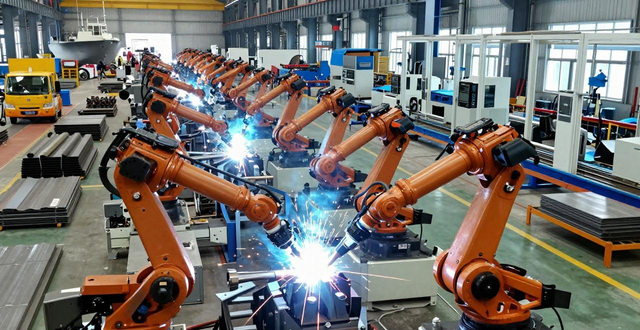
The automotive industry, still the largest market for welding robots, is gradually declining from more than 70%. Data in 2025 shows that the purchase volume of welding robots in the three fields of construction machinery, rail transportation and shipbuilding has increased by 42% year-on-year. In the Sany Heavy Industry Lighthouse Factory in Changsha, Hunan, more than 300 welding robots are responsible for the key welding seams of excavator arms and sticks. The production cycle is three times faster than manual welding, and the welding seam forming quality is completely uniform. It is this benchmarking effect that has driven the automation transformation trend of surrounding supporting companies.
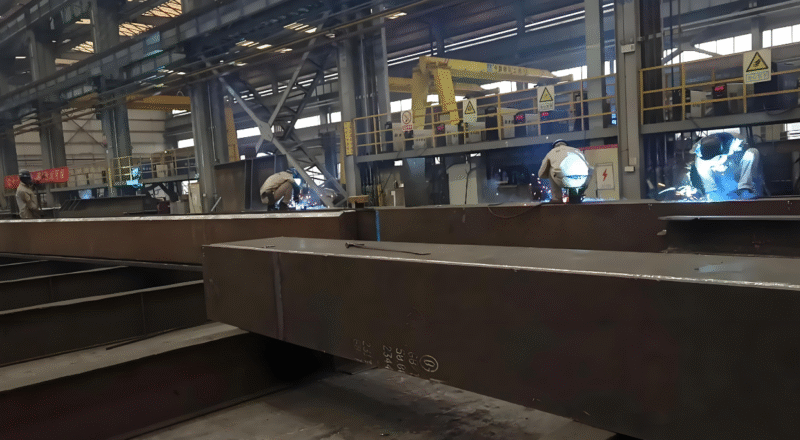
What deserves more attention is that steel structure buildings and new energy equipment are gradually evolving into new growth points. The penetration rate of domestic prefabricated buildings is set to reach 30% in 2026. However, the amount of welding of steel structure parts is astonishing, and it is difficult to ensure the construction period and quality with traditional manual welding methods. There is a steel structure company in Hangzhou, Zhejiang in 2025. At the end of the year, we invested in the construction of a dedicated line for welding robots, specifically used to handle the automatic welding of H-beams and box columns, doubling the daily production capacity. In addition, welding robots are also widely used in new energy supporting products such as photovoltaic brackets and energy storage cabinets. The reason is that such products have large batches and regular welds, making them extremely suitable for automated production.
Labor costs force automation upgrades
What has become a national problem is the shortage of front-line welders. According to the manufacturing employment report released in 2025, the average age of skilled welders is more than 45 years old, and young practitioners account for less than 15%. In the construction machinery industry cluster in Linyi, Shandong, the person in charge of human resources of a medium-sized company revealed that even if the monthly salary of welders reaches 12,000 yuan in 2025, there will still be insufficient recruitment. Moreover, welding quality depends on personal experience, and product consistency is difficult to guarantee. Under such circumstances, using welding robots to replace labor is not only a cost issue, but also a rigid need for stable production capacity.
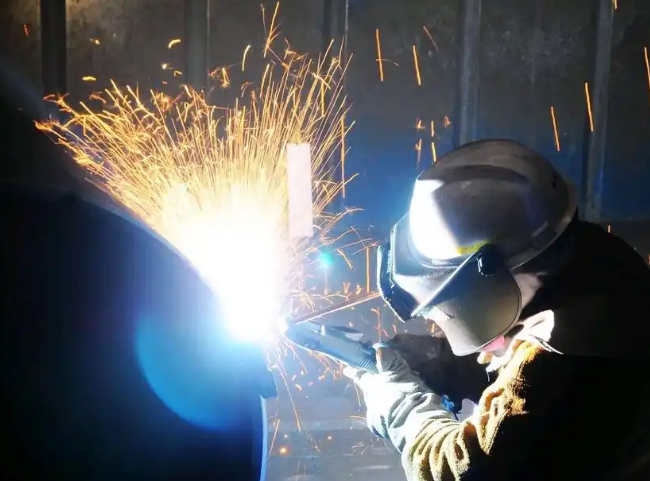
It is not just direct labor costs that drive companies to switch to automation. Hidden costs also play a role. The presence of smoke, arc light, and high temperatures in the environment where welding operations occur keeps occupational health risks at a high level. Companies spend considerable amounts on annual labor insurance, physical examinations, and work-related injury treatment. There is a metal structure factory in Handan, Hebei Province. In 2024, two arc burn accidents occurred. After that, the management decided to transform the welding workshop and invested 2.3 million yuan in 2025 to introduce 6 sets of welding robot workstations . In that year, the recruitment demand for 12 welders was reduced, and the work -related injury accident rate was also reduced to zero.
Popularization of smart devices creates new demands
What has fundamentally changed the way welding robots are managed is the integration of the mobile Internet and the industrial Internet of Things. Currently, mainstream welding robot systems are equipped with data collection interfaces. Information such as equipment operating status, welding current and voltage, and fault alarms can be uploaded to the cloud or factory management platform in real time. A workshop supervisor at an auto parts supplier in Suzhou, Jiangsu Province, said that with the help of a mobile app, the startup rate, standby time, and welding time of each robot can be viewed, and the overall equipment efficiency has increased from 68% to 82%.
This intelligent feature has changed the user's purchasing decision-making logic. In the past, companies only looked at the hardware parameters when purchasing robots, but now they also need to pay attention to the compatibility of the software system and the value of the data. Starting from the second half of 2025, welding robot manufacturers that can provide complete digital solutions will become more popular in the market, but orders from those manufacturers that only sell bare metal without supporting software will decrease significantly. This shows that welding robots have been upgraded from simple automation tools to data nodes in smart factories. This trend will further expand market demand.
Policy subsidies accelerate equipment updates
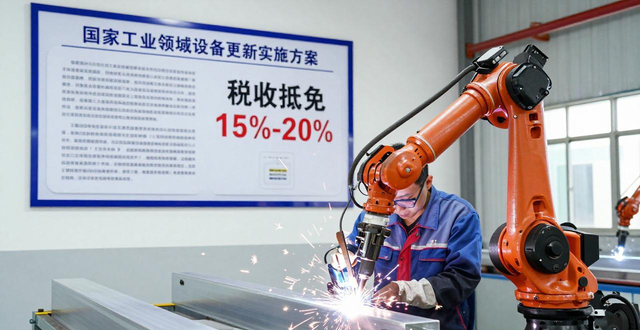
The national-level support policy for intelligent manufacturing equipment continues to be committed to implementing effective measures. In the implementation plan for equipment update in the industrial field announced in early 2026, welding robots are included in the catalog of key supports. Enterprises purchasing welding robots can enjoy a tax credit of 15% to 20% of the equipment investment. In Foshan, Guangdong, the local government has added additional subsidy policies. The actual amount paid by a small and medium-sized aluminum processing company to purchase welding robots in 2026 is only 67% of the original price, significantly reducing financial pressure.
Environmental protection policies have played a negative role in upgrading welding processes. It is difficult to control the smoke and dust generated by traditional manual welding. Automated welding can reduce the amount of smoke and dust generated by accurately controlling process parameters. A company in Tianjin that is engaged in environmental protection equipment manufacturing was interviewed many times due to issues with welding smoke emissions in 2025. Later, it introduced a fully enclosed welding robot workstation and equipped with a complete dust removal system. It not only solved the problem of environmental compliance, but also obtained the certification qualification of a green factory, and received extra points in the bidding process.
A new competitive landscape will be formed in the next five years
Looking at the current development situation, the market demand for welding robots is changing from linear growth to exponential growth. According to predictions made by industry research institutions, from 2026 to 2030, the average annual compound growth rate of the domestic welding robot market will remain within the range of 18% to 22%. More importantly, its application scenarios are extending from large-scale production to customized and small batches, which shows that small and medium-sized processing companies that were originally determined not to be suitable for automation can also find robot welding solutions that suit themselves.
For those engaged in the riveting and welding processing industry, the next three years are a critical window period. Companies that take the lead in completing automation transformation can expand their market share with cost and quality advantages; however, those companies that hold a wait-and-see attitude may lose their competitiveness under the dual pressures of rising labor costs and continuously improving quality requirements. Welding robots are no longer an optional item, but a must-select item related to the survival and development of enterprises.
For you, what is the most prominent pain point faced by factories or cooperative enterprises in the welding process – is it difficulty in recruiting workers, unstable quality, or encounters bottlenecks in efficiency? Welcome to share your actual experience in the comment area and discuss the transformation and development path of the riveting and welding processing industry together.




暂无评论内容