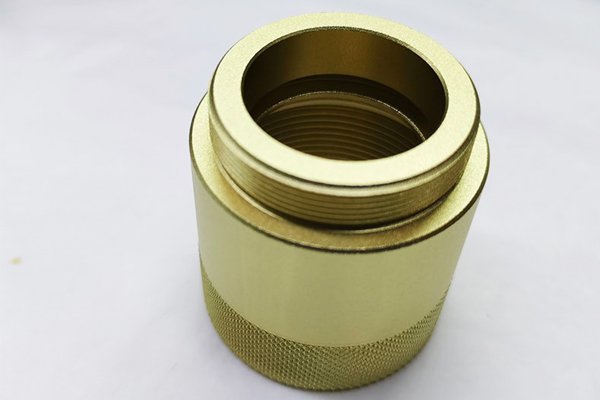


Aluminum alloy processing promotes the development of the aerospace industry (aluminum alloy processing process)
To reduce the weight of an aircraft by one kilogram, there are many breakthroughs in the processing technology of aluminum alloy parts. From the Boeing 787 to the domestic large aircraft C919, aluminum alloy processing technology directly plays a decisive role in the height and distance that the aircraft can fly. It also plays a decisive role in whether the lifeblood of the aviation industry can be controlled by itself.
Transformation from blank to precision parts
![图片[1]-Aluminum Alloy Processing Promotes The Development Of The Aerospace Industry (aluminum Alloy Processing Process)-Dalian Fuhong Machinery Co., Ltd](/wp-content/uploads/2026/03/1774181830305_0.jpg)
First, when processing aluminum alloy parts, you will first face challenges in terms of material properties. The second titanium alloy is used for aerospace processing . The texture of aluminum alloy is relatively soft, and it is easy for the tool to stick during cutting, resulting in built-up edge, which will have a certain impact on the surface finish. Third, in 2024, there was a domestic aviation manufacturing company. Due to improper cutting parameters, micro-cracks appeared on the surface of a batch of aircraft wing spar parts, which directly caused losses of more than 2 million yuan. Fourth, this requires precise control of cutting speed, feed amount and coolant ratio during the machining process.
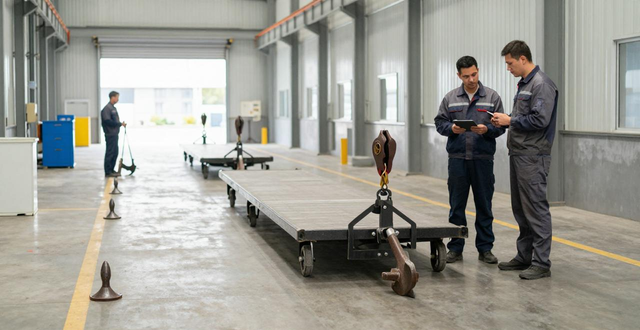
In modern times, the processing of aviation aluminum alloy parts has entered the era of high precision. Take the long wing girder of the C919 large passenger aircraft. Its length exceeds 20 meters, and the processing accuracy requirement is within 0.1 mm. Chengdu Aircraft Company has effectively solved the problem of processing deformation of long and thin-walled parts by using a five-axis linkage CNC machining center and a vacuum adsorption fixture. This processing method compresses the process that traditionally requires 8 processes to 2.
The heat treatment link in aluminum alloy processing cannot be ignored. The aging process after solution treatment of high-strength aluminum alloys such as 7075-T6 directly determines the mechanical properties of the parts. Data measured at Xi'an Aviation Base shows that if the heat treatment process is not up to standard, the tensile strength of the parts will decrease by 15% to 20%. In the aviation field, this means that the safety margin of the entire aircraft is weakened.
CNC machining reshapes aviation manufacturing landscape
![图片[2]-Aluminum Alloy Processing Promotes The Development Of The Aerospace Industry (aluminum Alloy Processing Process)-Dalian Fuhong Machinery Co., Ltd](/wp-content/uploads/2026/03/1774181830305_1.jpg)
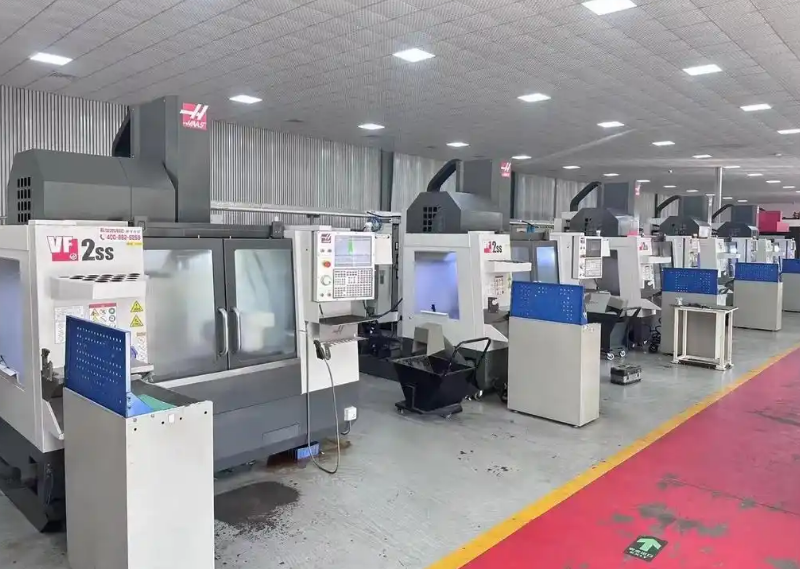
The popularization of CNC machine tools has transformed complex aviation aluminum alloy components from drawings into reality. In the past, processing the compressor casing of a turbofan engine required manual milling by experienced technicians, which took up to hundreds of hours. Nowadays, using a high-speed five-axis CNC machining center and programmed to automatically change tools for continuous processing, the processing time of a single piece is shortened to less than 12 hours, and the processing accuracy is stable at IT6 level.
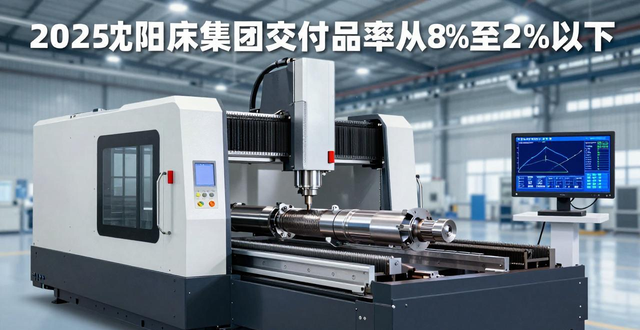
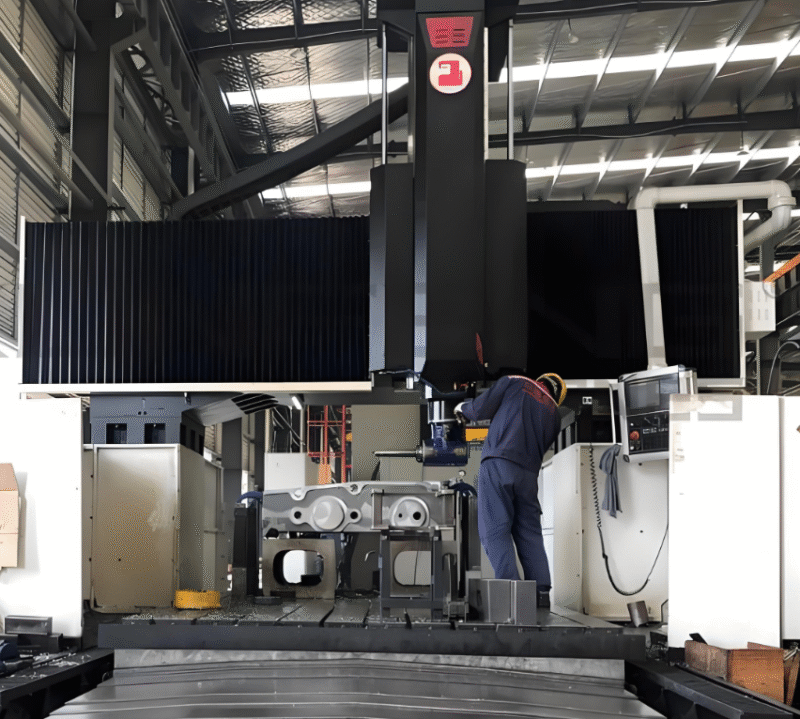
Domestic high-end CNC equipment is on the verge of breaking through the bottleneck. In 2025, Shenyang Machine Tool Group delivered the first batch of five-axis linkage gantry machining centers to the aviation industry, successfully completing the processing of key load-bearing parts such as wing ribs and frame beams. These devices are equipped with online measurement and adaptive compensation systems, which can monitor tool wear and workpiece deformation in real time, reducing the scrap rate from the original 8% to less than 2%.
After the introduction of intelligent flexible production lines, Chengdu Aircraft Civil Aircraft Company's annual production capacity of aluminum alloy structural parts has changed, from 3,000 units to 5,000 units, and the production cycle has been shortened by 40%. According to a report in China Aviation News in January 2026, this improvement in processing efficiency is directly reflected in production capacity, which provides a solid processing guarantee for the acceleration of mass production of domestic large aircraft.
Aluminum alloy materials are the cornerstone of aviation power
In terms of material properties, the status of aluminum alloys in the aviation field cannot be replaced. After a century of development, a mature system in the aviation field has been built, such as 2 series, 7 series, etc. In 2025, the aviation-grade aluminum alloy thick plate production line put into operation by China Aluminum Group's Southwest Aluminum Co., Ltd. has the ability to produce ultra-wide plates. The width of the ultra-wide plates can reach 4.5 meters. The completion of this production line meets the material requirements for the overall wall panels of those large transport aircraft, and each aircraft transport – 20 Transport aircraft use more than 40 tons of aluminum alloy alone.
The lightweight properties of aluminum alloys directly translate into economic benefits. According to a technical report published by Boeing, every kilogram of aluminum alloy reduction in the structural weight of a civil aviation airliner can save approximately 3,000 liters of fuel throughout its life cycle. The domestically produced ARJ21 regional airliner has reduced the weight of the entire aircraft by more than 500 kilograms by optimizing the aluminum alloy structural design, and the annual fuel cost of a single aircraft is reduced by approximately 150,000 yuan.
The key to ensuring the safety of the industrial chain lies in the localization of materials. In the past, my country's aviation-grade aluminum alloys have been dependent on imports for a long time. In 2024, the United States' export restrictions on high-end aluminum materials to my country caused tensions in the supply chain. Currently, Southwest Aluminum, Northeast Light Alloy and other companies have achieved stable mass production of 7050 aluminum alloy pre-stretched plates, and the performance data of their products have been included in the catalog of COMAC's qualified suppliers.
Advanced processing technology breaks through performance limits
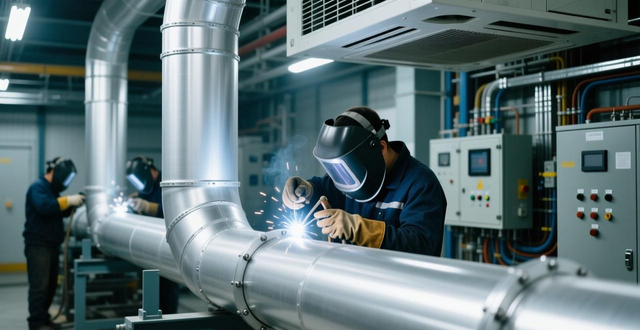
Friction stir welding technology has completely solved the bottleneck of aluminum alloy welding. Traditional fusion welding can easily cause softening and pore defects in aluminum alloy joints. The friction stir welding equipment developed by AVIC Manufacturing has been successfully used in the manufacture of large-scale launch vehicle fuel tanks. Compared with the fusion welding process, the joint strength coefficient has increased from 0.7 to over 0.9, and the air tightness has reached aerospace-grade standards.
High-speed cutting technology can double the processing efficiency of aluminum alloys. Aluminum alloys have the characteristics of good thermal conductivity and small cutting force, making them extremely suitable for high-speed processing. Harbin Institute of Technology and the First Institute of Aerospace Science jointly developed the aluminum alloy high-speed cutting process for titanium alloy processing aerospace applications . Its cutting speed can reach more than 3,000 meters per minute. When the processing efficiency is increased by three times, the surface roughness can reach within Ra0.8 microns, and the subsequent polishing process is eliminated.
There are special processing problems that traditional techniques cannot solve, and related problems have been solved. For complex structures such as aluminum alloy thin-walled parts and deep-hole parts, it is difficult for traditional tools to reach them. In 2025, Capital Aerospace Machinery Company used electrochemical processing technology to successfully process the aluminum alloy turbopump casing of a certain rocket engine. The accuracy of its inner wall flow channel reached 0.02 mm, and the processing efficiency was five times faster than that of EDM.
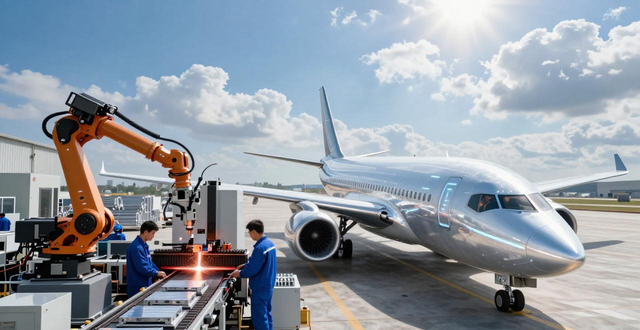
Looking at future aviation trends from the perspective of processing technology
3D printing is changing the manufacturing logic of aluminum alloy parts. Traditional aluminum alloy processing requires cutting off a large amount of remaining material from the entire material, and its material utilization rate is only 10% to 20%. The Aerospace Science and Industry Corporation uses laser selective melting technology to print aluminum alloy brackets. The material utilization rate has increased to more than 80%, and the manufacturing cycle has been reduced from two months to one week. Aluminum alloy processing promotes the development of the aerospace industry (aluminum alloy processing process). In 2025, this technology has been applied to the mass production of certain types of satellite structural parts.
A new trend has emerged, which is the hybrid structure of composite materials and aluminum alloys. The fuselage of the Airbus A350XWB uses a large amount of carbon fiber composite materials, but aluminum alloy is still needed for the wing ribs and connecting joints. As a result, new requirements have been put forward for aluminum alloy processing, namely the requirements for the connection adaptation of dissimilar materials. COMAC North Research Center has developed a hybrid joining process of aluminum alloy and composite materials, which can pre-treat the aluminum alloy surface through laser ablation, thereby increasing the bonding strength by 40%.
Aluminum alloy processing workshops are being fully penetrated by intelligent manufacturing. In early 2026, Xi'an Aviation Industry Corporation of China built an intelligent production line for aluminum alloy structural parts. The production line realizes full-process unmanned operation from blank loading to finished product off-line. The production line is equipped with a machine vision online inspection system. This system completes a processing size inspection every 30 seconds, uploads inspection data to the cloud in real time, and accurately traces quality to every part and every process.
Processing accuracy determines flight safety height
The errors produced during the processing of parts made of aviation aluminum alloy materials are directly related to flight safety. According to data from the Airworthiness Certification Department of the Civil Aviation Administration of China, in the past ten years, there have been a total of 27 domestic aviation unsafe incidents caused by defects in parts processing . Titanium alloy processing aerospace applications , of which aluminum alloy parts accounted for 14 cases. In 2023, a key pin of the landing gear of an airliner's aircraft almost caused an accident because the fillet radius was too small during processing, causing stress concentration and cracks.
The last line of defense to ensure processing quality is inspection methods. Traditional random inspection methods cannot cover all key parts. At present, industrial CT online inspection has been widely used by aviation manufacturing companies. Inspection data from the Shanghai Aerospace Precision Machinery Research Institute shows that after the application of industrial CT, the internal defect detection rate of aluminum alloy castings has increased from 80% to more than 98%, and many batches of parts with the risk of microcracks have been effectively intercepted.
The skills possessed by personnel are always a key and important guarantee for processing quality. Even though the degree of automation continues to improve, programming processes, tool selection, and exception handling still rely on the experience of technicians. In the 2025 National Aviation Vocational Skills Competition, the champion player in the aluminum alloy thin-walled parts processing project was able to control the processing deformation of parts with a wall thickness of 1.5 mm within 0.05 mm. This level has exceeded the stable accuracy of automatic programming of industrial robots.
When it comes to processing aluminum alloys, how many of our core technologies are restricted by others and therefore in a passive situation? Warmly welcome to the comment area to talk about your opinions and views, and click like so that more people can see the successful breakthrough development path that China Aviation has explored in manufacturing.
![图片[5]-Aluminum Alloy Processing Promotes The Development Of The Aerospace Industry (aluminum Alloy Processing Process)-Dalian Fuhong Machinery Co., Ltd](/wp-content/uploads/2026/03/1774181830305_4.jpg)





暂无评论内容